When a meat dish is delicious and you eat it without pausing, at some point you can't help saying, "I can't eat any more." Yet if a sweet cake or ice cream appears right then, strangely enough, you find yourself reaching for it again. It's the moment people often describe by saying, "There's a separate stomach for dessert." If your stomach were truly full, you should not want to eat anything at all, so why does your appetite come back to life in front of a new food? The answer is "sensory-specific satiety."
Put simply, sensory-specific satiety is the phenomenon in which the more you keep eating one food, the less pleasant its taste, smell, and texture feel, while the pleasure you take in other foods you haven't eaten yet stays almost the same. In other words, you tire first not of eating as a whole but of "that particular sensation" you've just had.
This article walks step by step through the concept of sensory-specific satiety, the brain and evolutionary principles that produce it, why we end up overeating at buffets, and how to make use of it at the table.
The Principles and Uses of Sensory-Specific Satiety
Why We Tire of the Same Food First
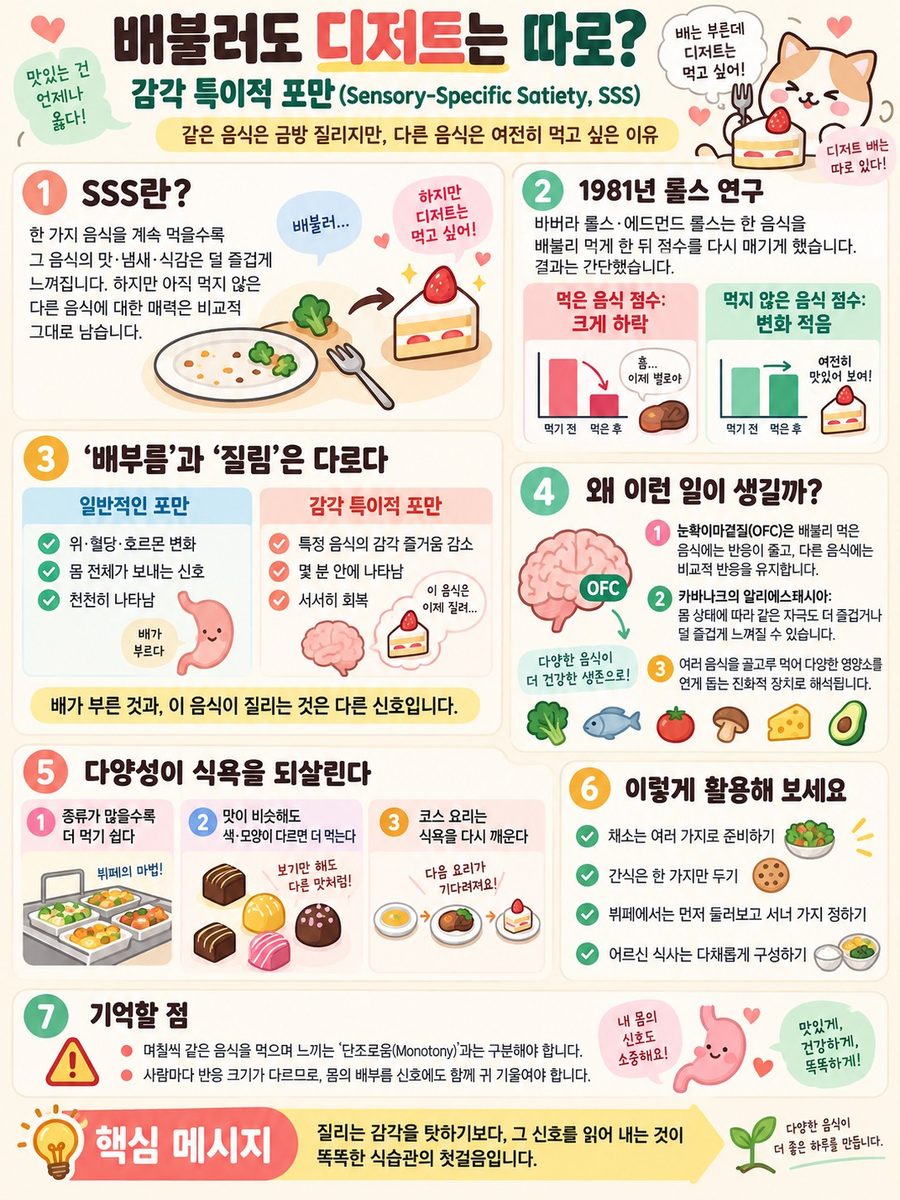
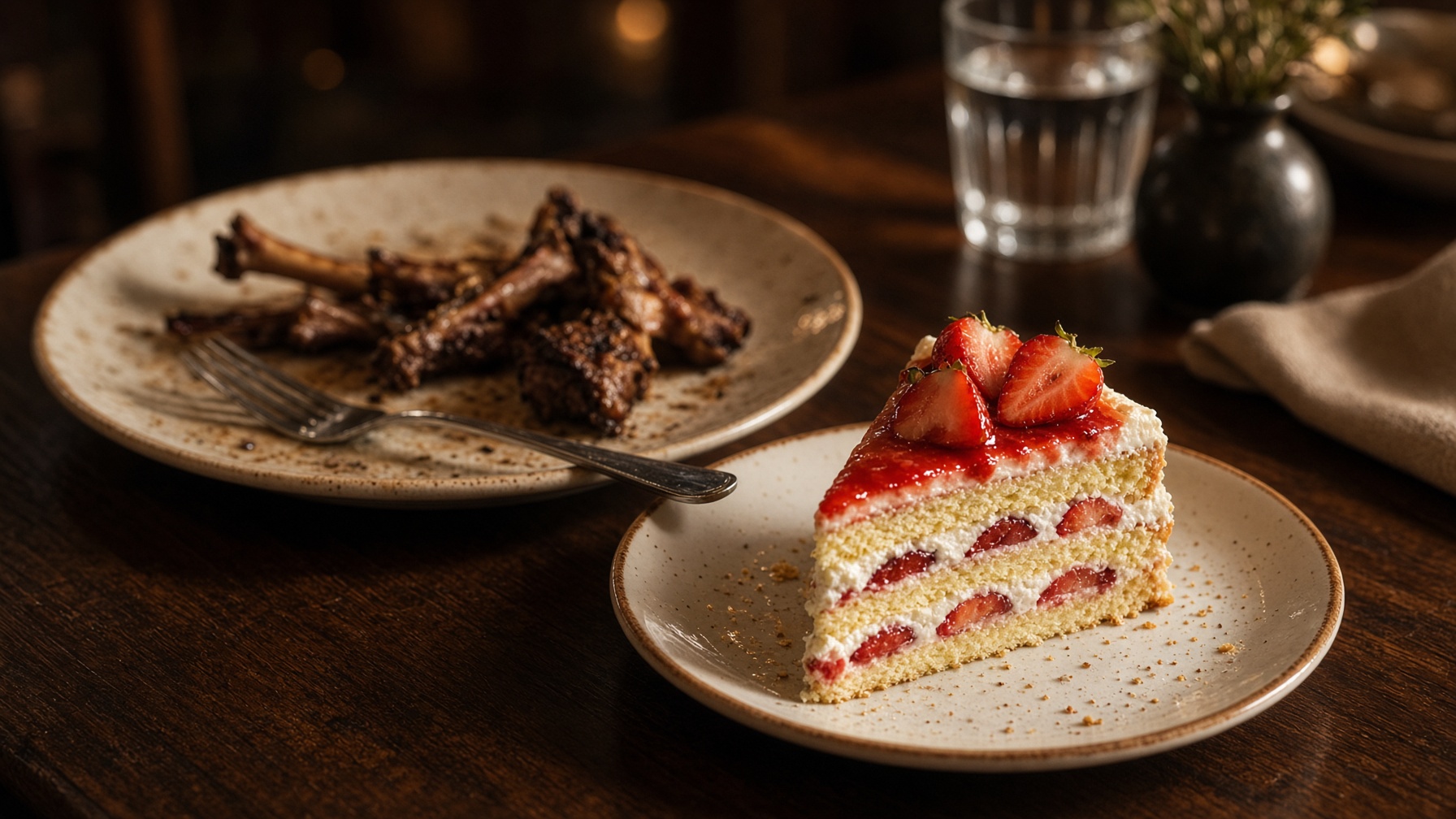
The people who studied this phenomenon systematically and made its name widely known were British nutritionist Barbara Rolls and neuroscientist Edmund Rolls. In a study published in 1981, they had people eat their fill of one food and then rate how tasty various foods were again. The ratings for the food they had just eaten dropped sharply, but the ratings for the foods they had not eaten hardly fell.
The important point here is that sensory-specific satiety is different from what we usually call feeling full.
(1) General satiety
This is the state in which the stomach stretches and blood sugar and hormones change, so the whole body sends the signal that "you can stop eating now." It takes time and appears slowly.
(2) Sensory-specific satiety
This is the state in which only the pleasure you take in a particular food's taste, smell, color, and texture decreases. It can appear within a few minutes of starting to eat and gradually recovers as time passes.
In other words, "I'm full" and "I'm sick of this food" are different signals, and sensory-specific satiety corresponds to the latter.
A Mechanism for Variety Built by the Brain and Evolution
In experiments with monkeys, Edmund Rolls reported that neurons in the brain's orbitofrontal cortex, the part of the forebrain just above the eyes, responded to the taste of a food, but their response decreased once the monkey had eaten its fill of that food. By contrast, they still responded to other foods. This means that how pleasant a food feels is regulated separately for each food in the brain.
In a similar vein, French physiologist Michel Cabanac described "alliesthesia," in which the same stimulus can feel pleasant or unpleasant depending on the state of the body. A good example is that after you have eaten plenty of sweets, sweetness is no longer as welcome as it was before.
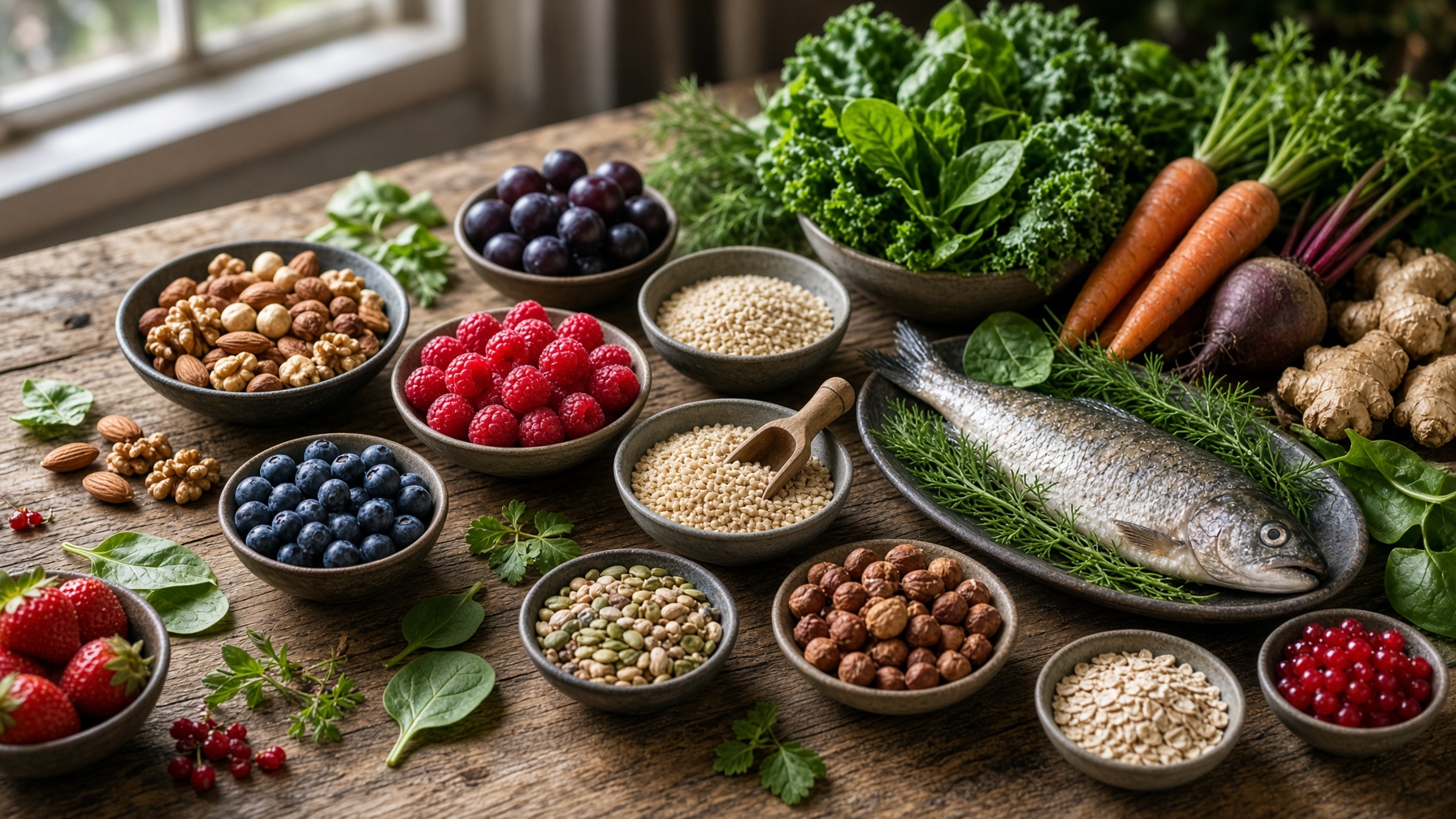
Seen through the lens of evolution, this mechanism is quite clever. If you depend on only one kind of food, you can easily run short of certain nutrients. The tendency to tire of the food you've been eating and be drawn to new food is thought to have led people and animals to naturally eat a balanced variety of foods, helping them obtain a range of nutrients.
Why We Overeat at Buffets
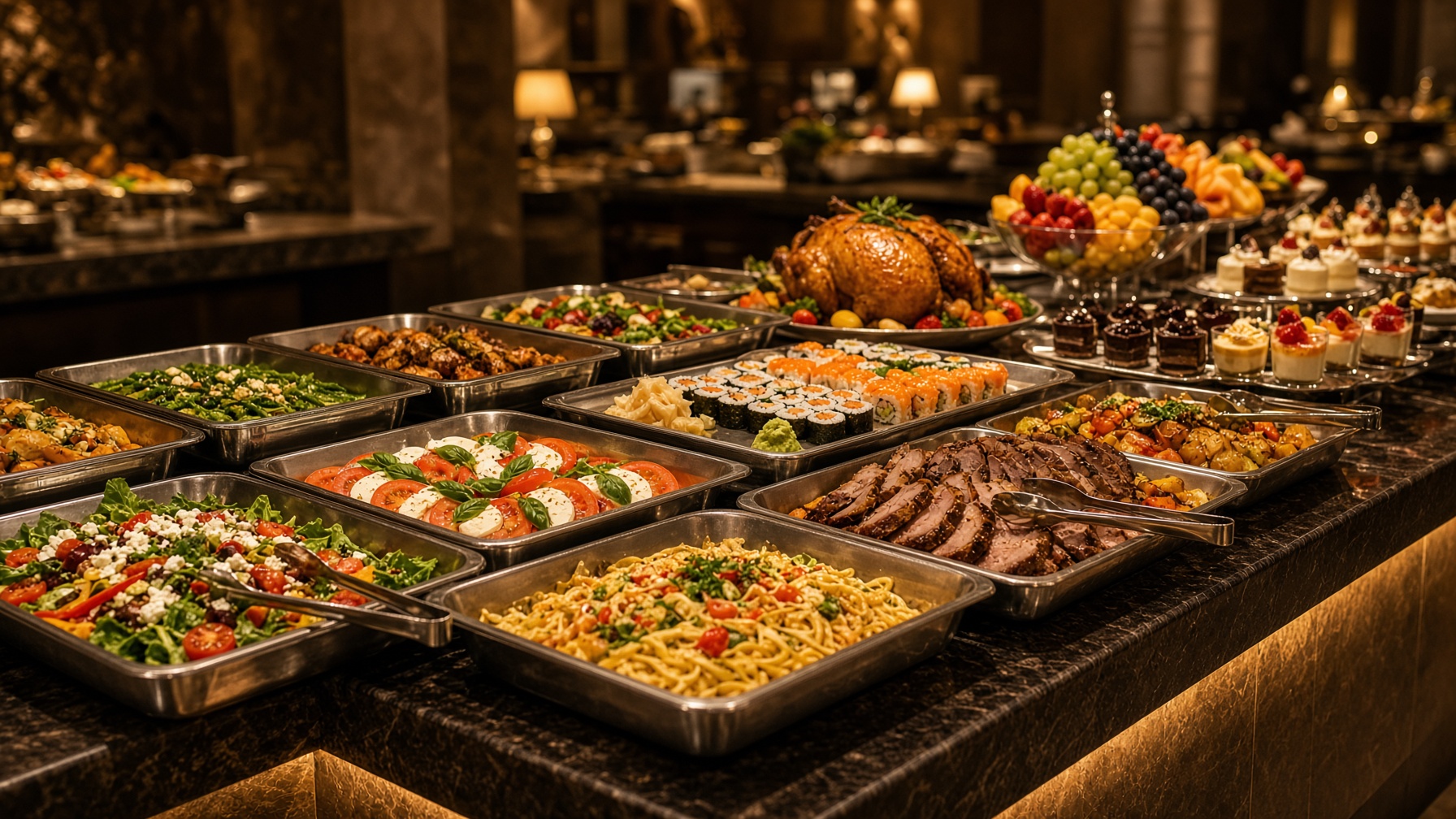
In today's environment, where food is overflowing, this mechanism can also become a cause of overeating. Researchers call this the "variety effect" or the "buffet effect." When there are many kinds of food, you can move straight on to another dish just as you tire of one, so your appetite keeps reviving without ever getting a chance to fade.
(1) The more kinds there are, the more we eat
In an experiment by the Rolls research team, people who were given sandwiches with several different fillings ate more than people who received sandwiches with only one filling.
(2) Even a different appearance has an effect
There is also a finding that even with chocolate candies of the same flavor, people ate more when they were given a mix of several colors than when they were given only one color.
(3) Multi-course meals revive the appetite
When foods with different tastes and textures, such as soup, meat, and dessert, come out one after another, the tired senses start fresh each time, and overall intake increases.
The expression "dessert stomach" can also be explained by this principle. When a sweet, cool dessert arrives after you've grown tired of a salty, greasy meal, it is a new sensation you haven't tired of yet, so it feels enjoyable all over again.
Using Sensory-Specific Satiety at the Table
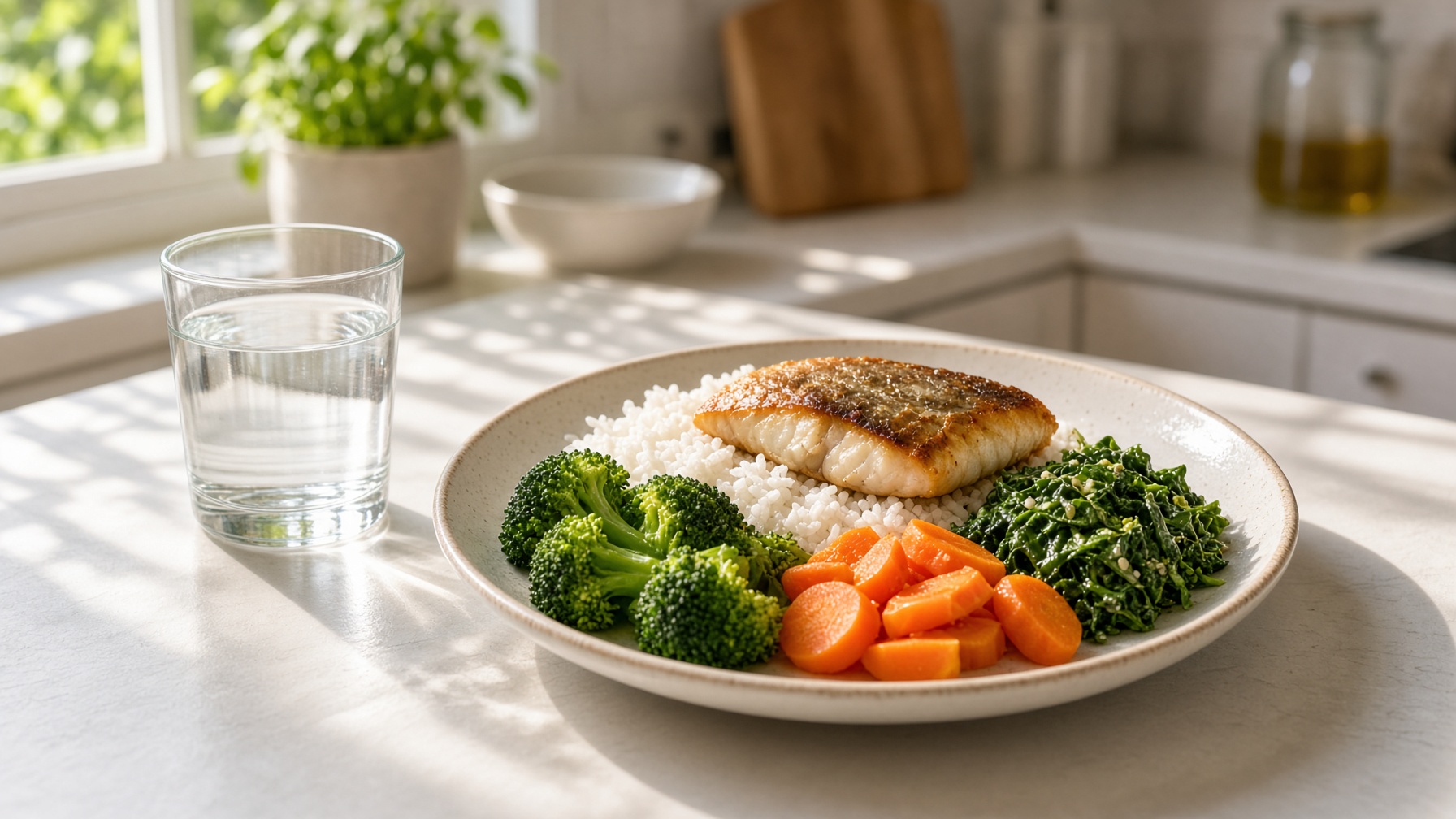
Once you understand sensory-specific satiety, you can turn the same principle around and use it to eat more healthily.
- Vegetable Variety: If you serve two or three kinds of vegetables instead of just one, you tire of them more slowly and end up eating more vegetables.
- Limited Choice: Rather than taking out several bags of snacks or candy at once, if you set aside just one kind to eat, you tire of it quickly and naturally eat less.
- Plan First: At a buffet, if you decide on three or four foods to eat before you pick up a plate, you can keep the tasting from going on endlessly.
- Variety for Elders: For older people whose appetite has declined with age, serving side dishes with a variety of colors and flavors can help increase how much they eat.
However, sensory-specific satiety is a response that appears over a short period, so it should be distinguished from "monotony," which develops when you eat the same food for several days in a row. Also, because the size of the response differs from person to person, it is good to listen not only to the boredom your tongue feels but also to the fullness signals your body sends more slowly.
Rather than blaming the sense of getting tired of a food, learning to read that signal is the first step toward smarter eating habits.