This time, we will look at functional differences between the cerebral hemispheres and the limits of using them to classify people as left-brained or right-brained personalities. A person has a single brain, but its left and right sides are divided, and each is responsible for different roles.
What connects these two sides with their different roles is a pathway called the corpus callosum, which is responsible for passing information back and forth between the left and right brain. If the corpus callosum is injured and damaged in the event of a head injury, the cooperation between the left and right brain is cut off, making normal life difficult. In other words, a situation arises in which the left and right sides of the body act separately.
Functions of the Left and Right Brain
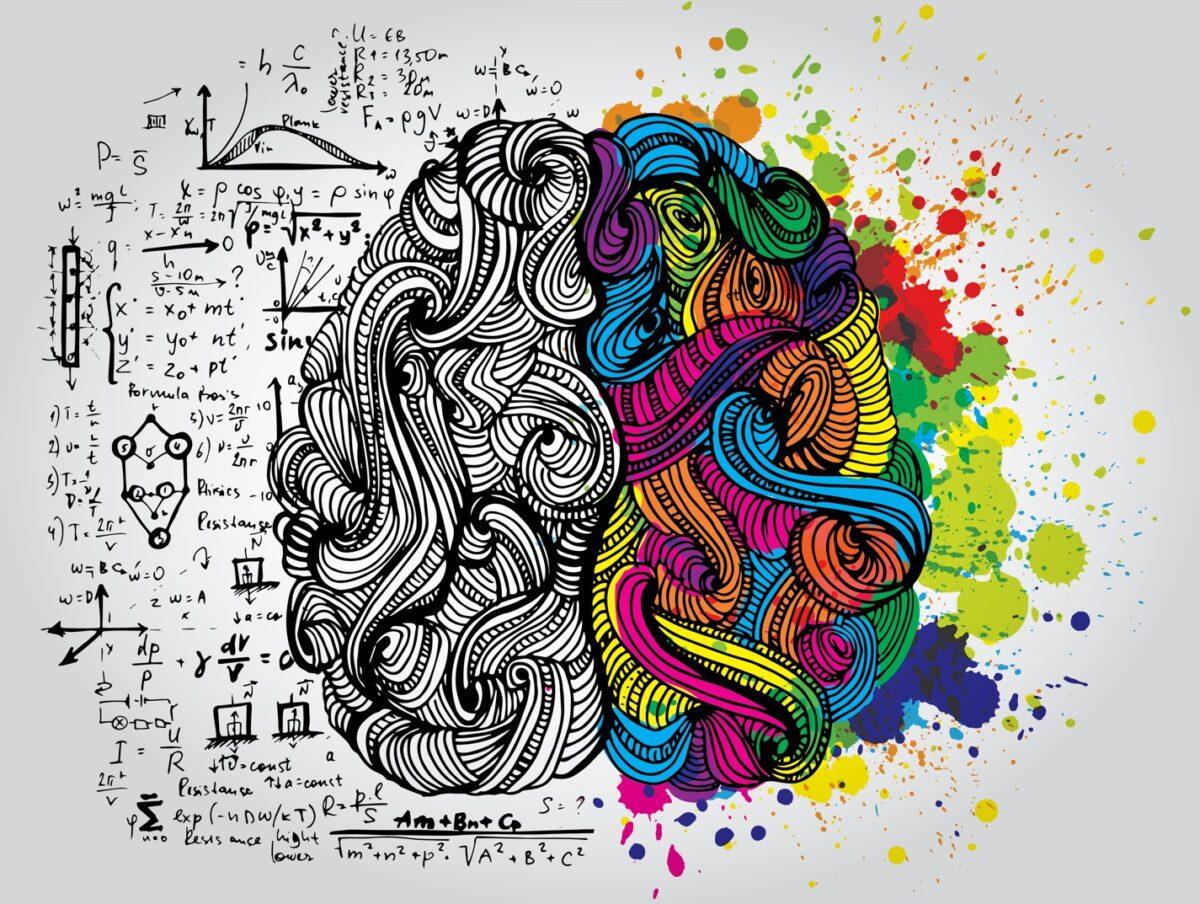 Functions and characteristics of the left and right brain
Physically, the left and right brain are each in charge of a different side. The left brain moves and controls the parts of the right side of the body, while the right brain moves and controls the parts of the left side of the body.
In addition, the left brain contains the area responsible for language processing in the brain, so it has a major influence on expressing what we think in writing or speech. For this reason, damage to the left brain can cause aphasia, an inability to speak, or reduce the ability to express oneself in words.
The right hemisphere also contains important regions involved in functions such as attention. Differences in how the two hemispheres contribute to particular functions do not, by themselves, justify attributing a person’s empathy or personal charm to one hemisphere.
Functional Differences and the Limits of Personality Labels
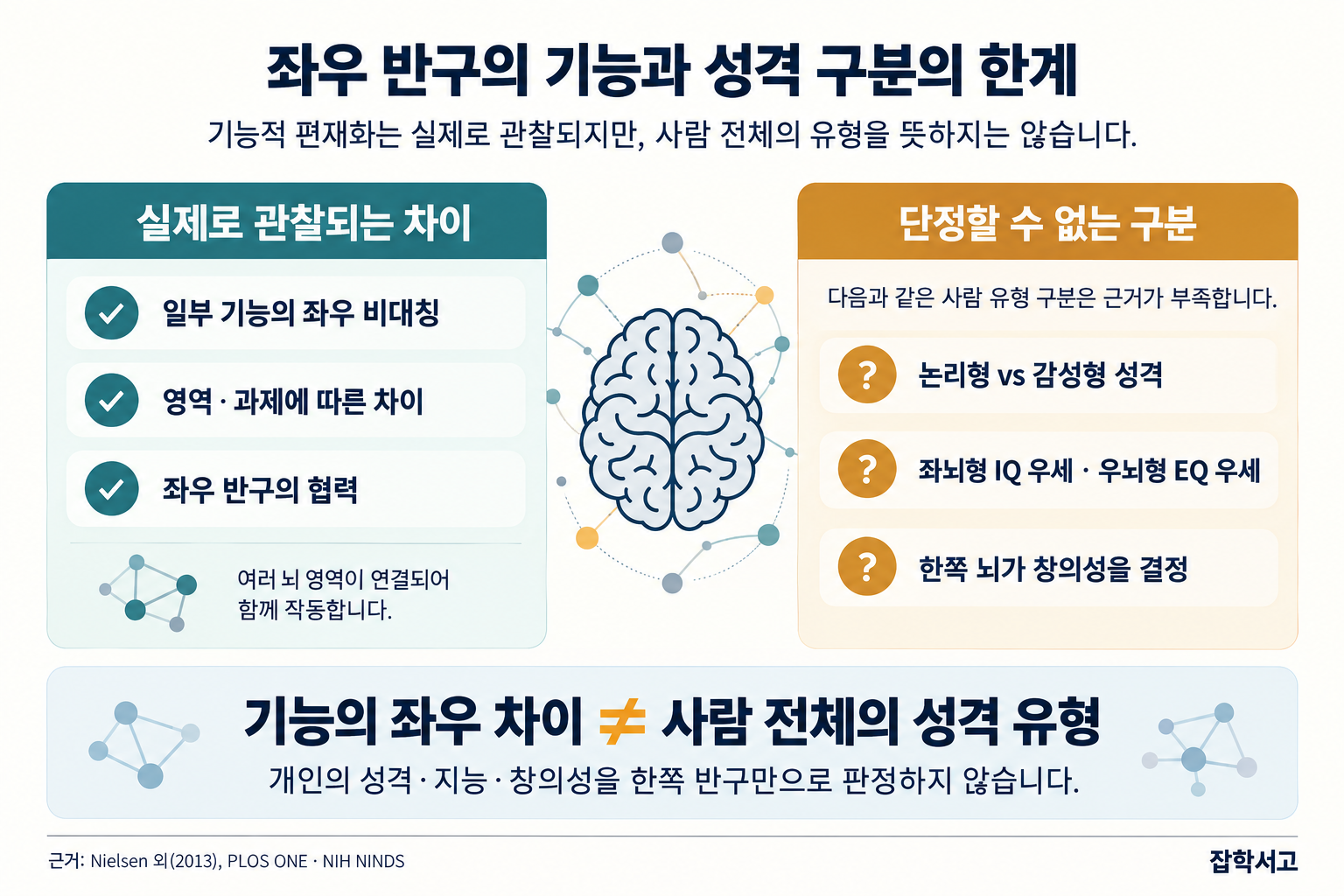 Functional differences between hemispheres and the limits of personality labels
The Left-Brained Personality Stereotype
 An example of working with words and numbers
Some functions, such as language processing, involve the left hemisphere relatively more. However, these functional differences do not support classifying a whole person as a systematic, logical, and objective left-brained personality.
There is insufficient evidence to explain mathematical or scientific abilities and preferences through a left-brained personality type. Being classified as left-brained should not be used to predict a higher IQ.
Grouping emotional expression, metaphor use, and name memory into a single left-brained personality profile is also insufficiently supported. Differences between the hemispheres in particular functions must be distinguished from whole-person personality categories.
The Right-Brained Personality Stereotype
 An example of a creative activity such as drawing
Describing right-brained people as the personality opposite of left-brained people is likewise unsupported. Intuitive or subjective thinking does not establish that a person’s brain as a whole is right-hemisphere dominant.
Enjoying drawing or composing music, or being good at creative activities, does not establish a right-brained personality. There is also insufficient evidence to use this classification to predict greater artistic or athletic ability, or a higher EQ.
Care is needed when grouping expressive emotions, metaphorical speech, and face memory into a single right-brained personality profile. Such traits alone do not establish overall dominance of one hemisphere.
The Left and Right Brain Work Together
 The left and right brain cooperate to create synergy
The hemispheres exchange information and work together. Even when one hemisphere contributes more to a particular region’s activity or task, this does not mean that a person’s brain as a whole belongs to a left-brained or right-brained type.
Scientific activities can call for creativity, and artistic activities can call for systematic thinking. It is not appropriate to classify these as activities of only the left or only the right hemisphere.
Practicing weaker skills while building on strengths must be distinguished from claims about balancing left-brained and right-brained personalities. These labels alone do not provide a sound basis for predicting empathy or training effects.
The important point is not to turn real functional differences between the hemispheres into whole-person personality categories. It is more appropriate to consider specific abilities and activities than to label people left-brained, right-brained, or whole-brained.