Put an egg in a pot and boil it for just a few minutes, and the clear white turns white and firm. Sprinkle lemon juice over raw fish and the flesh turns milky, and whisk egg whites long enough and the foam puffs up into white meringue. Some of these use fire and some do not, but the same thing is hidden behind all three scenes. It is the phenomenon in which the shape of the proteins in food falls apart, known as “Protein Denaturation.”
Put simply, protein denaturation means “the phenomenon in which the three-dimensional structure made by an intricately folded chain of amino acids unravels or falls apart under stimuli such as heat, acid, or physical force.” The order of the amino acids in the chain stays the same, but as the shape changes, the properties and uses of the protein change dramatically.
In this article, we will look in turn at how proteins are folded, the various forces that cause denaturation, the changes an egg goes through at different temperatures, and the effects of denaturation on nutrition.
Protein Denaturation Happens in the Kitchen Every Day
The Moment a Folded Chain Unravels
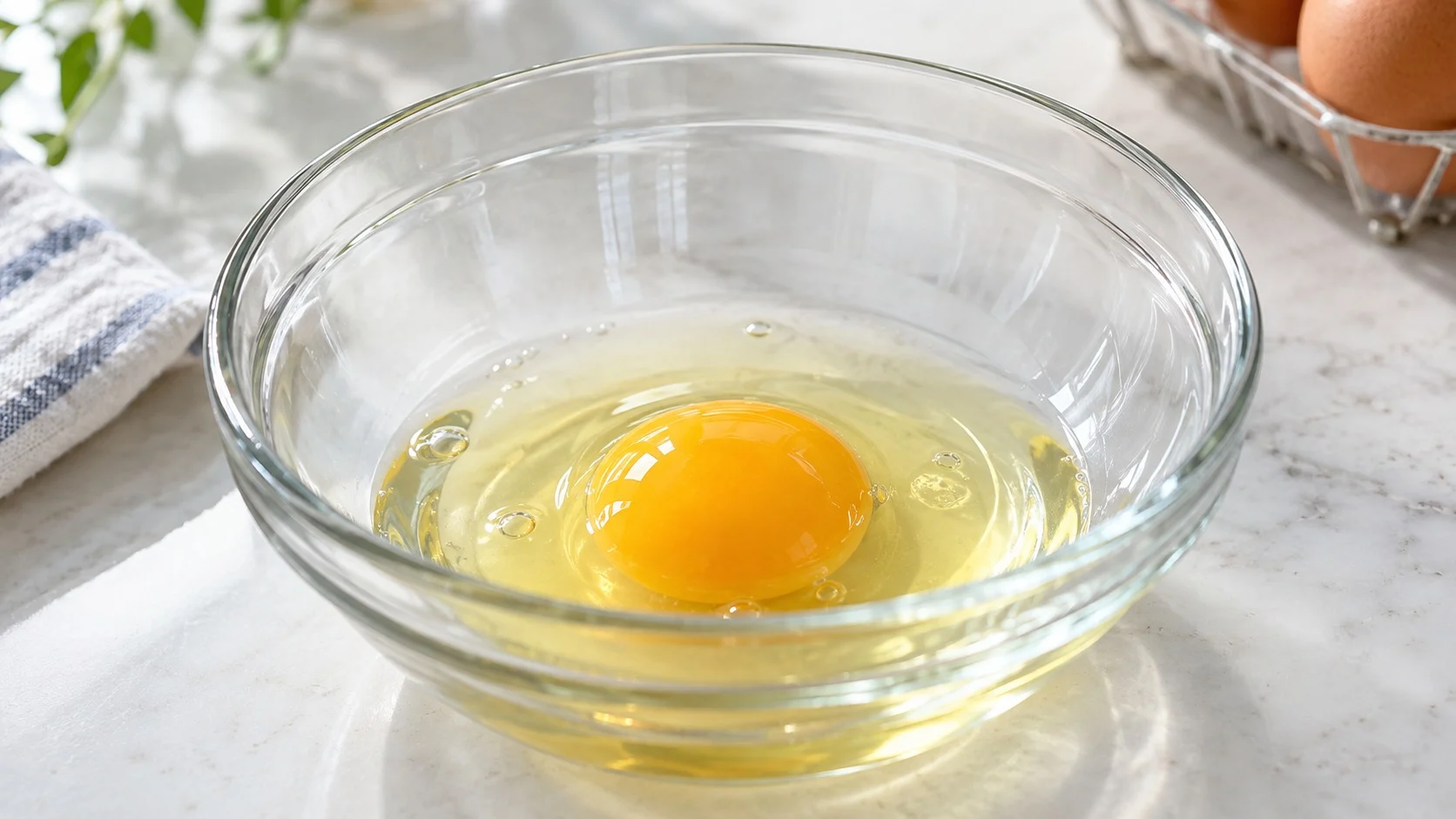
A protein is a long chain of tens to hundreds of amino acids linked one after another. This chain does not hang loosely at random; it is tightly folded into a set shape. Its structure is usually described in four levels.
(1) Primary structure
This refers to the order in which the amino acids are linked. The amino acids are held together by strong bonds called peptide bonds.
(2) Secondary structure
These are shapes in which parts of the chain fold into helices or pleated sheets, like a folding screen. Hydrogen bonds within the chain hold these shapes in place.
(3) Tertiary and quaternary structure
This is the three-dimensional shape in which the whole folded chain bunches up like a ball, and sometimes several chains come together to form a single cluster.
Denaturation is mainly the collapse of the secondary structure and the levels above it. Because peptide bonds are not broken, the primary structure remains intact. So a denatured protein still contains the same amino acids, yet its properties change so much that it behaves like a completely different substance: a protein that used to dissolve in water clumps together, or an enzyme loses its function.
The Many Forces That Cause Denaturation
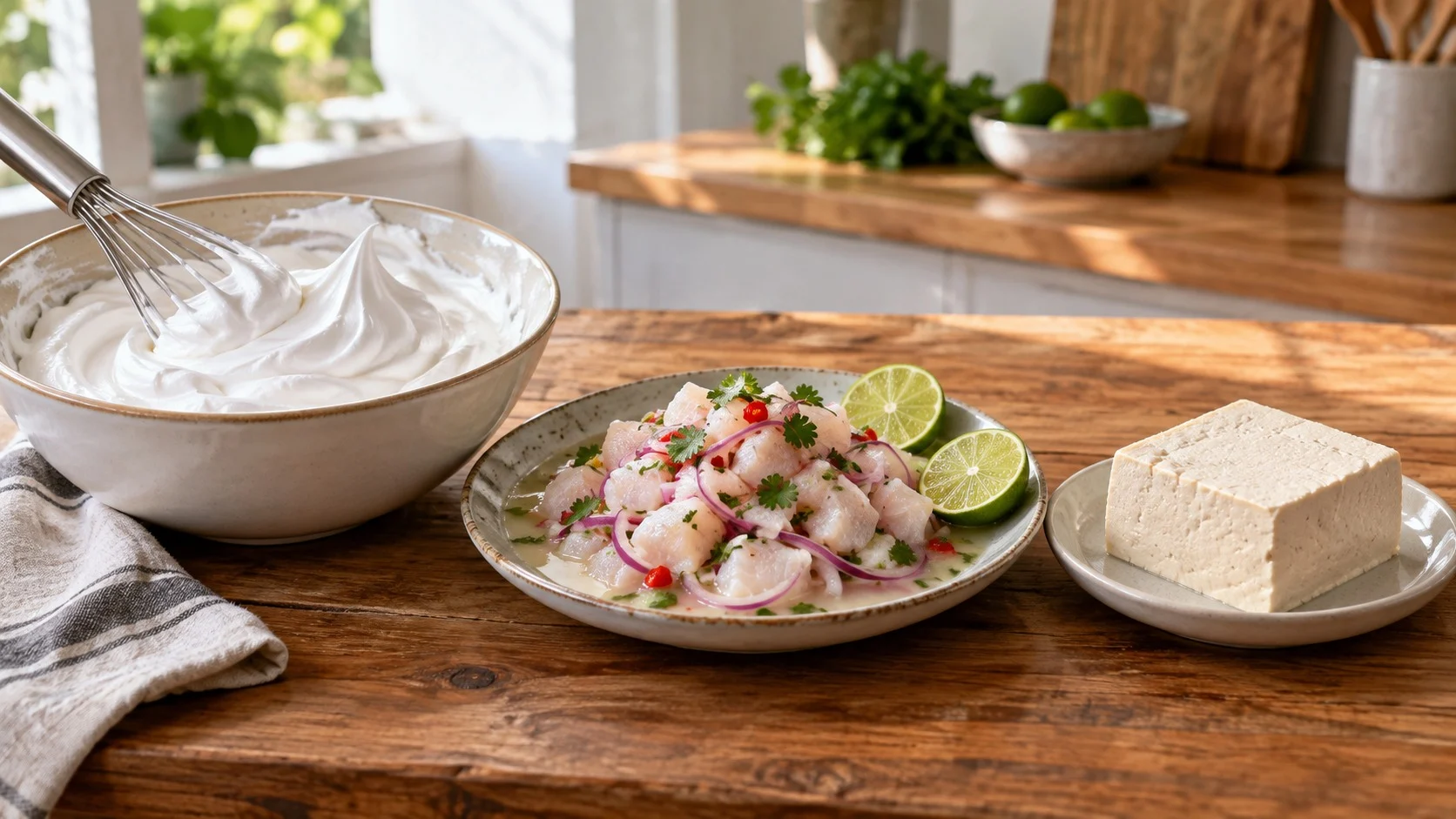
The folded shape of a protein is held together by relatively weak bonds, so it is more easily disturbed by various stimuli than you might think. The cases we often meet in the kitchen are as follows.
- Heat: As the temperature rises, molecules shake vigorously and weak bonds break. Grilling meat and boiling eggs both belong here.
- Acid: Acid changes the electrical charges on a protein and disrupts its structure. Typical examples are ceviche, in which fish is “cooked” by marinating it in lime juice, and yogurt, in which lactic acid makes milk proteins curdle.
- Mechanical Force: When you whisk egg whites hard, the proteins in contact with air unfold and form a thin film. This film wraps around air bubbles to become meringue.
- Salt and Coagulant: When nigari (a magnesium chloride–based coagulant) is added to warm soy milk, the soy proteins curdle and become tofu.
The same thing happens when meat is cooked. Muscle proteins exposed to heat denature and shrink, squeezing out the moisture held between the fibers. This is why overcooked meat becomes dry and tough. For this reason, a common approach with thick cuts is to sear the outside first, cook the inside slowly at a low temperature, and turn off the heat before the proteins shrink too much.
Even the same protein can produce completely different textures, such as a moist gel, a soft foam, or a firm lump, depending on what kind of stimulus it receives.
The Magic of Temperature, Seen in a Single Egg
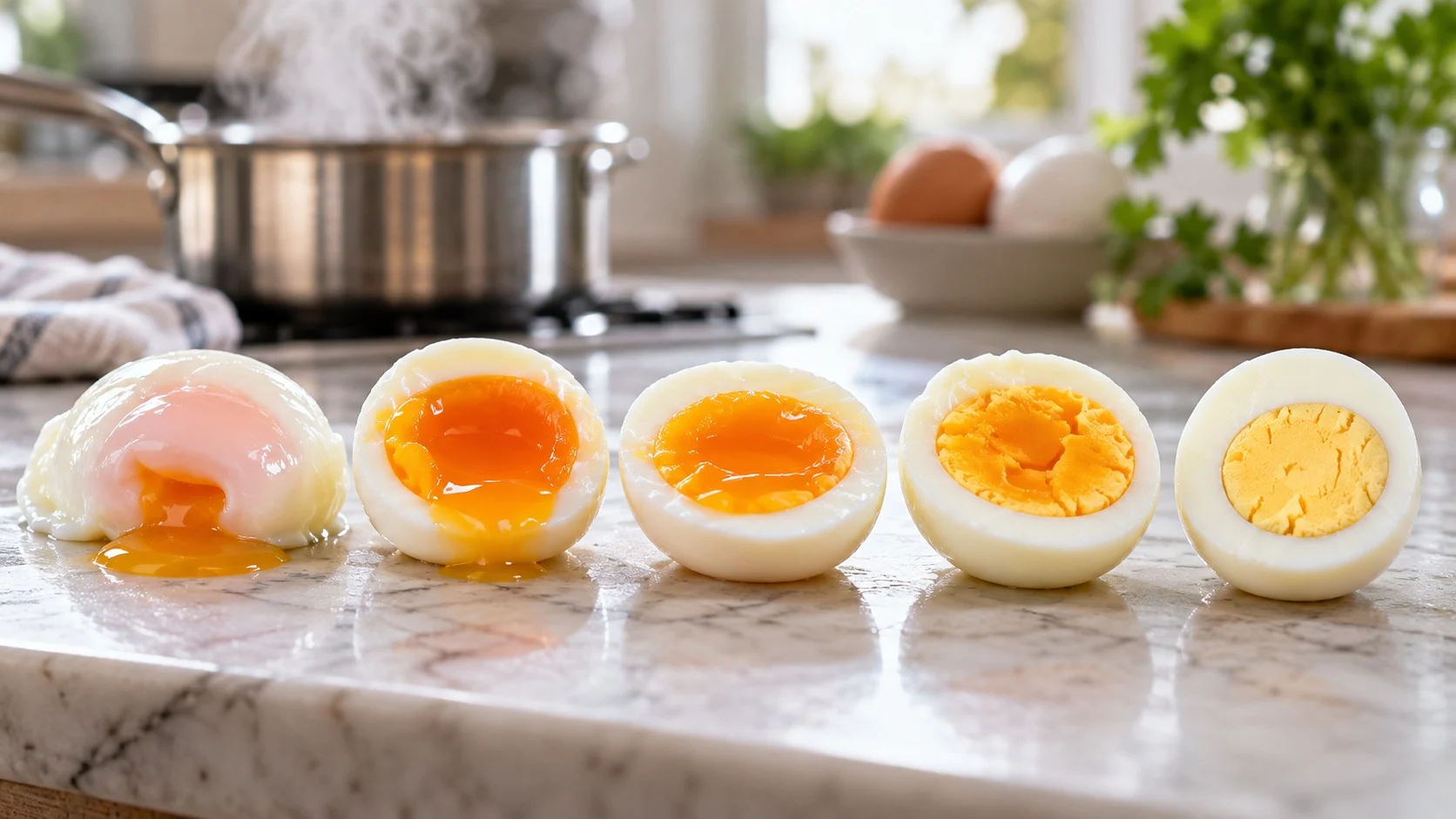
Eggs are the best ingredient for observing protein denaturation. The white contains dozens of proteins, and each denatures at a slightly different temperature.
How Egg Whites and Yolks Change with Temperature
Among the egg white proteins, ovotransferrin denatures first at about 61°C, and at around 65°C the white begins to set into a soft, cloudy gel. The yolk starts to thicken at around 65°C and sets at about 70°C. Ovalbumin, which makes up more than half of the egg white, does not begin to set until the temperature exceeds 80°C. That is why soaking an egg for a long time in water at about 65°C produces an onsen tamago (hot spring egg), with a delicate white and a moist yolk.
Conversely, if an egg is boiled too long in boiling water, almost all of its proteins clump together and push out moisture, making the white rubbery and tough. Even with the same egg, a difference of a few degrees or a few minutes completely changes the texture. This is also why cooking methods that control temperature precisely, such as sous vide, have become popular. Likewise, steamed egg custard comes out full of holes when steamed over high heat but smooth over low heat, because the heat level controls how quickly the proteins set.
Does Denaturation Ruin Nutrition?
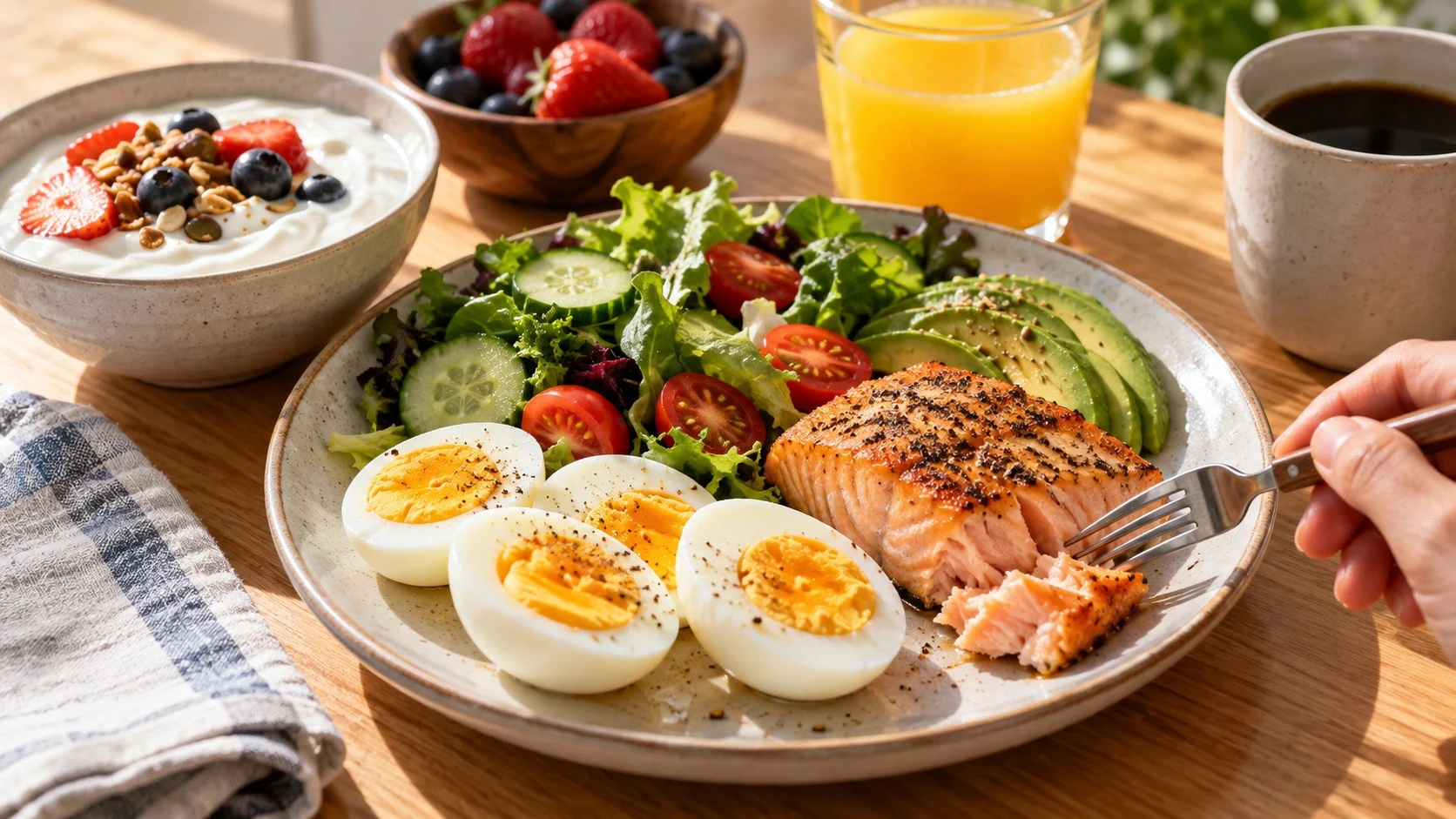
It is easy to assume that denaturing a protein destroys its nutritional value, but usually the opposite is true. The amino acids remain intact, and as the tightly folded structure unravels, digestive enzymes can reach the chain more easily. In fact, research has found that protein from cooked eggs is absorbed much better than protein from raw eggs. A protein in raw egg white called avidin binds tightly to biotin and interferes with its absorption, but cooking denatures it and weakens this effect as well.
Denaturation is not always irreversible. Around 1961, Christian Anfinsen unfolded ribonuclease in a urea solution and then removed that substance, showing that the protein refolded into its original shape on its own; for this research he received the 1972 Nobel Prize in Chemistry. He revealed that the information on how to fold is already contained in the sequence of amino acids. However, when the unraveled chains have stuck to one another, as in a boiled egg, there is no going back to a raw egg.
Knowing the moment a protein changes shape and handling heat and time accordingly: that is the first step in the science of delicious cooking.