The tortillas served at Mexican restaurants have a nutty aroma and a chewy texture quite different from wheat bread. Yet the corn dough used to make these tortillas cannot be made just by pouring water over cornmeal. That is because, before the dough is shaped, the corn must first be cooked in a special kind of water.
That process is called ‘nixtamalization.’ Nixtamalization is a traditional processing method in which dried corn kernels are cooked and steeped in an alkaline solution such as limewater, then washed and hulled, turning corn into a softer and more nutritious food.
In this article, we will look in turn at how nixtamalization began, how it is actually done, the changes the alkali brings about inside the corn, and what happened in regions that adopted corn without this technique.
The Power of Alkali to Transform Corn
Ancient Wisdom Born in Mesoamerica
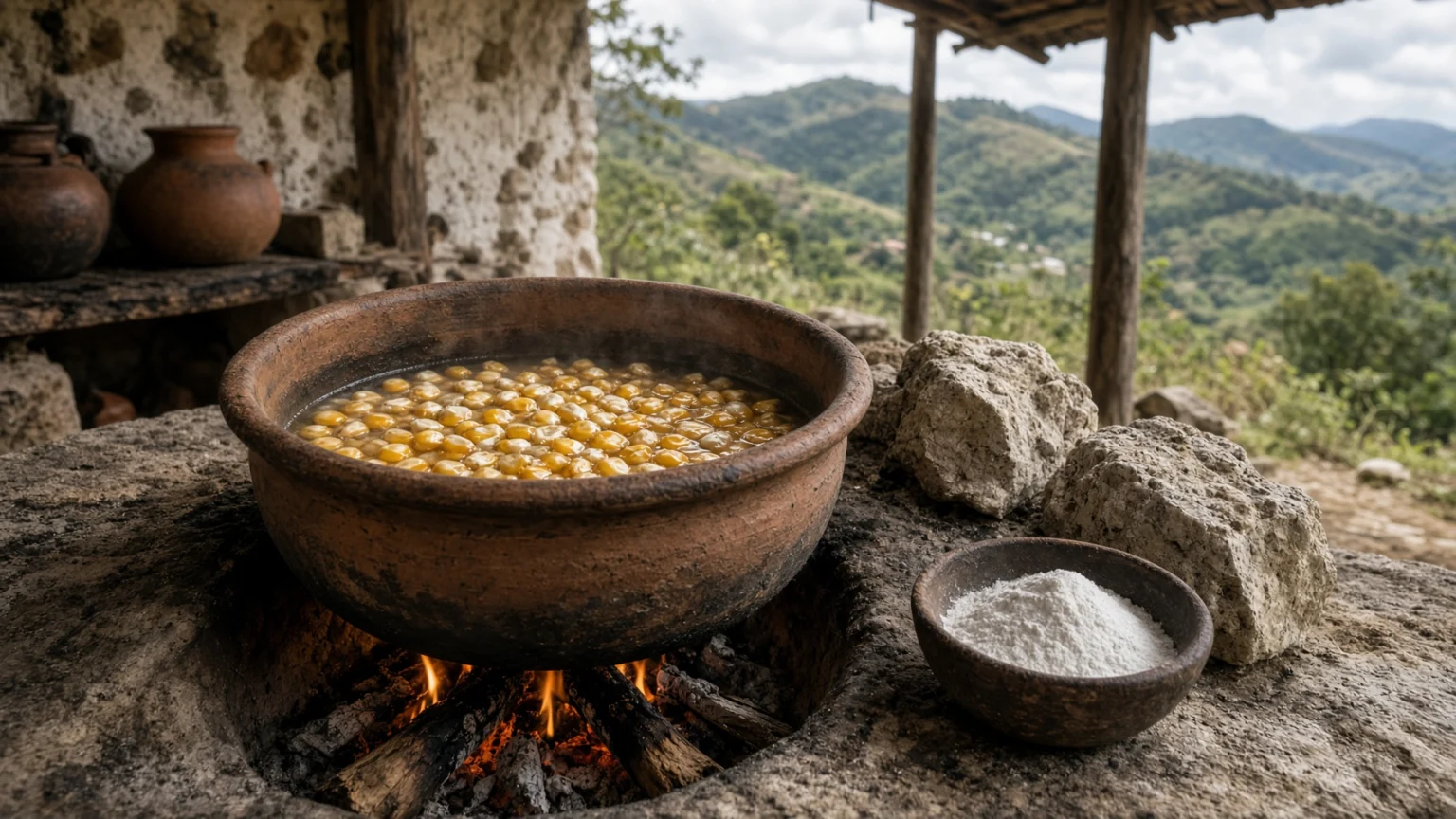
Nixtamalization began in Mesoamerica, the region where corn was first domesticated, corresponding to present-day Mexico and Central America.
(1) More Than 3,000 Years of History
The oldest evidence found so far is equipment from the southern coast of Guatemala, estimated to date from around 1500 to 1200 BCE. Along with corn farming, this technique spread throughout the Americas.
(2) Possibly Discovered by Accident
No one knows for sure who first discovered this method. One theory, however, holds that in the days when people boiled food by dropping fire-heated stones into water, using hot pieces of limestone in limestone-rich areas turned the water alkaline. In fact, experiments have shown that heated limestone alone can bring about nixtamalization.
(3) Ash in the Name
The word nixtamal comes from Nahuatl, the language spoken by the Aztecs. It combines nextli, meaning ‘ashes,’ and tamalli, meaning ‘corn dough,’ showing that the process was closely tied to water mixed with ash from the very beginning.
Cooking, Steeping, and Washing
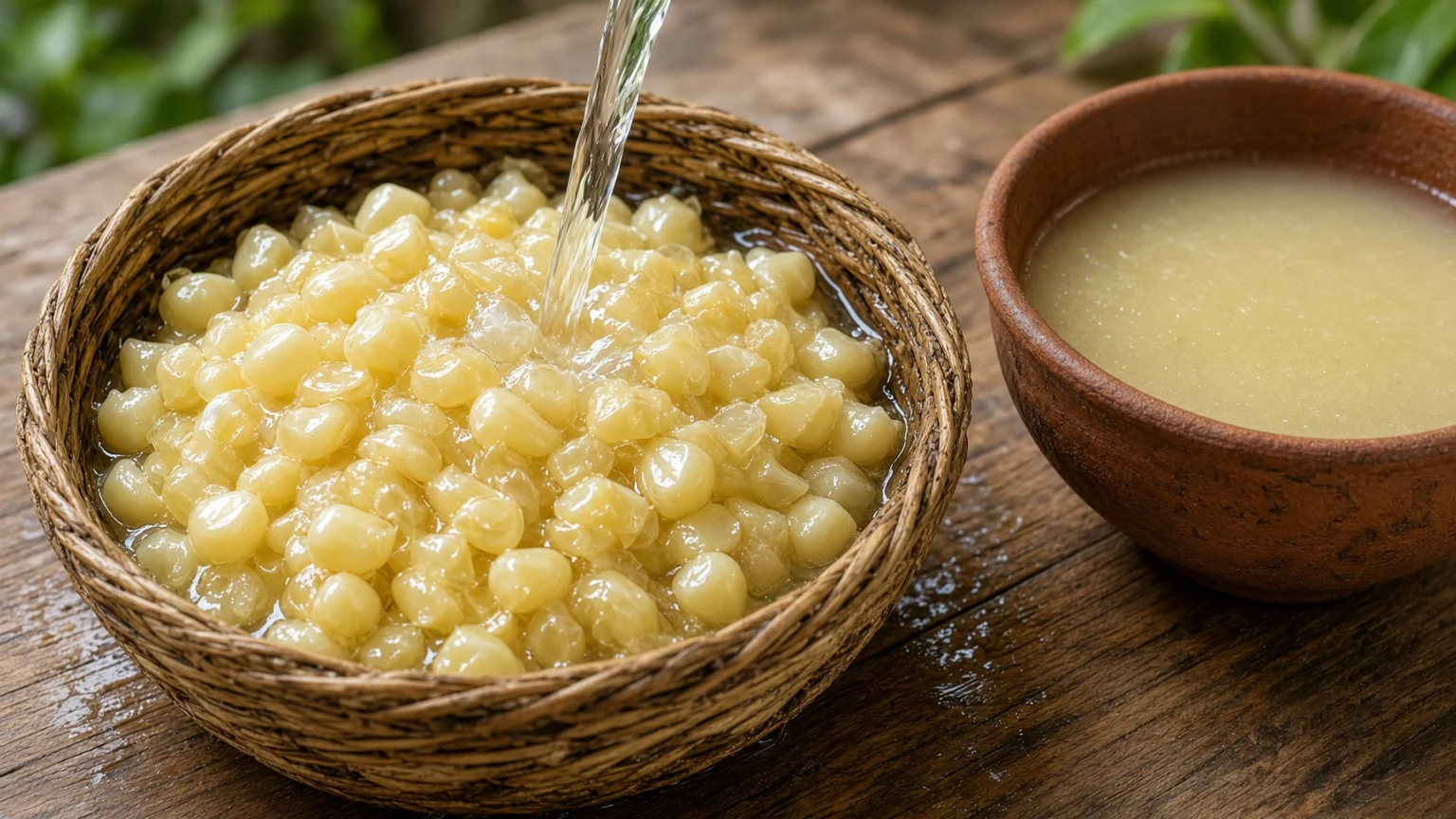
Nixtamalization may look simple, but each step has a clear purpose.
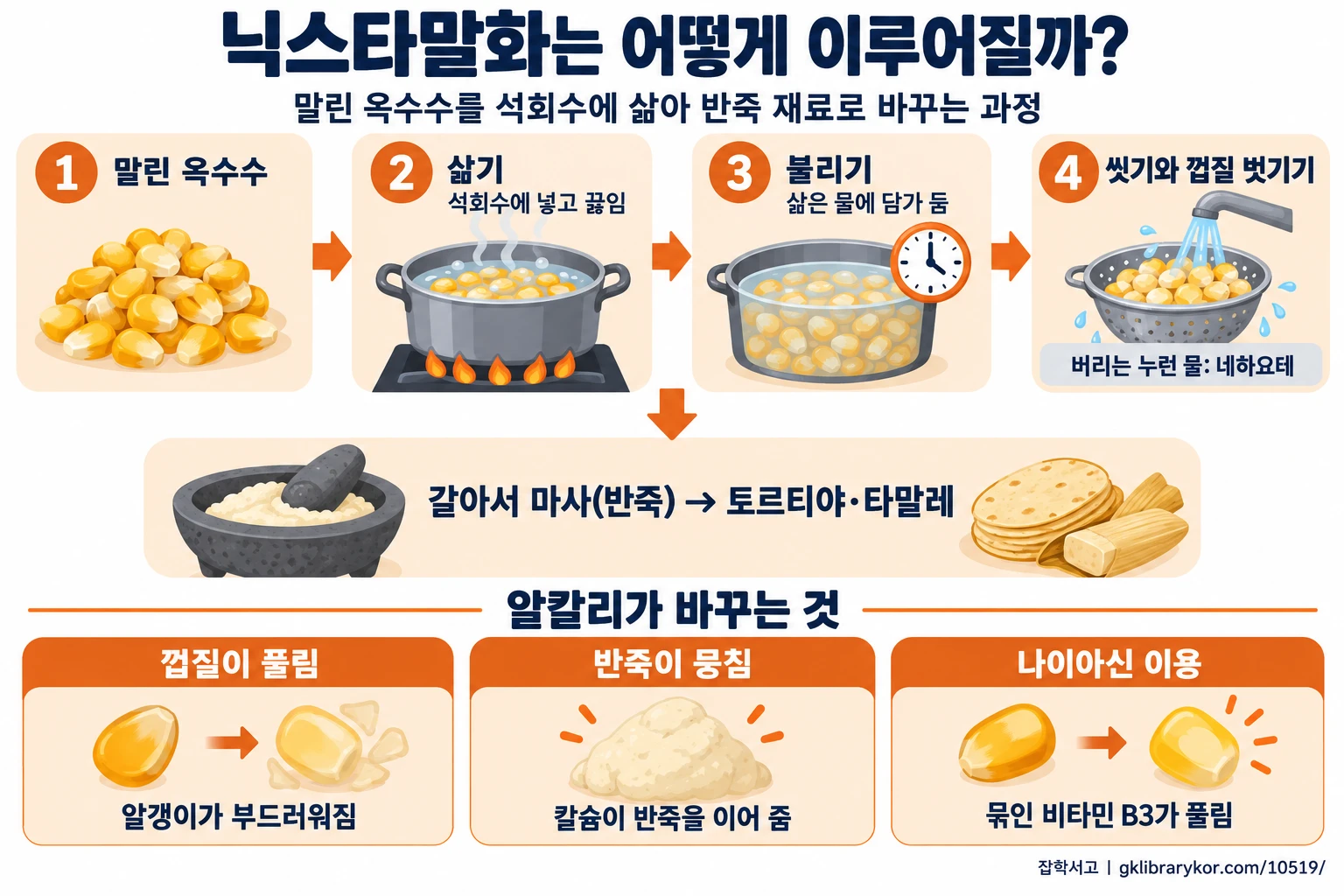
- Cooking: Dried corn kernels are placed in limewater and cooked near the boiling point. Depending on the region and the dish, they are cooked for anywhere from a few minutes to about an hour.
- Steeping: After the heat is turned off, the kernels are left soaking in the cooking water for anywhere from a few minutes to nearly a full day.
- Washing and Hulling: The alkaline water is poured off, the kernels are rinsed several times in clean water, and the loosened outer hulls are removed.
The yellowish water poured off at this stage is called nejayote. It contains dissolved hulls and starch and tastes unpleasant, so it must be washed off thoroughly.
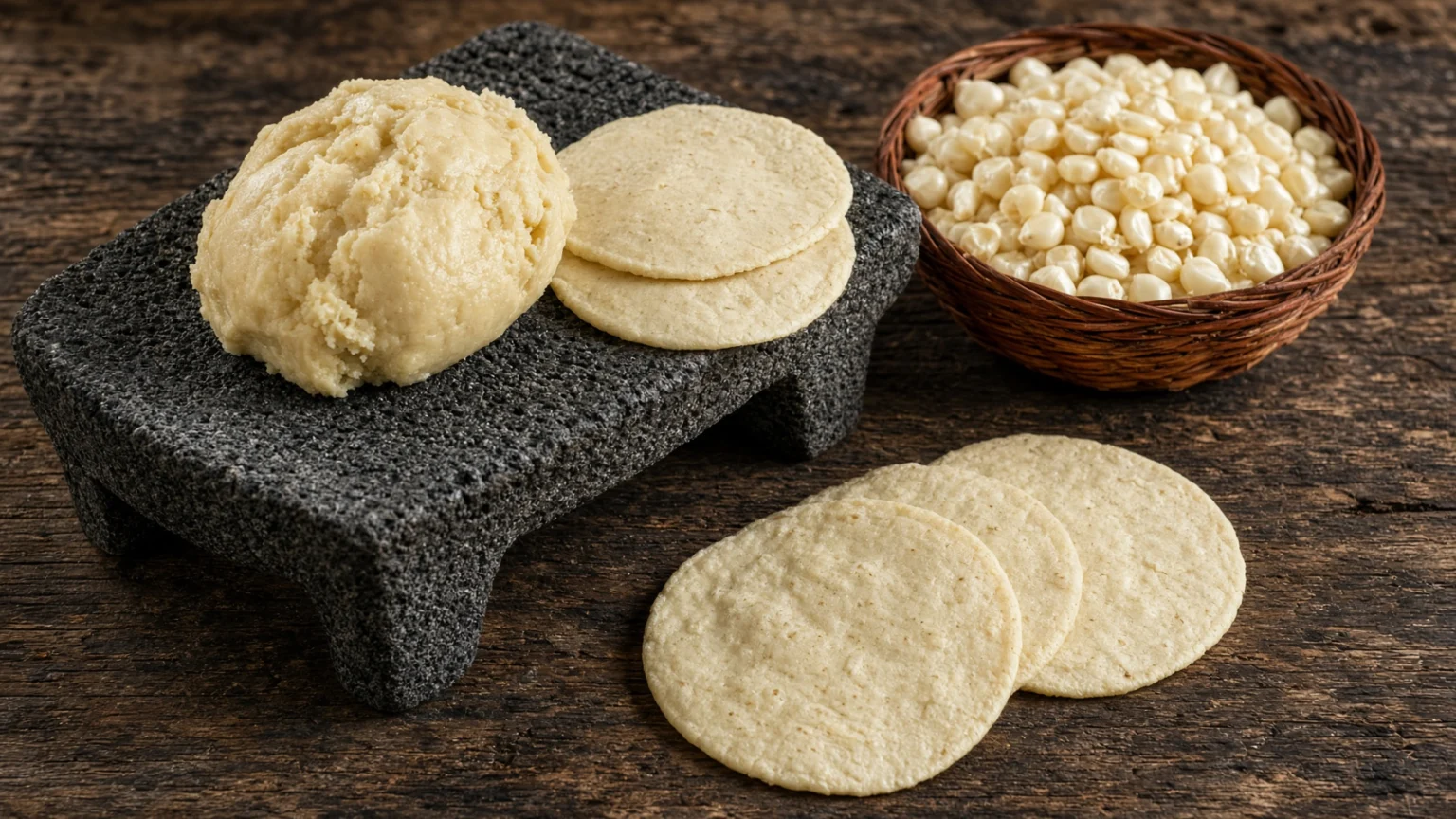
When the treated kernels are ground on a grinding stone, they become a dough called masa. Masa is the base for tortillas, tamales, and tortilla chips, and hominy, which is eaten as whole cooked kernels, is also corn that has gone through the same process.
Changes the Alkali Brings About Inside Corn
Alkaline water changes the structure and composition of corn kernels in several ways.
(1) The Hull Loosens and the Kernel Softens
Hemicellulose and pectin, which hold the corn’s cell walls together, dissolve readily in alkali. As a result, the tough outer hull comes off easily, and the kernels absorb water and become easier to grind.
(2) The Dough Gains Binding Power
During cooking, the starch swells, and the calcium in the limewater acts as a bridge between proteins and polysaccharides. Thanks to this, a cohesive dough forms that could not be made from simply ground cornmeal. The added calcium is also a nutritional bonus.
(3) Nutrients Become Usable by the Body
Corn contains niacin, or vitamin B3, in a form tightly bound to other compounds, so the body can barely absorb it as is. Alkaline treatment breaks this bond and makes the niacin available.
Reducing Mold Toxins
Nixtamalization is also known to greatly reduce aflatoxins, mold toxins that readily develop in corn. Besides improving aroma and flavor, it offers benefits for food safety as well.
Corn Spread Without the Technique, and Pellagra Followed
After the discovery of the New World, corn spread around the globe, but nixtamalization did not travel with it. The consequences were more serious than one might expect.
(1) A Strange Disease Sweeps Europe
Because corn yields many calories even from small plots of land, it became a staple for Europe’s poor farmers. But in regions that relied heavily on corn that had not been nixtamalized, pellagra, a disease marked by dermatitis, diarrhea, and mental disturbances, spread widely.
(2) An Endemic Disease in the American South
European settlers in the United States also found the process cumbersome and not to their taste, and rarely adopted it. As a result, in the early 20th century pellagra spread like an endemic disease among poor people in the American South who ate mostly corn.
(3) Diet Was the Answer
It was discovered that pellagra is caused by a lack of niacin, and the disease declined sharply as diets became more varied and flour began to be enriched with added nutrients. The reason this disease was rare among Mesoamerican peoples, who ate the same corn, was precisely nixtamalization.
Nixtamalization is a cooking method that people refined through experience long before modern science knew that nutrients existed. The fact that a single pot of ash-mixed water turned corn into a tastier, safer, and more nutritious staple shows clearly that science is hidden within food culture.
Knowing that behind a single tortilla lies the wisdom of a pot of limewater handed down for more than 3,000 years is the first step toward understanding nixtamalization.