The Myers-Briggs Type Indicator (MBTI) is one of the most widely used personality assessment tools in psychology. It is used to classify individual preferences and personality types.
This framework helps us understand how people typically gather and process information, how they gain and spend energy, how they make decisions, and how they perceive and experience the world.
In this guide, we will take a closer look at the concept of MBTI, each preference dimension, all 16 types, and notes on MBTI’s reliability.
What Is MBTI?
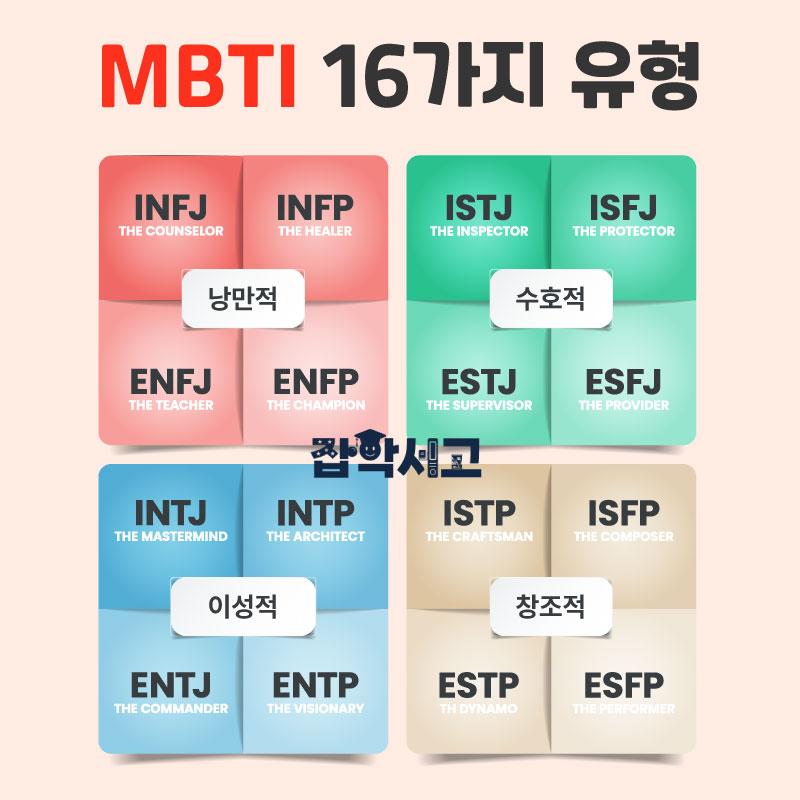 The 16 MBTI Types
MBTI was developed based on the work of Carl Jung and Isabel Briggs Myers. It analyzes individual preferences and behavioral patterns and classifies people into 16 personality types.
MBTI is used in many areas, including self-reflection, career choice, and improving organizational fit. It is a helpful tool for understanding people’s emotional and cognitive differences and for anticipating how individuals may act in different situations.
MBTI Preference Dimensions
MBTI distinguishes 16 personality types based on four pairs of opposing preferences. For each pair, a person leans toward one side, reflecting their preferred style.
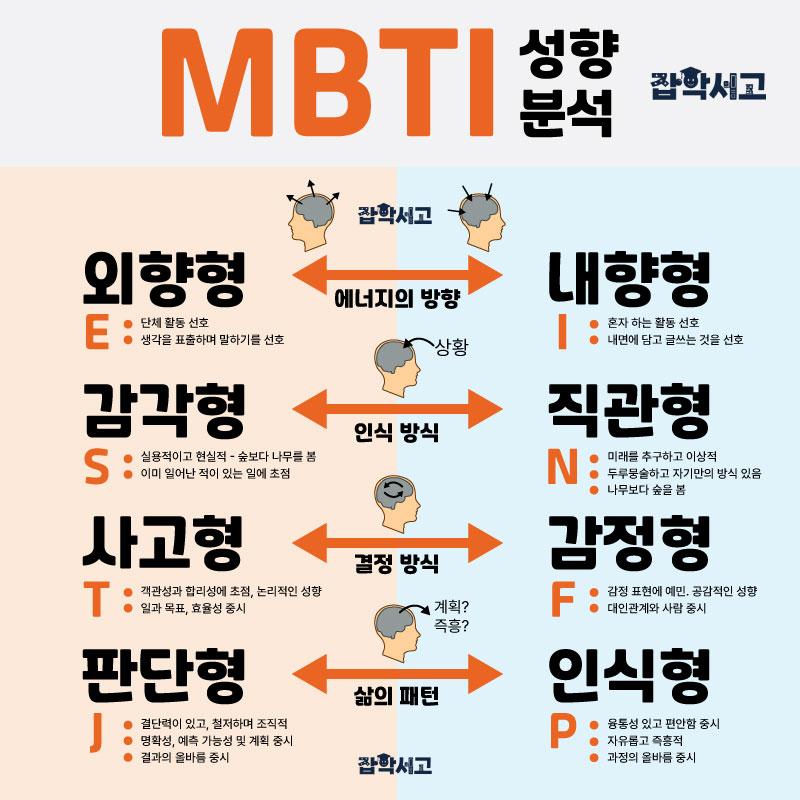 MBTI Preference Analysis
Energy Orientation (E–I)
Extraversion (E)
This preference focuses energy and attention primarily on the outer world—other people and activities. Extraverts are typically social and recharge through interaction with others.
Introversion (I)
This preference focuses energy and attention primarily on inner thoughts, feelings, and imagination. Introverts are typically more independent and recharge through time alone.
Information Gathering (S–N)
Sensing (S)
This preference gathers information based on concrete, present-day facts. Sensing types pay close attention to details and rely on direct experience.
Intuition (N)
This preference gathers information by focusing on possibilities, the future, and abstract ideas. Intuitive types look at the big picture and explore new potential.
Decision-Making Style (T–F)
Thinking (T)
This preference makes decisions based on logic and principles. Thinking types approach problems objectively and analytically.
Feeling (F)
This preference makes decisions by weighing values, people’s feelings, and harmony in the situation. Feeling types are people-centered and empathetic.
Lifestyle (J–P)
Judging (J)
This preference prefers to move work forward in a planned, organized way. Judging types like to finish what they start and prefer clear plans and structure.
Perceiving (P)
This preference prefers a flexible, open-ended way of getting things done. Perceiving types like to keep options open for new information and prefer a freer flow.
Combinations of these preferences yield a total of 16 personality types (for example, ISFJ and ENFP). MBTI is also used as a tool to better understand yourself and to support relationships and career decisions.
The 16 MBTI Types
Through combinations of the four preference pairs, MBTI describes 16 personality types. Each type has its own traits and behavioral patterns, which can help analyze a person’s preferences and personality.
Next, we will look at the traits of each type one by one.
ISTJ (Introverted–Sensing–Thinking–Judging)
 What Are ISTJ Traits?
ISTJs are reliable and highly responsible. They take their duties seriously and work hard to finish tasks thoroughly. They think in practical, logical terms and base decisions on concrete facts and information.
Strengths
Reliability: ISTJs tend to keep their promises and conscientiously complete the work they take on.
Attention to detail: They notice the fine points and thoroughly analyze information and facts.
Systematic approach: They excel at following schedules, plans, and procedures, and prefer systems that help them work efficiently.
Challenges
Resistance to change: Because ISTJs prefer tradition and familiar methods, they may hesitate about new approaches or change.
Difficulty expressing emotions: Their introverted preference can make it hard to express feelings, which may lead to misunderstandings in relationships.
Relationships
In close relationships they can be warm and trustworthy, but they generally avoid opening up about their thoughts and feelings. They prefer direct, factual conversation and tend to avoid unnecessary or highly emotional talk.
Career Preferences
Because of their systematic, detail-oriented style, careers such as accountant, engineer, manager, and law-enforcement officer are often recommended for ISTJs.
ISFJ (Introverted–Sensing–Feeling–Judging)
 What Are ISFJ Traits?
ISFJs are known as sincere and dedicated people. They care about looking after others and seek stability and harmony. They also pay attention to facts and details, and judge based on realistic situations and experience.
Strengths
Observant: They have a keen eye for their surroundings and the people around them.
Responsibility: ISFJs feel a strong sense of duty about their work and put effort into helping others.
Patience: They are patient and can stay calm even in difficult situations.
Challenges
Overcommitment: They may devote themselves so fully to others that they ignore or neglect their own needs and feelings.
Resistance to change: They dislike change and may need time to accept new situations or shifts.
Relationships
They value deep relationships and show warm care and consideration to people around them. They understand others’ feelings well and tend to think and act from another person’s perspective.
Career Preferences
Thanks to their care and attentiveness, ISFJs often fit well in fields such as healthcare, education, and counseling.
INFJ (Introverted–Intuitive–Feeling–Judging)
 What Are INFJ Traits?
INFJs have a complex inner world of thoughts and feelings. They seek a deep understanding of meaning and purpose in society and live according to their values and beliefs. Looking ahead, they explore possibilities and develop insight into situations and people through intuition.
Strengths
Insight: INFJs can deeply grasp essential facts and situations. They often understand people and circumstances quickly.
Passion: They bring great passion to causes or goals they care about.
Care for others: Sensitive to others’ emotions and moods, they excel at understanding and helping people.
Challenges
Excessive perfectionism: They often pursue perfection, which can put too much pressure on themselves.
Overly sensitive to others’ emotions: INFJs may react so strongly to others’ feelings that it becomes hard to protect their own boundaries.
Relationships
They prefer deep, meaningful relationships. They often understand others’ emotions and thoughts in depth and show genuine empathy. They are careful about expressing their own inner life, but can feel a deep connection with people they are close to.
Career Preferences
Because of their care and deep insight, roles such as counselor, writer, artist, educator, or nonprofit leader can suit INFJs well.
INTJ (Introverted–Intuitive–Thinking–Judging)
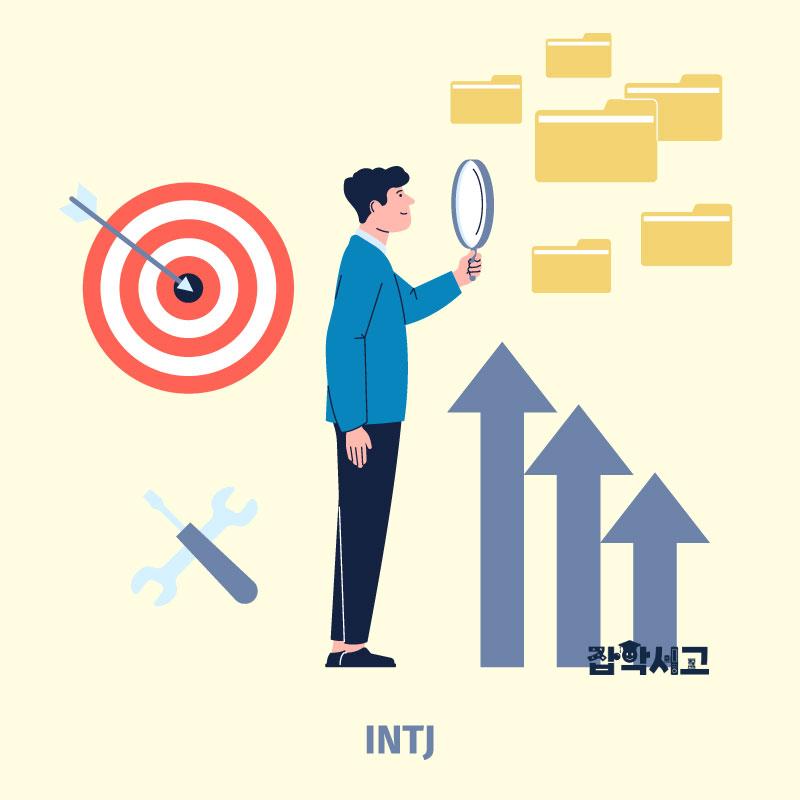 What Are INTJ Traits?
INTJs are independent, with deep insight and strong strategic thinking. They hold clear visions for their ideas and the future and are skilled at planning how to achieve them. They enjoy solving complex problems and approach them in their own distinctive ways.
Strengths
Strategic thinking: They are future-oriented and skilled at setting long-term goals and plans.
Decisiveness: Once a goal is set, they move toward it directly and systematically.
Independent streak: They trust their own thoughts and ideas and are not easily swayed by others’ opinions.
Challenges
Relationship challenges: INTJs may struggle with emotional expression and communication, which can cause misunderstandings with others.
Harsh criticism: They hold very high standards for themselves and others and can sometimes come across as overly critical.
Relationships
They often communicate based more on logic and reason than emotion. Still, they prefer deep relationships and serious conversation and get along well with people who share similar values. They do not open up easily, but they try to build deep connections with those they trust.
Career Preferences
Given their strategic thinking and independence, roles such as researcher, scientist, engineer, programmer, and entrepreneur can suit INTJs well.
ISTP (Introverted–Sensing–Thinking–Perceiving)
 What Are ISTP Traits?
ISTPs are practical and approach things analytically. They are skilled at hands-on problem solving and respond flexibly to situations. Many enjoy making things by hand or working with machines.
Strengths
Problem-solving: ISTPs are good at solving problems quickly and efficiently on the spot. They excel at taking things or situations apart and finding the core issue.
Flexibility: They are not tied to rigid plans and can respond appropriately as situations change.
Practicality: ISTPs value concrete information and direct experience.
Challenges
Limited emotional expression: They often find it hard to express their own feelings.
Weak long-term planning: Because ISTPs focus on the moment, they may struggle to set long-term plans or strategies.
Relationships
In social settings they may seem quiet or reserved, but they share opinions actively on topics they care about. They communicate based on logic and facts and prefer concrete, practical information over emotional conversation.
Career Preferences
Thanks to their analytical thinking and practicality, careers such as mechanic, engineer, medical technician, pilot, and firefighter can suit ISTPs.
ISFP (Introverted–Sensing–Feeling–Perceiving)
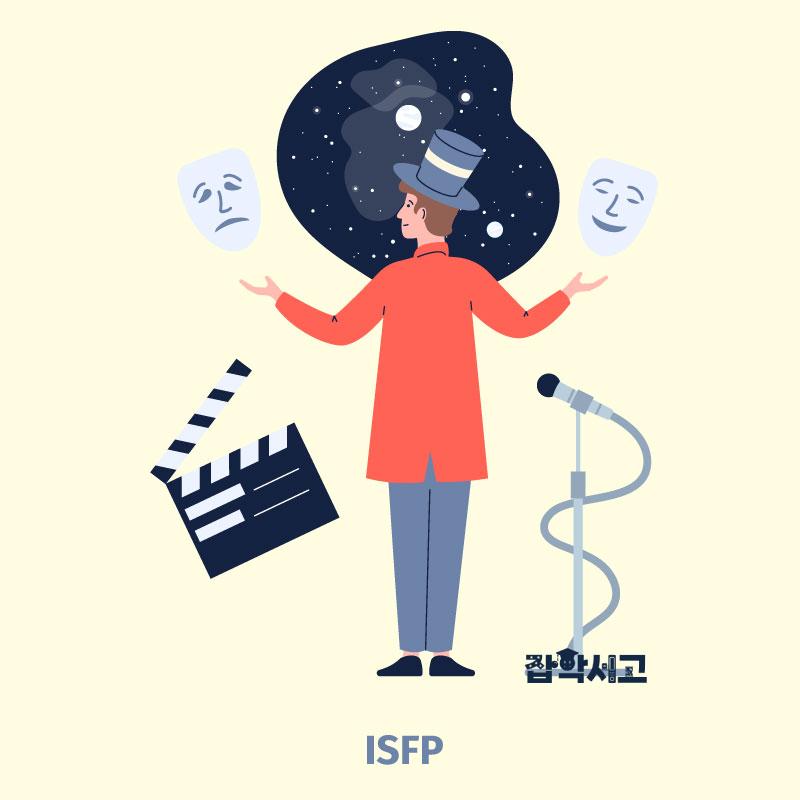 What Are ISFP Traits?
ISFPs cherish life’s moments and try to stay realistic while living in harmony with their surroundings. They are flexible and open, responding appropriately to each situation. They feel deeply and often have a strong artistic sense that draws them into creative work.
Strengths
Artistic sensibility: Many ISFPs are skilled in creative activities such as art, music, cooking, and crafts.
Keen observation: They notice their surroundings and people well and respond sensitively to small changes and details.
Warm heart: ISFPs are sensitive to their own and others’ emotions and show sincerity when caring for people around them.
Challenges
Decision difficulty: Sometimes ISFPs can get stuck in deep deliberation when making choices.
Emotional conflict: When strong feelings arise, they may struggle to express or manage them appropriately.
Relationships
They are generally not highly outgoing, but they are warm and kind with people close to them. They prefer sincere, feeling-based conversation and deep connection, and they respect others’ emotions and thoughts.
Career Preferences
With their artistic sense and warm personality, careers such as artist, musician, designer, gardener, and chef can suit ISFPs.
INFP (Introverted–Intuitive–Feeling–Perceiving)
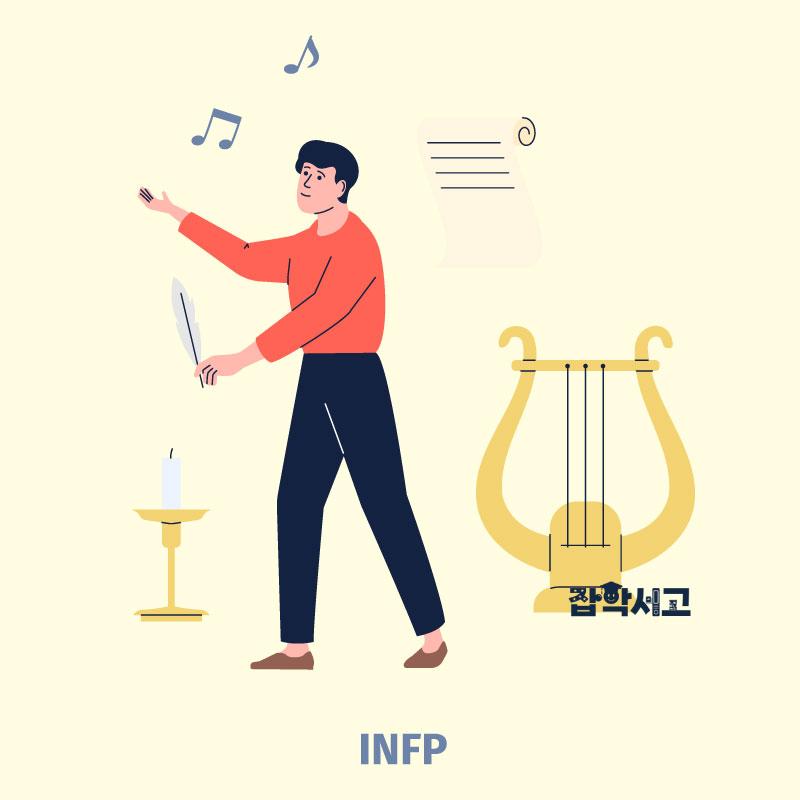 What Are INFP Traits?
INFPs are idealistic, with deep values and sincerity. They prioritize their inner world and emotions and see life in their own unique way. They decide based on their values and beliefs and place great importance on personal identity.
Strengths
Idealism: INFPs pursue noble ideals and dreams and work to bring them to life.
Warm heart: They approach others with understanding and empathy and care about looking after people.
Creativity: With distinctive perspectives and rich imagination, they can excel in creative or artistic fields.
Challenges
Over-reflection: At times they may get so absorbed in their own feelings and thoughts that they lose connection with the real world.
Sensitive to criticism: Because INFPs think deeply about their values and beliefs, they can react strongly to criticism or negative feedback.
Relationships
At first they may seem quiet and reserved, but in close relationships they enjoy sharing deep feelings and thoughts. They prefer sincere conversation and deep connection and try to respect and understand others’ emotions and ideas.
Career Preferences
With their idealism, creativity, and deep understanding of others, roles such as writer, artist, counselor, psychologist, and nonprofit activist can suit INFPs.
INTP (Introverted–Intuitive–Thinking–Perceiving)
 What Are INTP Traits?
INTPs are analysts at heart and constantly explore new ideas and theories. They are gifted at solving complex problems and spotting patterns and connections in their surroundings. They value free, independent thinking and try to understand the world in their own way.
Strengths
Logical thinking: They solve problems through logic and analysis and care about consistent reasons and evidence.
Independent nature: INTPs trust their own thinking and judgment. They are not bound by others’ expectations or frameworks and find their own path.
Creativity: They keep exploring new perspectives and ideas and are not afraid to challenge existing methods.
Challenges
Emotional expression: They may find it hard to express themselves in emotional situations or conversations. Sometimes they tend to ignore or avoid their own feelings.
Trouble finishing: They have many ideas and plans, but finishing what they start can be hard.
Relationships
At first they may seem reserved or distant, but with close friends they share their humor and insight. They prefer in-depth discussion over small talk and get along well with people who share their interests.
Career Preferences
Given their logical, analytical nature, careers such as scientist, engineer, programmer, researcher, and philosopher can suit INTPs.
ESTP (Extraverted–Sensing–Thinking–Perceiving)
 What Are ESTP Traits?
ESTPs enjoy the present moment and value real experience. They seize opportunities quickly and adapt well in almost any situation. They process factual information fast and have a talent for solving problems intuitively in the moment.
Strengths
Adaptability: ESTPs adapt and act quickly even in changing environments or new situations.
Realism: They prefer clear, concrete, reality-based information and can make immediate decisions from it.
Energy: They are high-energy and active, and they pass that energy on to people around them.
Challenges
Long-term planning: Because ESTPs focus on the present, they may struggle with long-term plans or goal setting.
Limited patience: Because they want quick results, they may lack patience for delayed or long-running tasks.
Relationships
They are sociable and enjoy interacting with many kinds of people. They look after those around them and often play the role of mood-maker. They are direct and tend to express their opinions honestly.
Career Preferences
With their practical, active personality, careers in sales, marketing, management, business, policing, and firefighting can suit ESTPs.
ESFP (Extraverted–Sensing–Feeling–Perceiving)
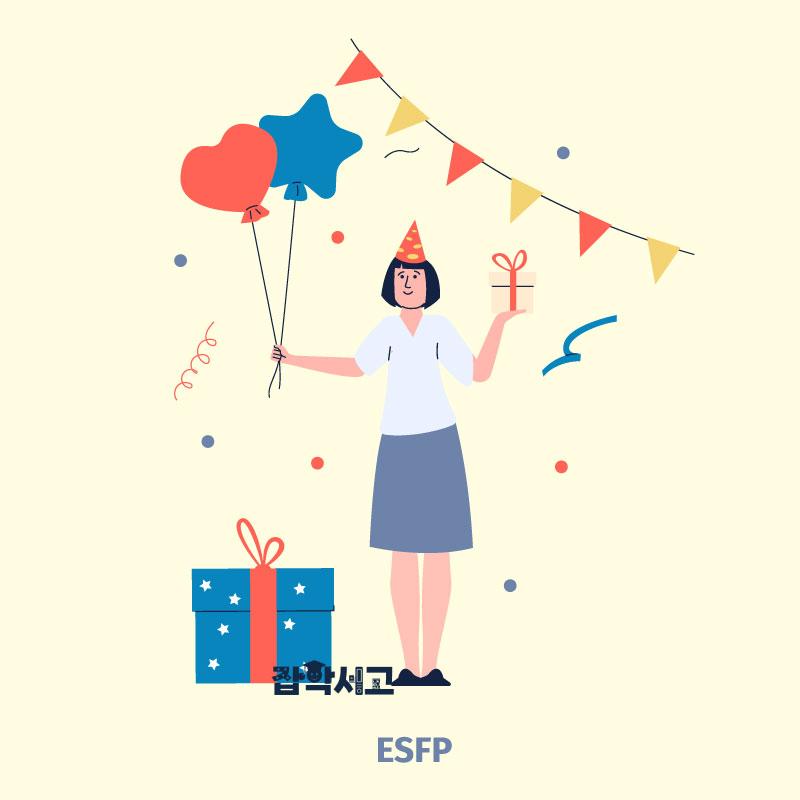 What Are ESFP Traits?
ESFPs enjoy the present and are open to their surroundings and people. They are lively and social and react quickly to what is happening around them. They value emotional experience and care about warmth and friendliness in relationships.
Strengths
Sociability: ESFPs enjoy meeting many people and make friends easily.
Practical outlook: They see situations realistically and offer practical solutions.
Spontaneous action: They act in the moment based on feelings and circumstances and adapt well to fast-changing environments.
Challenges
Weak long-term planning: Their focus on the present can make long-term planning or goal setting difficult.
Overly emotional reactions: At times they may get swept up in feelings and overreact, which can create conflict with others.
Relationships
They like making people around them happy and respond sensitively to others’ emotions. They are gifted listeners and warmly empathize with others’ problems and feelings.
Career Preferences
With their sociability and people-centered nature, careers such as sales, marketing, nursing, teaching, and social work can suit ESFPs.
ENFP (Extraverted–Intuitive–Feeling–Perceiving)
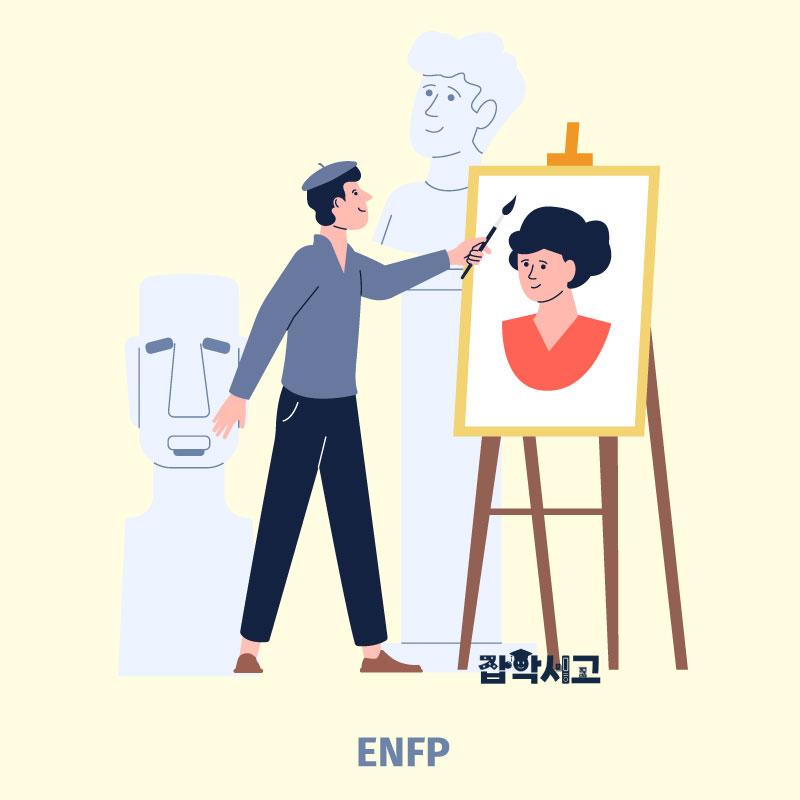 What Are ENFP Traits?
ENFPs are passionate and creative and love exploring possibilities. They keep an open mind toward new ideas and opportunities. They deeply value relationships and enjoy expanding their world through meeting many kinds of people.
Strengths
Creativity: ENFPs constantly think about new ideas and approaches. They are skilled at solving problems by considering multiple perspectives.
Passion: They show deep passion for fields or activities they care about and pass that energy on to others.
Sociability: ENFPs enjoy interacting with others and are good at maintaining a wide network.
Challenges
Follow-through: They get excited about new ideas or projects easily, but finishing what they start can be hard.
Emotional sensitivity: ENFPs are emotional people and can sometimes overreact to their own or others’ feelings.
Relationships
With a warm, approachable manner, they respond sensitively to others’ feelings and thoughts. They quickly sense people’s moods and can make others feel at ease. They respect others’ emotions and opinions and are skilled at forming deep relationships with many kinds of people.
Career Preferences
With their sociability, creativity, and people-centered nature, ENFPs can find fitting work in education, counseling, advertising, marketing, media, and the arts.
ENTP (Extraverted–Intuitive–Thinking–Perceiving)
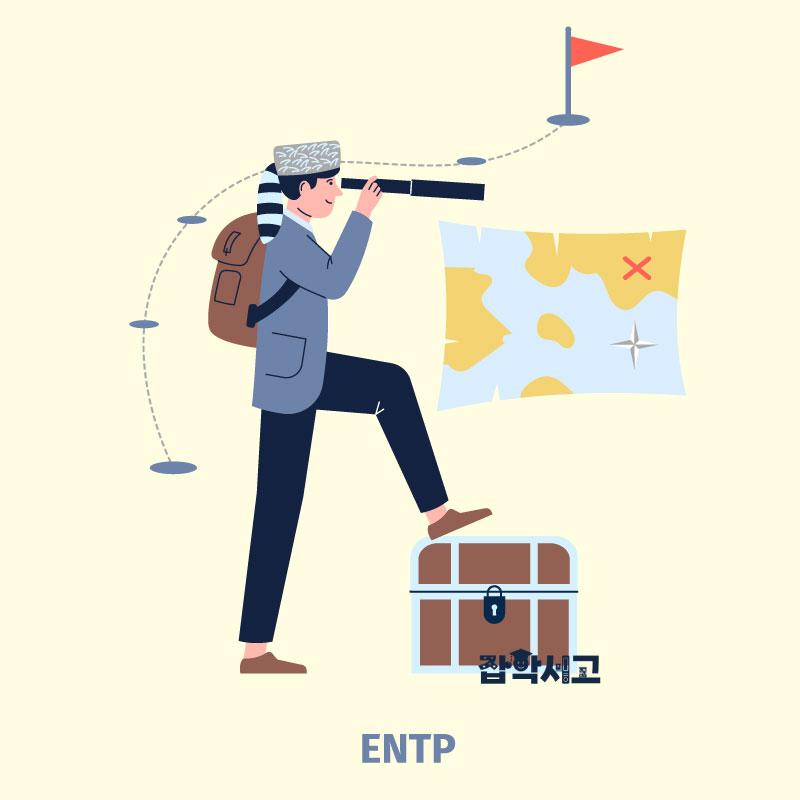 What Are ENTP Traits?
ENTPs are creative and intellectually curious. They enjoy inventing new ideas and approaches and explore many viewpoints and possibilities. Flexible and highly adaptable, they are not afraid of change or challenge.
Strengths
Creative thinking: Unbound by existing methods or tradition, they generate original, creative ideas.
Quick intellectual response: In debates or discussions, ENTPs grasp what others say quickly and reply logically.
Open mind: They are open to accepting new ideas and proposals.
Challenges
Scattered focus: With varied interests, ENTPs tend to juggle many things at once rather than stay long on one task.
Over-arguing: They enjoy intellectual debate, but sometimes push discussion further than needed and can hurt others’ feelings.
Relationships
They respect others’ viewpoints and ideas and enjoy gaining new knowledge through conversation. Still, they can sometimes seem overly logical or critical, so staying sensitive to others’ feelings matters.
Career Preferences
ENTPs prefer careers that use their analytical thinking and creativity—for example, scientist, inventor, engineer, consultant, lawyer, and advertising planner.
ESTJ (Extraverted–Sensing–Thinking–Judging)
 What Are ESTJ Traits?
ESTJs have a practical, organized personality. They value logic and systems and prefer consistent, practical approaches. They care about tradition and rules and tend to carry out assigned responsibilities diligently.
Strengths
Organizational skill: ESTJs are good at organizing information systematically and making concrete plans to reach goals.
Decisiveness: They are gifted at making quick decisions and take effective action based on clear judgment.
Responsibility: With a strong sense of duty toward work or tasks, they try to finish what they start.
Challenges
Limited flexibility: Relying too much on fixed methods or procedures can make it hard to respond to new situations or change.
Emotional responsiveness: Because ESTJs prioritize logic and facts over feelings, they may not respond sensitively to others’ emotions.
Relationships
In everyday relationships and workplace interactions, they set clear expectations and boundaries—and hold others to the same standards. As team members they take responsibility and pursue efficient results, though they can sometimes act too directive or controlling.
Career Preferences
With their systematic thinking and sense of responsibility, they can excel as managers, supervisors, accountants, auditors, military officers, and law-enforcement officers.
ESFJ (Extraverted–Sensing–Feeling–Judging)
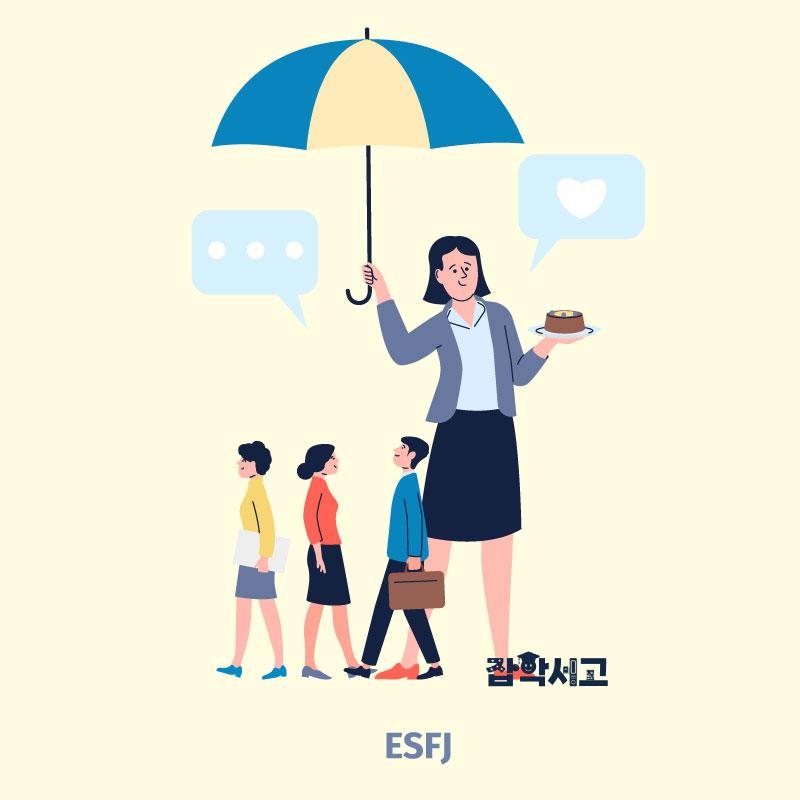 What Are ESFJ Traits?
ESFJs are cooperative and warm, responding sensitively to others’ feelings and needs. They value relationships and harmony with people around them. Practical by nature, they try to decide based on present situations and facts.
Strengths
Consideration for others: They understand the feelings and needs of people around them and try to offer support and help.
Organizing ability: ESFJs excel at organizing and managing events or gatherings.
Responsibility: They handle assigned duties carefully and try to keep their promises.
Challenges
Overinvolvement: At times they get so absorbed in others’ problems or feelings that they ignore their own emotions or needs.
Resistance to change: Because they value stability and routine, they dislike sudden change or uncertainty.
Relationships
They enjoy social activities and feel at ease interacting with many people. They tend to show care and support through direct feedback and recognition.
Career Preferences
They often excel in fields that use their care and organizing skills—for example, education, healthcare, counseling, and management.
ENFJ (Extraverted–Intuitive–Feeling–Judging)
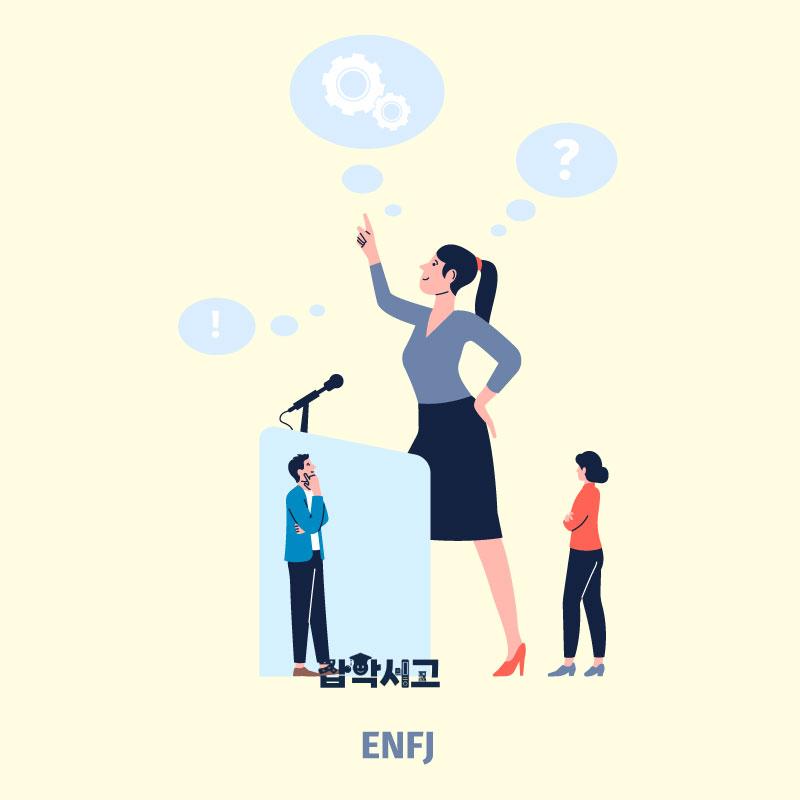 What Are ENFJ Traits?
ENFJs are warm and insightful and deeply empathize with others’ feelings and needs. They are gifted at helping people and driving positive change. Future-oriented, they focus on possibilities and potential.
Strengths
People-centered: They understand others’ emotions and opinions well and value harmony and cooperation in relationships.
Insight: ENFJs use intuition to read situations and are talented at anticipating future possibilities.
Motivation: They give positive energy to themselves and others and motivate teams to reach goals.
Challenges
High expectations: At times they set high expectations for people around them and may end up disappointed.
Neglecting own needs: By caring so much about others, they may ignore or forget their own feelings and needs.
Relationships
They work to form deep relationships and strengthen connections through conversation and communication. Helping people reach their full potential matters greatly to them.
Career Preferences
They can excel in fields that use their helpful nature and insight—for example, counseling, education, HR, leadership, and team management.
ENTJ (Extraverted–Intuitive–Thinking–Judging)
 What Are ENTJ Traits?
ENTJs are strong leaders—planned and efficiency-focused. They see the big picture and can solve complex problems by approaching them structurally. Future-oriented, they enjoy thinking strategically and making plans.
Strengths
Decisiveness: They make fast, clear decisions and take the actions needed to reach goals.
Organizing ability: They can approach complex situations or problems in a systematic, structured way.
Strategic thinking: They set long-term goals and visions and plan strategies to achieve them.
Challenges
Overcontrol: At times they may believe their view or method is right and try too hard to dominate others’ opinions or approaches.
Insensitivity: Approaching decisions too rationally, they may overlook others’ feelings or positions.
Relationships
They prefer clear, efficient communication and talk with others through logical, structured conversation. They express their views clearly and also give clear feedback on others’ opinions.
Career Preferences
They can excel where their leadership, organizing skill, and strategic thinking apply—for example, business management, project management, technical leadership, and consulting.
Reliability of MBTI and Caveats
 Is MBTI Information Reliable?
MBTI is widely seen as a useful tool, yet some scholars question its reliability. It describes individual preferences and traits, but it is not a scientifically proven result.
So it is better to treat MBTI results as reference material rather than absolute truth. Preferences can also shift with context, so a flexible view is important.
That concludes this overview of MBTI preferences and the 16 types.
MBTI is a useful tool for analyzing and understanding personality types. Combinations of four preference pairs form 16 types, each with its own traits and behavioral patterns.
Through MBTI, people can identify preferences and personality and discover and develop their strengths. Still, MBTI results are not absolute truth, and their reliability remains scientifically debated.
Therefore, interpreting MBTI results with flexible, critical thinking is important. Used wisely, MBTI can support personal growth and development.