Omega-3 fatty acids are nutrients involved in cell membranes and several physiological functions. Their effects on cardiovascular health, brain function, and inflammation have been studied, but findings about foods, supplements, and prescription medicines must be distinguished, and effects vary by population and formulation.
This article aims to comprehensively cover the types and characteristics of omega-3, an analysis of its main components, its various benefits, foods rich in it, and recommended intake and precautions.
Types and Characteristics of Omega Fatty Acids
 A balance between omega-3 and omega-6 is important.
Omega fatty acids are unsaturated fatty acids commonly grouped as omega-3, omega-6, and omega-9. Alpha-linolenic acid (ALA), an omega-3, and linoleic acid (LA), an omega-6, are essential fatty acids that cannot be synthesized in the body and must be obtained from food. In contrast, omega-9 can be synthesized in the body, so it is not classified as an essential fatty acid.
Omega-3 Fatty Acids
Representative omega-3 fatty acids are eicosapentaenoic acid (EPA), docosahexaenoic acid (DHA), and alpha-linolenic acid (ALA). Fish and other sources provide EPA and DHA, while ALA is mainly found in plant foods. Their physiological roles must be distinguished from the clinical effects of taking supplements.
Omega-6 Fatty Acids
Omega-6 fatty acids include linoleic acid (LA) and arachidonic acid (AA), which can be obtained from foods such as vegetable oils and meat. Omega-6s participate in several physiological functions; they should not simply be labeled inflammatory fats or assumed to require a lower intake than omega-3s.
Omega-9 Fatty Acids
Omega-9 fatty acids can be divided into oleic acid (OA) and erucic acid (EA) and can primarily be obtained from foods such as olive oil and avocados. Although omega-9 fatty acids can be synthesized in the body, obtaining them through food benefits cardiovascular health.
Omega-3 Intake and Dietary Balance
When considering omega-3 intake, the existing diet and the types of fatty acids both matter. There is no general recommendation to consume more omega-3 than omega-6 or omega-9. A balanced diet that supplies nutrients from food should be distinguished from research on supplements or prescription medicines for specific conditions.
Each type of omega fatty acid has different characteristics and roles. An optimal dietary omega-6-to-omega-3 ratio has not been established, so achieving a particular ratio should not be presented as the central goal of health management.
Definition of Omega-3 and Analysis of Its Main Components
 What Is Omega-3?
Omega-3 fatty acids occur in marine organisms and certain plant foods and contribute to cell membrane structure and function. ALA is an essential omega-3 that must be obtained from food. It can be converted into EPA and DHA in the body, but this conversion is limited.
Main Components of Omega-3 Fatty Acids
Major omega-3 fatty acids include EPA, DHA, and ALA. EPA and DHA contribute to cell membranes and the production of signaling molecules, and DHA is particularly abundant in the brain and retina. These roles do not by themselves establish that supplements prevent or treat disease.
Alpha-Linolenic Acid (ALA)
Alpha-linolenic acid (ALA) is mainly obtained from plant foods and can be converted into EPA and DHA in the body. However, conversion is limited, so consuming ALA is not equivalent to obtaining EPA and DHA directly. Sources of ALA include flaxseed oil, chia seeds, and walnuts.
Physiological Functions of Omega-3 Fatty Acids
Omega-3s are used in cell membranes and in signaling molecules involved in processes such as inflammation. These physiological functions alone do not establish that ordinary omega-3 supplements prevent cardiovascular disease or treat inflammatory diseases.
Maintaining Cell Membranes and Brain Function
Omega-3s contribute to cell membranes, and DHA is an important structural component of the brain and retina. This does not mean that taking additional supplements improves memory or vision in everyone.
Main Food Sources of Omega-3
Fish are major food sources of EPA and DHA, while flaxseed oil, chia seeds, and walnuts provide ALA. Algal oils mainly supply DHA, and some products also contain EPA.
Benefits of Omega-3
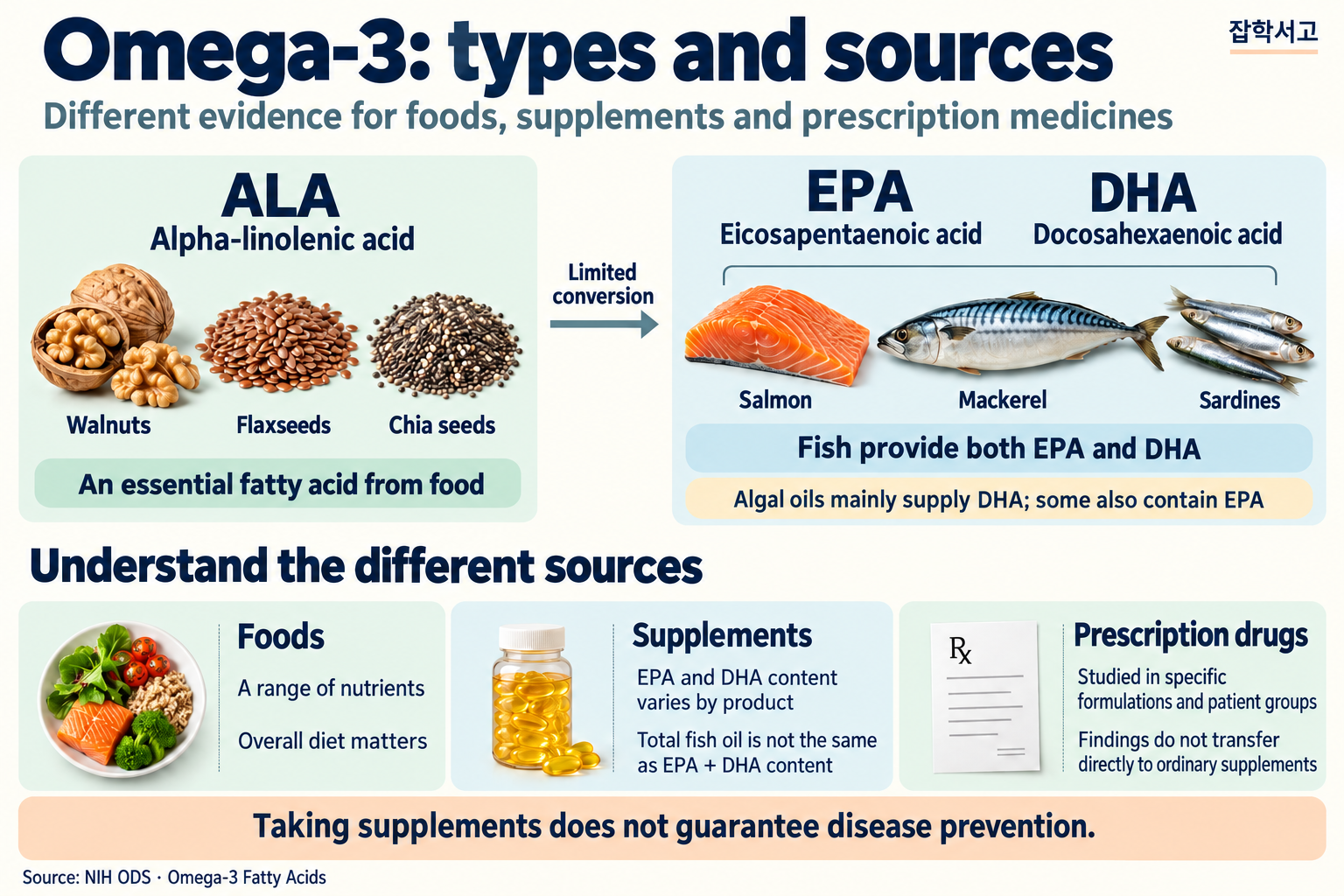
Omega-3 effects depend on the fatty acid, formulation, amount studied, population, and outcome assessed. Physiological roles, observational associations with food intake, and clinical trials of supplements or prescription medicines should be considered separately.
Evidence on Cardiovascular Health
EPA and DHA can lower blood triglycerides, but this does not establish cardiovascular disease prevention for everyone. In VITAL, supplementation in middle-aged and older adults without a prior heart attack or stroke did not significantly reduce major cardiovascular events. REDUCE-IT found benefit with a high-dose prescription purified EPA formulation in statin-treated patients with elevated triglycerides who had cardiovascular disease or diabetes with additional risk factors. In contrast, a different high-dose EPA-DHA formulation did not reduce major cardiovascular events in the high-risk STRENGTH population, so findings for a specific prescription medicine cannot be applied directly to ordinary supplements.
Research on Inflammation
EPA and DHA participate in inflammatory signaling. They have been studied as an adjunct to existing treatment in rheumatoid arthritis, but findings on symptom improvement are inconsistent. These findings cannot be generalized to treatment of all forms of arthritis or inflammatory disease, and supplements are not a substitute for existing treatment.
Research on Brain Function
DHA is important in the structure of the brain and nerve cells, but supplements cannot be assumed to improve memory or learning or to prevent Alzheimer's disease. In AREDS2, omega-3 supplementation did not significantly slow cognitive decline in older adults with age-related macular degeneration. Potential effects in particular populations require further research, and food intake must also be distinguished from supplement effects.
Research on Mental Health
Omega-3 supplements have been studied for treating major depressive disorder in adults, but the 2021 Cochrane review rated the evidence as low or very low certainty, with uncertainty about the clinical importance of the observed differences. These findings should not be interpreted as a mental health benefit that applies to everyone.
Relationship to Skin Health
Essential fatty acids are involved in skin health, and deficiency can cause skin changes. This nutritional role should not be equated with evidence that ordinary omega-3 supplements treat acne or atopic dermatitis or improve skin elasticity and hydration.
Roles in Immune and Inflammatory Responses
Omega-3s are used to produce signaling molecules involved in immune and inflammatory responses. These physiological roles alone do not establish that ordinary supplements strengthen immunity or prevent or treat infectious diseases.
Which Foods Are Rich in Omega-3?
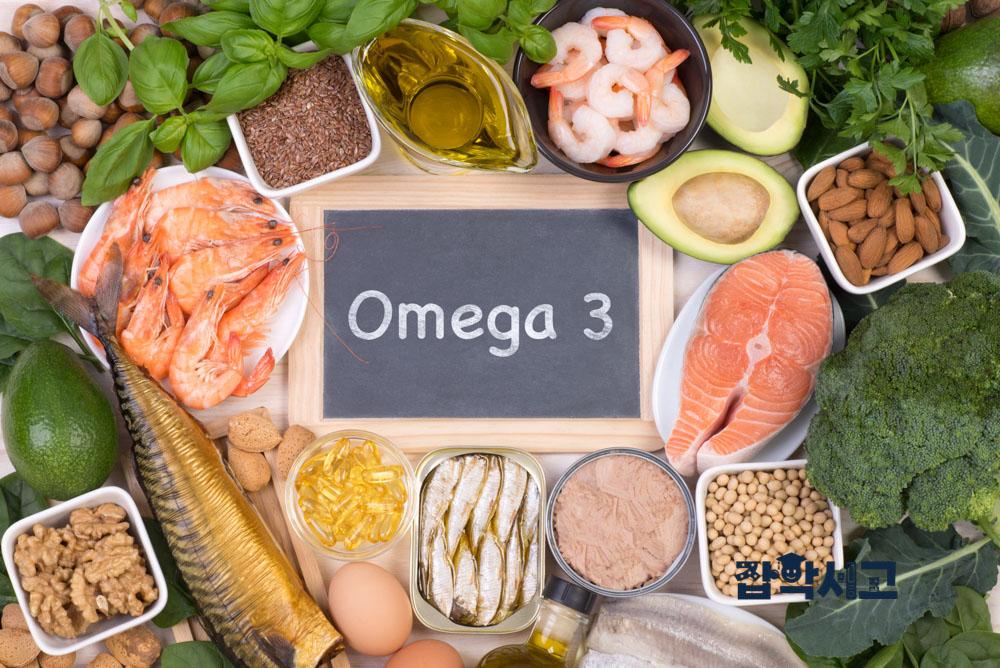 Which Foods Are Rich in Omega-3?
Omega-3 fatty acids can be obtained from marine organisms and certain plant foods. The types and amounts differ by food, so it is useful to distinguish the sources.
Fish
Fish are major food sources of EPA and DHA. Examples include mackerel, salmon, herring, and sardines. Omega-3 content varies among fish, including tuna, depending on species and farming conditions.
Algal Oils
Algal oils are non-animal sources of DHA, and some products also contain EPA. They should not be assumed to provide the same types and amounts of omega-3 as ordinary edible seaweed, so the labeled components and amounts need to be distinguished.
Plant Sources
Certain plant sources also contain omega-3. Flaxseed oil, chia seeds, and walnuts are representative examples. Flaxseed oil and chia seeds can easily be consumed by adding them to salad dressings or smoothies, while walnuts can be eaten as a snack or added to dishes. These foods provide ALA, whose conversion into EPA and DHA in the body is limited.
Cooking Oils
Some cooking oils also contain omega-3. Plant-based oils such as perilla oil, in particular, are good sources of alpha-linolenic acid (ALA). These oils can be used as salad dressings or in cooking.
Fortified Foods
The modern food industry also offers many foods fortified with omega-3 fatty acids. Examples include omega-3-fortified milk, eggs, and yogurt. By adding omega-3 to foods consumed regularly, these products help people easily increase their intake.
Different foods supply a range of nutrients together. The omega-3 content of a particular food alone does not determine the health effects of the overall diet or guarantee disease prevention.
Recommended Omega-3 Intake and Precautions
 What Precautions Should You Take When Consuming Omega-3?
Recommended Intake
Omega-3 intake references must distinguish the fatty acid and the population concerned. The US Institute of Medicine adult intake references described by NIH are established for ALA; separate recommended intakes have not been established for EPA and DHA. A single EPA-DHA amount should therefore not be presented as a universal recommendation for all adults. EPA and DHA from fish or algal oils must also be distinguished from ALA in plant foods.
How to Consume Omega-3
Mackerel, salmon, and herring provide EPA and DHA, while flaxseed oil, chia seeds, and walnuts provide ALA. Nutrients obtained from meals should be distinguished from the components and amounts in supplements; ALA foods should not be counted as equivalent direct sources of EPA and DHA.
Precautions When Taking Supplements
The safety of omega-3 supplements depends on their components, the amount taken, health status, and other medicines. Some long-term high-dose trials in high-risk populations observed an increased risk of atrial fibrillation. Because interactions with anticoagulants and other medicines are possible, people taking medicines should check concurrent use with a health professional. The research described here is not an instruction to choose a personal dose or change medication.
Intake Precautions for Pregnant and Breastfeeding Women
DHA contributes to brain and retinal development in fetuses and infants. Methylmercury exposure from fish should be distinguished from quality control of purified fish-oil supplements. NIH notes that methylmercury is removed during supplement processing; this is not a guarantee of the quality of every product. Intake during pregnancy or breastfeeding should be discussed with a health professional in light of the diet and health status.
Precautions When Choosing Supplements
Supplements differ in the types and amounts of omega-3 they contain. The labeled total fish-oil amount is not the same as the EPA-DHA content, so these should be read separately. Origin or marketing claims alone do not establish a product's effectiveness or safety.
The Importance of Balanced Intake
Omega-3 and omega-6 fatty acids each have physiological roles, and an optimal intake ratio has not been established. The overall diet and the types of fatty acids matter more than judging dietary quality solely by a specific ratio or the relative amount of omega-3.
Omega-3s are important nutrients, but their physiological roles are not equivalent to evidence that supplements prevent or treat disease. Fatty acids, formulations, study populations, and outcomes must be distinguished, and benefits from a specific trial should not be generalized to all foods or supplements.
It is important to maintain a balanced diet, distinguish the components of foods and supplements, and discuss the need for supplements or their use alongside medicines with a health professional according to individual circumstances.