
You have probably had the experience of opening a door not by turning a round knob but simply by pressing down a bar-shaped lever handle. A person carrying bags, an older adult with weak hands, and someone who can only use their elbow can all open the door just as easily. This idea of making things usable by more people from the very start is called “universal design.”
Put simply, universal design means “a way of designing products and spaces so that as many people as possible can use them, regardless of age, build, or disability, without separate modifications or special add-on devices.” The term was popularized in the 1980s by the American architect Ronald Mace. Having had polio as a child and used a wheelchair, he understood better than anyone the problems of buildings and objects that shut people out.
In this article, we will walk step by step through what universal design is and how it differs from barrier-free design, its seven principles, examples in everyday life, and points to keep in mind when applying it to design.
Universal Design: Designing for Everyone from the Start
What Is Universal Design?

Universal design does not take a single “average person” as its standard. It starts from the fact that people’s bodies and abilities differ from one another, and that even within one person they change with age and circumstances.
- Barrier Free: Focuses on finding and removing barriers that already exist. Adding a ramp next to a staircase is a typical example.
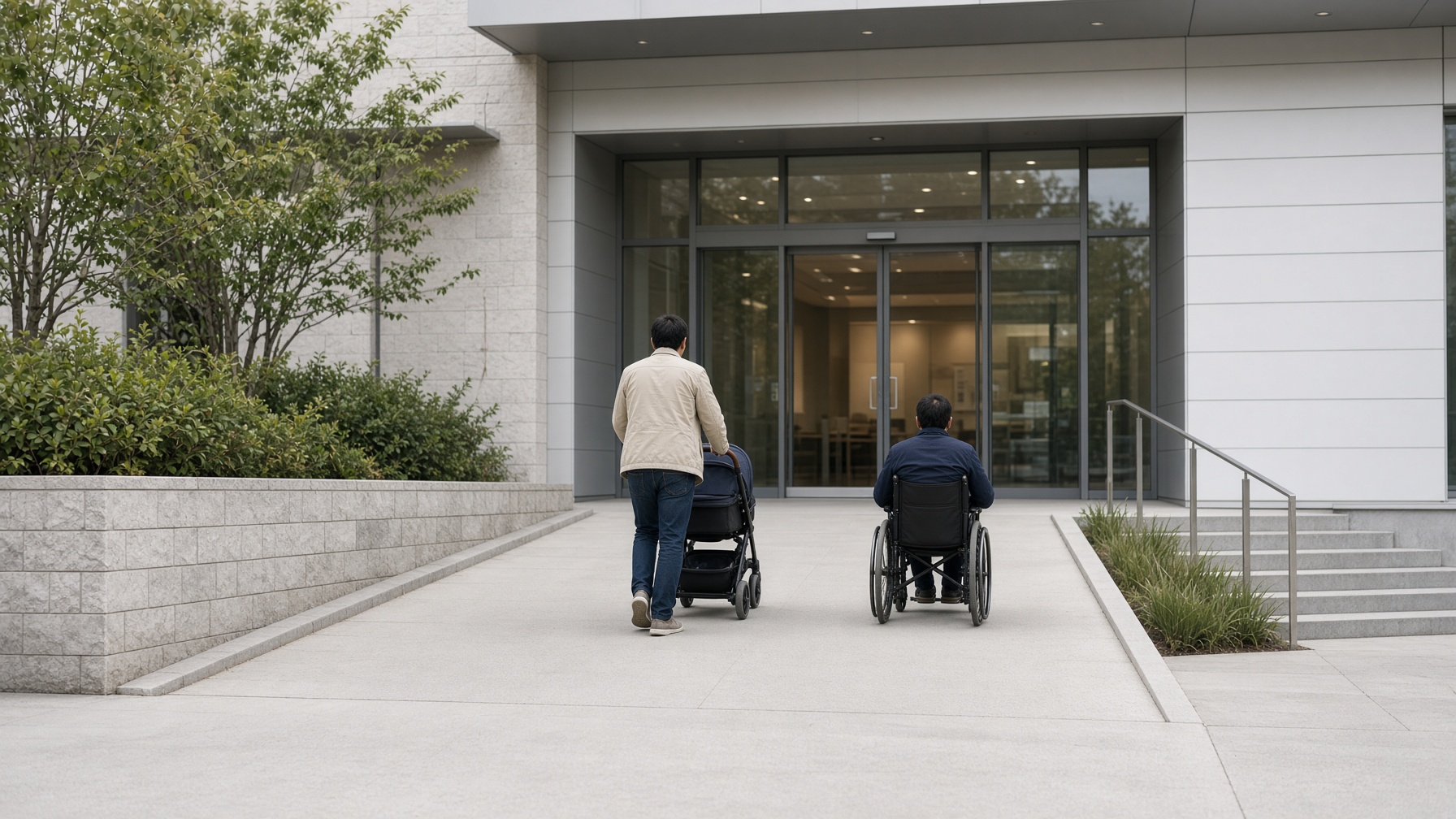
- Universal Design: Considers everyone together at the design stage so that barriers never arise in the first place. An example is making an entrance flat with no steps at all.
- Inclusive Design: A term used mainly in the UK and elsewhere, it emphasizes involving users who are easily left out in the design process.
The three terms overlap a great deal, but universal design places more importance on “one solution” that everyone shares than on “separate solutions” made for specific groups.
The Seven Principles of Universal Design
In 1997, at the Center for Universal Design at North Carolina State University in the United States, architects, product designers, and engineers, including Mace, set out seven principles.
(1) The same way for everyone
Equitable Use is the principle that everyone should be able to use a design in the same way as far as possible. Flexibility in Use is the principle of letting each person choose the way that suits them, such as right-handed and left-handed people.
(2) Easy to understand
Simple and Intuitive Use means that people should be able to tell right away how to use something, regardless of their experience or language skills. Perceptible Information is the principle of conveying information through multiple senses, such as pictures, sound, and touch.
(3) No strain on the body
Tolerance for Error means that mistakes should not be dangerous and should be reversible. Low Physical Effort and Size and Space for Approach and Use are the principles that people should be able to approach and use something comfortably with little effort, whether sitting, standing, or using a wheelchair.
The seven principles are less a checklist to inspect one item at a time than criteria that work together. Mace passed away in 1998, the year after the principles were set out, but they are still widely used as a starting point for evaluating architecture, products, and screen design.
Universal Design in Everyday Life

Universal design has already seeped into every corner of our surroundings, so naturally that we often don’t even notice it is design.
[Example 1] Streets and buildings
- Curb Cut: The sloped ramp cut into the end of a sidewalk was created for wheelchair users, but people pushing strollers, pulling suitcases, or walking bicycles benefit from it too.
- Low-floor Bus: With a low floor and no steps, it is easy for older adults, children, and passengers carrying bags alike to get on and off.
[Example 2] Things you hold in your hand
- Kitchen tools with thick handles (Good Grips): In 1990, the American Sam Farber created a vegetable peeler with a rubber handle after watching his wife, who had arthritis, and it became hugely popular because it was more comfortable even for people with strong hands.
This phenomenon, in which a solution made for some people ends up benefiting everyone, is often called the “Curb-Cut Effect.” Video subtitles being useful not only to Deaf and hard-of-hearing people but also to people in noisy places is another example.
Points to Keep in Mind When Applying It to Design
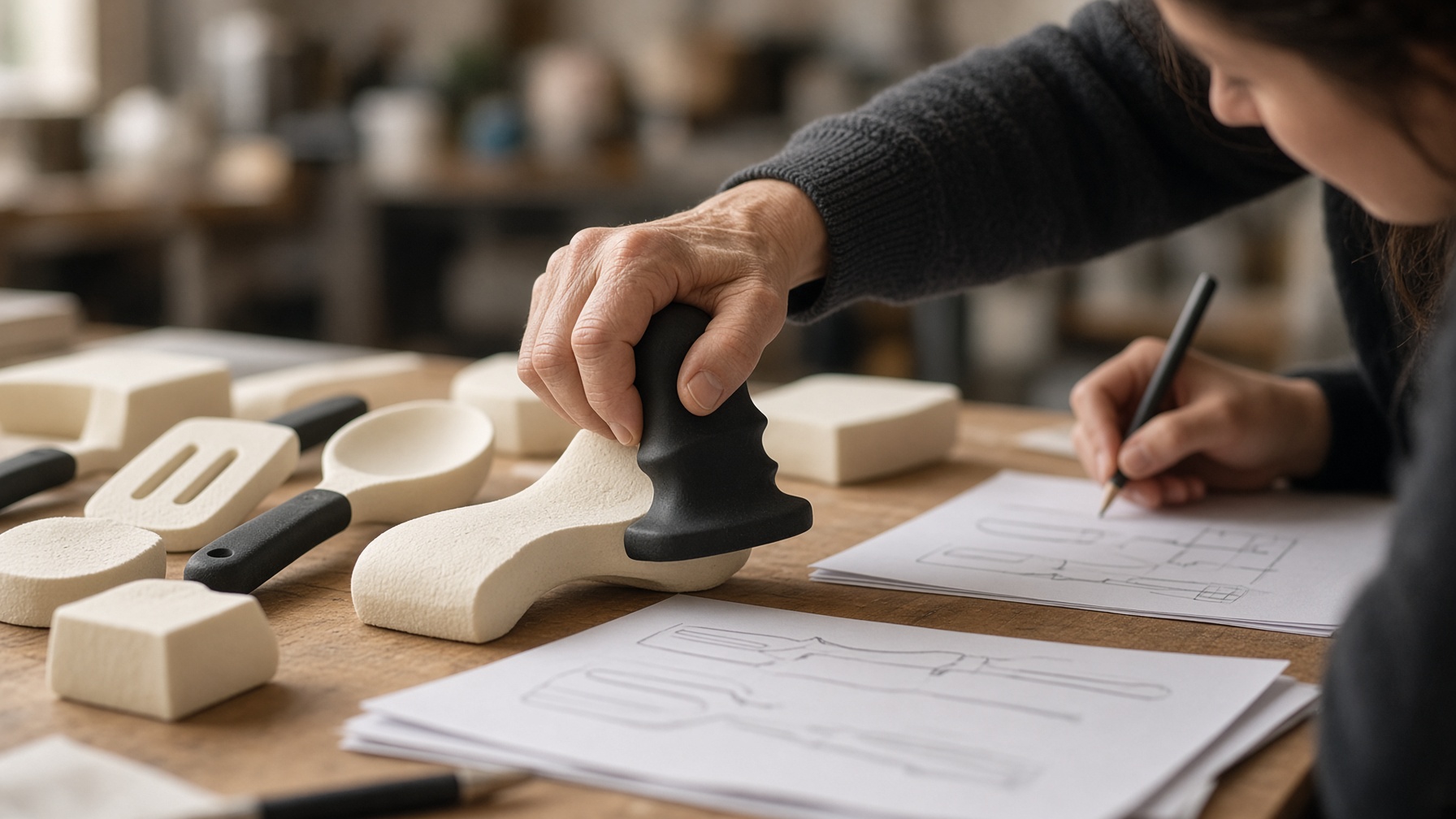
Universal design is both a standard for choosing finished results and an attitude to carry from the very first stage of planning. When actually applying it, it helps to keep the following points in mind.
- Picture a range of users (Persona Range): Instead of one young, healthy user, picture older adults, children, people with injured hands, and first-time visitors as well.
- Let people try it (User Testing): Have people who face real difficulties, such as wheelchair users or blind people, try it in advance and listen to their feedback.
- Build it in from the start (Early Planning): Fixing things after construction is finished greatly increases costs, so consider it at the very first stage of design.
- Improve rather than perfect (Continuous Improvement): Accept that no design is perfect for everyone, and keep refining it while listening to the voices of the people who use it.
Thinking it over once more from the position of the person who finds things most inconvenient: that is the first step toward design that is comfortable for everyone.