
Take out a receipt you left in your wallet for a few months, and the text may have faded so much that you can barely read it. On the other hand, a receipt left in a car in midsummer can turn grayish-black all over.
This happens because most receipts are printed on a special paper called thermal paper. Thermal paper shows text with heat alone, without any ink, and it is widely used at supermarket and café checkouts, ATMs and parcel shipping labels.
You can check how thermal paper works at home with just a receipt, your fingernail and a hair dryer. Let's find out through simple observation how the text appears and why it disappears.
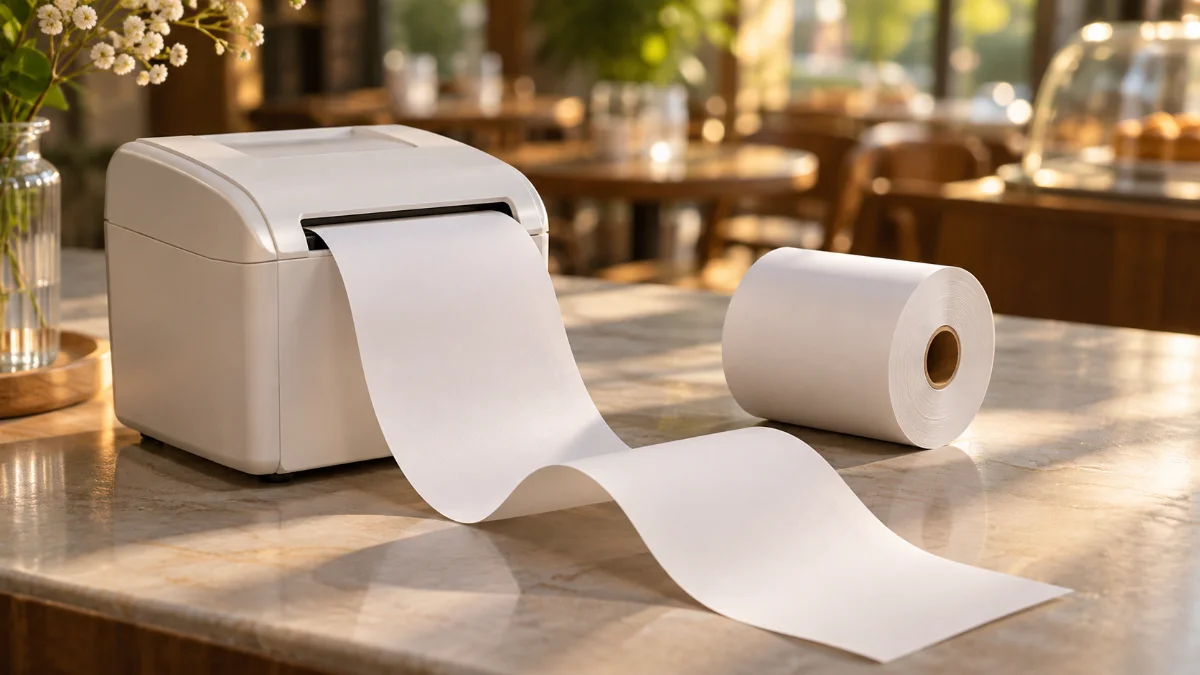
A Thermal Paper Experiment You Can Do at Home
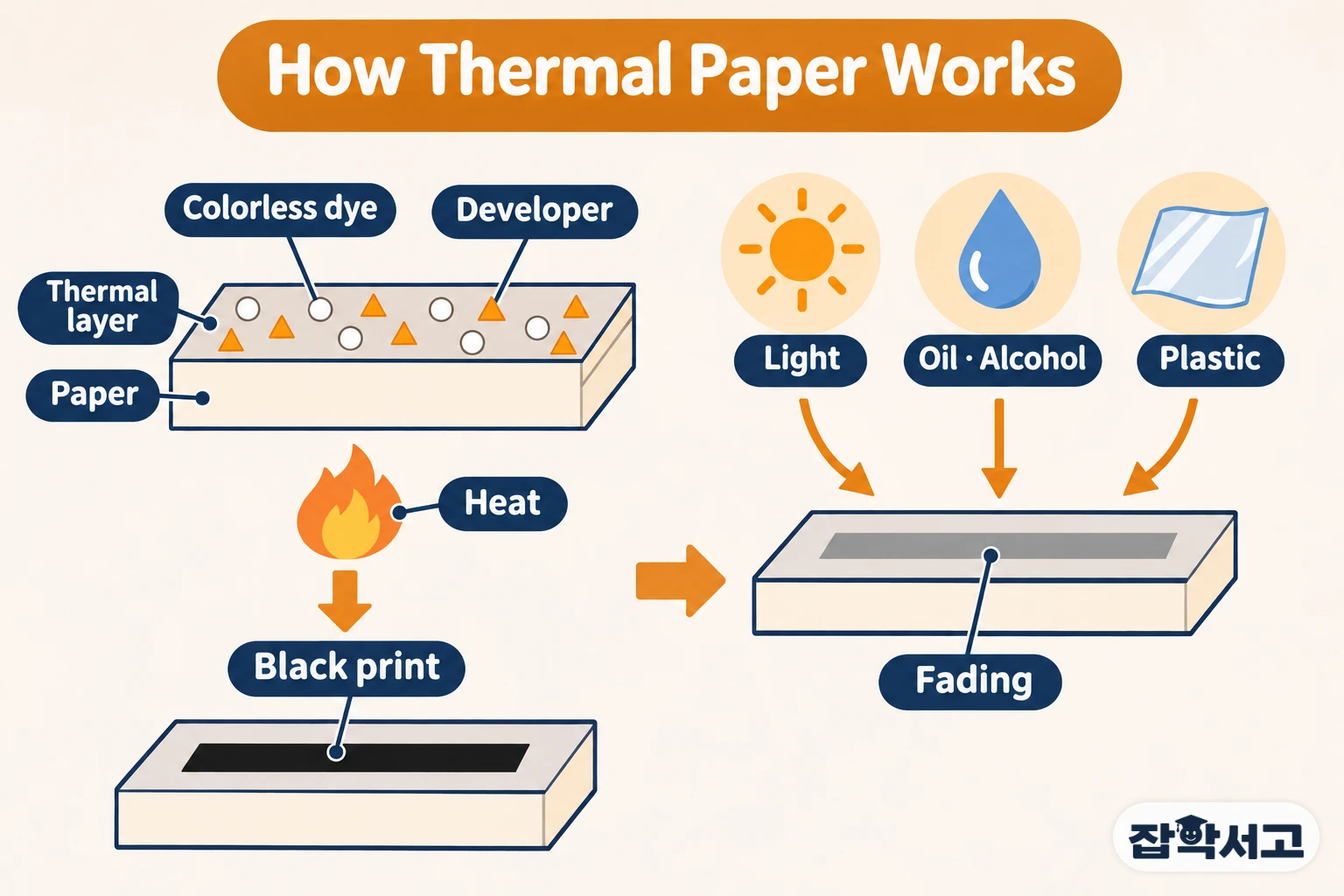
Thermal paper is paper coated with a thin layer that reacts to heat (the thermal layer). This layer contains a dye that is normally colorless and a developer that makes the dye show color, mixed together as fine particles. A receipt printer uses a print head lined with tiny heating dots to warm only the spots it needs for an instant, forming the text.
There is no ink or toner to replace, printing is fast and the printer is simple, so it suits checkouts and parcel logistics where many slips must be printed in a short time. The trade-off is that the text relies only on a reaction on the paper surface, so it is vulnerable to storage conditions.
This experiment looks at how the thermal layer reacts to heat, friction, light and oil. Choose used receipts that carry no personal information such as card numbers or names. Some tests show results right away and others take days, so it helps to set up step 4 first.
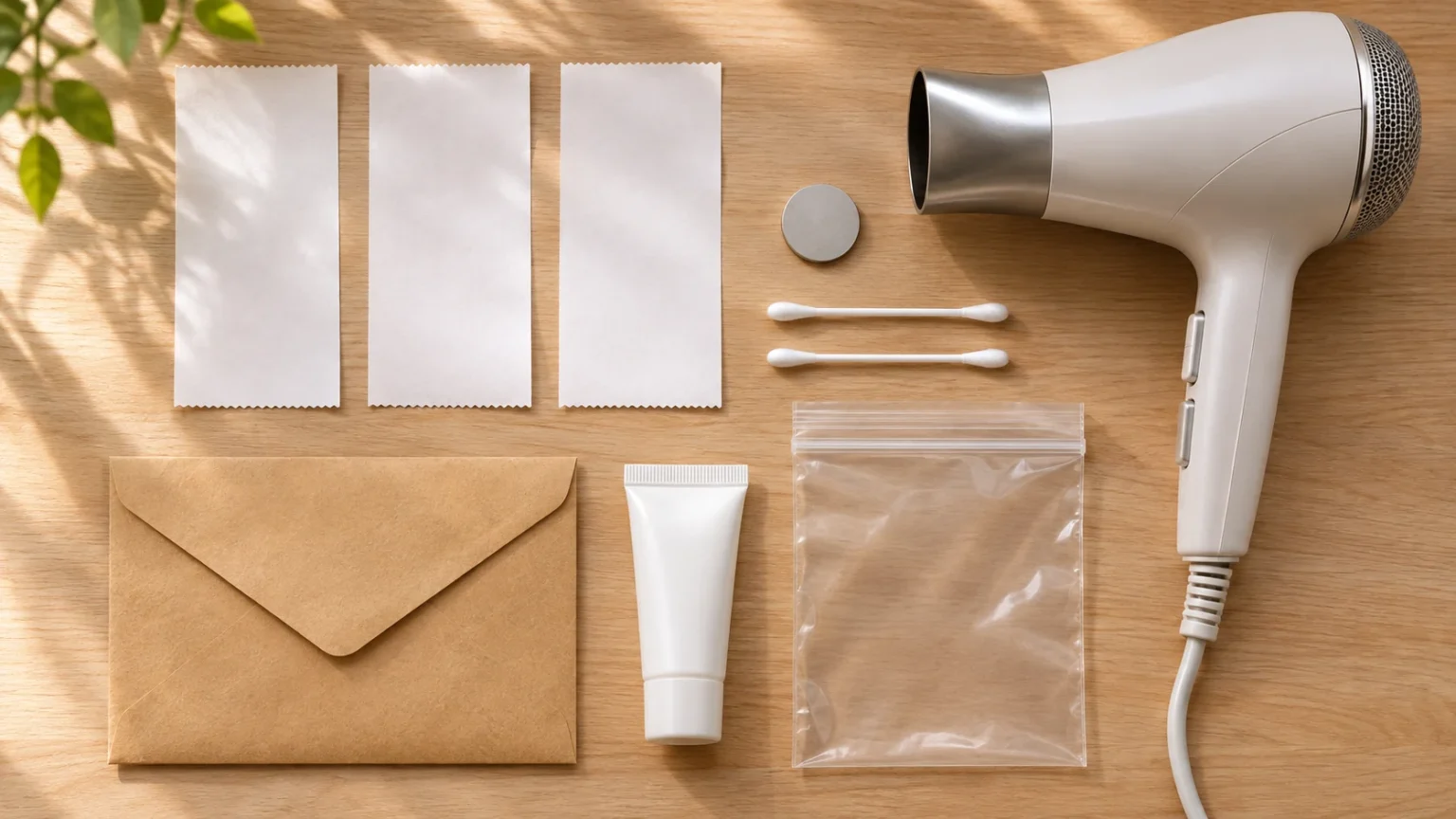
What You Need
- 3 used receipts (with no personal information)
- 1 coin
- A hair dryer
- Cotton swabs and a little hand cream or hand sanitizer
- A clear plastic sleeve or zip bag, and a paper envelope
Steps
- Scratch the printed side (the glossy side) and the back of the first receipt quickly and firmly with the edge of a coin or your fingernail.
- Hold a hair dryer close to a blank margin of the second receipt and blow hot air on it for about 10 seconds.
- Dip a cotton swab in hand cream or hand sanitizer and gently rub it over part of the printed text.
- Cut the third receipt into three pieces and place one on a sunny windowsill, one in a plastic sleeve and one in a paper envelope inside a drawer.
- After a few days to a few weeks, lay the three pieces side by side and compare how dark the text is.
What Will You See?
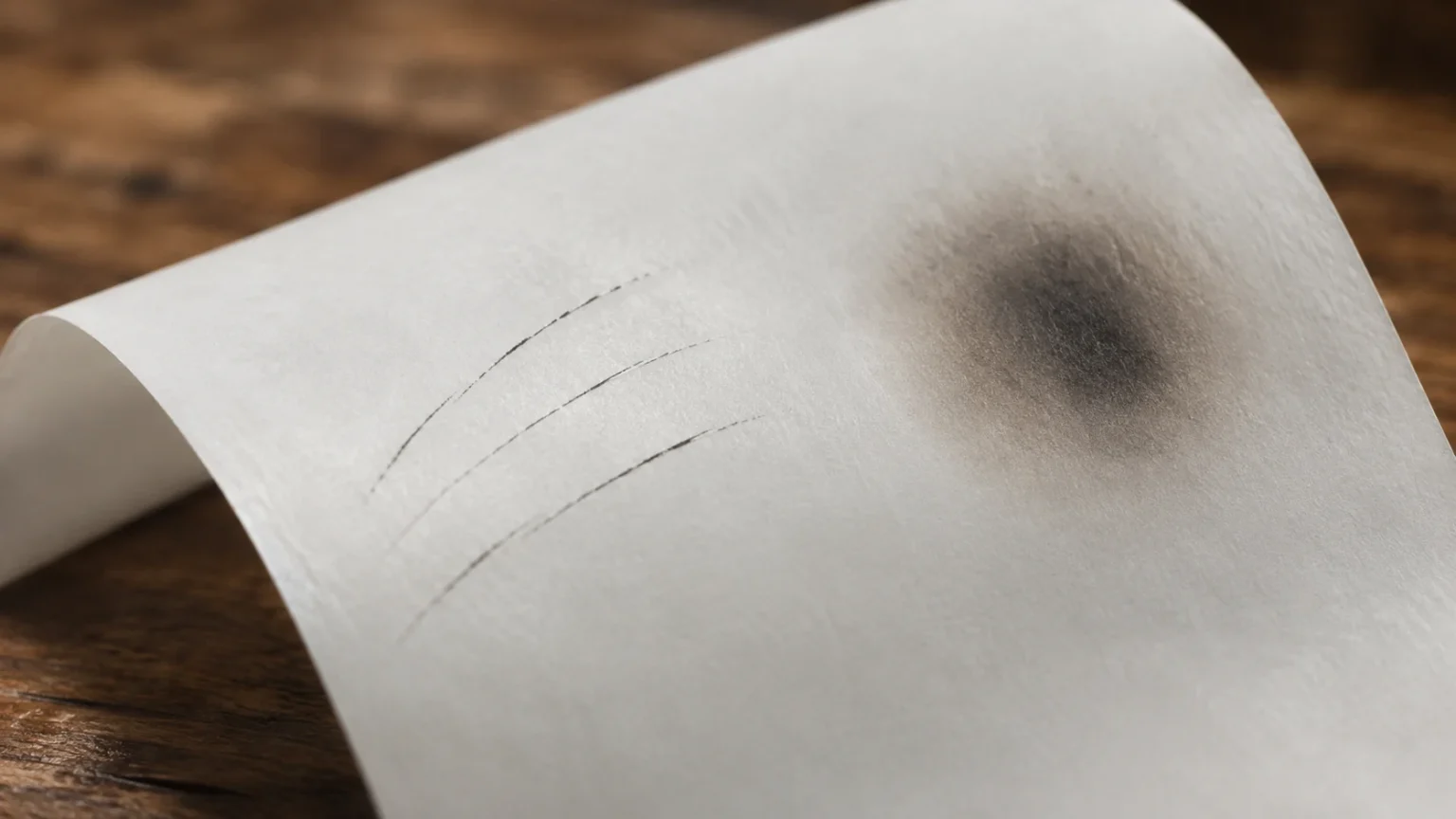
Scratching the printed side leaves a black line along the scratch, but the back stays the same no matter how hard you scratch. That is because the thermal layer is coated only on the front, and this difference makes it easy to tell whether a paper is thermal paper.
Where you scratched hard with the coin you get a thick, dark line, and where you scratched lightly a pale gray one, showing that the darkness changes with the amount of heat.
The spot hit by the hair dryer turns gray and then black within a few seconds. Text rubbed with cream or sanitizer becomes faint or smudged, and depending on the paper, the background may darken as well.
Over time, the piece on the windowsill fades noticeably more than the one in the drawer. The piece in the plastic sleeve also often fades first on the side touching the plastic.
Why Does This Happen?
Text on thermal paper is not ink sitting on the surface but the result of a chemical reaction on the paper. So when it meets conditions that trigger or reverse that reaction, text can newly appear or disappear.
Why the Color Appears
Normally the dye in the thermal layer has a closed ring in its molecule, so it absorbs very little light and looks colorless. When heated, the dye and developer melt and mix, and the acidic developer opens the dye's ring so it turns black. The layer also contains a sensitizer that lowers the melting point to help this reaction, so a clear print appears even though the printer applies heat for only a split second.
The friction heat from a fingernail scratch and the heat from a hair dryer trigger this reaction just like the printer's heat. That is why thermal paper can be written on without ink, simply by heating the right spots.
Why the Color Fades
The open-ring state is not firmly locked in place, so over time it gradually returns to its original closed form. Ultraviolet rays in sunlight damage the dye molecules, while oil, alcohol and the plasticizers in plastic sleeves loosen the bond between dye and developer, making the text paler.
Humidity speeds up this process too. High temperatures, on the other hand, make even the background react and turn the whole paper black, so a receipt left in a car in midsummer becomes hard to read because text and background blend together.
Shipping labels and some receipts that need to last longer have an extra protective coating over the thermal layer. This kind of paper fades less from cream or plastic even in the same experiment, so comparing a few receipts from home can be fun.
How to Keep Receipt Text Readable Longer
For receipts you need for warranties, exchanges or refunds, the surest way is to take a photo, scan them or copy them onto plain paper on the day you get them. If you keep the paper itself, put it in a paper envelope in a drawer away from light and heat, and avoid clear plastic sleeves and hot, humid places such as bathrooms, windowsills and cars. Do not laminate them either, since a heat laminator turns the whole receipt black.
Bisphenol A (BPA), long used as a developer in thermal paper, can act like a hormone in the body, so since January 2020 the European Union has banned thermal paper containing more than 0.02% BPA by weight. Receipts using other developers have become more common, but if you handle receipts often, it is a good habit to wash your hands afterwards.
Because of the thermal layer, used receipts are hard to recycle with paper, so in Korea people are advised not to put them out with paper recycling but to throw them away in the standard waste bags.
When experimenting, do not hold the hair dryer on one spot for too long, and never heat the paper with an open flame such as a lighter or candle. Wash your hands after handling the receipts used in the experiment.
Receipt text fades not because the paper is badly made, but because that is simply the nature of thermal paper, designed to print quickly with a single touch of heat. If a record needs to last, the best way to keep it is to move it into another format on the day you receive it.
Recommended reading