Imagine picking up a brand-new phone for the first time and finding the button placement and screen layout completely unfamiliar. No matter how impressive its features, you'd probably hesitate to use it. On the other hand, if it were no different from last year's model, it would be hard to find a reason to buy it. People are drawn to the new, yet shy away from what feels too strange.
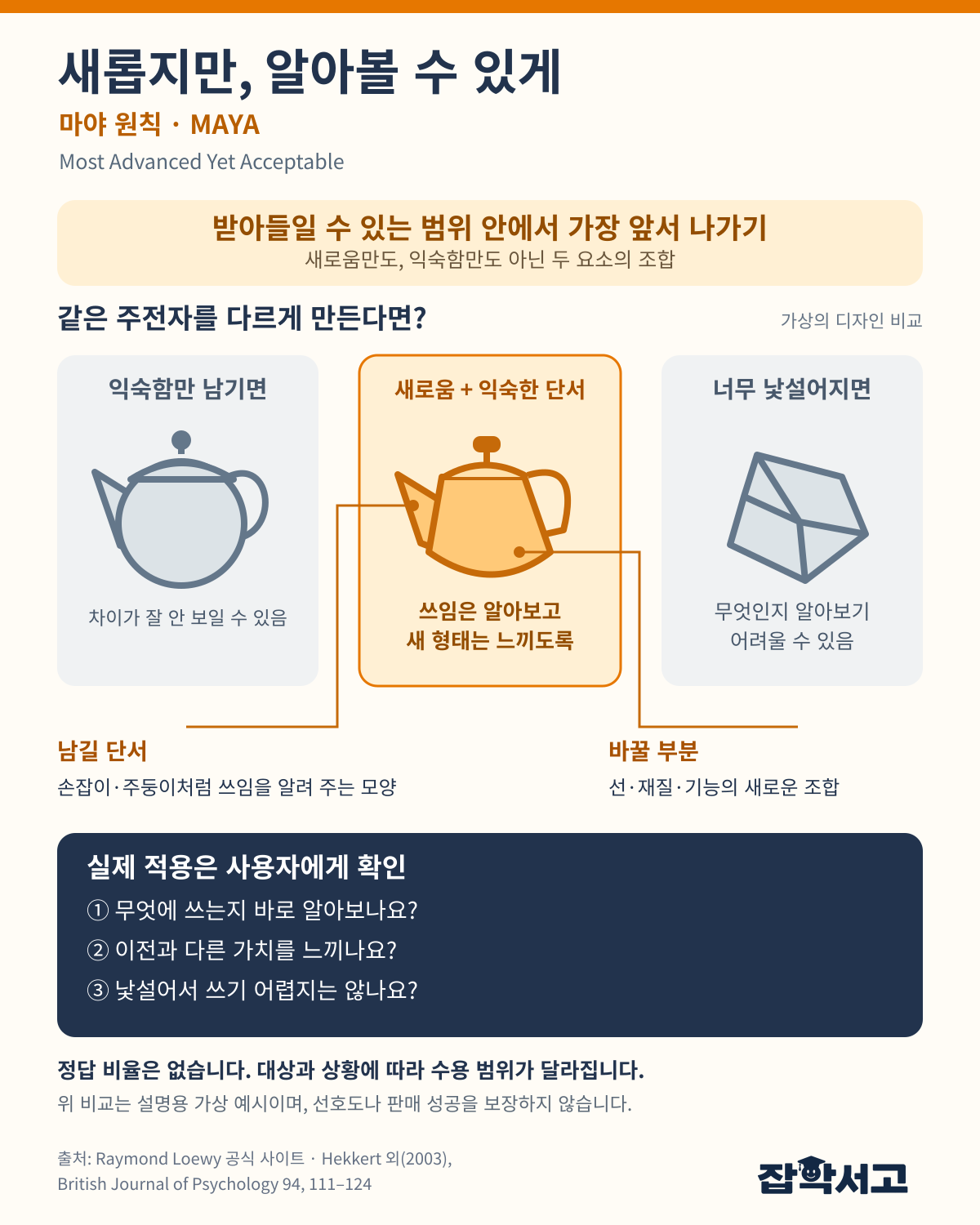
Raymond Loewy, who shaped 20th-century American industrial design, summed up this delicate balancing act in a single line: design should go as far ahead as possible while staying within the range people can accept. That is the “MAYA principle (Most Advanced Yet Acceptable).”
This article looks at Loewy and how the MAYA principle came about, the way novelty and familiarity work together, real design examples, and finally how designers use the principle today and what to watch out for.
Balancing Novelty and Familiarity: How the MAYA Principle Works and How to Use It
Raymond Loewy and the Birth of the MAYA Principle

Raymond Loewy was born in Paris, France, in 1893 and moved to the United States in 1919. He first worked as a fashion illustrator for magazines and department stores, but changed course when he opened an industrial design office in 1929.
(1) A career that began with a duplicator's exterior
Loewy's first major job was refining the exterior of a duplicating machine for the British company Gestetner. He enclosed the machinery in a sleek outer shell to make it more attractive, and the design remained in use for many years afterward.
(2) Designing everyday American life
Loewy's firm went on to design the Sears Coldspot refrigerator, Lucky Strike cigarette packaging, Greyhound buses, Pennsylvania Railroad locomotives, and Studebaker cars, among others. In 1949, he even appeared on the cover of the news weekly Time.
(3) The name of the principle
Loewy laid out his ideas in works such as his 1951 autobiography Never Leave Well Enough Alone, and his philosophy became known as MAYA, an acronym for “most advanced yet acceptable.”
How Novelty and Familiarity Work Together
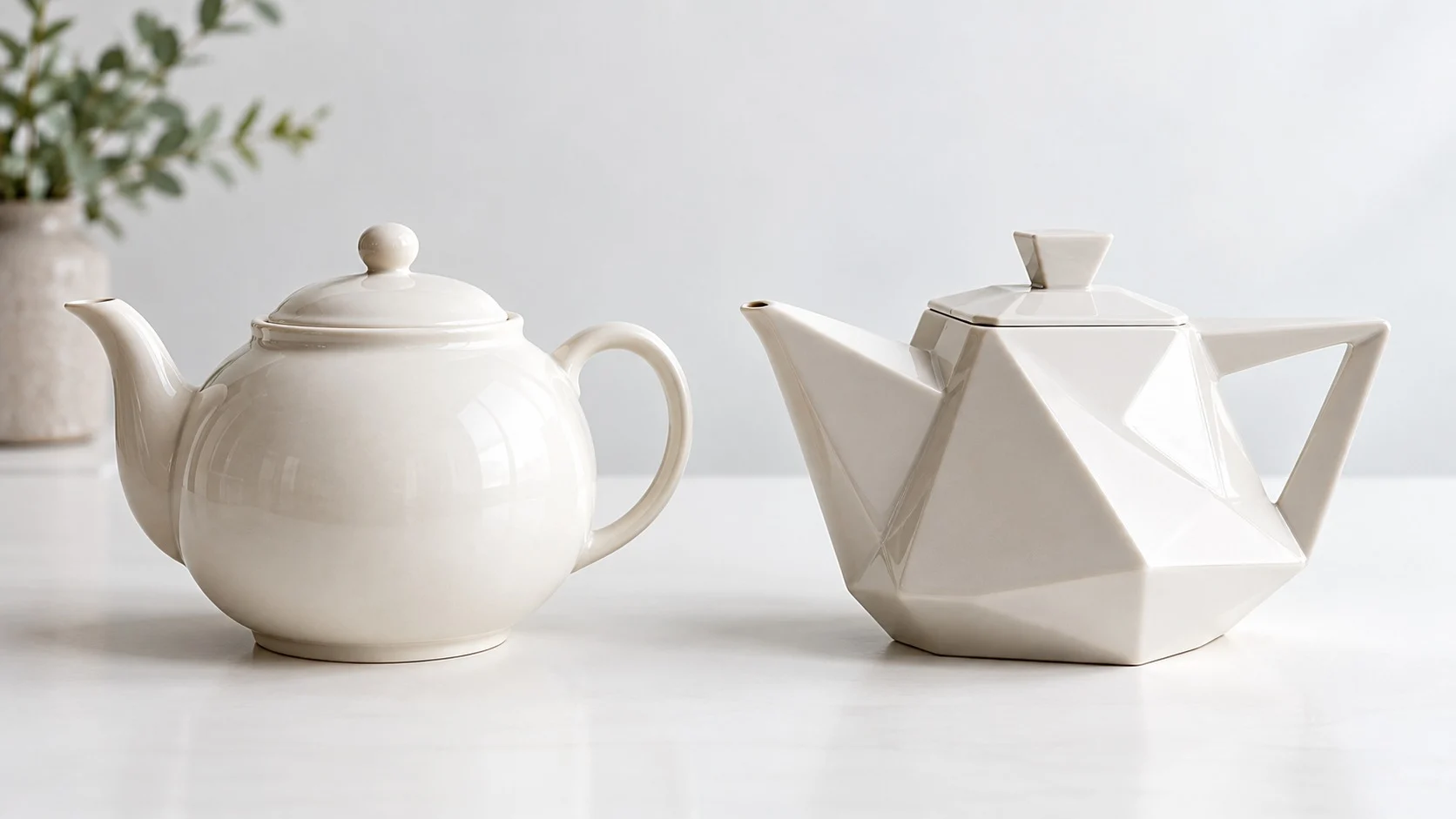
Loewy believed that public taste does not always immediately embrace the most logically superior solution. If that solution strays too far from the standards people have grown used to, resistance comes first.
- Novelty: Unfamiliar forms and functions spark curiosity and raise expectations that the product is better than what came before.
- Typicality: When an object looks like a typical member of its category, people recognize it easily and feel comfortable with it.
These two forces pull and push against each other. With too much novelty, it becomes hard to tell what the object is for; with nothing but familiarity, it quickly grows boring. The MAYA principle asks designers to find the point where both are at their highest together.
A Balancing Act Confirmed by Research
In 2003, a research team led by Paul Hekkert in the Netherlands showed people a range of industrial products and surveyed their preferences. The results revealed that typicality and novelty each raise preference while also suppressing each other's effect, and the researchers concluded that the best designs are those that combine both.
The MAYA Principle in Practice
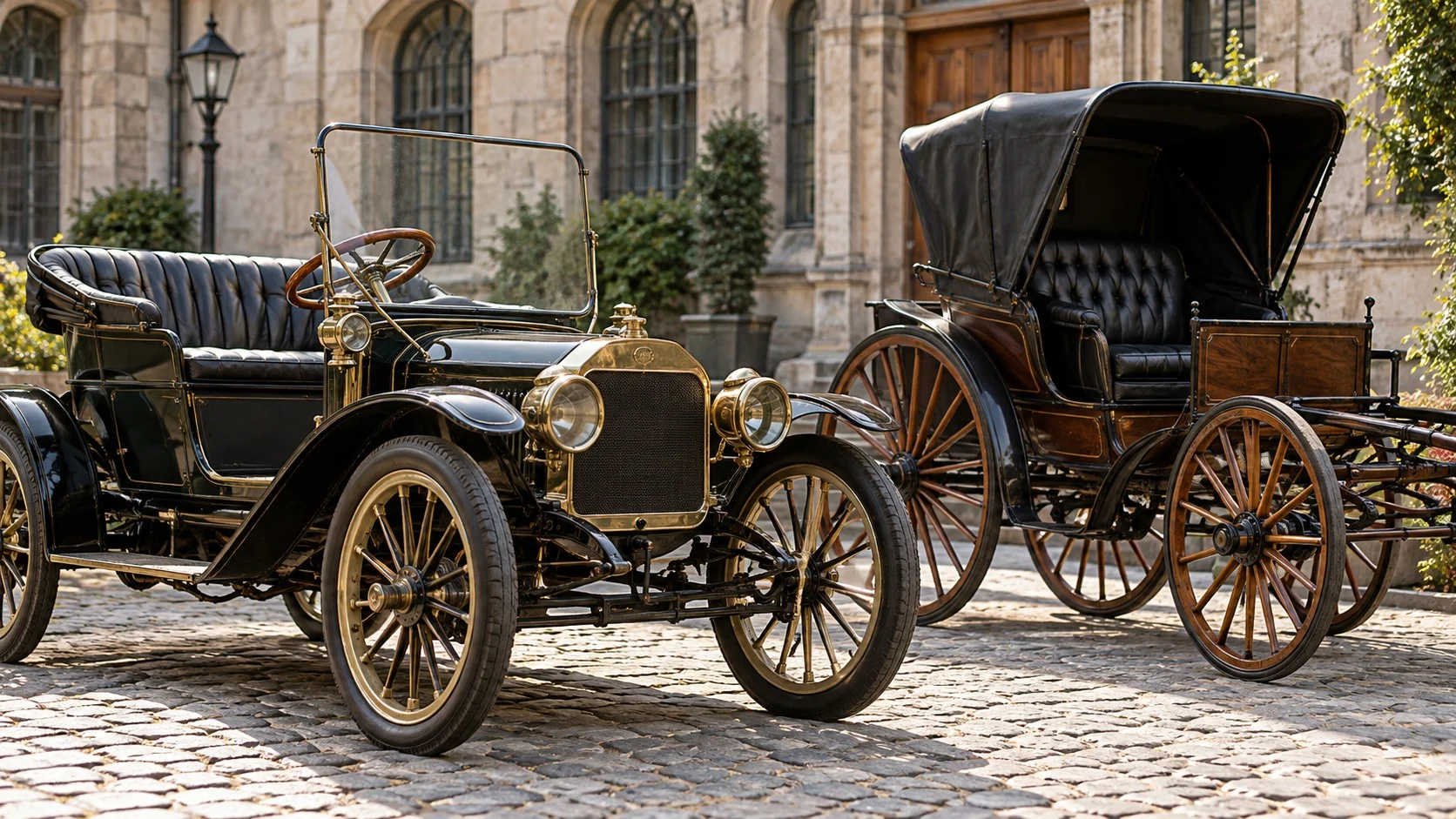
The MAYA principle shows up especially clearly when a new technology first appears before the public.
(1) Early cars that looked like carriages
Early automobiles looked so much like carriages that they were called “horseless carriages.” By borrowing the shape of a vehicle people already knew, the unfamiliar machine was accepted with less fear.
(2) Loewy's gradually sleeker designs
Rather than turning a refrigerator or locomotive into an entirely different object all at once, Loewy chose to keep the basic form anyone could recognize while smoothing out its lines. Consumers felt that a familiar object had become more refined.
(3) Familiar shapes on the screen
The way early smartphone screens imitated the textures of real buttons, paper, and leather follows the same pattern. Wrapping the unfamiliar act of pressing a screen with your finger in familiar shapes made it easy to learn.
How Designers Use the MAYA Principle, and What to Watch Out For

Today's product designers and user experience (UX) designers often bring the MAYA principle to mind. The key is to lead users at a pace they can keep up with, rather than releasing big changes all at once.
(1) Leave familiar cues
Keep the cues users already know, such as button placement, icon shapes, and the basic menu layout, and add new features on top of them.
(2) Roll out changes in stages
If a major overhaul is needed, split it into several steps so users have time to adjust little by little.
(3) The standard depends on the audience
What counts as acceptable varies by person and by era. Tech-savvy users welcome bolder changes, while for others even small changes can feel like a burden.
That said, relying only on familiarity can bring innovation to a halt. The MAYA principle is not a call to avoid change, but a call to push boldly right up to the limit of what people can accept.
The MAYA principle reminds us that good design is as much about reading people's minds as it is about the possibilities of technology. After all, even the most advanced idea cannot change the world if people cannot accept it.
Add something new, but leave at least one handle people can recognize. That is the first step toward a design that is loved for a long time.