In visual design, patterns are elements that play an important role by bringing form and meaning into harmony. Patterns go beyond merely repeating forms and serve an important function in strengthening a design's structure and conveying meaning.
This material will discuss in depth how patterns harmoniously combine form and meaning in visual design. In particular, it will examine how visual designers can use patterns effectively in practice through their definition and importance, ways to use them, and examples of their integration.
The Importance of Patterns: Harmony Between Form and Meaning
 Why Are Patterns Important?
In visual design, patterns are essential elements for maintaining consistency and achieving overall harmony. Patterns create a visual rhythm through repeating elements, giving viewers a sense of stability and making a design's structure easier to understand.
The Formal Role of Patterns: Aesthetics and Harmony
The formal aspects of patterns are important factors in determining a design's aesthetics. When various visual elements, such as colors, forms, and sizes, are arranged harmoniously, the overall quality of the design improves. These formal elements play an important role in enhancing a design's aesthetic value.
The Semantic Role of Patterns: Communicating Messages and Evoking Emotions
Patterns play an important role in communicating messages by combining formal and semantic elements. For example, patterns in nature can symbolize vitality, harmony, and balance, and applying them to a design further strengthens its message. Patterns are also effective in strengthening brand identity or evoking particular emotions.
Visual Unity and Patterns: Strengthening Brand Identity
Patterns provide visual unity in design and can be used as a tool to strengthen brand identity. Consistent use of patterns continually communicates a brand's message and plays an important role in marketing and advertising.
The Practical Importance of Patterns: Increasing Efficiency
Patterns are also important because they improve design efficiency. Repeating elements can reduce the time and cost of design work, which is a very useful aspect in practice. In marketing and advertising in particular, consistent patterns enable efficient communication of messages.
In visual design, the formal and semantic aspects of patterns play an important role in clearly communicating a design's message. When patterns harmoniously combine form and meaning, a design can communicate a more powerful message, which is essential for maximizing its value.
The Definition of Formal Patterns and Their Visual Elements
 What Are Formal Patterns?
Formal patterns refer to design elements composed of repeating visual elements. Various visual elements, such as lines, shapes, colors, and textures, work in harmony and play an important role in determining a design's structure and aesthetics. These patterns are essential for maintaining consistency and harmony in design.
Lines: Creating Structure and Rhythm in Design
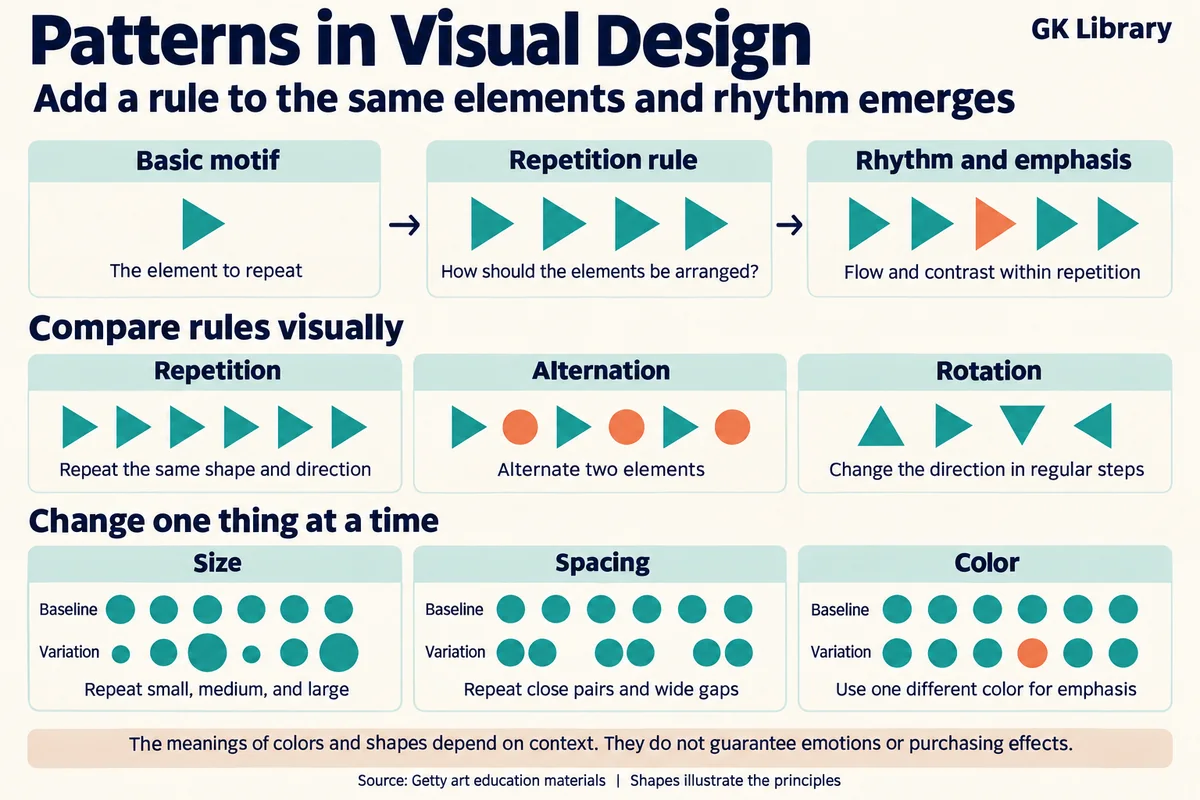
Lines are among the most basic elements of formal patterns. Different kinds of lines, including straight, curved, and zigzag lines, form a design's structure and provide visual rhythm. Patterns emerge through the repetition and arrangement of lines, playing an important role in maintaining design consistency.
Shapes: Harmony Between Structure and Balance
Shapes are important elements that provide a structural foundation for formal patterns. Various shapes, such as circles, rectangles, and triangles, give a design a clear structure and form visual patterns through repeated arrangements. The size and arrangement of shapes are key factors in determining a design's balance and harmony.
Colors: Evoking Moods and Emotions
Colors are elements that bring a design to life within formal patterns. The repetition and arrangement of colors can evoke particular moods or emotions and generate visual interest while maintaining design consistency. Colors play an important role in enhancing the visual appeal of patterns.
Texture: Adding Depth and Realism
Texture is an element that gives formal patterns depth and dimension. The repetition and arrangement of textures add realism to a design and provide viewers with visual enjoyment. When used in combination with other visual elements, texture further improves a design's overall quality.
The Harmonious Combination of Formal Patterns
Formal patterns are created through the harmonious arrangement of various visual elements, such as lines, shapes, colors, and textures. Each element is important individually, but when they combine to form patterns, the design produces a more polished result. Formal patterns play an essential role in visual design by maintaining design consistency and communicating messages effectively.
Ways to Use Patterns to Convey Meaning
 How Should Patterns Be Used?
Patterns are important tools in visual design for conveying particular meanings and strengthening messages. Let us examine various ways to use them in combination with formal elements to leave a strong impression on viewers.
Using Patterns to Strengthen Brand Identity
Patterns play an important role in strengthening brand identity. Continually using particular patterns can maintain brand consistency and increase recognition. For example, distinctive color or shape patterns are essential for establishing a brand's identity.
The Strategic Use of Patterns to Evoke Emotions
Patterns can be used effectively to evoke particular emotions. Repeated arrangements of lines or shapes convey stability or dynamism, while repeated colors can evoke warmth or coolness. These emotional effects are used strategically according to the purpose of the design.
Patterns That Visually Represent Information Hierarchy
Patterns are useful for clearly representing information hierarchy visually. Repeating patterns effectively distinguish important information or elements that need emphasis, enabling viewers to understand a design easily and absorb information quickly.
Using Patterns to Convey Cultural and Historical Meaning
Patterns can be used as important tools for conveying cultural or historical meaning. Using traditional patterns or symbolic shapes to reflect a particular culture or history in a design can enrich its depth and meaning.
Generating Visual Interest and Attracting Viewers' Attention
Patterns are effective in generating visual interest and attracting viewers' attention. Repeating visual elements stand out and help keep viewers looking at a design longer. This is an important factor in maximizing a design's effectiveness.
Varying Patterns to Introduce Change While Maintaining Consistency
Patterns are tools that can introduce change while maintaining design consistency. Varying a pattern's arrangement, size, and colors while retaining its repeating elements can bring freshness to a design. This is a way to maximize a design's appeal by balancing consistency and change.
Strategies for Using Patterns Effectively in Practice
 What Should You Know Before Using Patterns?
Several important strategies should be considered to use patterns successfully in practice.
Maintaining Consistency and Ensuring Flexibility
When using patterns, it is important to maintain design consistency while allowing flexibility. Adjusting a pattern's size, colors, arrangement, and other aspects to suit the situation prevents the design from becoming monotonous. This allows patterns to work effectively in various environments.
Using Patterns with Restraint
Patterns are powerful visual tools, but excessive use can make a design confusing. It is important to use patterns only where needed and focus on strengthening the core message. Avoiding overuse of patterns helps maintain clarity in design.
Choosing Patterns That Suit the Context
It is essential to choose patterns that suit the design's purpose, intended audience, and message. Stable patterns are effective when a design needs to convey calmness and trustworthiness, while bold patterns are effective for creating a dynamic atmosphere. The suitability of the chosen patterns determines a design's success.
Adjusting the Placement and Size of Patterns
It is also important to adjust the relative prominence of patterns within a design appropriately. The placement and size of patterns can manage visual flow and communicate the design's theme or message more clearly. Adjusting placement and size helps maximize the visual effects of patterns.
Optimization Through Testing and Feedback
After applying patterns, it is necessary to continually test how the design actually looks and optimize it based on feedback. This ensures that patterns function as intended and enables the best results in practice. Testing and feedback are important steps in improving the quality of pattern use.
Harmony in Patterns: Examples of Integrating Form and Meaning
 What Are Some Examples of Patterns Used in Different Fields?
The harmony of patterns becomes clear through examples in which form and meaning combine to communicate powerful messages in design. These examples of integration can be found in various fields, and each shows how patterns achieve both formal beauty and semantic depth.
Integrating Patterns in Fashion Design
In fashion design, patterns go beyond simple decorative elements to reflect a brand's philosophy and style. Hermès scarf designs are a representative example in which repeating patterns of particular textures and colors strengthen brand identity while harmoniously combining form and meaning.
Harmony of Patterns in Architectural Design
In architectural design, patterns are used as elements that pursue both structural stability and formal beauty. In parametric design, complex mathematical patterns establish a building's identity and achieve a perfect integration of form and meaning. These patterns ensure both the originality and functionality of buildings.
Using Patterns in Graphic Design
In graphic design, patterns are used as powerful tools for visually expressing brand messages or social issues. Peter Saville's album cover designs are examples in which formal patterns and meaning harmonize perfectly, maximizing visual impact and the effectiveness of message communication.
Integrating Patterns and Meaning in Product Design
In product design, repeating patterns create designs that maintain product consistency while evoking emotions in users. This integration plays an important role in increasing a product's value and improving the user experience. Consistent use of patterns also strengthens brand recognition.
Harmony of Patterns in Advertising Design
In advertising design, patterns play an important role in attracting viewers' attention and creating positive perceptions of products or services by combining visual elements with meaningful messages. The combination of repeating patterns and powerful messages is a key factor in the success of marketing campaigns.
Using Patterns in Digital Interface Design
In digital interface design, combining repeated patterns with meaningful interactions greatly improves the user experience. Interfaces that users can easily understand and use are achieved through harmony between repeating elements and clear communication of meaning, which is central to user-friendly design.
In visual design, patterns are important elements that strengthen design consistency and messages through harmony between form and meaning. The definitions and uses of formal and semantic patterns, along with various examples of their integration, provide a deeper understanding of how patterns affect design.
Patterns go beyond simple repetition and play an important role in clearly communicating a design's structure and message. The effective use of these patterns is essential for visual designers to maximize the value of their designs.