The most dangerous ice on a winter road is not the ice that looks white. Snow-covered roads stand out from far away, so drivers slow down in advance, but thin ice that lets the color of the asphalt show through simply looks like a wet road.
This ice is called black ice. Despite the name, the ice itself is not black: it is so thin and clear that you can see the dark pavement right through it.
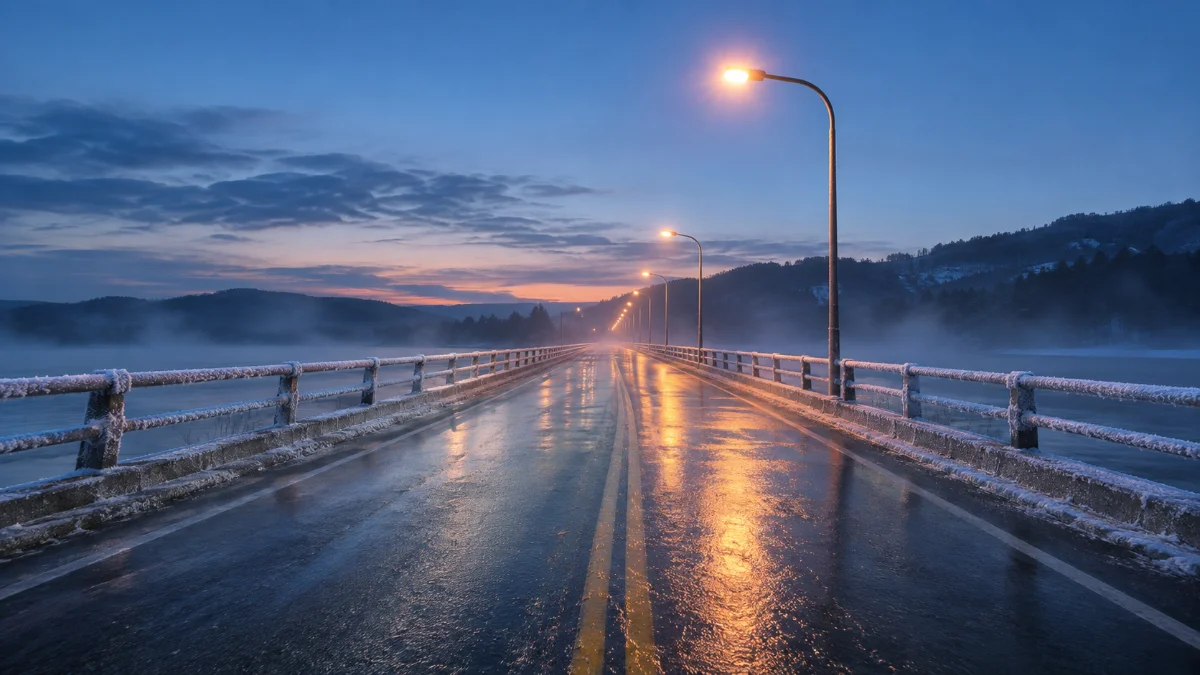
Black ice does not suddenly fall from the sky. It forms step by step: moisture appears, the road surface cools, and the water freezes into a thin layer. Following the process stage by stage makes it clear where the danger lies and when to be careful.
How Black Ice Forms
Two things are essential for black ice: a thin film of water on the road and a road surface cold enough to freeze it. The four steps below trace how ice comes to fool a driver's eyes once these two conditions are met.
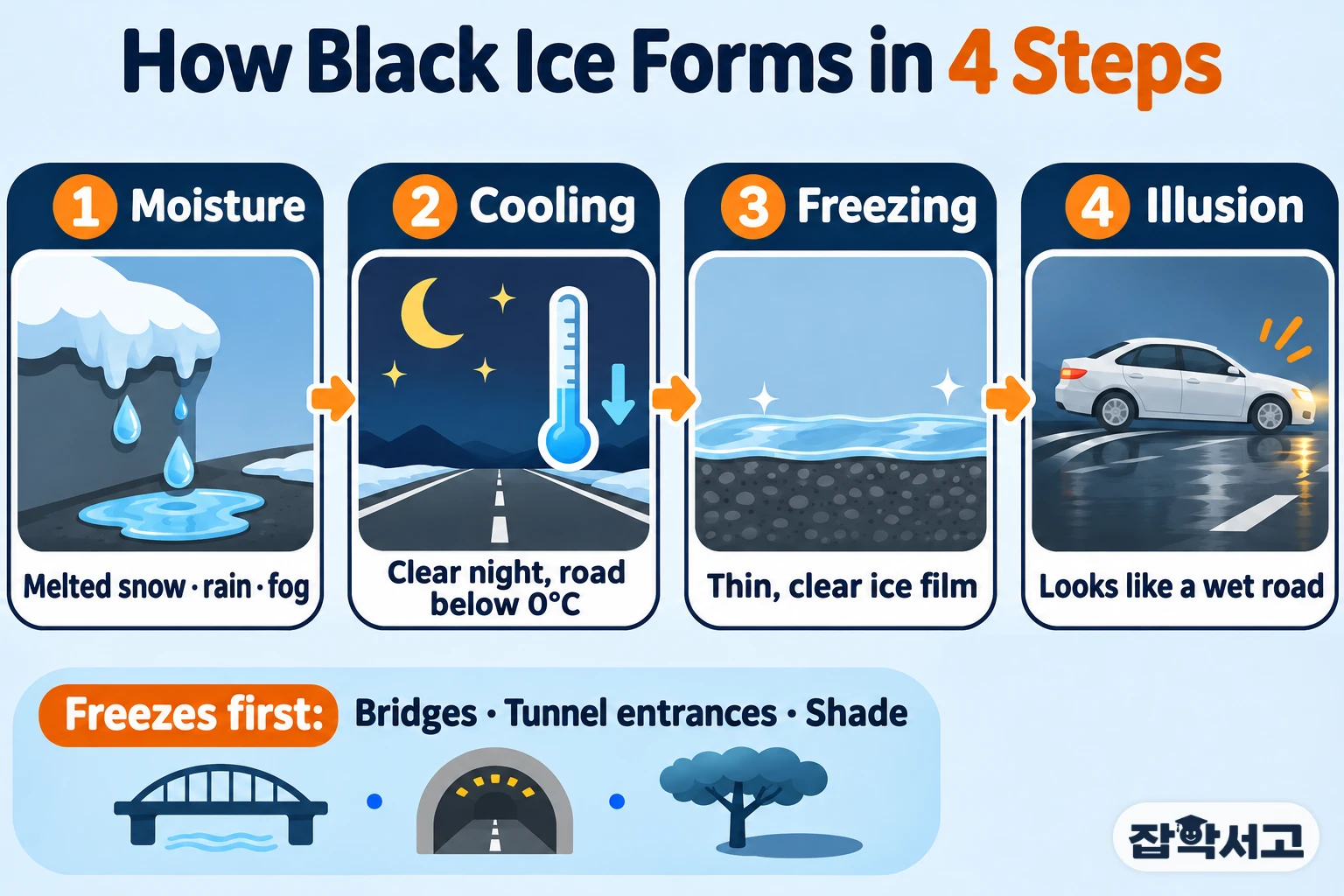
Step 1: A Thin Film of Water Forms on the Road
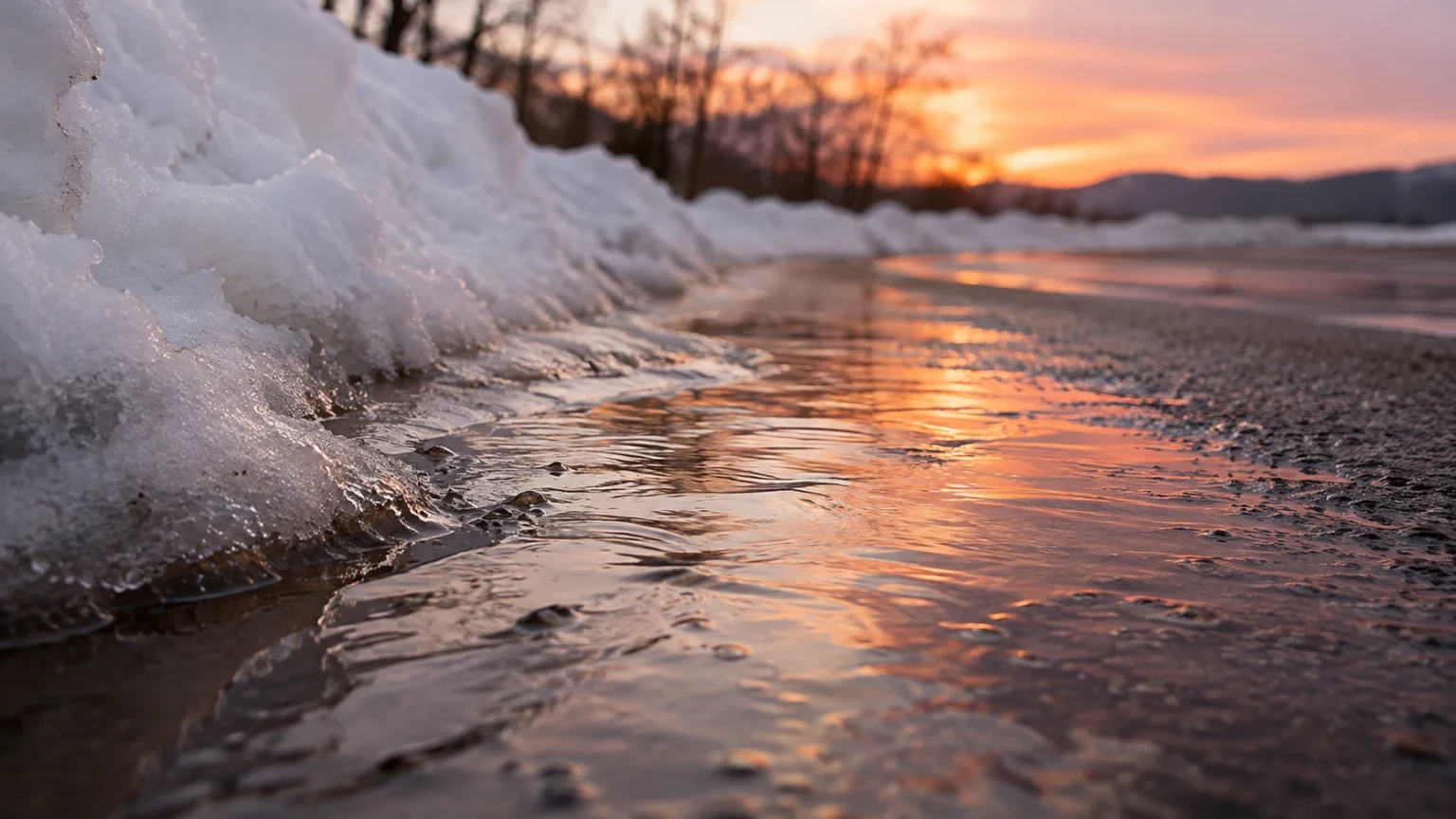
It all starts with water. The most common cases are snow that melts from sunlight and vehicle heat and trickles across the road, or a road that has not fully dried after rain. Fog, dew and sleet settling overnight also leave a thin film of water on the pavement.
It does not take much water. A thin, spread-out film has less heat to lose than a deep puddle, so it freezes faster. Moisture so slight that you would barely notice the road was damp becomes the raw material for black ice. That is why black ice often causes more trouble in the days after a heavy snowfall than on the day itself: snow that melts by day keeps refreezing at night.
Step 2: The Road Cools Before the Air Does
On a clear, cloudless night, the ground quickly cools as it radiates the heat it absorbed during the day back into the sky. This is called radiative cooling, and it can make the road surface colder than the air temperature we feel. That is why the pavement can drop below freezing even when the forecast says it is above zero.
Because the coldest time of day is around sunrise, black ice forms most often between dawn and early morning. If the wind is also calm, the slightly warmer air above does not mix in, and the road cools even further. Even on the same road, some spots cool noticeably faster than others.
Bridges and Overpasses
An ordinary road receives a little heat rising from the ground beneath it, but a bridge is exposed to cold air both above and below. With no ground to hold heat, it freezes sooner and thaws later than a regular road. Bridges over rivers or reservoirs also get extra moisture from water fog.
Tunnel Entrances and Shaded Mountain Bends
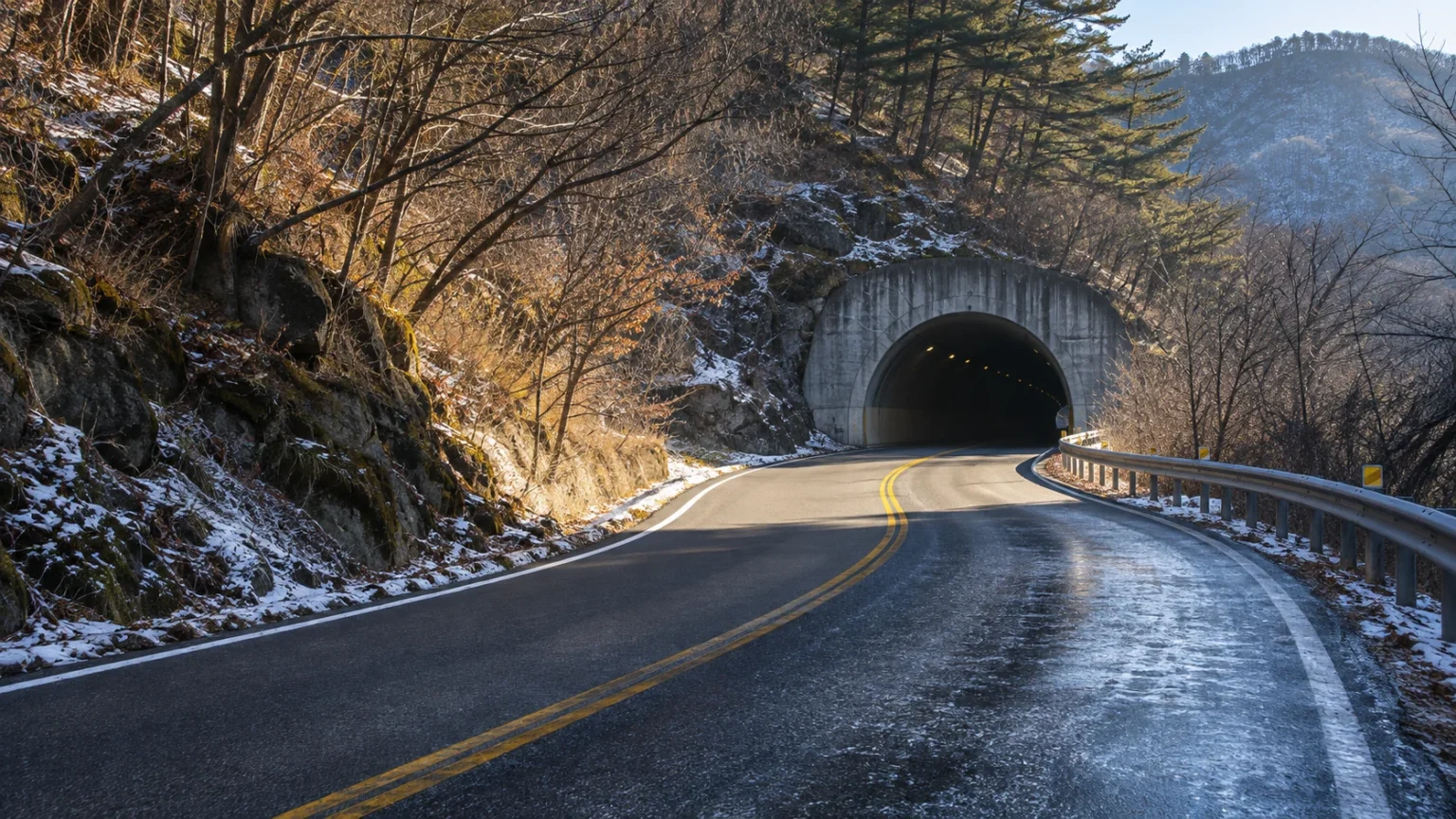
Tunnel entrances and exits, mountain bends and roads in the shadow of tall buildings get little sunlight even during the day. Ice tends to linger there even at midday when the surrounding roads have thawed, so drivers can suddenly hit an icy stretch after driving on a sunny road. The inside of a tunnel is also milder and drier than outside, and the abrupt change in road conditions on exiting adds to the danger.
Step 3: It Becomes a Thin, Clear Film of Ice
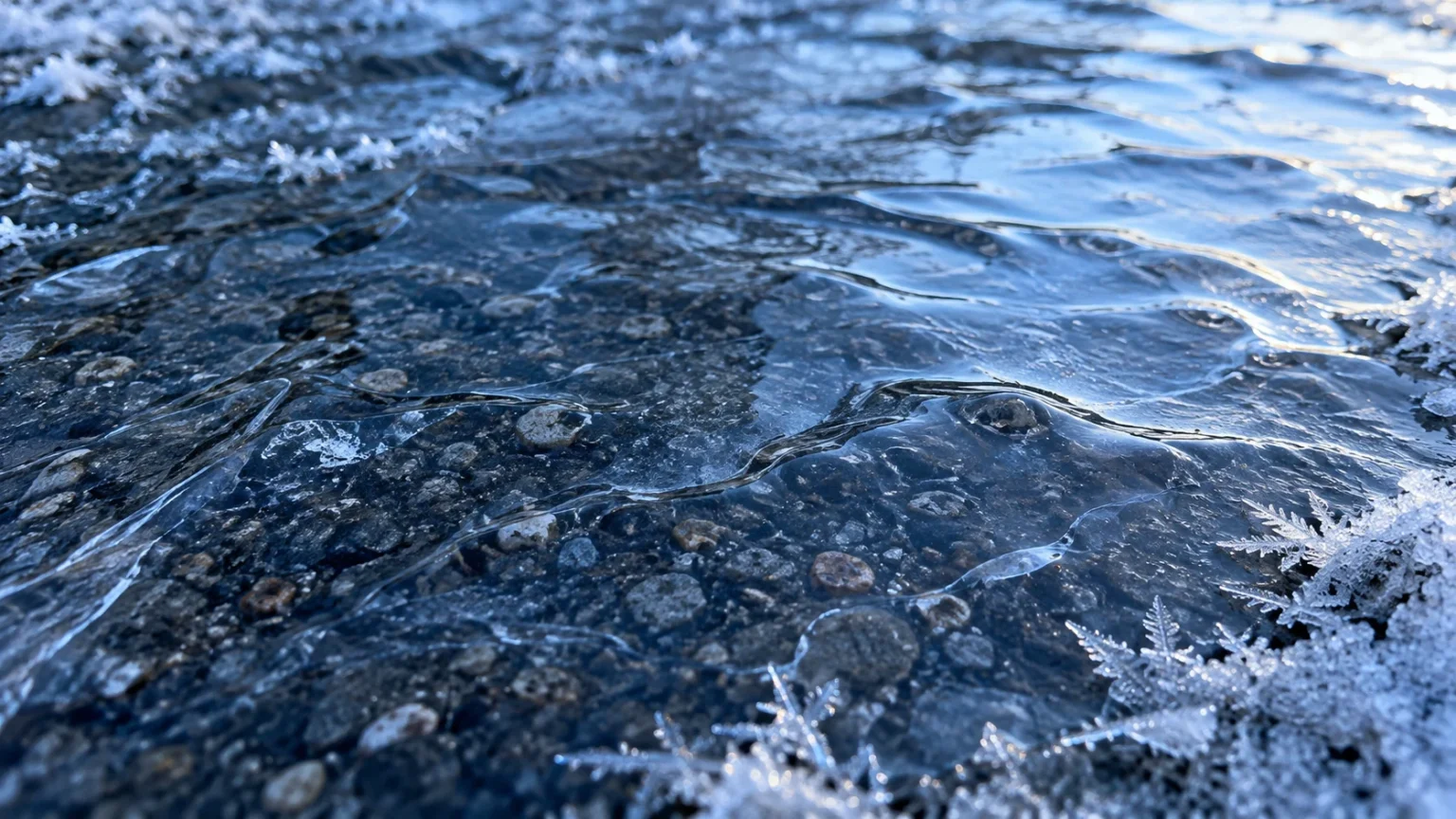
When the road surface drops below 0°C, the thin film of water freezes as it is. Because the film is so thin, hardly any air bubbles get trapped, so the ice does not turn cloudy white but becomes as clear as glass. This is why black ice looks different from the white ice of packed snow.
The dark asphalt shows through the clear ice. If road dust and exhaust soot freeze into it as well, it looks even darker, making it even harder to tell by eye whether ice is there at all.
It also forms differently from frost. Frost is water vapor in the air attaching directly to a cold surface as ice crystals, which is why it looks white, whereas black ice is water already on the road freezing whole into a smooth film. That makes it far more slippery than a frosty road.
Step 4: It Looks Like a Wet Road, So Drivers Don't Slow Down
The last step happens on the human side. Drivers slow down on their own on white snowy roads, but they tend to treat a glistening, wet-looking dark road as just a road after rain and keep driving as usual. This is even more true if the stretch just before was dry. Black ice earned the nickname "the assassin on the road" because of this illusion.
On ice, the tires lose much of their grip on the road, so braking distances grow longer. In a 2021 test by the Korea Transportation Safety Authority, a passenger car braking from 30 km/h needed 10.7 m to stop on ice, about seven times its distance on dry pavement. In the same test, a bus traveling at 60 km/h slid 118.7 m on ice before it came to a stop.
When accidents happen, the damage is serious. According to the Korea Road Traffic Authority, the five years from 2018 to 2022 saw 4,609 traffic accidents caused by icy roads and 107 deaths. The fatality rate, meaning deaths per 100 accidents, was 2.3, about 1.5 times the overall traffic accident rate of 1.5.
How to Break the Chain at Each Step
A black ice accident happens only when all four steps are linked. Put the other way, breaking even one step greatly reduces the risk. Road authorities and drivers each have a part to play at every step.
- Moisture step: After snow stops, road authorities clear the remaining snow and water and spread de-icing agents. De-icers such as calcium chloride lower the temperature at which water freezes and delay the formation of ice.
- Cooling step: At dawn after a clear, calm winter night, assume there is ice on bridges, at tunnel entrances and on shaded roads. Don't rely only on a forecast saying it is above zero.
- Ice step: A road that glistens unusually black, or a stretch that looks wet but sends up no spray from the tires of the car ahead, may be ice.
- Driving step: Slow down before entering a risky stretch and leave a much bigger gap to the car ahead than usual. On ice, avoid sudden braking, sudden acceleration and abrupt steering. Even winter tires cannot fully prevent skidding on ice, so don't speed up just because you trust your tires.
If a road looks unusually black and shiny on a winter morning, it may not be wet at all but covered with a thin layer of ice. Once you know how black ice forms, that same glint will look a little different.
Recommended reading