When you look at photos of Heaven Lake (Cheonji) at the summit of Mount Baekdu, you can’t help wondering how such a wide, round lake came to sit on top of a high mountain. Since it is the site of a volcanic eruption, it may seem like rainwater simply pooled in a crater, but the landform beneath Heaven Lake actually formed differently from an ordinary crater. It is not a mark left by something blasting out of the ground; it is a place where the ground itself sank downward. This kind of landform is called a “caldera.”
Simply put, a caldera is “a large, round basin that forms when a volcano expels a great amount of underground magma all at once, and the ground above the emptied magma chamber collapses.” Calderas can range from a few kilometers to several tens of kilometers across, and when water collects inside one, it becomes a beautiful lake known as a caldera lake.
In this article, we will look in turn at what a caldera is and how it differs from a crater, how calderas form, some of the world’s most famous calderas, and the gifts and dangers that calderas bring us.
Caldera: The Giant Cauldron Formed When the Ground Collapses
How Is a Caldera Different from a Crater?
Calderas and craters are both hollow landforms on volcanoes, but they differ in how they form and in size.
(1) The meaning behind the name
The word caldera comes from Spanish, meaning “cauldron” or “cooking pot,” and shares its roots with the Latin word “caldaria.” The German geologist Leopold von Buch introduced it as a geological term when he wrote about his 1815 tour of the Canary Islands.
(2) A difference in how they form
A crater is the opening of the vent through which magma and volcanic gases erupt—a hole created as explosions blast away soil and rock. A caldera, by contrast, is a landform where the ground sinks after the space beneath it empties, making it more like a sinkhole, where the ground caves in.
(3) A difference in size
Craters are usually a few hundred meters across, but calderas are often more than 1 kilometer wide, and large ones reach several tens of kilometers. That is why some calderas hold entire villages, farmland, and lakes within them.
In this way, it is easiest to think of a caldera not simply as a big crater, but as the trace left when the ground collapsed wholesale after the space beneath a volcano emptied.
How Does a Caldera Form?
For a caldera to form, the underground magma chamber must empty substantially in a short period of time.
(1) The magma chamber empties
Several kilometers beneath a volcano lies a magma chamber where magma collects. When a large explosion or a massive outpouring of lava drains this magma all at once, the magma chamber can no longer support the weight of the ground and rock above it.
(2) The ground cracks in a ring
The ground fractures in a circle along the edge of the magma chamber; these cracks are called ring faults. They can also become pathways for magma to leak out, so new small volcanoes sometimes form around the rim of a caldera.
(3) The center sinks
As the ground inside the ring of cracks sinks into the emptied magma chamber, a huge cauldron-shaped basin is completed. Sometimes it collapses in an instant during a single great eruption, and sometimes it subsides little by little over several eruptions.
(4) Calderas that form without explosions
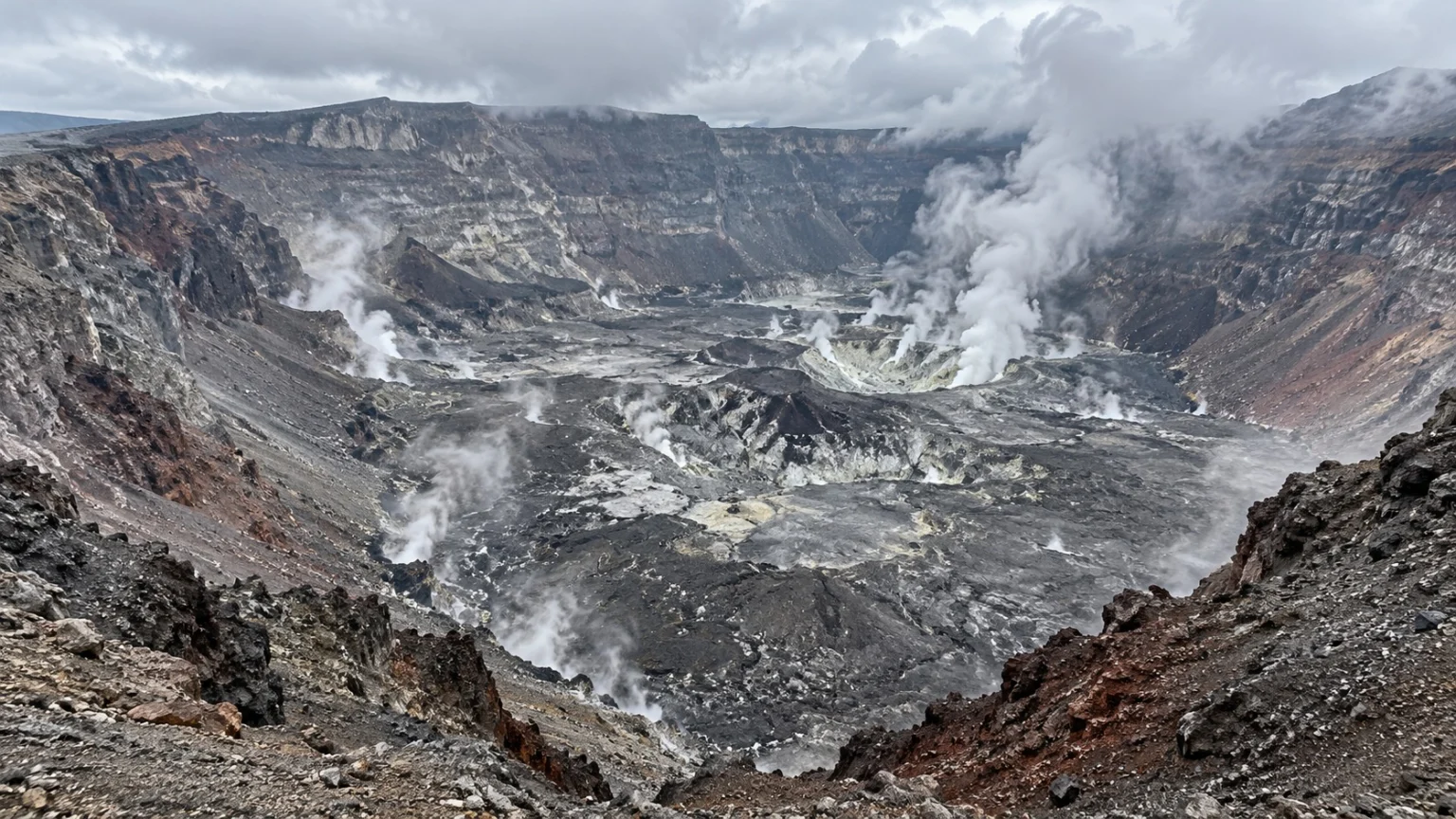
At volcanoes where runny, low-viscosity basaltic magma flows, such as Kīlauea in Hawaii, a caldera can form slowly without a big explosion, as lava flows out and empties the magma chamber. Kīlauea experienced this kind of collapse as recently as 2018.
Famous Calderas Around the World
Calderas can be found wherever there are volcanoes around the world, and each creates its own distinctive landscape.
- Heaven Lake (Cheonji) on Mount Baekdu: A lake formed when water filled the caldera at the summit of Mount Baekdu; it is the best-known caldera lake on the Korean Peninsula.
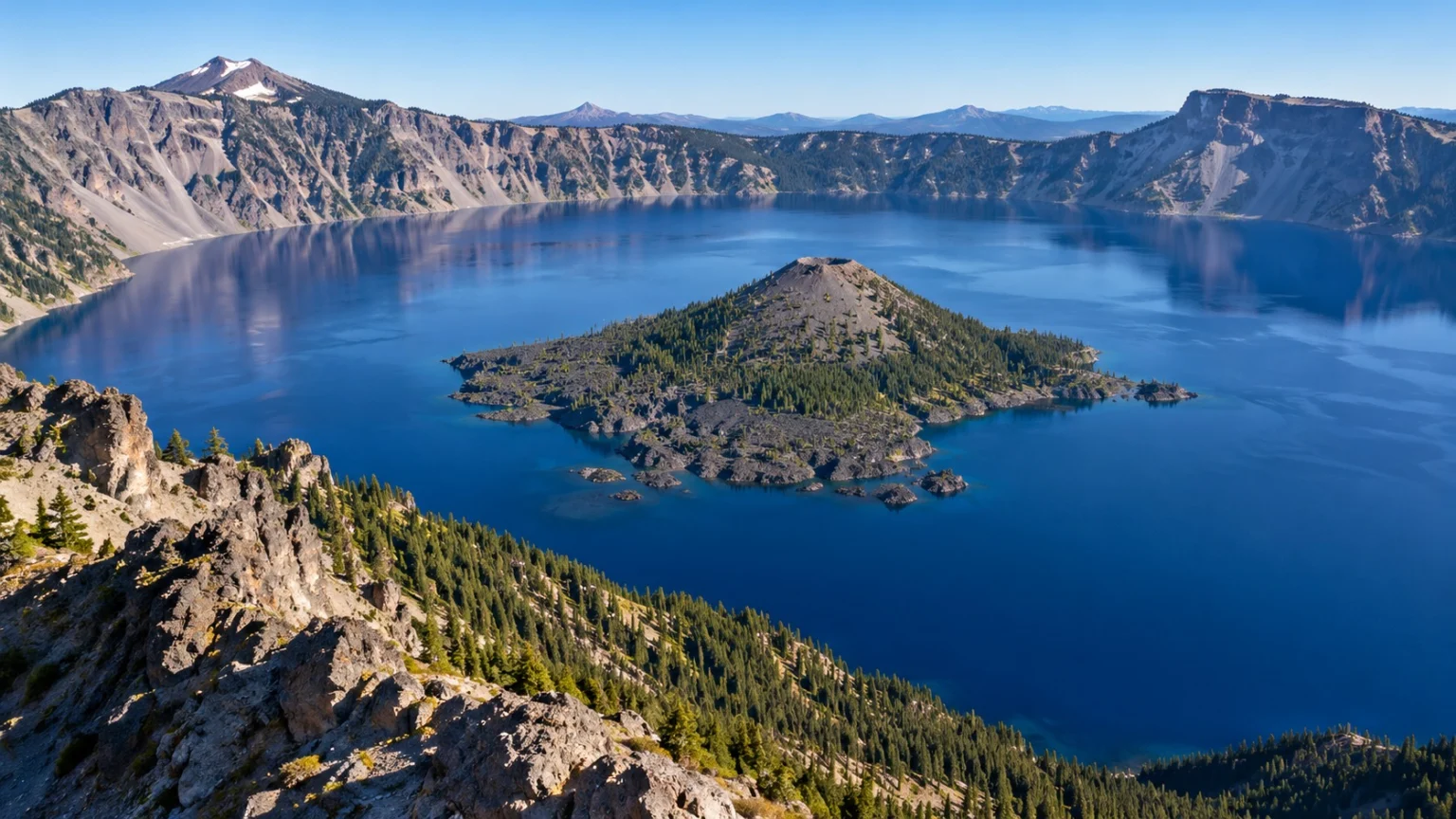
- Crater Lake: A lake in Oregon, USA, formed when water filled the caldera left after Mount Mazama erupted massively and collapsed about 7,700 years ago. Despite the word “crater” in its name, it is actually a caldera lake.
- Lake Toba: A lake about 100 kilometers long on the island of Sumatra, Indonesia, formed by a colossal eruption about 74,000 years ago; it is one of the largest calderas in the world.
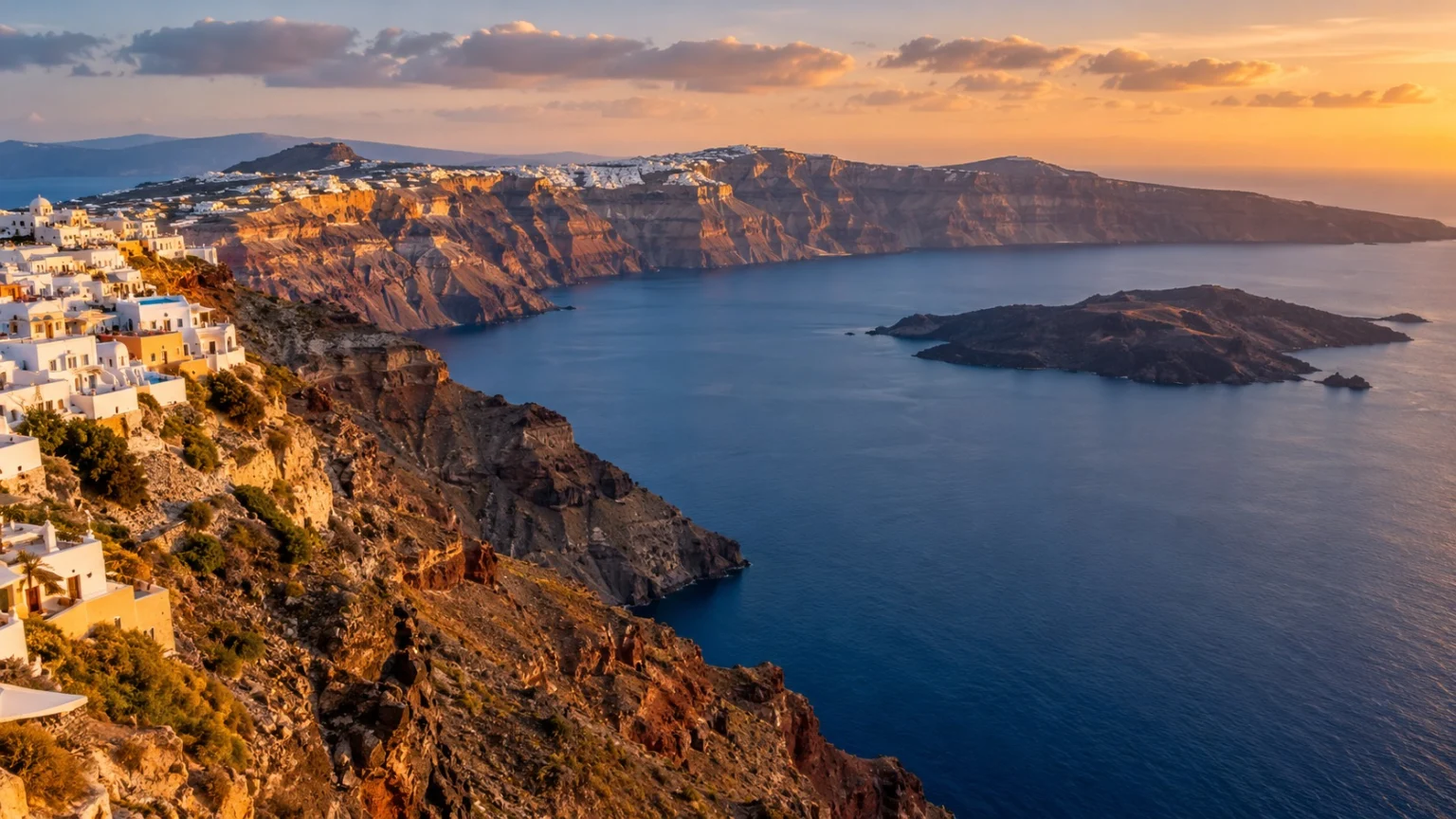
- Santorini: These Greek islands are the rim of a caldera submerged by the sea, and the cliffs lined with white villages are the very walls of the caldera.
The Gifts and Dangers of Calderas
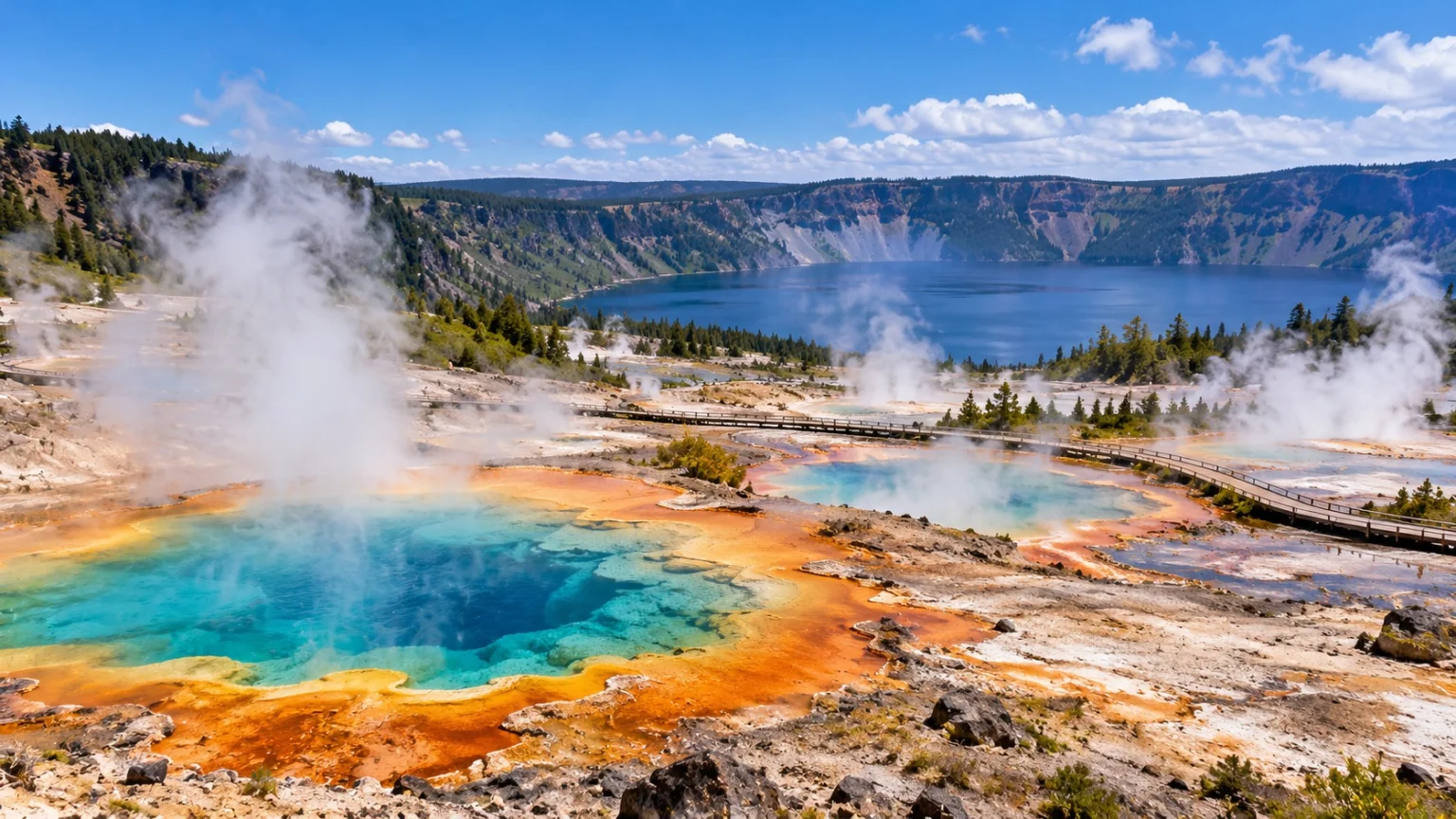
Calderas offer beautiful scenery and resources, yet they are also part of volcanoes that are still alive.
(1) Scenery and tourism
Caldera lakes and caldera cliffs create spectacular views rarely seen elsewhere, drawing many tourists. In some places, such as Mount Aso in Kyushu, Japan, villages and pastures sit within a vast caldera.
(2) Hot springs and mineral resources
Intense heat still lingers beneath calderas, providing hot springs and geothermal energy. In addition, hot water circulating underground can concentrate metals such as gold, silver, and lead to form ore deposits.
(3) Volcanoes that could reawaken
Yellowstone in the United States sits atop a caldera formed by a colossal eruption more than 600,000 years ago, and scientists still monitor the movement of the ground there closely. Caldera-forming eruptions are rare, occurring only a few times per century, but when they happen they can spread volcanic ash over wide areas and even lower temperatures around the world.
That is why monitoring of ground elevation changes, earthquakes, and gas emissions continues steadily in caldera regions.
A caldera is a giant cauldron made by the Earth, formed when the ground sank wholesale after the space beneath it emptied. Remembering that an enormous amount of magma once lay beneath a tranquil caldera lake, and continuing to pay attention to the movements of that land—this is the first step toward the wisdom of living alongside volcanoes.