Gravity is an essential part of our everyday lives and one of the fundamental forces of the universe. Through gravity, we pull objects toward the ground, and it affects everything we do, from walking and lifting objects to venturing beyond the atmosphere into space.
This article explores the basic principles needed to understand the nature of gravity and its role, and examines its scientific definition, historical background, and the latest research trends.
The Nature of Gravity: Exploring the Fundamental Principles of the Universe
 What Is Gravity, and What Are Its Principles?
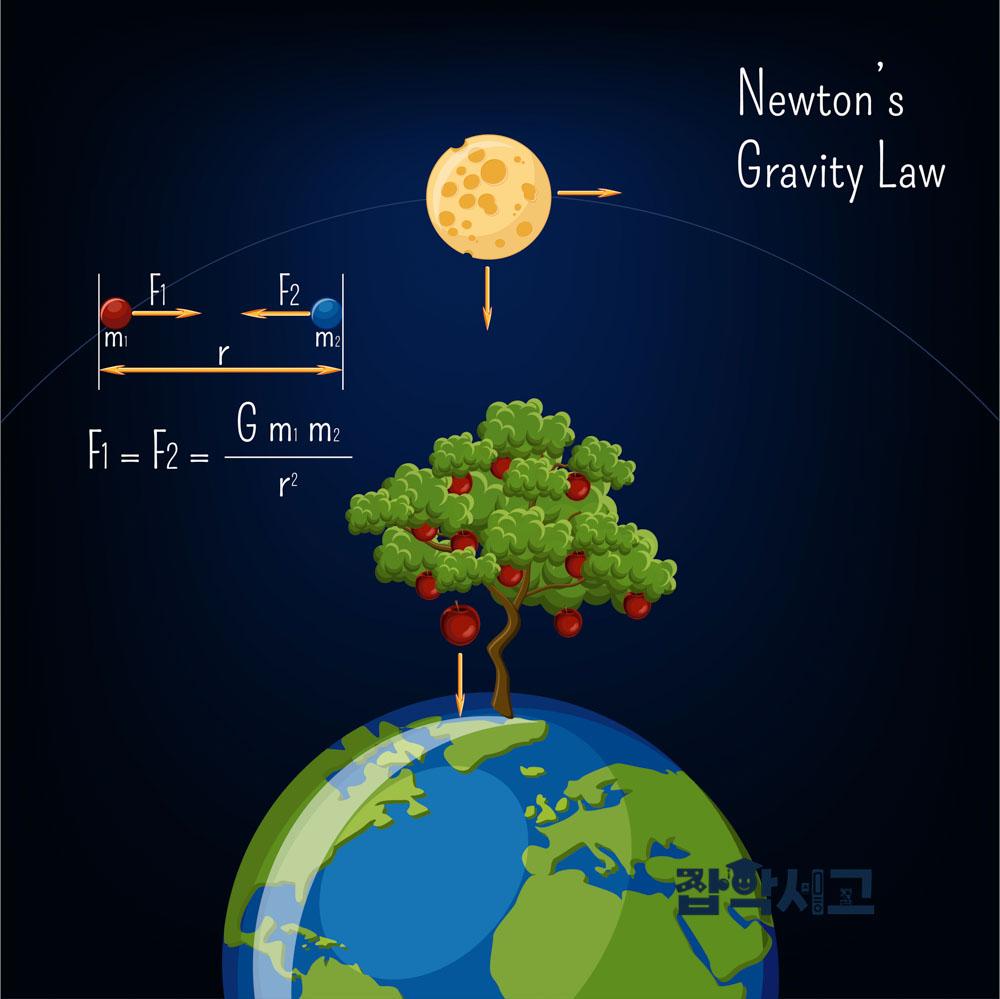
Gravity is very familiar to us, but understanding its nature requires an in-depth exploration. Gravity is the force by which objects attract one another, and it varies according to their masses and the distance between them. Isaac Newton explained this through the "law of universal gravitation," stating that gravity is proportional to the product of the masses of two objects and inversely proportional to the square of the distance between them.
The Law of Universal Gravitation
Newton's law of universal gravitation applies equally to all objects in the universe, beyond just the relationship between Earth and objects. For example, gravity between the Sun and the planets maintains the structure of the solar system. Gravity between the Moon and Earth also causes changes in the tides, which have a profound influence on marine ecosystems.
General Relativity and Gravity
Another important aspect of understanding the nature of gravity is Einstein's theory of general relativity. According to this theory, gravity is explained as a phenomenon in which objects curve spacetime. This presents a new paradigm that goes beyond traditional Newtonian mechanics, allowing the effects of gravity to be explained more accurately, particularly for massive celestial bodies or under extreme conditions.
Practical Applications of Gravity
Understanding the nature of gravity has an important influence on our everyday lives and on the development of advanced science and technology. For example, GPS systems can measure positions accurately by accounting for subtle variations in Earth's gravity. Gravitational wave detection technology is also establishing itself as an important tool for unraveling the mysteries of the universe.
Gravity Research Across Academic Disciplines
Gravity is studied in various academic disciplines, including Earth science, astronomy, and physics, providing a foundation for humanity to better understand and make use of the universe. An in-depth exploration of the nature of gravity therefore remains one of the important tasks of modern science.
What Is Gravity? Its Scientific Definition and Historical Background
 The Discovery and Development of Gravitational Theory
The Scientific Definition of Gravity
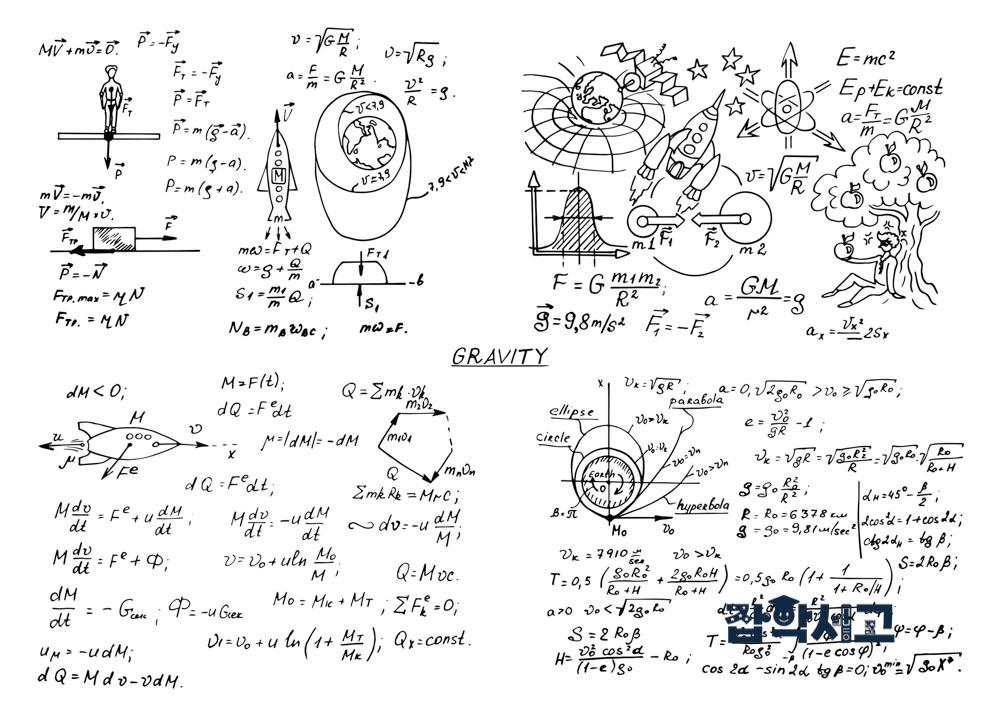
Gravity is scientifically defined as the force by which objects attract one another, and it is described as being inversely proportional to the objects' masses and the square of the distance between them. This definition was first systematized through Isaac Newton's law of universal gravitation. In the late 17th century, Newton explained gravity mathematically in his book "Principia," providing an important foundation for understanding the motions of Earth and celestial bodies.
Newton's Law of Universal Gravitation
Newton's theory of gravity became a fundamental principle of astronomy and physics for centuries afterward. His theory made a major contribution to explaining planetary orbits, changes in the tides, and free-fall motion. These achievements by Newton remain an important foundation for our understanding of gravity today.
The Innovation of General Relativity
As the 20th century began, our understanding of gravity underwent a revolutionary change through Einstein's theory of general relativity. Einstein explained gravity as a phenomenon in which objects curve spacetime, presenting a new paradigm that went beyond traditional Newtonian mechanics. His theory allows the effects of gravity to be explained more accurately, particularly for massive celestial bodies or under extreme conditions.
Gravity Under Extreme Conditions
For example, gravity associated with celestial bodies such as neutron stars and black holes exhibits complex phenomena that Newton's theory cannot adequately explain. Einstein's theory of general relativity accurately explains the effects of gravity even under these extreme conditions, and this remains an important area of research in modern astrophysics.
The Philosophical, Religious, and Social Contexts of Gravity
Looking at the historical background of gravity, our understanding of it did not depend solely on scientific research. Gravity has also played an important role in philosophical, religious, and social contexts. For example, ancient Greek philosophers understood gravity as the "order of nature," while in medieval Europe it was sometimes regarded as divine providence.
Understanding Gravity in Modern Science
These varied perspectives on gravity provided an important background for our scientific understanding of it today. An in-depth exploration of gravity's scientific definition and historical background can be considered an important process for better understanding its nature and thereby expanding human knowledge.
The Role of Gravity: Analyzing Its Influence on the Solar System and Earth
 What Role Does Gravity Play?
The Structure and Stability of the Solar System
Earth's gravity plays an important role in maintaining the structure and stability of the solar system. Gravity between the Sun and the planets keeps the planets moving along their orbits, maintaining order in the solar system. For example, Earth's orbit around the Sun proceeds at a constant speed under the influence of the Sun's gravity, causing seasonal changes and providing an important environment for life on Earth.
Tides and Marine Ecosystems
Gravity between the Moon and Earth causes changes in the tides. Tides have a profound influence on marine ecosystems, playing an important role in the survival and reproduction of marine organisms and in changes to the terrain of coastal areas. These tidal changes are also an important factor in various fields, including fishing, maritime transport, and marine research.
The Atmosphere and Weather
Gravity also affects the structure and movement of the atmosphere. Earth's gravity holds the atmosphere to Earth's surface, providing the air we can breathe. Atmospheric movement plays an important role in changes in weather and climate, which are directly connected to humanity's living environment.
The Structure and Movement of Earth's Interior
Gravity also affects the structure and movement of Earth's interior. For example, movement in Earth's mantle and core is regulated by Earth's gravity, playing an important role in geological phenomena such as earthquakes, volcanic activity, and continental drift. These geological phenomena have a profound influence on Earth's environment and human life.
Artificial Satellites and Communications
Gravity also affects the orbits and motion of artificial satellites. Artificial satellites move along their orbits under Earth's gravity and are used for various purposes, including communications, weather observation, and exploration. Accurately understanding and controlling the effects of gravity is an important factor in optimizing the operation and performance of artificial satellites.
Sports and Everyday Life
Finally, gravity also plays an important role in sports and everyday life. For example, athletes can achieve their best performance by understanding and using the effects of gravity. We also use gravity in everyday life to lift objects, move, and carry out various activities. Accurately understanding the role of gravity is an important factor in making our lives more convenient and efficient.
The Latest Trends in Gravity Research: New Discoveries by Scientists
 What Are Gravitational Waves?
The Discovery of Gravitational Waves
Gravity research is continually advancing at the forefront of modern science. In recent years, scientists have made important progress in unraveling the secrets of the universe through new discoveries about gravity. One of these is the discovery of gravitational waves. In 2015, scientists succeeded in observing gravitational waves for the first time, an important discovery that confirmed Einstein's prediction.
The Importance of Gravitational Waves
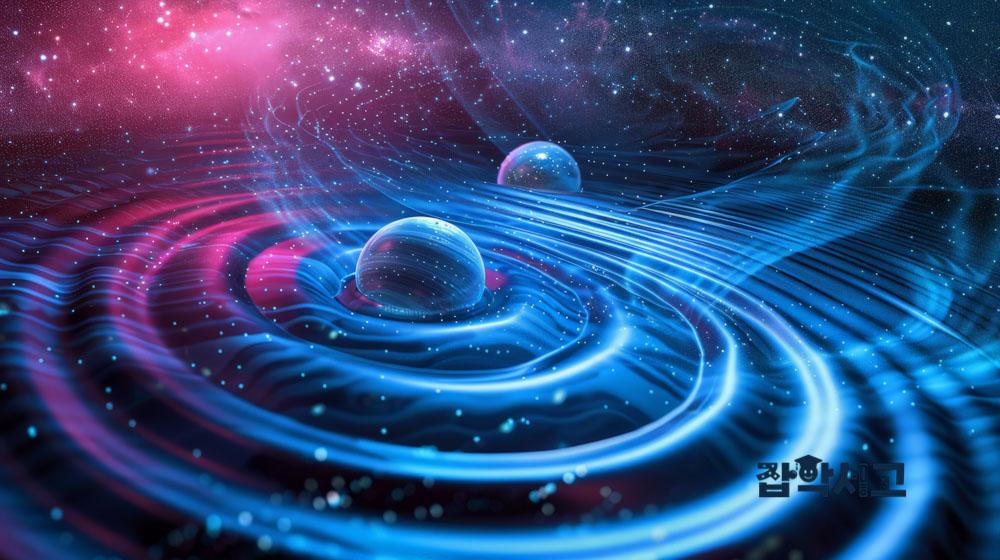
Gravitational waves are ripples in spacetime generated when two massive celestial bodies collide or merge. Technology for detecting these gravitational waves can serve as an important tool for studying extreme environments in the universe. For example, gravitational wave detection can make a major contribution to studying various phenomena, including the mergers of black holes or neutron stars and the formation of the early universe.
Measuring Subtle Variations in Earth's Gravity
Scientists are developing technologies to measure subtle variations in Earth's gravity. These play an important role in improving the accuracy of GPS systems and monitoring various changes in Earth's environment, including crustal movement, ocean circulation, and ice loss. Such research can provide important information for addressing climate change and protecting the environment.
The Influence on Space Exploration and Aerospace Engineering
Gravity research is also having a major influence on space exploration and aerospace engineering. For example, accurately understanding and using gravity is an important factor in spacecraft orbit design, fuel efficiency, and landing techniques. The latest trends in gravity research can increase the chances of successful space exploration and further accelerate humanity's expansion into space.
Research into Unifying Gravity and Quantum Mechanics
Gravity research plays an important role in exploring fundamental questions in modern physics. For example, scientists are working to develop a theory that unifies gravity and quantum mechanics. Such research can make an important contribution to understanding the fundamental structure of the universe and the principles by which it operates.
In conclusion, the latest trends in gravity research play an important role in advancing science and technology and expanding human knowledge. New discoveries about gravity can make an important contribution to helping us better understand the universe and Earth and thereby improve our lives.
Gravity is an essential force deeply embedded in our everyday lives and in science and technology. This article has examined the nature of gravity, its scientific definition and historical background, its role in the solar system and on Earth, and the latest trends in gravity research.
An in-depth understanding of gravity will make an important contribution to helping us better explore the universe, protect Earth's environment, and expand human knowledge. Gravity research will remain an important scientific task, and through it we will be able to build a better future.