In recent years, fine particulate matter has emerged as a major problem threatening the environment and human health. It is frequently found all around us, and its adverse effects are far too serious to ignore.
This article aims to examine in depth the definition and characteristics of fine particulate matter, its main sources, its effects on health, and effective measures to address it.
What Is Fine Particulate Matter? Definition and Basic Characteristics
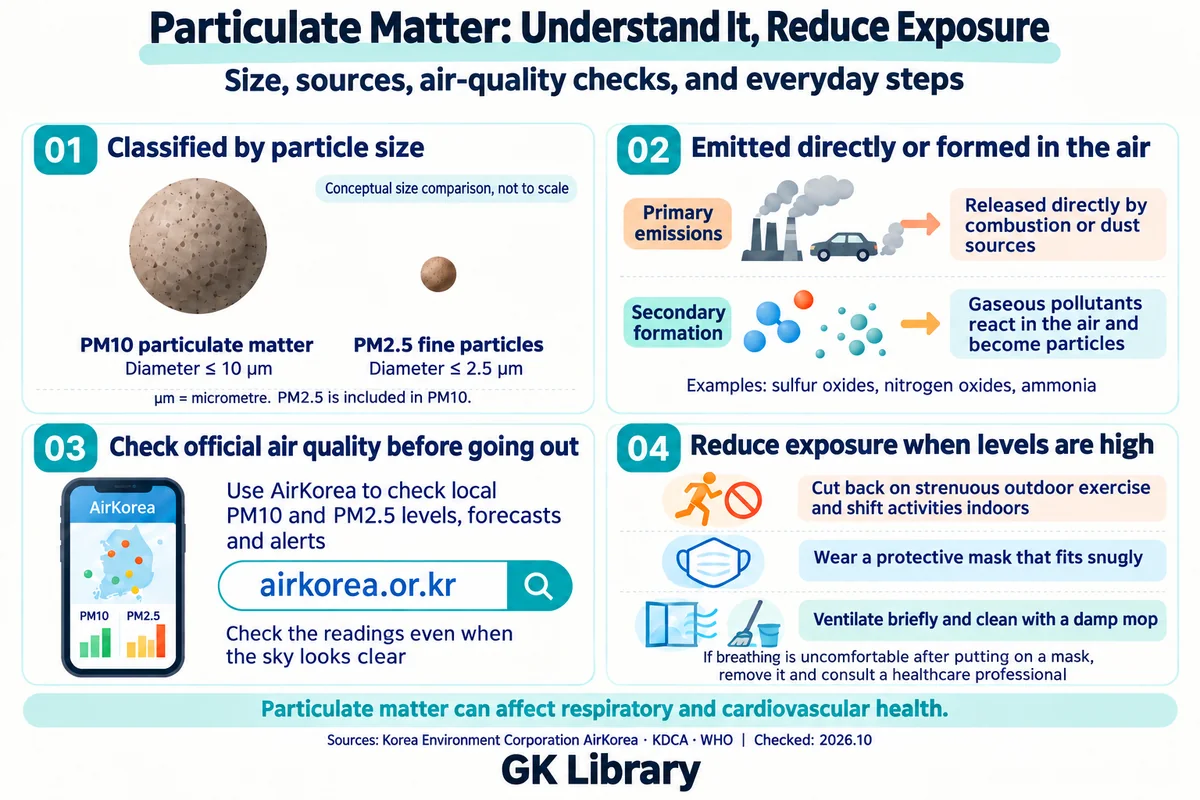
 What is fine particulate matter?
Fine particulate matter refers to extremely small particles that float or drift in the atmosphere. These particles are classified by diameter as PM10 and PM2.5, with PM10 referring to particles with a diameter of 10 micrometers or less and PM2.5 referring to particles with a diameter of 2.5 micrometers or less. These small particles remain suspended in the air and can easily enter the human body through the respiratory tract.
Main Sources of Fine Particulate Matter
The concentration of fine particulate matter in the atmosphere increases as industrialization and urbanization progress. Vehicle exhaust and factory emissions are major sources, particularly in urban areas. For this reason, people are often advised to avoid going out and stay indoors on days when fine particulate matter concentrations are high.
Components of Fine Particulate Matter and Their Effects
Fine particulate matter consists of various components. Common examples include sulfates, nitrates, ammonia, sodium salts, calcium, and magnesium. These components affect health and the environment in various ways depending on their respective physical and chemical properties.
Natural Sources and Seasonal Characteristics
Fine particulate matter can also occur naturally. Examples include Asian dust blown in from deserts, smoke from wildfires, and salt particles originating in the ocean. These natural sources have seasonal characteristics and occur predominantly at particular times.
The Mobility of Fine Particulate Matter and Its International Impact
Fine particulate matter can remain in the atmosphere for a long time and travel long distances. This means it can affect areas other than the region where it originated. Accordingly, fine particulate matter is recognized as an international problem extending beyond local concerns.
The Correlation Between Fine Particulate Matter and Climate Change
Finally, fine particulate matter can also affect climate change. It can alter temperatures by absorbing or reflecting solar radiation in the atmosphere. For this reason, the problem of fine particulate matter is closely related to climate change.
Main Sources of Fine Particulate Matter: Industry and Everyday Life
 What are the main sources of fine particulate matter?
The sources of fine particulate matter can broadly be divided into industrial sources and sources associated with everyday life. The main industrial sources are various pollutants emitted by factories, power plants, and construction sites. These pollutants undergo chemical reactions in the atmosphere and are converted into fine particulate matter, accounting for a significant portion of air pollution.
Industrial Sources: The Impact of Factories and Power Plants
Factories are among the main industrial sources of fine particulate matter. Various chemicals, metal particles, and gases released during manufacturing processes enter the atmosphere and can be converted into fine particulate matter. In particular, coal-fired power plants emit sulfur oxides and nitrogen oxides into the atmosphere, which act as major constituents of fine particulate matter. Factories in heavy industries such as cement, steel, and petrochemicals also release large amounts of air pollutants along with fine particulate matter, adversely affecting local air quality.
The Contribution of Construction Sites
Construction sites also contribute significantly to the generation of fine particulate matter. Large quantities of fine particulate matter can arise from fugitive dust generated by construction activities, the movement of materials, and the use of heavy machinery. In particular, fine particulate matter generated during building demolition or road construction spreads to surrounding areas and worsens air quality.
The Impact of Vehicle Exhaust
Vehicle exhaust is a major source of fine particulate matter. In particular, fine particulate matter emitted by diesel vehicles is classified as PM2.5 and is known to be highly harmful to health. For this reason, many countries are tightening emission standards for diesel vehicles, which plays an important role in improving air quality.
Fine Particulate Matter Generated in Everyday Life
Sources associated with everyday life include household heaters, cooking appliances, and smoking. In particular, burning coal, wood, and other fuels for heating in winter generates large amounts of fine particulate matter, which can worsen indoor air quality and cause respiratory diseases. Vacuum cleaners and aerosol products used in the home can also be sources of fine particulate matter. Because these products release large amounts of fine particles into the air during use, fine particulate matter concentrations also need to be carefully managed indoors.
Agricultural Activities and Fine Particulate Matter
Agricultural activities are another source of fine particulate matter. Particles generated when fertilizers or pesticides are applied remain suspended in the atmosphere, and harvesting crops can also produce large amounts of dust. Although these agricultural activities mainly take place in rural areas, attention is needed because wind can carry their effects into urban areas.
Natural Factors and Fine Particulate Matter
Finally, natural factors include Asian dust, wildfires, and sea salt. These factors have seasonal characteristics and occur predominantly at particular times. For example, fine particulate matter concentrations tend to rise sharply during the spring Asian dust season. Natural factors should also be recognized as an important consideration in addressing the problem of fine particulate matter.
The Effects of Fine Particulate Matter on Health: Risks and Symptoms
 How does fine particulate matter affect our health?
Fine particulate matter can enter the body through the respiratory tract and cause various health problems. It can cause a range of diseases and symptoms across multiple bodily systems and pose a particularly serious threat to health over the long term. Its effects can become more severe depending on the size and composition of the particles. Although people of all ages are at risk, vulnerable groups such as children, older adults and people in poor health, and pregnant women face greater risks.
Respiratory Diseases
Fine particulate matter can cause respiratory diseases such as bronchitis, asthma, and emphysema. In particular, the extremely small size of PM2.5 allows it to penetrate deep into the lungs and cause inflammation, which can impair respiratory function and lead to chronic respiratory diseases. Long-term exposure to fine particulate matter can gradually reduce lung function and develop into serious diseases such as chronic obstructive pulmonary disease (COPD).
Cardiovascular Diseases
Cardiovascular diseases are another major health problem that can result from fine particulate matter. Fine particulate matter can enter the bloodstream and spread throughout the body through blood vessels, causing vascular inflammation and serious conditions such as increased blood pressure, myocardial infarction, and stroke. Research indicates that mortality from cardiovascular diseases tends to increase on days when fine particulate matter concentrations are high, posing a particularly significant risk to older adults and people with existing cardiovascular diseases.
Weakened Immune Function
Fine particulate matter can also negatively affect the immune system. Long-term exposure can weaken immune function, making people more susceptible to infectious diseases. This happens because the body's ability to fight external pathogens is weakened, and children, older adults, and people in poor health are especially vulnerable to these effects. Weakened immunity can aggravate infectious diseases such as colds and pneumonia as well as allergic reactions.
Skin Conditions
Fine particulate matter also directly affects the skin. When airborne fine particulate matter comes into contact with the skin, it can cause inflammation and lead to skin conditions such as hives and atopic dermatitis. As the particles adhere to the skin, they can clog pores and damage the skin's natural barrier, worsening skin problems. Fine particulate matter can also accelerate skin aging, leading to problems such as wrinkles and pigmentation, and these effects can become more severe with long-term exposure.
Mental Health Problems
Fine particulate matter can also negatively affect mental health. Research indicates that mental health problems such as depression and anxiety tend to increase on days when fine particulate matter concentrations are high. This is interpreted as resulting from fine particulate matter directly affecting the brain or promoting the secretion of stress hormones. In particular, people exposed to fine particulate matter over a long period may face increased risks of anxiety disorders, depression, and cognitive decline.
Reproductive Health and Birth-Related Problems
Fine particulate matter can also affect reproductive health. Women exposed to fine particulate matter over a long period may face increased risks of premature birth, low birth weight, and miscarriage, and this is known to adversely affect fetal development. In men, exposure to fine particulate matter can cause problems such as reduced sperm counts and decreased sperm motility, affecting reproductive ability. It is therefore important for women of childbearing age and pregnant women to minimize exposure to fine particulate matter.
Long-Term Health Problems and Cancer Risk
Long-term exposure to fine particulate matter can increase the risk of developing cancer. In particular, links with lung cancer and bladder cancer have been suggested. Carcinogens in fine particulate matter are known to increase cancer risk as they accumulate in the body. This suggests that fine particulate matter can cause fatal diseases in humans over the long term, extending beyond short-term risks.
Fine particulate matter has a wide range of effects, and long-term exposure can reduce overall quality of life and cause serious health problems. It is therefore important to minimize exposure and take active preventive measures.
Effective Measures to Address the Problem of Fine Particulate Matter
 What measures can be taken to address fine particulate matter?
Various measures are needed to address the problem of fine particulate matter. Approaches addressing industry, everyday life, and public policy are all important.
Reducing Emissions from Industrial Facilities and Vehicles
First, it is essential to reduce emissions from industrial facilities and vehicles. Governments should establish stricter emission standards and promote the introduction of environmentally friendly vehicles and process technologies. It is important to strengthen systems for monitoring and regulating emissions from factories and power plants to reduce fine particulate matter generation at its source.
Efforts to Reduce Fine Particulate Matter in Everyday Life
Second, efforts are needed to reduce the generation of fine particulate matter in everyday life. At home, it is advisable to use environmentally friendly products such as electric heaters and induction cooktops and install air purifiers to keep indoor air clean. Combining vacuuming with damp mopping can minimize dust generation.
Encouraging Public Transport and Environmentally Friendly Travel
Third, policies are needed to promote the use of public transport and encourage environmentally friendly ways of getting around, such as cycling and walking. These measures reduce traffic volume and consequently decrease vehicle emissions. It is also important to expand bicycle lanes and pedestrian paths in cities so that residents can use them more conveniently.
Guidelines for Days with High Fine Particulate Matter Concentrations
Fourth, people are advised to avoid going out and stay indoors on days when fine particulate matter concentrations are high. Particular care is needed for children, older adults, and people in poor health because they are more vulnerable to fine particulate matter. When going out, it is important to wear a mask to minimize exposure.
Cooperation Between Governments and the Public
Fifth, governments and the public need to work together to address the problem of fine particulate matter. Governments should provide accurate information and implement effective policies, while members of the public should participate in reducing fine particulate matter generation by improving their personal habits. Raising public awareness through education and outreach about fine particulate matter is also an important task.
The Importance of International Cooperation
Finally, international cooperation is necessary because fine particulate matter can travel across national borders. Countries should share technologies and policies for reducing fine particulate matter and jointly develop response measures. Continued research and development to address the problem of fine particulate matter through international cooperation are needed.
Fine particulate matter has become a significant problem threatening the environment and human health in modern society. This article has examined its definition and characteristics, its main sources, its effects on health, and various measures to address it.
The problem of fine particulate matter is not limited to a particular region or country; it is a challenge that the entire world must address together. Accordingly, governments, the public, and the international community should cooperate to resolve it.