Have you ever felt a little warmer after a hearty lunch? It is not just your imagination. Your body spends energy while it chews, digests, absorbs and stores food, and that work gives off heat. The energy used to process the food you eat is called the ‘Thermic Effect of Food’.
Simply put, the thermic effect of food means ‘the extra energy the body spends, above its usual level, to digest, absorb and store a meal’. It is also called diet-induced thermogenesis, and it became known as ‘Specific Dynamic Action’ through the work of German physiologist Max Rubner from the late 19th to the early 20th century.
In this article, we will look in turn at where the thermic effect of food fits in daily energy expenditure, why it differs from nutrient to nutrient, what raises or lowers it, and common misconceptions and sensible ways to use it.
It Takes Energy to Eat
The Three Parts of Daily Energy Expenditure

The energy we use each day falls into three broad parts: the energy we burn even while at rest, the energy we use to process food, and the energy we spend moving. The thermic effect of food is the smallest of the three, but it is spent every single day.
The reason to single it out is that this share changes with what we eat. Basal metabolism depends largely on body size and age, and activity depends on lifestyle, but the thermic effect is tied directly to the content of a meal.
(1) Basal Metabolic Rate
This is the energy needed to breathe, keep the heart beating and maintain body temperature. It makes up about 60–70% of daily energy expenditure, the largest share.
(2) Thermic effect of food
This is the energy used to process food, usually taken as about 10% of daily energy expenditure. For someone eating 2,000 kcal a day, roughly 200 kcal goes into processing that food.
(3) Physical activity energy
This is the energy spent moving the body, such as walking, exercise and housework. It fills the remaining share and is the part that varies most from person to person depending on lifestyle.
Different Nutrients, Different Thermic Effects
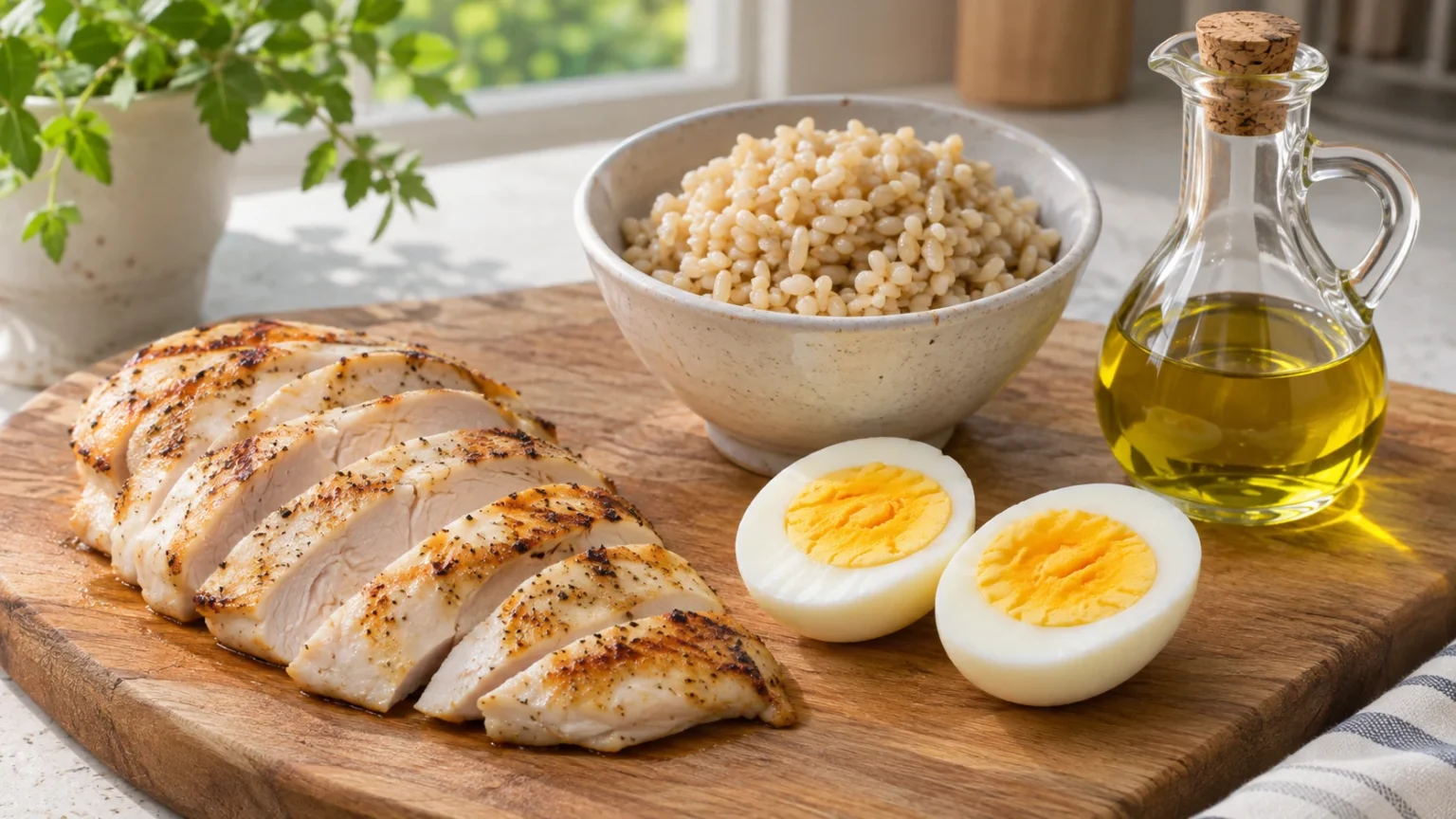
Even with the same number of calories, the cost of processing differs greatly by nutrient. Taken together, studies suggest that the share of eaten calories used up by the thermic effect is roughly as follows.
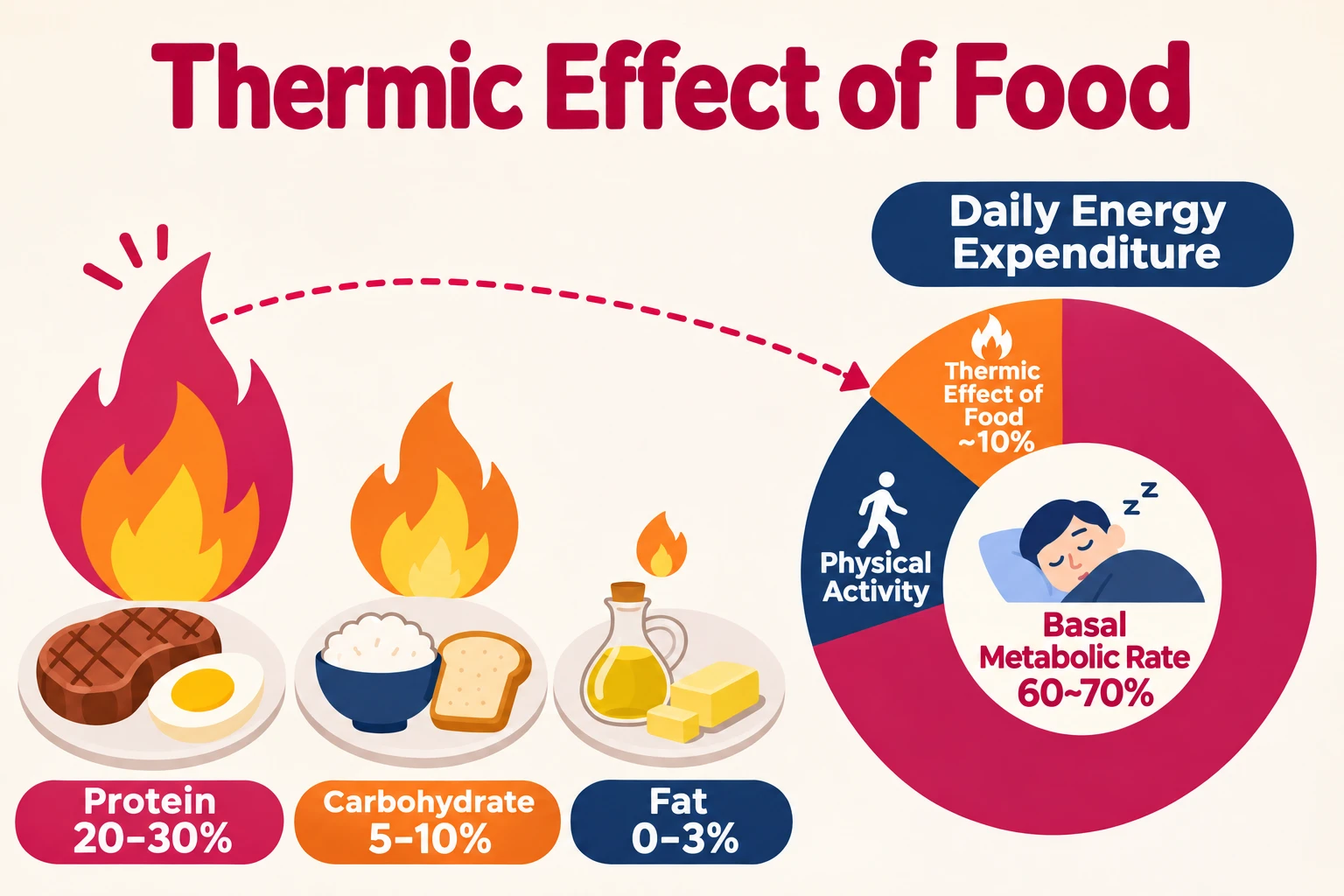
- Protein: about 20–30%. Breaking down amino acids and converting nitrogen into urea for excretion takes a lot of energy.
- Carbohydrate: about 5–10%. Energy is needed to convert glucose into glycogen for storage.
- Fat: about 0–3%. It is stored in fat tissue without much change, so its processing cost is the lowest.
- Alcohol: about 10–30%. The body cannot store it, so it is broken down first.
(1) What 100 kcal of protein means
When you eat 100 kcal of protein, 20–30 kcal of it is used up in processing. The same 100 kcal of fat costs only a few kcal.
(2) Differences in storage
The body can store fat almost as it is, but protein has no dedicated storehouse, so breaking it down and handling it takes much more work.
(3) Mixed meals
Real meals contain a mix of nutrients, so in a typical diet about 10% of total calories, give or take, goes to the thermic effect.
What Changes the Thermic Effect
The thermic effect of food rises within an hour or two after a meal and then slowly returns to normal over several hours. Its size depends on what and how much you ate and on the condition of the person eating.
So even meals with the same calories can lead to slightly different amounts of energy actually spent on processing, depending on the person and the situation.
(1) Meal size and composition
The more you eat at once, the larger the absolute thermic effect, and the higher the share of protein, the higher the percentage.
(2) Degree of processing
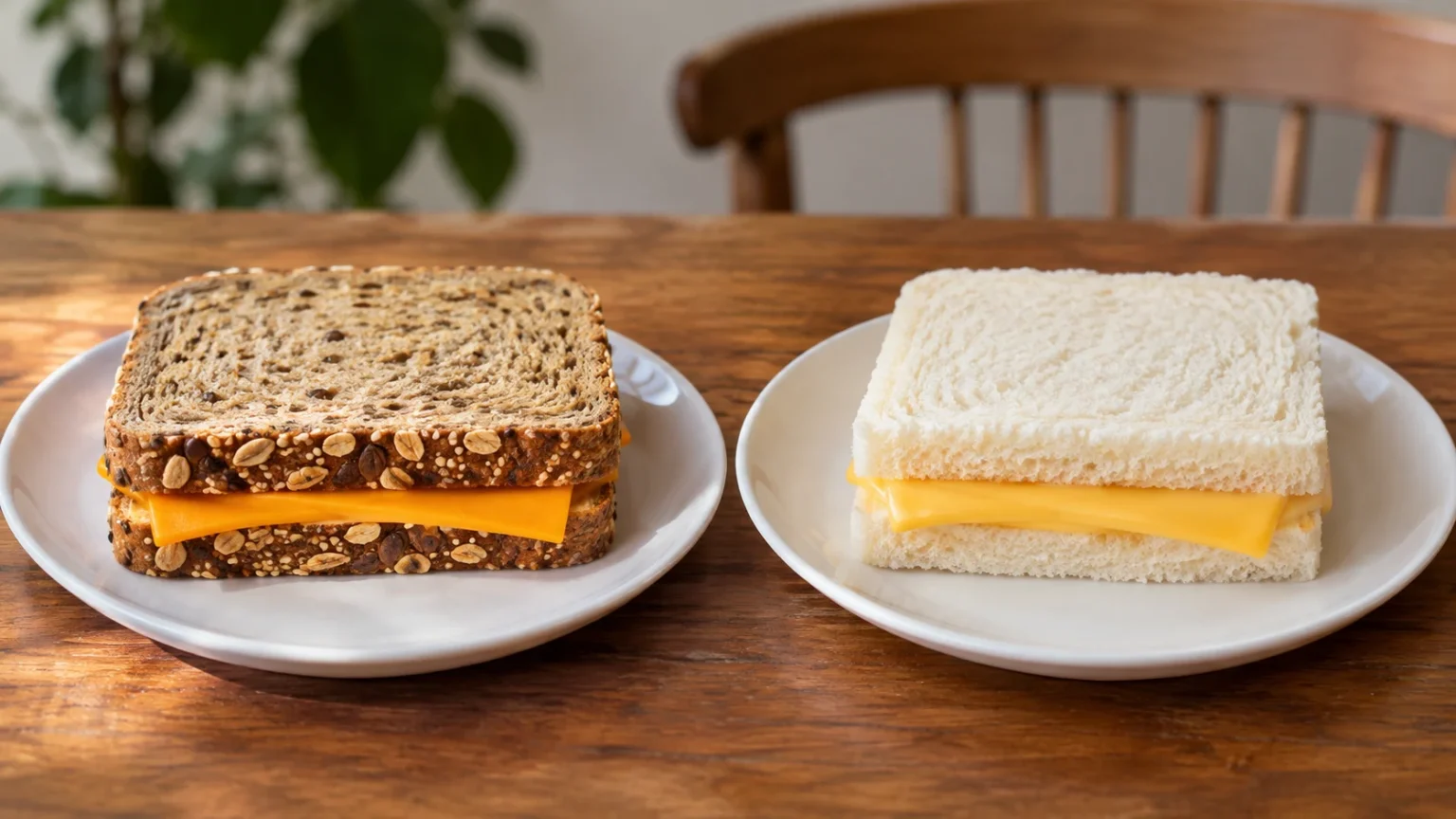
A study comparing a sandwich made with whole-grain bread and natural cheese with one made with refined white bread and processed cheese (Barr & Wright, 2010) found lower energy expenditure after the processed meal. Less processed food seems to take more effort to digest.
(3) Age and physical condition
Some reports show a somewhat lower thermic effect in older people and in people with insulin resistance. However, individual differences are large, so it is hard to pin down a value for any one person.
Misconceptions and Sensible Use

The thermic effect of food comes up often in diet talk, but it is frequently exaggerated. It is important to know its real size before putting it to use.
In particular, claims like ‘just eat this food and the weight will melt away’ usually overstate the thermic effect of food.
(1) There are no negative-calorie foods
Some say that eating very low-calorie vegetables such as celery makes you lose weight because digesting them costs more energy than they provide, but there is no scientific evidence for this. The thermic effect is only a fraction of the calories eaten.
(2) The real effect of high-protein diets
Protein has a large thermic effect and keeps you full longer, which can help with controlling how much you eat. But the extra energy spent is only a few dozen kcal a day, so it will not change body weight much on its own.
(3) Measured by indirect calorimetry
Researchers calculate the thermic effect with indirect calorimetry, which measures the oxygen breathed in and the carbon dioxide breathed out before and after a meal. Because measurements must run for several hours, values differ slightly from study to study.
In short, the thermic effect of food is a small share of daily energy expenditure, but it shifts a little with habits such as getting enough protein, which is costly to process, and choosing less processed foods. Looking at the balance of the whole meal is wiser than relying on a single number.
The simple idea that even one meal is work the body has to process — that is the first step to understanding the thermic effect of food.