Bite into a Cheongyang chili pepper and your mouth catches fire and your eyes well up with tears. A bell pepper tastes only mildly sweet, yet some peppers make you gulp down several cups of water. So could this heat be compared as a single number, rather than as a feeling that differs from person to person?
The standard created to answer that question is the “Scoville Scale.” It expresses how hot a pepper is as a number called the Scoville Heat Unit, or SHU for short, and was first devised in 1912 by the American pharmacist Wilbur Scoville.
This article looks in turn at what spiciness really is, how the Scoville Scale is measured, how hot different peppers are, and the science of taming the burn.
Spiciness in Numbers: How the Scoville Scale Works and How It Is Used
Spiciness Is Not a Taste but Pain
Spiciness is often thought of as one of the tastes, like sweet or salty, but scientifically it is a sensation picked up not by the taste buds on the tongue but by the nerves that sense pain.
(1) The Hot Compound in Peppers: Capsaicin
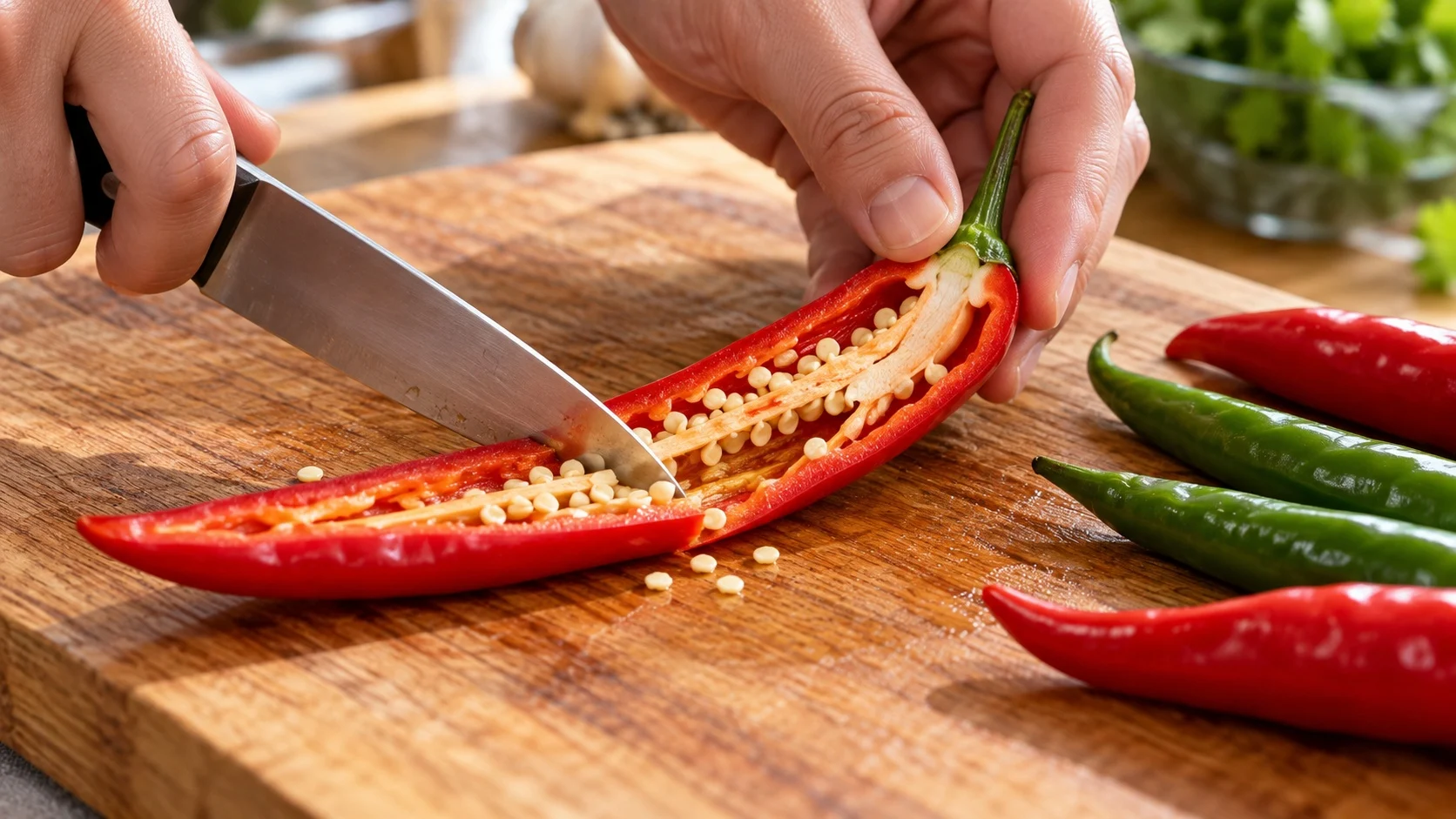
What makes peppers hot is a group of compounds called capsaicinoids (Capsaicinoids), including capsaicin (Capsaicin). Capsaicin is found throughout the pepper, but it is most concentrated near the white inner part where the seeds are attached.
(2) The Sensor That Signals Heat: TRPV1
The nerves in our body have a receptor called TRPV1 that detects heat above about 43 degrees Celsius. Capsaicin binds to this very receptor and sends the brain a “hot” signal even though nothing is actually hot. That is why spicy food makes us sweat and our faces flush. The research that identified this receptor led to the 2021 Nobel Prize in Physiology or Medicine. Many people also say they feel good after eating spicy food; one explanation is that the body releases endorphins to counter the pain, but this has not yet been firmly established.
(3) Birds Don’t Feel the Heat
Birds’ TRPV1 does not respond to capsaicin. The pepper drives away mammals that grind up its seeds with spiciness, while offering its fruit to birds that swallow the seeds whole and spread them far, which is interpreted as the pepper’s survival strategy.
Measuring Spiciness by Tongue, Then by Machine

The Scoville Scale was first measured with the human tongue, and today it is measured with analytical machines.
(1) The Scoville Organoleptic Test
Scoville’s method was to weigh dried peppers precisely, dissolve them in alcohol to extract the hot compounds, and then dilute the extract in sugar water, step by step. Five trained tasters sampled it, and the dilution continued until three or more of them could no longer detect any heat. The dilution factor at that point became the Scoville value.
(2) The Limits of the Human Tongue
People differ in how strongly they sense heat, and the tongue quickly becomes numb after only a few tastings. As a result, measurements of the same pepper differed by as much as 50% from lab to lab.
(3) High-Performance Liquid Chromatography
Since the 1980s, the concentration of capsaicinoids has been measured directly with a machine called high-performance liquid chromatography (High-Performance Liquid Chromatography), or HPLC for short. The measured concentration is multiplied by a fixed factor to convert it into SHU, giving an objective number free of human perception. Keep in mind, however, that Scoville values are calculated based on the weight of dried peppers, so hot sauces with a lot of water or fresh peppers come out with lower values even with the same compounds.
Comparing the Scoville Ratings of Peppers
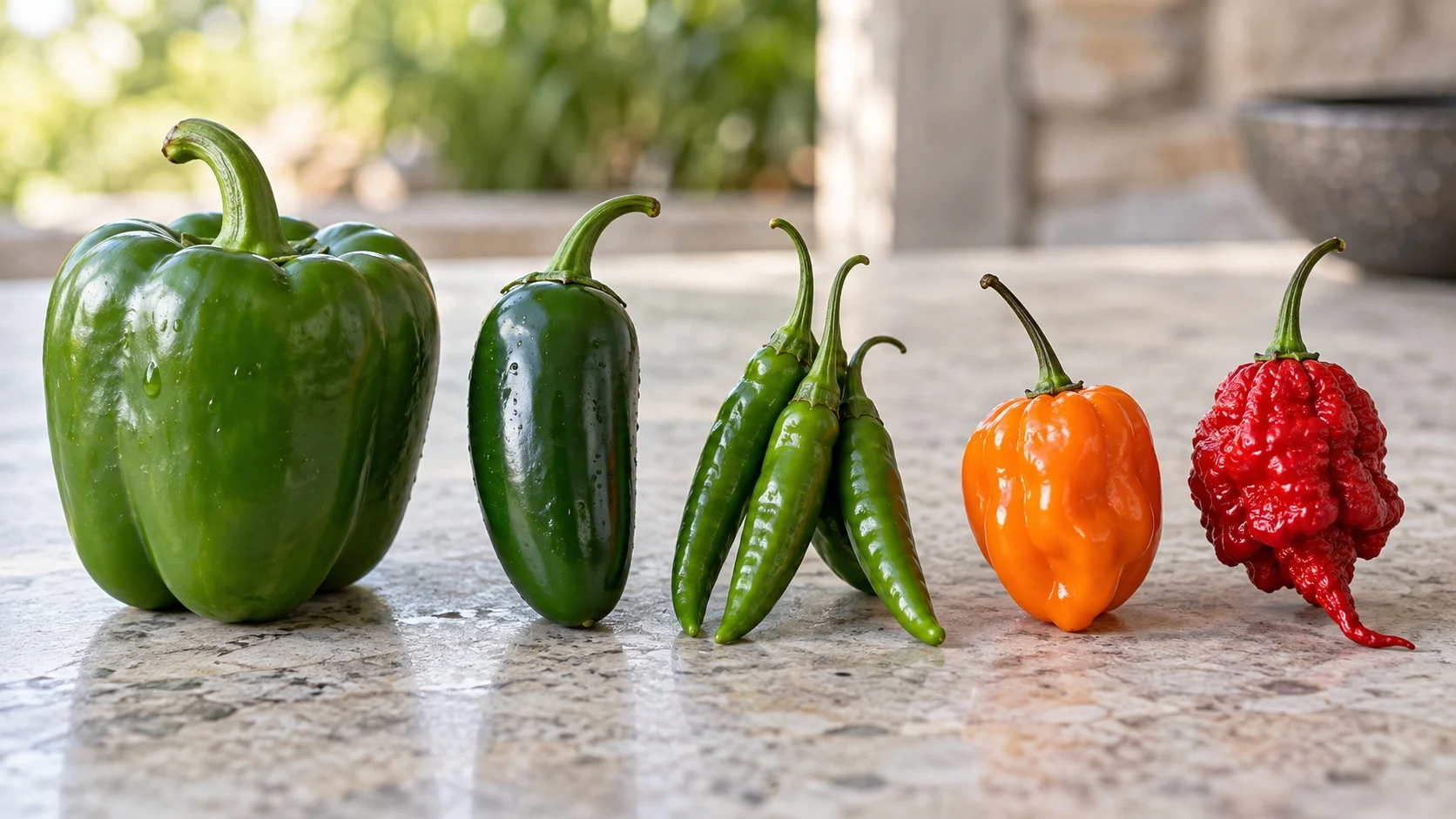
Lined up on the Scoville Scale, peppers turn out to differ in heat by a factor of thousands.
- Bell pepper (Bell Pepper): it has almost no capsaicin, at 0 SHU.
- Jalapeño (Jalapeño): about 2,500–10,000 SHU, the classic moderately hot pepper.
- Cheongyang chili pepper (Cheongyang Chili Pepper): about 10,000–25,000 SHU, several times hotter than a jalapeño. Its name comes from the first syllables of Cheongsong and Yeongyang in North Gyeongsang Province.
- Habanero (Habanero): reaches about 100,000–350,000 SHU.
- Carolina Reaper (Carolina Reaper): about 1.5 million–2.5 million SHU, long ranked as the world’s hottest pepper.
- Pepper X (Pepper X): measured at about 2.69 million SHU, breaking that record.
Pure capsaicin reaches 16 million SHU. However, even the same variety can vary in heat more than tenfold depending on climate, soil, and growing conditions, so these numbers are best understood as rough ranges.
The Science of Taming the Burn
Once you understand the Scoville Scale, you can also see smart ways to handle spiciness.
(1) Milk Rather Than Water
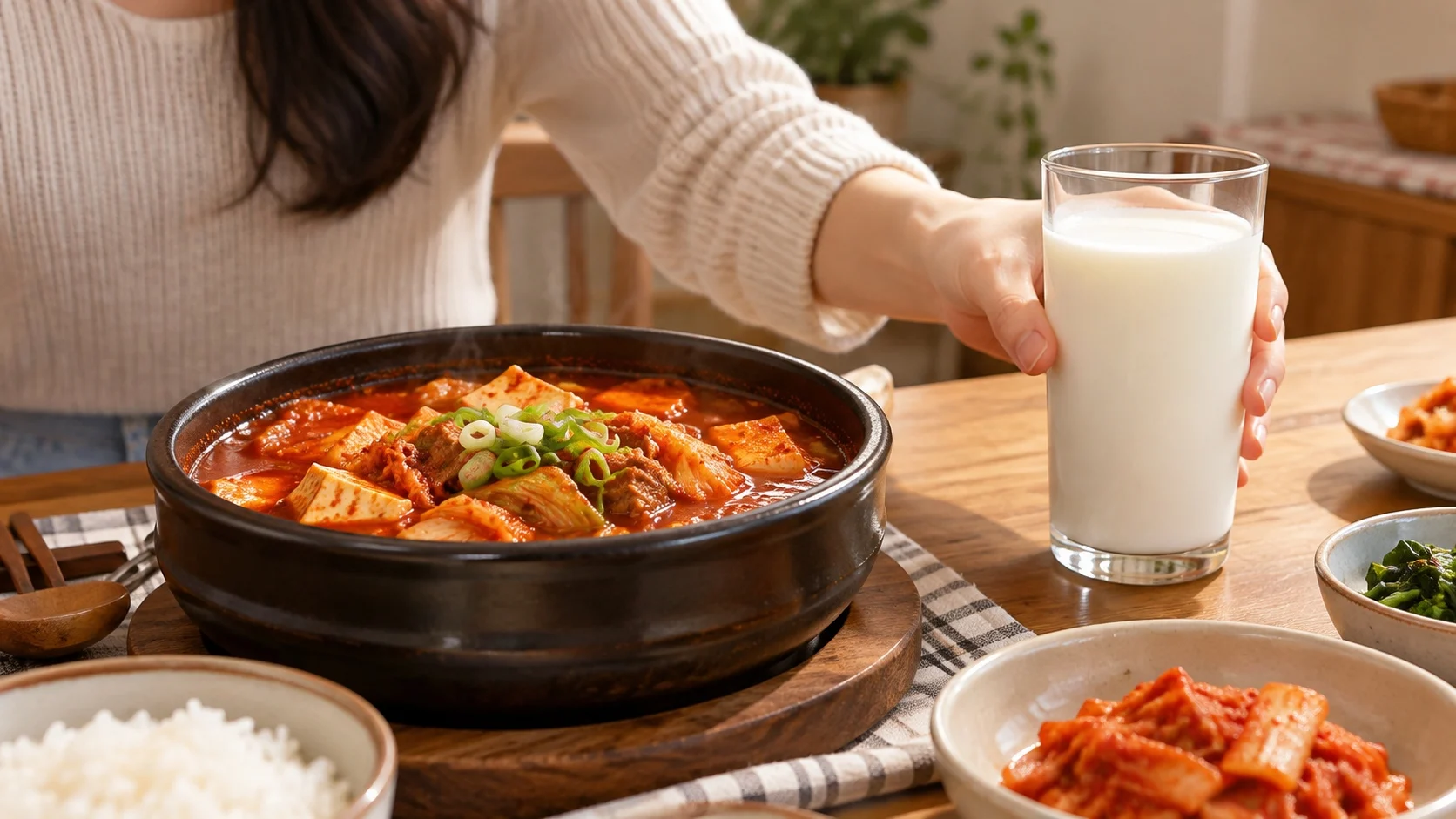
Capsaicin dissolves well in oil and alcohol but hardly at all in water. That is why drinking cold water doesn’t do much to ease the burn. Casein (Casein), a protein in milk, helps wrap up and wash away capsaicin, so milk works better than water when things get too hot.
(2) Cooking Methods That Control the Heat
Removing a pepper’s seeds and white inner part makes it much milder. Conversely, if you want to bring out the heat, stir-fry the peppers in oil to draw out the capsaicin.
(3) Beware of Too Much Heat
Eating a lot of very hot peppers at once can cause nausea, vomiting, and stomach pain. Rubbing your eyes with hands that have handled peppers causes severe pain and tears, so it is safest to wear gloves when handling hot peppers.
The Scoville Scale turned spiciness, which everyone used to feel differently, into a number anyone can compare. Thanks to it, we can gauge heat far more accurately than a few chili icons on a menu.
Knowing in numbers where your own comfortable level of heat lies, and enjoying it, is the first step toward a healthy and enjoyable life with spicy food.