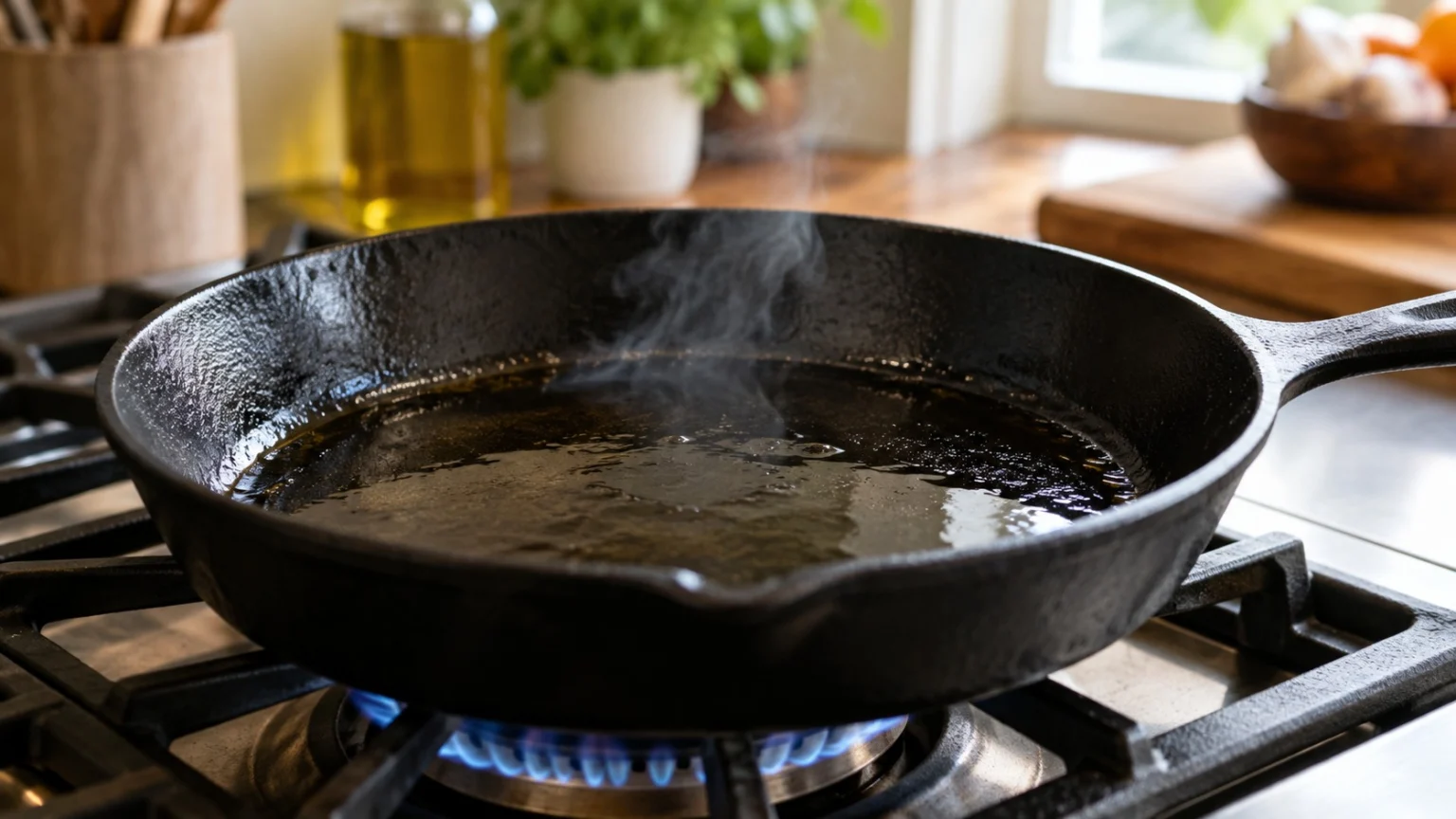
If you heat oil in a frying pan and look away for a moment, thin wisps of bluish smoke begin to rise from the pan. An acrid smell spreads through the kitchen, and your eyes may even start to sting. On the same heat, some oils smoke almost at once while others hold out for quite a while. That is because each oil tolerates a different temperature, and the word for that threshold is the “smoke point.”
Put simply, the smoke point means “the temperature at which an oil or fat, when heated, begins to give off a continuous, clearly visible bluish smoke.” It is a sign that the oil can no longer withstand the heat and has started to break down, and it is widely used as a guide for choosing which oil to cook with.
In this article, we will look in turn at why oil smokes, the factors that determine the smoke point, how the temperature differs from oil to oil, and what the smoke point alone cannot tell you.
The Temperature at Which Oil Starts to Smoke: How the Smoke Point Works and How to Use It
Why Does Oil Smoke?
Most of the oils we eat are triglycerides, in which three fatty acids are attached to a single molecule of glycerol. When oil is heated for a long time or at high heat, these bonds break and fatty acids split off, and the remaining glycerol breaks down further at high temperatures into a substance called acrolein. Acrolein is the main cause of oil smoke and gives off an acrid smell that stings the eyes and nose.
(1) Smoke Point, Flash Point, and Fire Point
As the temperature of oil keeps rising, it crosses three thresholds in turn.
- Smoke point: The temperature at which bluish smoke begins to rise continuously.
- Flash point: The temperature at which vapor from the oil briefly ignites when a spark or flame is brought near; it is much higher than the smoke point.
- Fire point: The temperature at which the oil, once ignited, keeps burning without going out.
(2) The Warning Smoke Sends
Smoke means the oil is breaking down, its flavor and aroma are deteriorating, and substances that are bad for the body have begun to form. There is no need to be overly afraid of the occasional smoke at home, but it is best to avoid breathing in a lot of smoke for a long time in a small kitchen.
Factors That Determine the Smoke Point
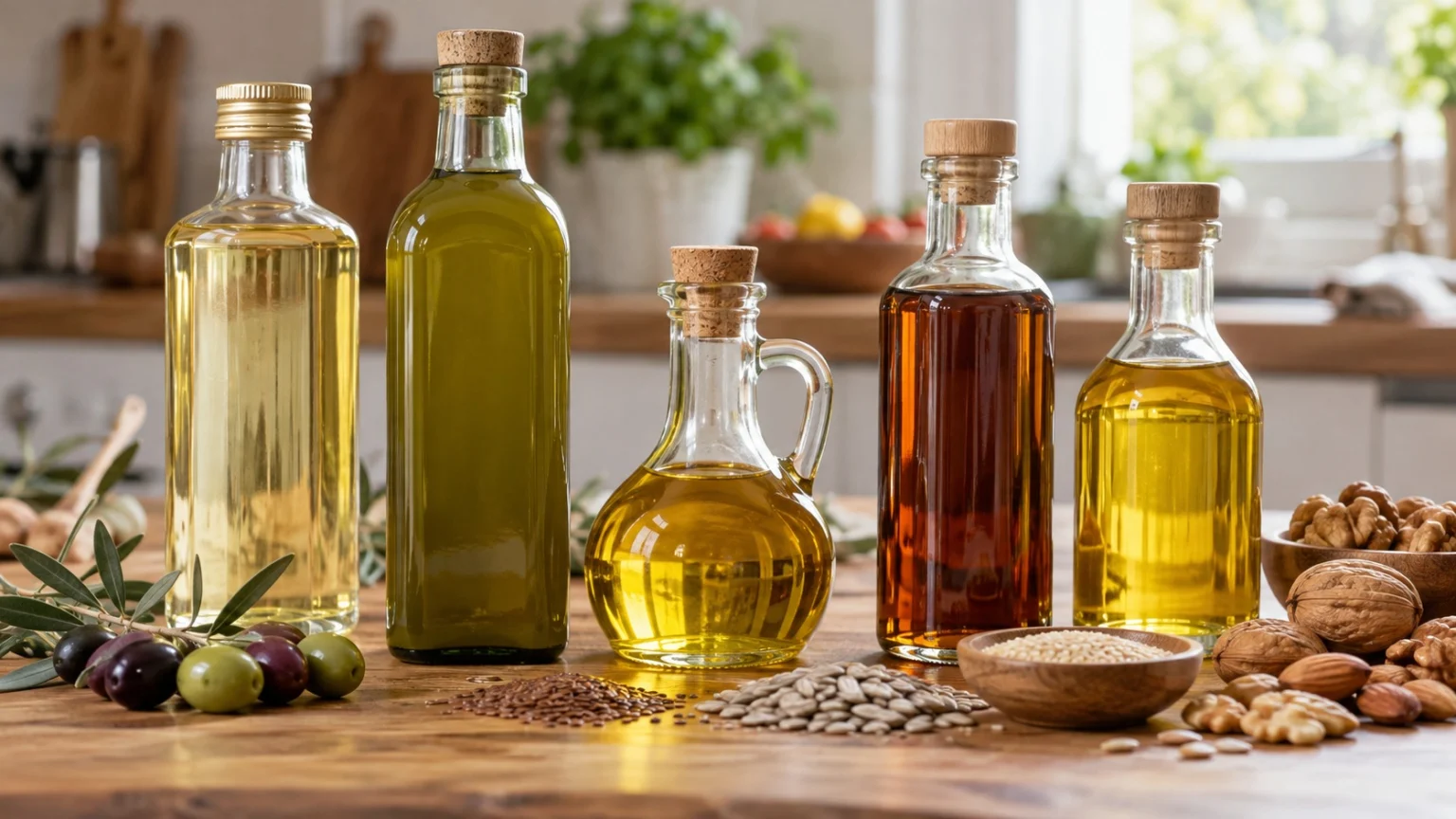
Even oils with the same name can have very different smoke points depending on the circumstances.
- Free fatty acids: The more fatty acids that have split off from triglycerides, the lower the smoke point. This is the factor with the greatest influence.
- Degree of refinement: Oils that have been refined to remove impurities such as proteins and flavor compounds have high smoke points, while oils used just as they were pressed have low ones.
- Fatty acid composition: In general, oils rich in polyunsaturated fatty acids tend to have lower smoke points, and the more saturated fatty acids an oil contains, the higher its smoke point tends to be.
- Reuse: Oil that has already been used once for deep-frying has partly broken down, so the next time it smokes at a lower temperature.
The measuring conditions, such as the amount of oil, the size of the pot, and the airflow around it, also change the result. So the smoke points listed in tables should be taken as approximate values measured under set conditions.
Different Temperatures for Different Oils: Choosing One to Suit the Dish
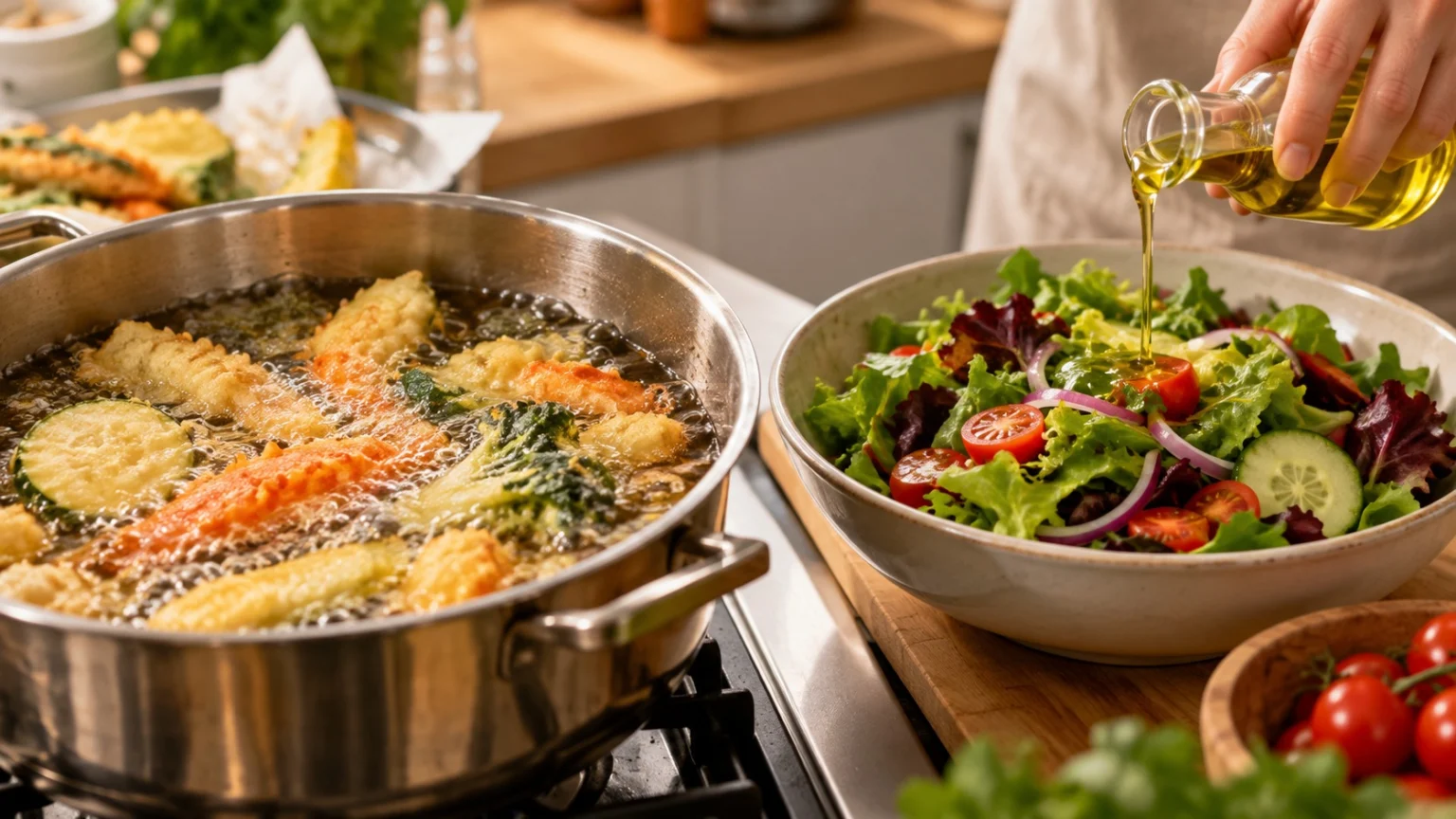
If you cook over high heat with an oil that has a low smoke point, it quickly starts to smoke and leaves a burnt smell on the food. That is why it is a good idea to choose the oil to match the cooking method.
(1) Approximate Smoke Points
Butter is on the low side at about 150℃, but clarified butter (ghee), from which the milk proteins and water have been removed, goes up to about 250℃. Extra virgin olive oil is about 190–210℃, refined soybean oil and canola oil about 220–230℃, and refined avocado oil around 270℃. Unrefined flaxseed oil, on the other hand, smokes at about 107℃. Even sesame oil, when unrefined, smokes at about 177℃, lower than the refined kind.
(2) Comparing with Cooking Temperatures
Pan-frying is done at about 120℃, deep-frying at about 160–180℃, and oven baking at an average of about 180℃. So refined oils are well suited to dishes such as deep-frying that involve high temperatures and long heating, while fragrant pressed oils bring out the most flavor when used in seasoned dishes or drizzled on as a finishing touch. When the surface of the oil starts to shimmer and ripple, it is a sign that it is about to smoke, so that is the moment to add the ingredients or turn down the heat.
What the Smoke Point Alone Cannot Tell You
A high smoke point does not automatically mean an oil is heat-resistant and healthy.
(1) Oxidative Stability
Many studies suggest that oxidative stability, which shows how slowly an oil deteriorates when it meets heat and oxygen, better reflects how it actually behaves in cooking. Extra virgin olive oil does not have a very high smoke point, but it is rich in monounsaturated fatty acids and antioxidants, so it holds up relatively well even under prolonged heating. Conversely, oils rich in polyunsaturated fatty acids can oxidize quickly even if their smoke points are high. Storage conditions matter too. Oil that has been exposed to light, air, and heat for a long time goes rancid, its free fatty acids increase, and its smoke point drops accordingly. Keep oil tightly capped in a cool, dark place, and do not hesitate to replace oil that has been used for frying several times.
(2) Fire Is Scarier Than Smoke
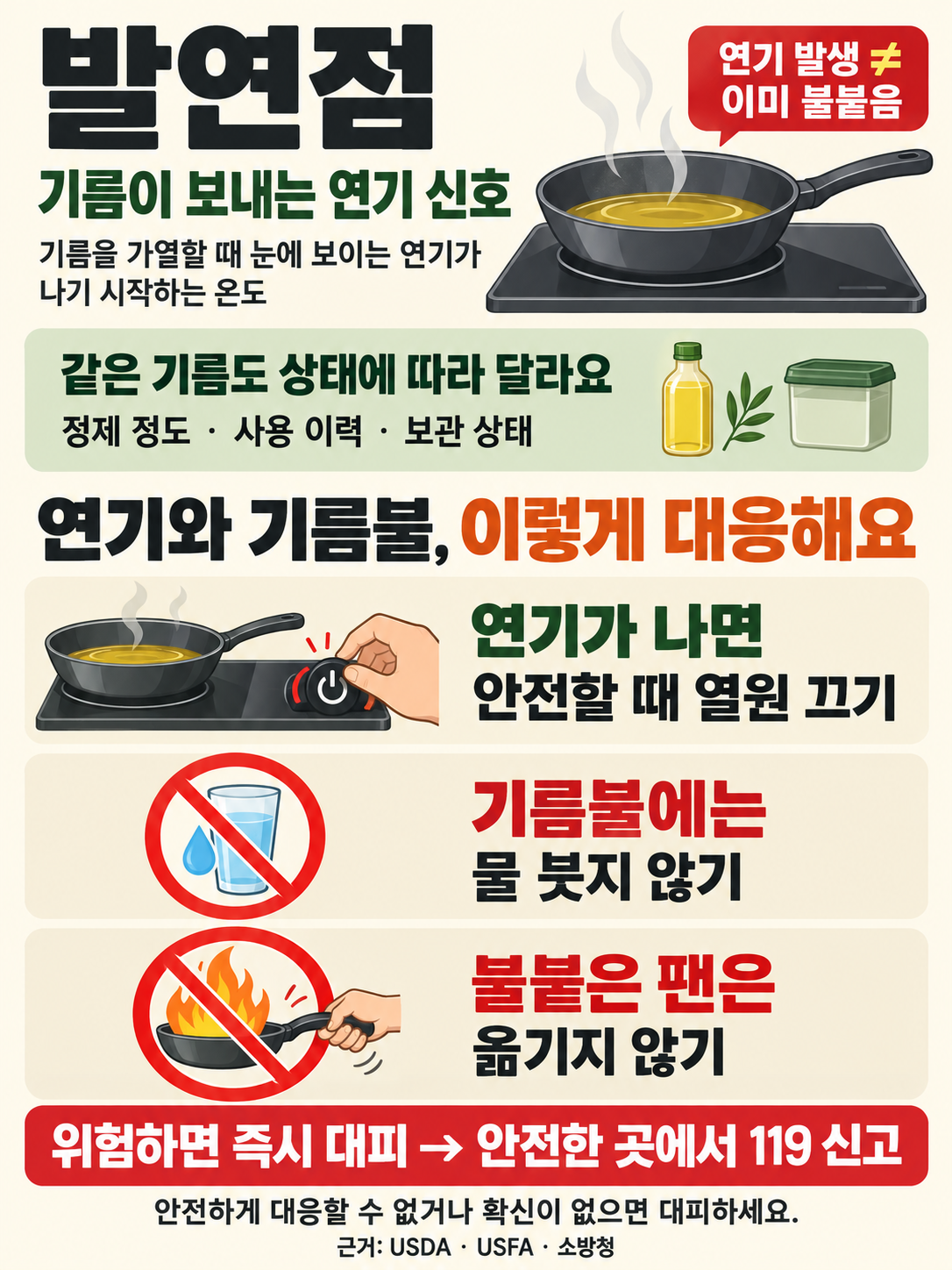
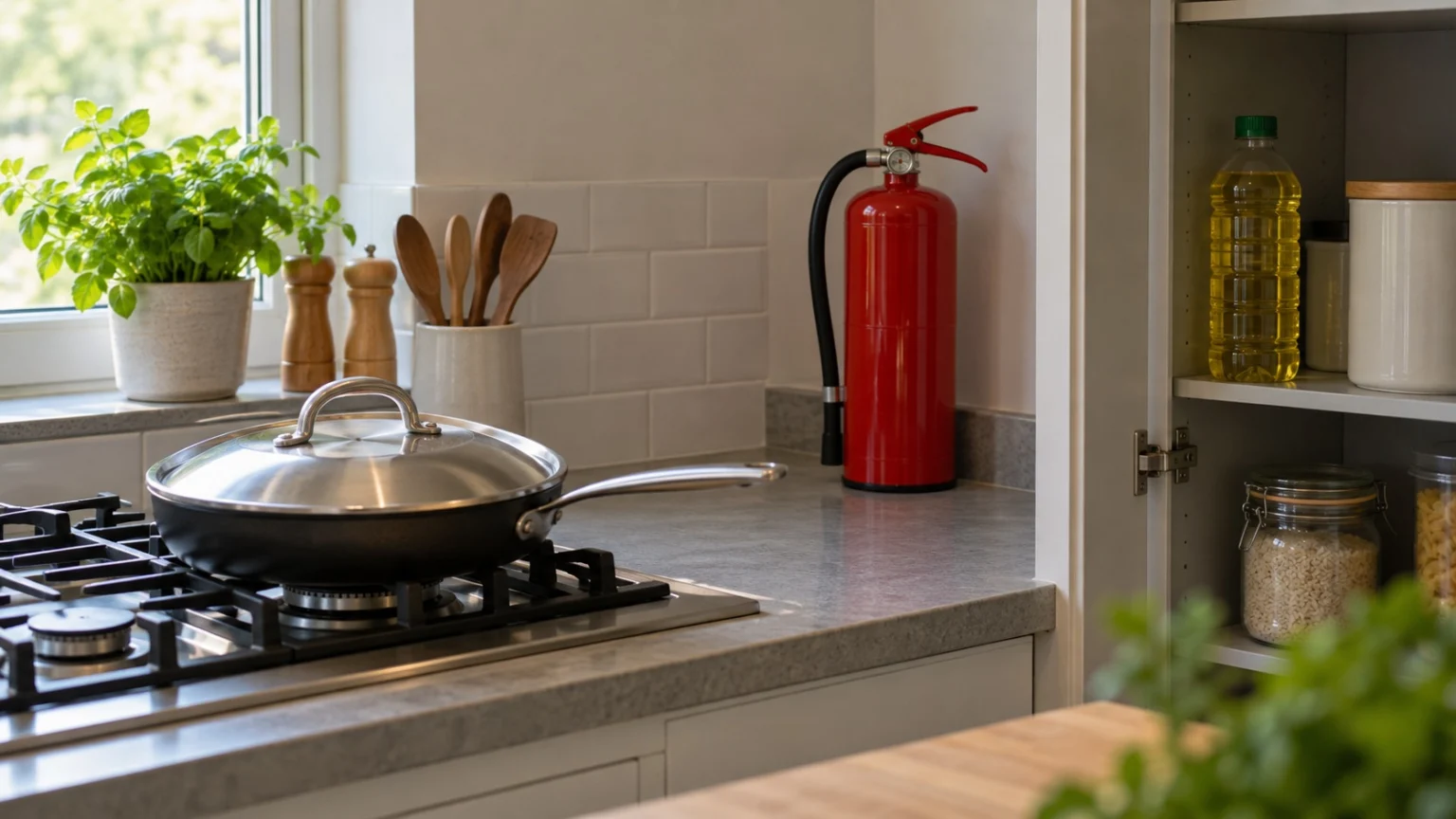
If oil keeps being heated past its flash point, it can catch fire. Pouring water on an oil fire makes the water boil instantly and sends burning oil spattering everywhere, so you must never pour water on it. It is safe to turn off the heat first and cover the pan with a lid to cut off the air, or to use a Class K fire extinguisher designed for cooking oil fires.
The smoke point is a handy gauge of the limit to which oil can withstand heat, but it is an approximate value that varies with the degree of refinement and how many times the oil has been used. Considering both the cooking temperature and the properties of the oil, and getting into the habit of adjusting the heat before smoke rises, protects both flavor and safety.
Reading the signals the oil sends before smoke rises from the pan: that is the first step toward cooking that is both delicious and safe.