Food safety is an important topic that directly affects our health and quality of life. Thorough management is needed in various areas, including proper food handling and storage and compliance with relevant laws and regulations.
This resource helps deepen your understanding of food safety and presents ways to put it into practice in everyday life. It comprehensively covers the key elements of food safety that you need to know to maintain a healthy and safe life.
The Importance of Food Safety: Analyzing Its Health and Social Impacts

The Importance of Food Safety
Food safety has a significant impact on both individual health and society as a whole. When food is contaminated or handled improperly, various risks can arise, including food poisoning and infectious diseases, and these can have serious consequences for families, communities, and the entire nation, extending beyond individual concerns. Food safety should therefore be recognized as a social responsibility as well as an individual matter.
Food Poisoning and Risks to Vulnerable Groups
Food poisoning is a representative example of a food safety problem. Even a single food poisoning incident can cause major disruption in a community and can be fatal, particularly for vulnerable groups such as children, older adults, and pregnant women. Because vulnerable groups have weaker immune systems, inadequate food safety management is more likely to lead to serious health problems. To prevent such problems, individuals and everyone who handles food must strictly follow safety standards.
Economic Losses and the Need for Food Safety
Food safety is also a very important economic issue. Recalls, medical costs, and production losses caused by food contamination result in enormous economic losses. Food businesses suffer a major blow when trust in their products is lost, and governments must also allocate substantial budgets to safeguard public health. To reduce these economic burdens, businesses and governments must introduce rigorous food safety management policies and programs.
Consumer Trust and Food Safety
Food safety problems directly affect consumer trust. Once a food safety problem occurs, consumers lose trust in the product or brand concerned, which can damage the company's image and lead to declining sales. The food industry must therefore establish reliable food safety systems alongside rigorous quality control.
The Need for International Food Safety Standards
In the global food market, food safety standards can differ between countries, making problems likely to arise during trade. In today's era of active international trade, countries must establish and comply with unified food safety standards. This can prevent unnecessary disputes in global food trade and increase trust in the international food market.
The Relationship Between Sustainable Development and Food Safety
Food safety is also closely related to sustainable development. Establishing a safe food supply chain can reduce food waste and contribute to environmental protection. Reducing the resources unnecessarily discarded because of food contamination or improper management is very important and can be considered a responsible action for future generations.
The Basics of Hygiene Management: Proper Food Handling and Storage
Basic Principles of Food Handling
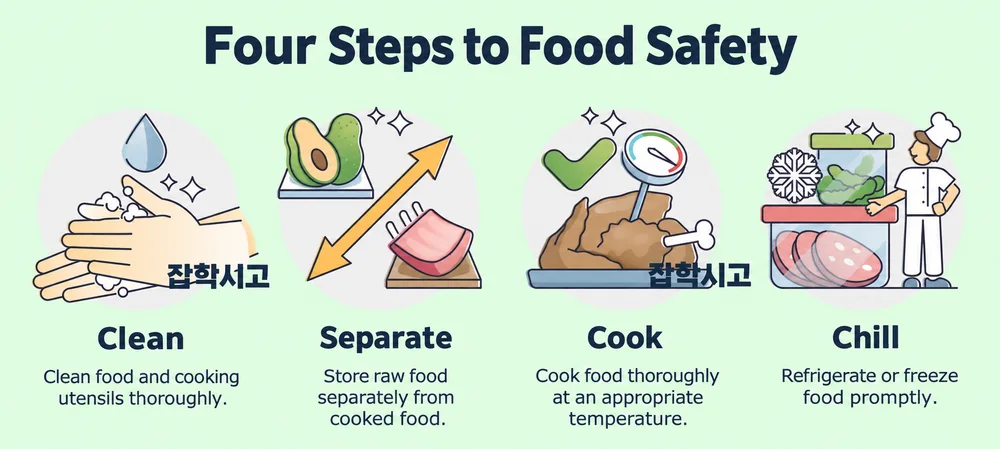
The first step in food safety begins with proper food handling. You must wash your hands thoroughly when handling food. This is because bacteria on your hands can cause food poisoning if they are transferred to food. Using clean utensils and containers is also essential. Kitchen utensils such as cutting boards and knives should be thoroughly washed and disinfected before and after use, and cleanliness must always be maintained during cooking. Particular care is needed when handling high-risk ingredients such as raw meat or fish.
Proper Food Storage Methods
Safe food storage plays an important role in maintaining freshness and inhibiting bacterial growth. Keeping food at the appropriate temperature in the refrigerator is essential. Suitable storage temperatures are 0 to 4 degrees for meat, -2 to 0 degrees for fish, and 0 to 10 degrees for vegetables. It is also important to seal food during storage to minimize contact with air. This can reduce oxidation and bacterial growth. Labeling food with the date when storing it is another good way to help maintain freshness.
The Importance of Managing Sell-by Dates
Observing food sell-by dates is essential for safe consumption. As a rule, food past its sell-by date should not be consumed, and food nearing that date should be used promptly. To do this, organize your refrigerator or food storage space systematically so that you can easily check the sell-by dates of the food you have purchased. Processed and frozen foods in particular need to be checked regularly, as their sell-by dates are easy to overlook.
Checking Internal Temperatures During Cooking
When cooking food, its internal temperature must be raised sufficiently. Most bacteria die at temperatures of 70 degrees or higher, so it is especially important to cook meat and fish thoroughly at an appropriate temperature. Using a cooking thermometer is recommended to check this. A thermometer allows you to confirm that meat is fully cooked all the way through, which is effective in preventing food poisoning.
Preventing Cross-Contamination
Preventing cross-contamination is also very important. Raw and cooked foods must be stored separately, and it is advisable to use separate utensils when handling each type of food. Store raw meat, fish, and raw vegetables separately so that they do not come into contact with cooked food, and take care not to use the same knives or cutting boards during preparation. This can prevent cross-contamination and reduce risks such as food poisoning.
What to Check Before Eating Food
Do not taste food to determine whether it is safe. Normal smell or color does not establish the absence of harmful bacteria or show that the food is safe. It is safer not to eat food that seems unusual, and particular care is needed with food approaching its sell-by date. If anything seems even slightly suspicious, it is best to avoid eating it without hesitation. This can prevent unnecessary risks of food poisoning before they arise.
Food Allergies and Intolerances: Prevention and Response

The Difference Between Food Allergies and Intolerances
Food allergies and intolerances have different causes and symptoms. A food allergy occurs when the immune system overreacts to a particular food, and it can lead to anything from mild symptoms to serious threats to life. In contrast, food intolerance is a problem caused by an inability to digest certain foods, unrelated to the immune system, and is usually less serious than an allergy but can cause considerable physical discomfort.
Management Methods for Preventing Allergies
The most important way to prevent food allergies is to identify precisely which foods trigger them and avoid those foods. To do this, you must undergo allergy testing to determine which foods pose a risk to you. Once you have clearly identified the foods that trigger your allergies, it is essential to take care in everyday life to avoid eating them.
Emergency Response Measures
People with allergies must always carry emergency medication such as an EpiPen. This provides a way to respond quickly when an allergic reaction occurs and can save a life in a serious situation. It is also important to teach family members or people close to you in advance how to provide first aid for an allergic reaction. A rapid response in an emergency greatly helps prevent an allergic reaction from worsening.
Managing Food Intolerance
Food intolerance results from digestive problems, and symptoms may appear several hours or days later rather than immediately. Eating a food to which you are intolerant can cause symptoms such as abdominal pain, diarrhea, and bloating, and it is advisable to avoid that food if these symptoms persist. In particular, intolerance is easy to overlook because symptoms do not appear immediately after eating certain foods, but if symptoms recur, it is necessary to avoid the food concerned or find alternatives.
The Importance of Checking Food Labels
Developing the habit of reading food labels carefully is very important for managing food allergies and intolerances. Since food may contain ingredients that trigger allergies, you must check the ingredient list before purchasing it. Processed foods may also contain unexpected ingredients, so examining their ingredients carefully can ensure safe consumption.
Precautions When Dining Out
When dining out, people with allergies or intolerances need to inform the restaurant in advance and ask for recommendations for safe menu options. In particular, you must check how dishes are prepared and whether there is any possibility of cross-contamination with foods that trigger allergies. Shared kitchen utensils or ingredients can cause allergic reactions, so communicating about cross-contamination prevention is important.
Food allergies and intolerances both require careful management in everyday life. You must identify precisely which foods you are allergic or intolerant to and pay close attention every time you eat. Above all, it is important to maintain safe eating practices through thorough checks and communication in your everyday eating habits and when dining out, as well as through preparation for emergencies.
Food Safety Laws: Key Regulations and Compliance Measures

The Importance of Food Safety Laws
Various laws and regulations have been established to ensure food safety. Food safety laws are applied very strictly in South Korea, and complying with them is an important responsibility for both food businesses and consumers. Following legal requirements is an important means of improving food safety and protecting public health.
The Food Sanitation Act: The Foundation of Hygiene Management
The Food Sanitation Act strengthens hygiene management throughout every stage of food production, manufacturing, distribution, sale, and storage. Its purpose is to prevent food contamination and hazards before they occur. Food businesses must regularly check that their food-handling environments are clean and safe and strictly follow the hygienic handling and management requirements of this law. The key is to identify and address problems in advance through regular hygiene inspections.
The Framework Act on Food Safety: Systematic Food Safety Management
The Framework Act on Food Safety provides a legal basis for systematically implementing food safety policies. This law focuses on establishing a system that enables a rapid response to food safety incidents and is intended to protect public health and increase consumer trust. It also makes consistent food safety management possible at the national level. Food businesses must strengthen their safety management systems based on this law and raise awareness of food safety through employee education and training.
The Role of the MFDS: A Key Food Safety Agency
The Ministry of Food and Drug Safety (MFDS) is the lead agency responsible for implementing and administering food safety laws and regulations. The MFDS establishes various food safety standards and guidelines to help food businesses and consumers handle food safely. In particular, it works to minimize harm by establishing systems for prompt information provision and response when food safety incidents occur. Food businesses must strictly follow the regulations provided by the MFDS and organize their hygiene management systems accordingly.
Legal Compliance and Hygiene Management for Food Businesses
Food businesses are responsible for providing consumers with safe food by complying with food safety laws and regulations. Through regular employee education and training, they must ensure that employees understand the regulations and follow them in their work. It is also advisable to periodically review hygiene management systems with the help of outside experts and immediately address any problems discovered. This process is an important way to improve food safety.
The Consumer's Role: Obtaining Accurate Information and Choosing Food
Consumers must also have a basic understanding of food safety laws and regulations. This helps them make appropriate food choices and handle food safely. Reading food labels carefully and strictly observing sell-by dates and storage instructions are the foundations of safe food consumption. It is also important to continually update your food safety knowledge and respond attentively to food safety problems.
Food safety is essential for protecting our everyday lives and health. Practicing proper food handling and storage, preventing food allergies and intolerances, and strictly complying with relevant laws and regulations are the way to maintain a healthy and safe life.
We hope this resource helps you develop a deep understanding of food safety and the ability to put it into practice, and you should remember how important it is to fulfill your social responsibilities as well as protect your own health and happiness.