Shake a bottle of salad dressing and it briefly turns cloudy, then quickly splits again into oil on top and vinegar below. Mayonnaise, though, stays one white, sticky mass for days. Same water and oil—why does only one of them last? The secret is emulsion.
Put simply, an emulsion is a state in which two liquids that do not normally mix are kept together by turning one into tiny droplets dispersed evenly throughout the other. Milk, cream, ice cream, mayonnaise, and hollandaise sauce all rely on this principle. They may look like a single liquid, but under a microscope countless fine droplets float in place. Without an emulsifier wrapping those droplets, the mixture soon separates again; with the right emulsifier and mixing method, a stable texture can last.
In this piece we will look in turn at the definition of emulsion and its two basic types, the role of emulsifiers, everyday examples such as mayonnaise, milk, and butter, and why emulsions break—and how food science puts them to work.
The Food Science of Water Meeting Oil: Emulsion
What Is an Emulsion?
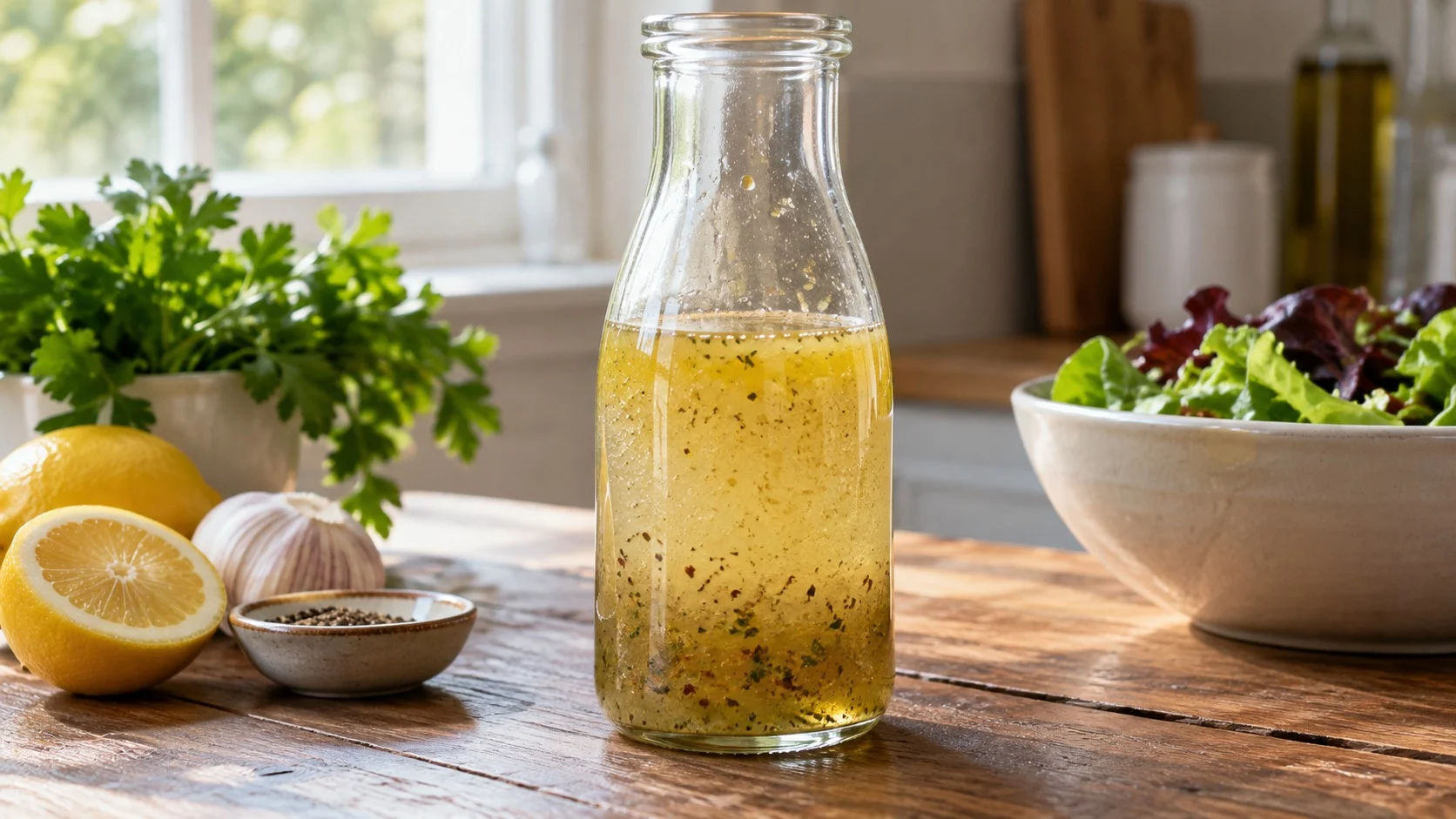
Water and oil pull on their own molecules in different ways, so they slip past each other and push apart. Shake them hard and small droplets form for a moment, then like joins like and the two layers return. An emulsion makes those droplets very small and coats their surfaces with a film so they cannot merge again.
- Dispersed Phase: the side broken into small droplets. In mayonnaise, that is the oil.
- Continuous Phase: the side that surrounds the droplets and stays connected. In mayonnaise, the watery vinegar-and-egg side is continuous.
- Emulsifier: a molecule with one end that likes water and another that likes oil; it sticks to droplet surfaces and builds the film.
In food science, droplet size is often tuned to a few micrometers up to tens of micrometers. Smaller droplets mean more surface area, so the rich taste spreads more evenly in the mouth, and the mixture looks smoother and more opaque.
Oil in Water, Water in Oil: Two Types
Emulsions fall into two main branches, depending on which liquid becomes the droplets. They may look similar, but taste, texture, and how you store them differ.
(1) Oil-in-Water (O/W)
Oil droplets float in water. Milk, cream, yogurt, mayonnaise, and salad dressing belong here. Because they hold a lot of water overall, they often feel relatively light.
(2) Water-in-Oil (W/O)
Water droplets sit inside oil. Butter and margarine are classic examples. With fat as the continuous phase, they melt slowly in the mouth and leave a lasting savory feel.
(3) Bancroft’s Rule
As a rule of thumb, emulsifiers that dissolve well in water tend to make oil-in-water emulsions, and those that dissolve well in oil tend to make water-in-oil emulsions. In complex food systems, though, mixing speed and ratios can produce exceptions.
Egg yolk contains both lecithin, which favors oil-in-water, and cholesterol, which favors water-in-oil. That is why dumping all the oil into mayonnaise at once can invert the type and make the sauce “break.”
Faces of Emulsion at the Table
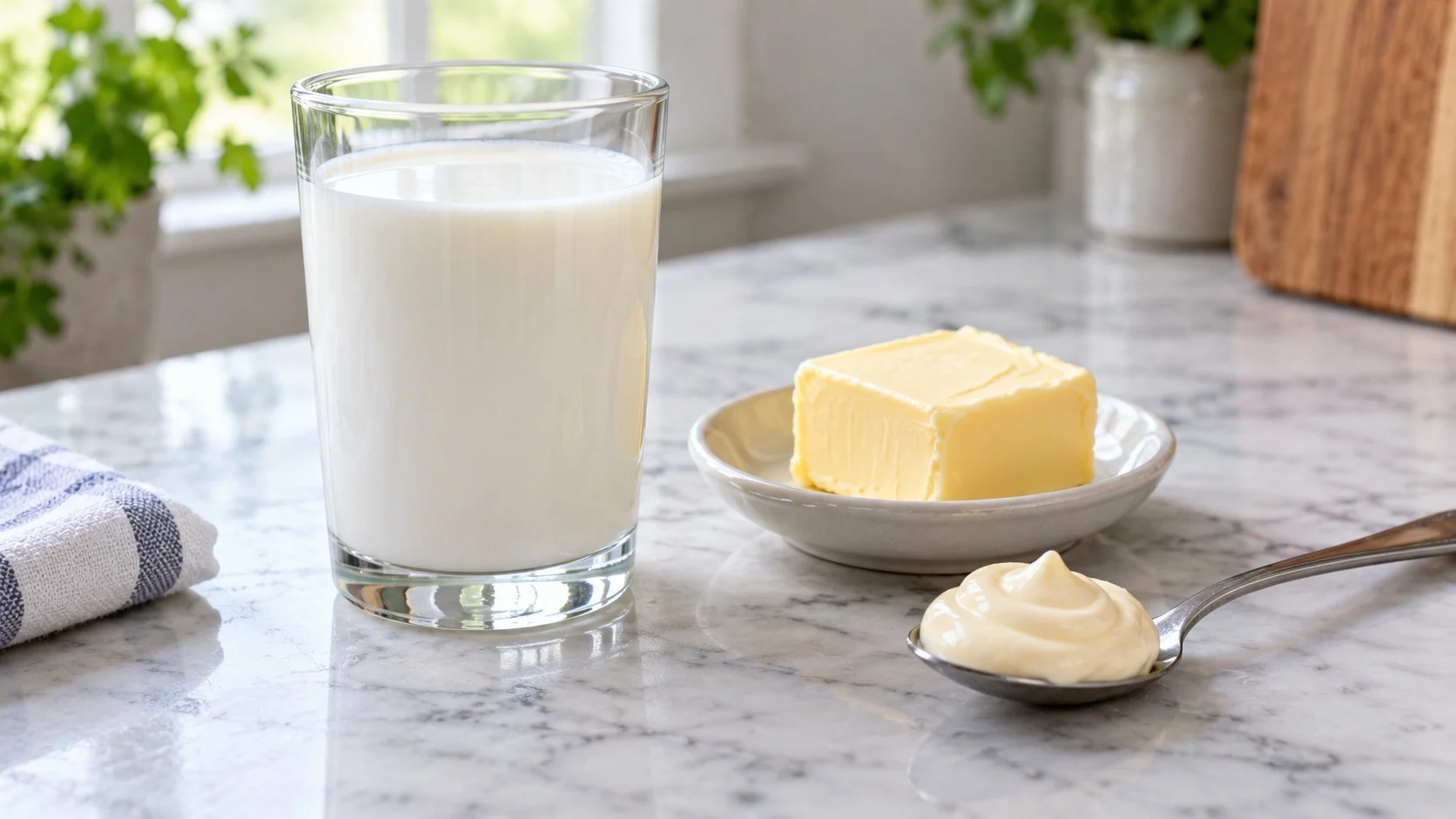
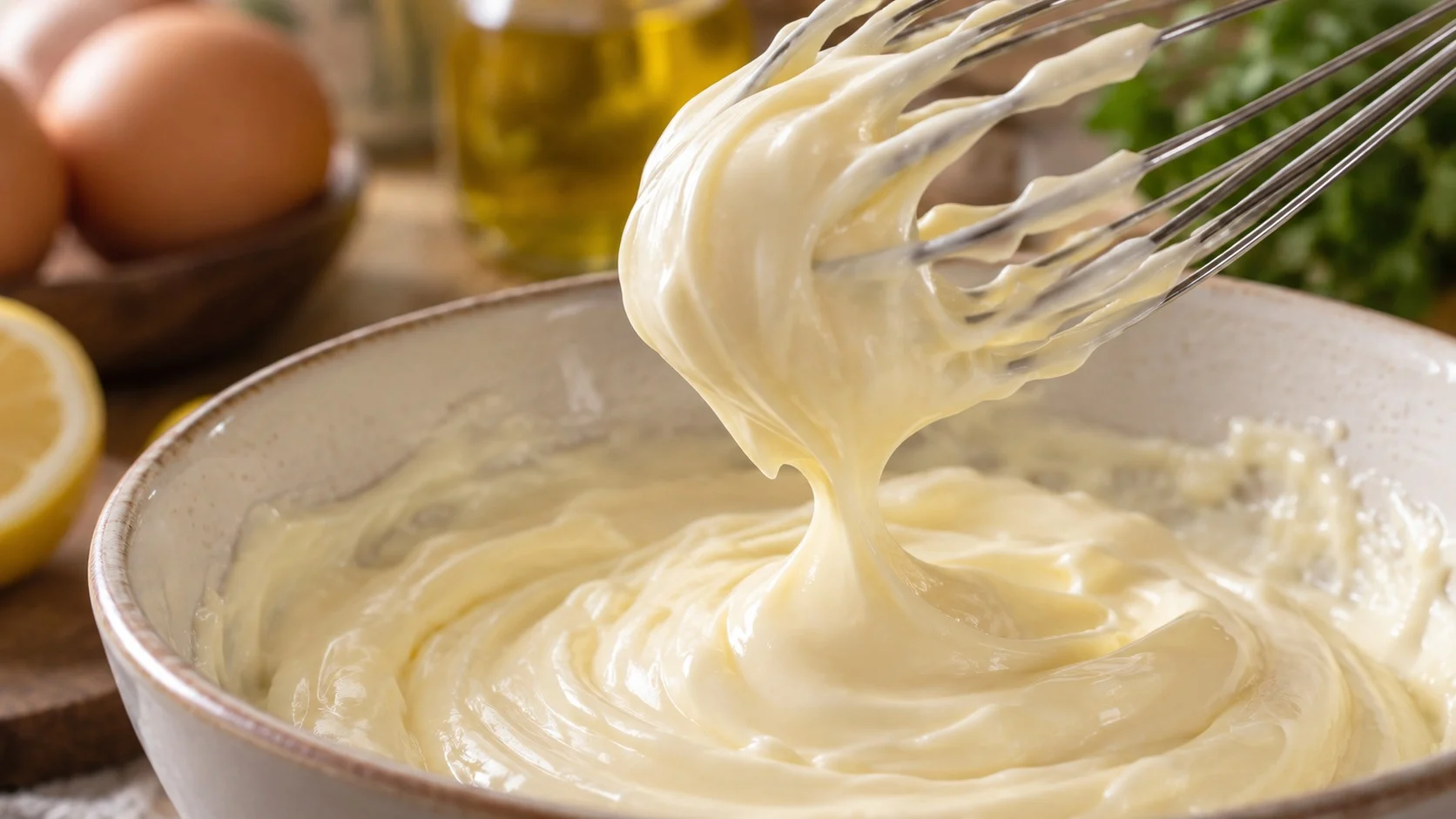
The most visible emulsion food is mayonnaise. First mix egg yolk, vinegar, and salt well to prepare the continuous phase and emulsifier, then add oil little by little while whisking hard. Done right, even when oil exceeds 70% of the whole, the tightly packed droplets create a cream-like firm texture. In theory, equal-sized spheres pack to about 74% at most, yet mayonnaise can hold a higher oil fraction because thin water films still coat the droplets and keep the structure.
Milk is a near-natural oil-in-water emulsion. Fat globules float wrapped in water, proteins, and emulsifying components; left alone, the fat rises and forms a cream layer. Homogenization breaks those droplets finer so cream does not rise easily. Butter, by contrast, comes from churning cream until fat droplets merge and the system inverts into a water-in-oil emulsion, with water left inside the fat.
Mustard, soy lecithin, and some plant gums are everyday emulsifying and stabilizing helpers. Vegan mayonnaise and low-fat dressings build droplet films with these ingredients instead of egg.
Why Emulsions Break—and What That Means in Food
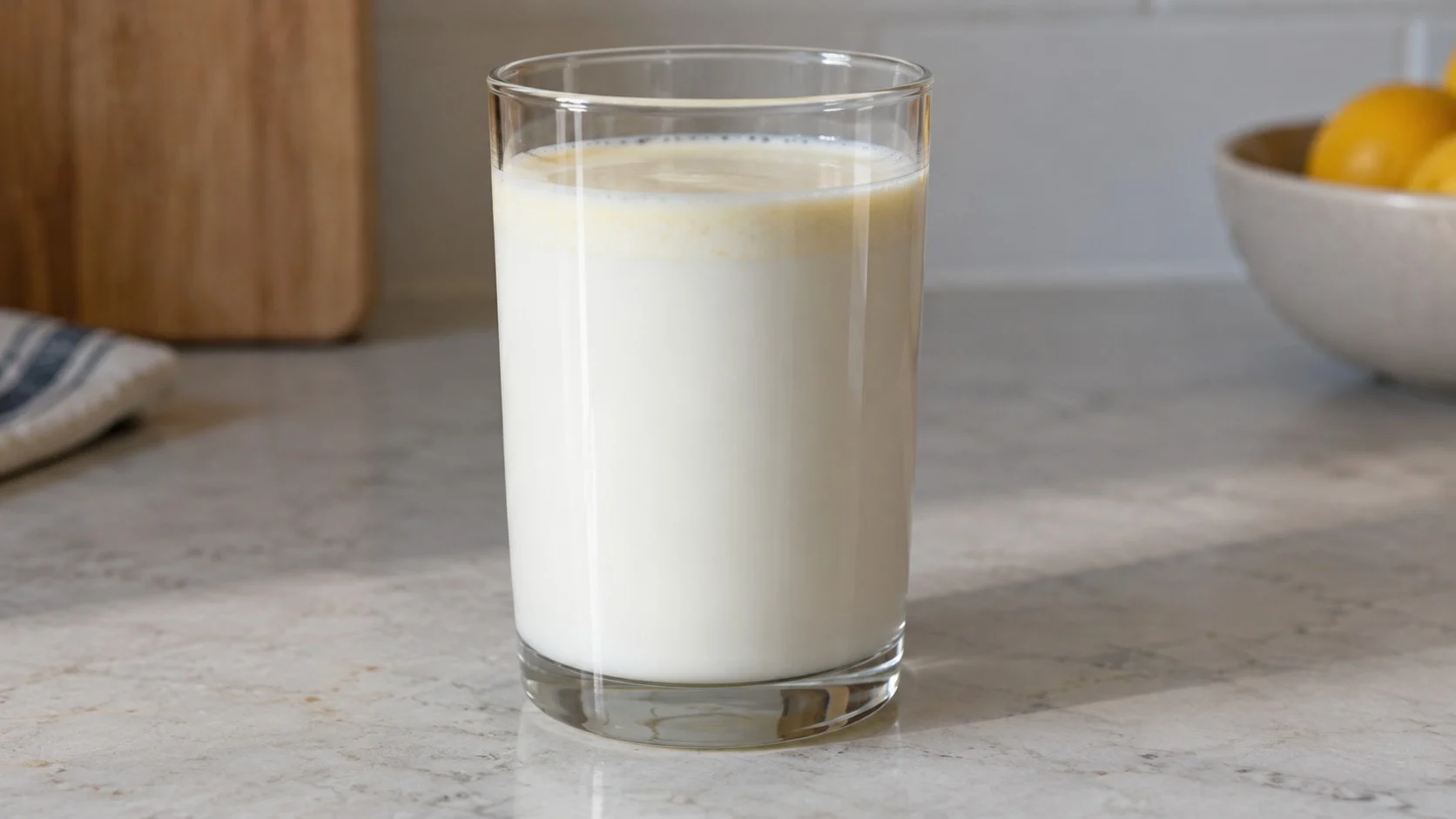
An emulsion is inherently unstable, so over time or when conditions change it can fail in several ways. Rising temperature, shifting acidity, freeze–thaw cycles, or hard mechanical stirring can weaken the droplet film. That stability is central to food quality.
- Creaming: oil droplets are lighter than water and rise, forming a layer. Cream gathering on top of milk is the classic case.
- Flocculation: droplets stick into clusters, but the droplets themselves have not yet merged.
- Coalescence: the film around droplets tears and small droplets fuse into larger ones. When it goes far enough, water and oil separate completely.
Making droplets smaller, using the right emulsifier, and controlling viscosity, acidity, and temperature can slow these changes. Conversely, ice cream deliberately allows partial coalescence of fat droplets to build a soft texture. Emulsion is both a craft of mixing and a basic tool of nutrition and food processing for designing taste, mouthfeel, and shelf life.
An emulsion brings hard-to-mix liquids like water and oil nearly into one body through tiny droplets and emulsifiers. Knowing oil-in-water versus water-in-oil, emulsifiers such as lecithin and egg yolk, and failure paths like creaming and coalescence helps explain why some sauces last and some dressings split so soon.
Pausing over one spoonful of white mayonnaise on the table and asking how water and oil can coexist—that is a first step toward reading food as science.