When you read a paper, you often see familiar names appearing side by side in the reference list at the end. If a researcher cites two papers together in the same piece of writing, there is a good chance those two papers are saying something similar. And if such co-citations appear again and again across many writings, it becomes even harder to call it a coincidence.
The method that developed this simple idea into a way of drawing a map of scholarship is “Co-citation Analysis.” Co-citation analysis is a citation analysis technique that counts how many times two documents are cited together by other documents and judges that the more often this happens, the closer the subjects of the two documents are.
In this article, we will look in turn at the background from which co-citation analysis emerged, its basic principle, how it differs from bibliographic coupling, a similar technique, its expanded uses in author analysis and proximity analysis, and the points to keep in mind when interpreting it.
The Structure of Scholarship Revealed by Papers Cited Together
How Co-citation Analysis Came About

Attempts to read the relationships between documents through citations began in earnest in the 1960s. This was because the creation of citation indexes made it possible to examine on a large scale who cited whom.
(1) Kessler’s bibliographic coupling
In 1963, M. M. Kessler of MIT in the United States presented the concept of bibliographic coupling, which holds that two papers are related if they both refer to the same document. It was one of the early methods for calculating the similarity of documents through citations, and Eugene Garfield, who created the citation index, also actively embraced the concept.
(2) 1973: the same discovery by two people
In 1973, Henry Small in the United States proposed co-citation in a journal article as a new measure of the relationship between two documents. In the same year, Irina Marshakova in the Soviet Union independently published the same idea, but because it appeared in Russian, it remained comparatively less known.
How Co-citation Strength Is Counted
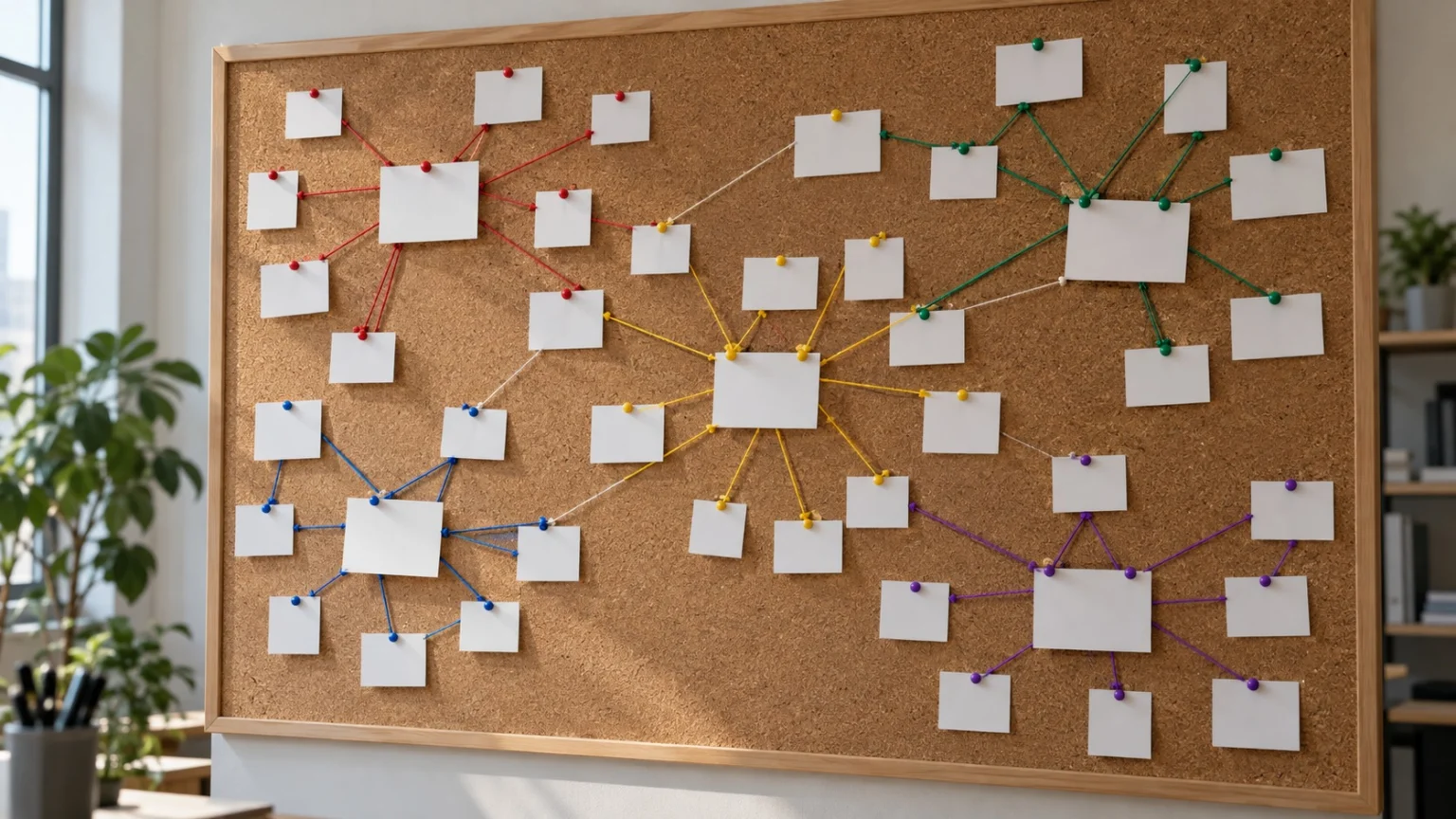
The principle of co-citation analysis is surprisingly simple. Take documents A and B, and just count how many other documents cite both of them together.
- Co-citation: The relationship in which one or more other documents cite A and B together.
- Co-citation Strength: The number of documents that cite A and B together. If documents C, D, and E all cite A and B, the strength is 3.
- Cluster: A group of documents with high co-citation strength bundled together, which shows a single research topic or specialty.
If you draw the documents bundled this way as dots connected by lines, you get a knowledge map that shows at a glance which studies form a neighborhood. In 1974, Small, together with Belver Griffith, published research that used this method to identify the specialties of science and represent them as a picture.
The same principle is also used in literature searches. When a researcher finds a paper they like, showing the documents frequently cited together with that paper can reveal related research that is easy to miss with search terms alone.
How Is It Different From Bibliographic Coupling?

Co-citation analysis and bibliographic coupling both measure how similar documents are through citations, but they look in exactly opposite directions.
(1) Bibliographic coupling looks to the past
Bibliographic coupling compares the reference lists written by two documents. Once a paper is published its references do not change, so the coupling strength stays fixed as well.
(2) Co-citation is open to the future
Co-citation is created by other studies that later cite the two documents. Because new papers keep appearing as scholarship develops, the strength also changes over time, and classifications can shift to follow the currents of a field.
(3) The accumulated judgment of many people
Co-citation is regarded as better at showing similarity of subject because it is the combined result of the judgments of many authors who read those documents. The idea is that relationships that many people have repeatedly bundled together are more reliable than references chosen by a single person.
(4) Methods that combine the two
Some researchers, such as Robert Amsler of the University of Texas, have proposed measures that use both bibliographic coupling and co-citation together to judge the subject similarity of two documents. The two methods are less rivals than partners that fill in each other’s gaps.
Expanding Uses and Pitfalls of Interpretation

Co-citation analysis has expanded beyond documents into a tool for understanding researchers and academic fields. Still, there are points to examine before taking the numbers at face value.
(1) Author co-citation analysis
In 1981, Howard White and Griffith introduced author co-citation analysis, which counts co-citations at the level of authors instead of papers. It is widely used as a method to show which scholars are grouped together like a single school of thought.
(2) Citation proximity analysis
In 2009, Bela Gipp and Joeran Beel proposed citation proximity analysis, which also takes into account how close two citations are to each other within the body text. Documents cited together in the same sentence, for example, are considered closer.
(3) Differences in citation motives
Researchers sometimes cite papers by close colleagues more often, and the Matthew effect also appears, in which already famous papers receive even more citations. In addition, citations are made not only to praise but also to refute, so being cited together does not always mean being on the same side. That is why co-citation results should be interpreted together with a review that actually reads the content.
Co-citation analysis gathers the small traces researchers leave behind in their references to reveal the large structure of scholarship. By looking at which papers are mentioned together with which others, you can even read the currents by which new fields emerge and meet one another.
Gathering the traces of being cited together to measure the distance between pieces of knowledge: that is the first step of bibliometrics in drawing the map of scholarship.