The lithium batteries in the smartphones we use every day, the gasoline we put in our cars, the sprays we use to repel mosquitoes in summer, and even the disinfectants used to produce clean tap water. What do they have in common? They are all 'Dangerous Goods' that make our lives more convenient but can lead to major accidents if vigilance slips during transport and storage.
In the logistics industry, dangerous goods management demands the highest levels of expertise and vigilance. A single mistake, a small impact, or even a slight temperature change can cause an uncontrollable disaster, including explosions, fires, toxic gas leaks, and environmental pollution. In fact, a substantial proportion of logistics accidents worldwide result from improper handling of dangerous goods, loading incompatible goods together, or inadequate compliance with safety rules.
Dangerous goods logistics is not simply the task of moving goods from point A to point B. It is a 'synthesis of science and safety' that combines a deep understanding of chemical properties, strict compliance with international regulations, and thorough control systems.
Focusing on the 'UN Dangerous Goods Classification System' established by the United Nations (UN), this article examines the types of dangerous goods from Class 1 through Class 9 and the core principles of transport and storage for each class. We now reveal the world of rigorous management behind the dangerous goods logistics that supports modern industrial society.
The UN Dangerous Goods Classification System: 9 Classes and Management Guidelines
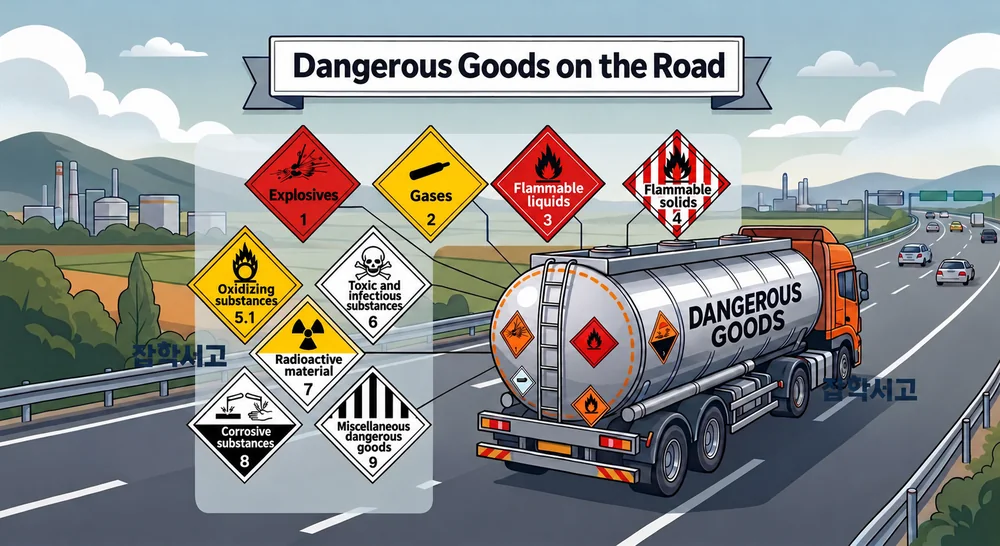
To ensure that dangerous goods can be handled safely under a consistent set of standards in logistics operations worldwide, the United Nations (UN) classifies them into a total of 9 classes (Class) according to the nature of their hazards and their physical and chemical properties.
Class 1: Explosive Substances (Explosives)
These substances undergo an instantaneous, violent chemical reaction in response to external impact, friction, heat, or flames, releasing gas and heat.
- Representative items: Dynamite, fireworks, ammunition, explosive materials
- Logistics management essentials: Even minor friction or impacts must be prevented, making shock-absorbing cushioning materials essential. Vibration-free vehicles are used for transport, and loading these goods together with other combustible substances is strictly prohibited.
Class 2: Gases (Gases)
Gases transported in compressed, liquefied, or dissolved form are subdivided into flammable gases, nonflammable and nontoxic gases, and toxic gases.
- Representative items: Butane gas, propane, oxygen, gases used for fire suppression, ammonia
- Logistics management essentials: Because these gases are stored in high-pressure containers, there is a substantial risk of explosion from external impacts or rising temperatures. Dedicated vehicle depots with good ventilation and ventilated containers must be used, and gas leak detectors must remain in operation at all times.
Class 3: Flammable Liquids (Flammable Liquids)
These liquids readily release flammable vapors at low temperatures and can ignite from even a small ember or spark.
- Representative items: Gasoline, kerosene, alcohol, paint, adhesives
- Logistics management essentials: Grounding equipment is essential to prevent sparks caused by static electricity. Direct sunlight is avoided, and freezer/refrigerated containers with temperature control or sealed tanker trucks are used.
Class 4: Combustible Solids (Flammable Solids)
These are divided into solids that ignite easily through friction or heat (4.1), substances liable to spontaneous combustion (4.2), and substances that release flammable gases upon contact with water (4.3).
- Representative items: Sulfur, matches, naphthalene, sodium, potassium
- Logistics management essentials: Keeping out moisture is the top priority. Waterproof packaging is standard, and containers with double packaging that completely prevent contact with air or water are used.
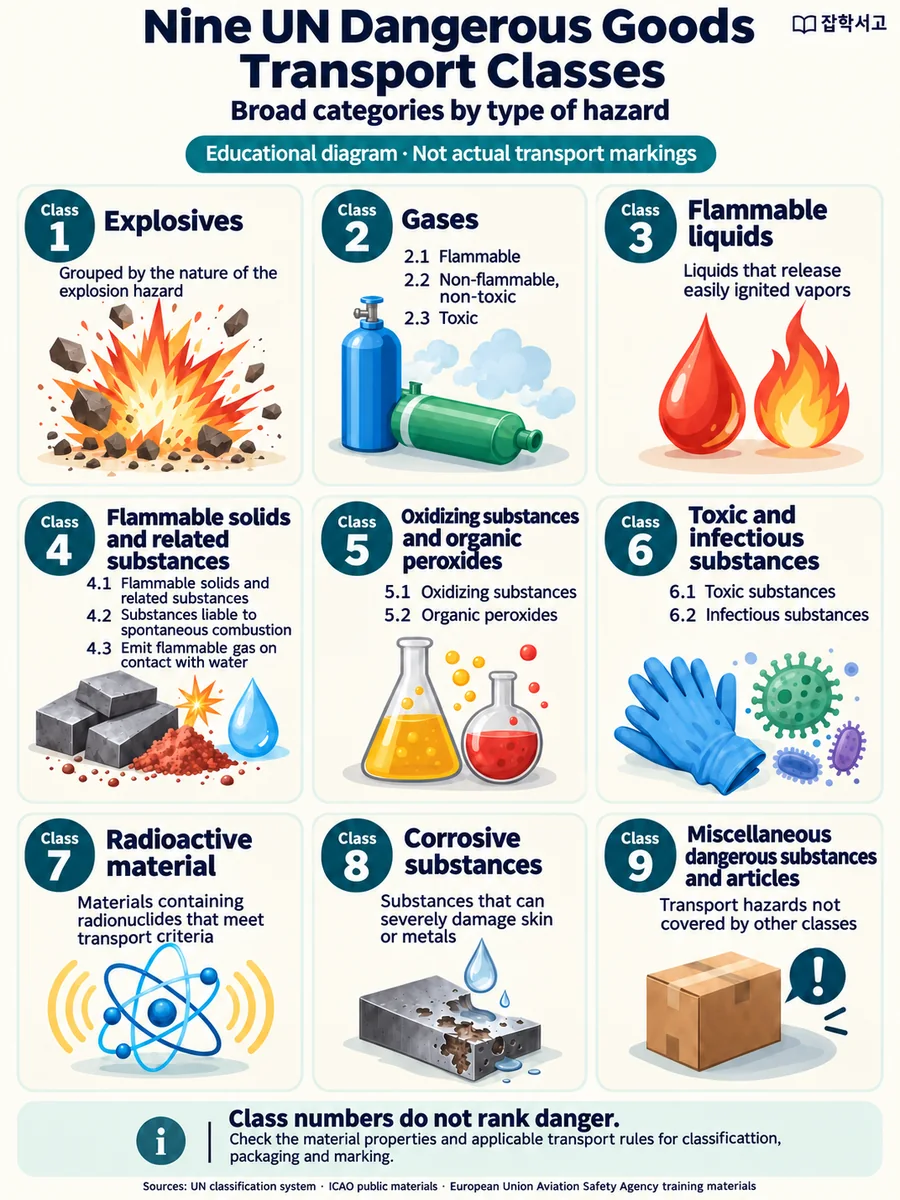
Class 5: Oxidizing Substances and Organic Peroxides (Oxidizing Substances & Organic Peroxides)
These substances release oxygen to support the combustion of other substances even if they do not burn themselves (5.1), or can explode violently through thermal decomposition (5.2).
- Representative items: Bleach, agricultural fertilizers (ammonium nitrate), hydrogen peroxide
- Logistics management essentials: Loading these goods together with combustible substances is a major cause of large fires, so they must be transported in complete segregation. Because they are highly sensitive to heat, strict temperature control must be maintained.
Class 6: Toxic and Infectious Substances (Toxic & Infectious Substances)
These substances cause fatal poisoning in humans through absorption into the body, skin contact, or inhalation (6.1), or contain pathogens that cause disease (6.2).
- Representative items: Pesticides, sodium cyanide, medical waste, pathogen specimens
- Logistics management essentials: Because leaks pose an immediate threat to workers and the environment, packaging in completely sealed containers is standard. Transporting these goods together with food or animal feed is strictly prohibited, and workers must wear dedicated protective equipment.
Class 7: Radioactive Substances (Radioactive Material)
These substances continuously emit harmful radiation, such as alpha, beta, and gamma rays, that can destroy human tissue or cause genetic alterations.
- Representative items: Nuclear power generation fuel, medical radioactive isotopes, industrial nondestructive testing equipment
- Logistics management essentials: Packaging materials made of lead, concrete, and special alloys capable of blocking radiation are used. Transport routes must be approved in advance, and vehicles must carry a meter for measuring radioactivity in real time.
Class 8: Corrosive Substances (Corrosive Substances)
These are strongly acidic and strongly alkaline substances that severely corrode metals on contact and cause unpleasant chemical burns to living tissue, such as the skin and eyes.
- Representative items: Sulfuric acid, hydrochloric acid, sodium hydroxide (positive soda), battery fluid
- Logistics management essentials: Special plastics that withstand acids or alkalis and containers with anti-corrosive treatment are used. Emergency neutralizing agents and washing equipment must be carried at all times for use in an accident.
Class 9: Other Dangerous Goods (Miscellaneous Dangerous Goods)
These are substances and articles that do not fall under the definitions of Class 1 through 8 but harm the environment during transport or possess distinctive hazards.
- Representative items: Lithium-ion batteries, dry ice, environmentally hazardous substances, magnetic substances
- Logistics management essentials: As fires involving lithium batteries have recently increased, safety regulations tailored to individual items are being strengthened, including limits on SOC (state of charge) and insulating packaging to prevent short circuits (electrical shorts).
Safe Logistics Means National Industrial Competitiveness
The UN system of 9 dangerous goods classes discussed so far is not merely a way of categorizing goods, but the 'last line of defense' for saving lives and protecting the environment in emergencies.
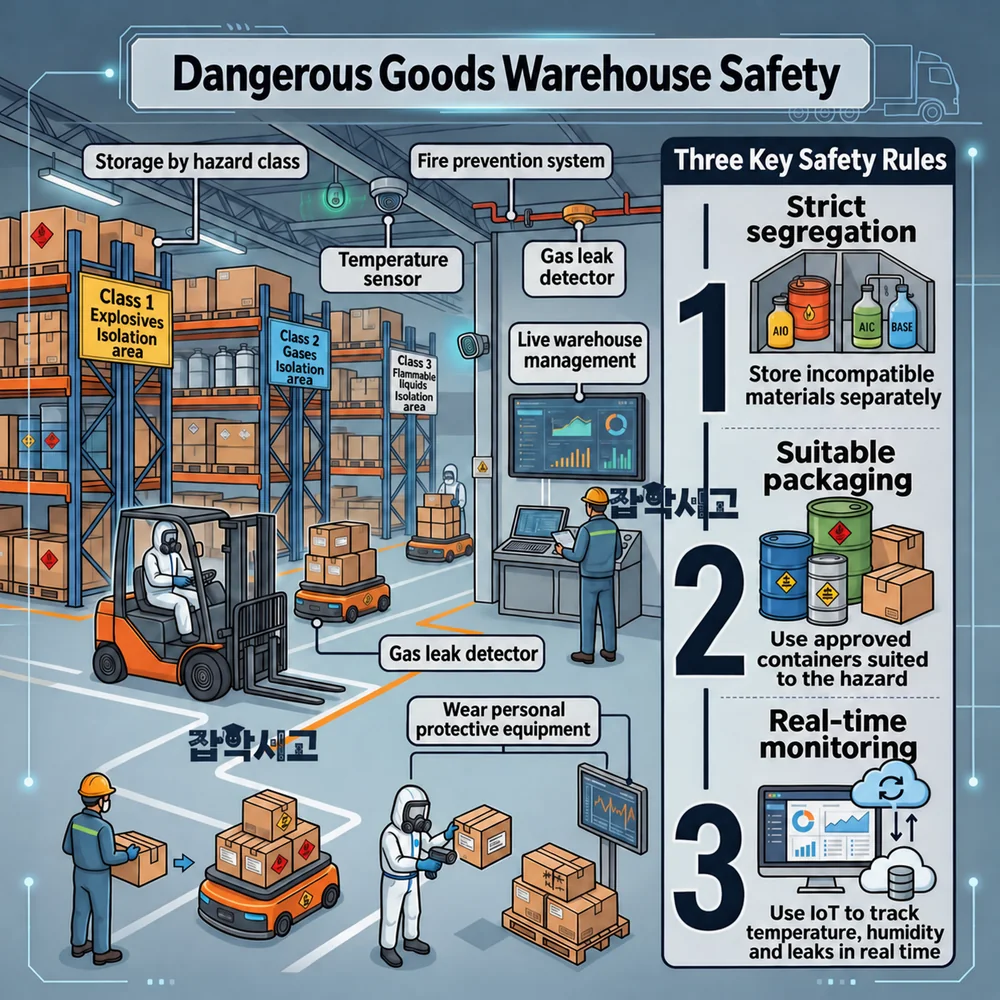
To keep a dangerous goods logistics system running successfully, the following 3 key elements must be put into practice.
- Principle of Segregated Transport (Segregation): Substances that react with each other (e.g., Class 3 flammable liquids and Class 5 oxidizing substances) must not be stored or transported together in the same space.
- Standardized Labeling and Packaging (Labeling & Packaging): Internationally standardized pictogram labels must be clearly affixed so that the type and hazard level of dangerous goods can be recognized at a glance, and only verified UN-certified containers must be used.
- Real-Time Monitoring Based on Data: A system must be in place to track the condition of dangerous goods in transit in real time using IoT sensors and technologies for measuring temperature, humidity, and gases, and to respond immediately when signs of abnormalities appear.
We can confidently use countless products in our daily lives because logistics professionals comply with regulations and meticulously manage the safe transport of dangerous goods in logistics operations that take place out of sight. We hope this article has helped you understand the importance of dangerous goods logistics and its rigorous system of safety management.