When you watch a speeding car or a swinging arm on film, the moving parts look slightly blurred. Yet in some war films the battle scenes look choppy, with every grain of dirt and drop of spray frozen sharply in place, while other scenes smear into a long, dreamlike blur. The number behind this difference is the ‘shutter angle’.
Put simply, the shutter angle means ‘the amount of time each frame of video collects light, expressed as an angle of a circle’. The name comes from the rotary disc shutter in film cameras, a half-moon disc that spins to let light in and block it again; the larger the angle, the longer each frame is exposed and the longer moving objects blur.
In this article, we will look at how the shutter angle got its name, why 180 degrees became the standard, how the picture changes when the angle changes, and finally how the shutter angle lives on in the age of digital cameras.
Measuring the Time Light Gets In as an Angle
1. A Name Born from the Rotary Disc Shutter
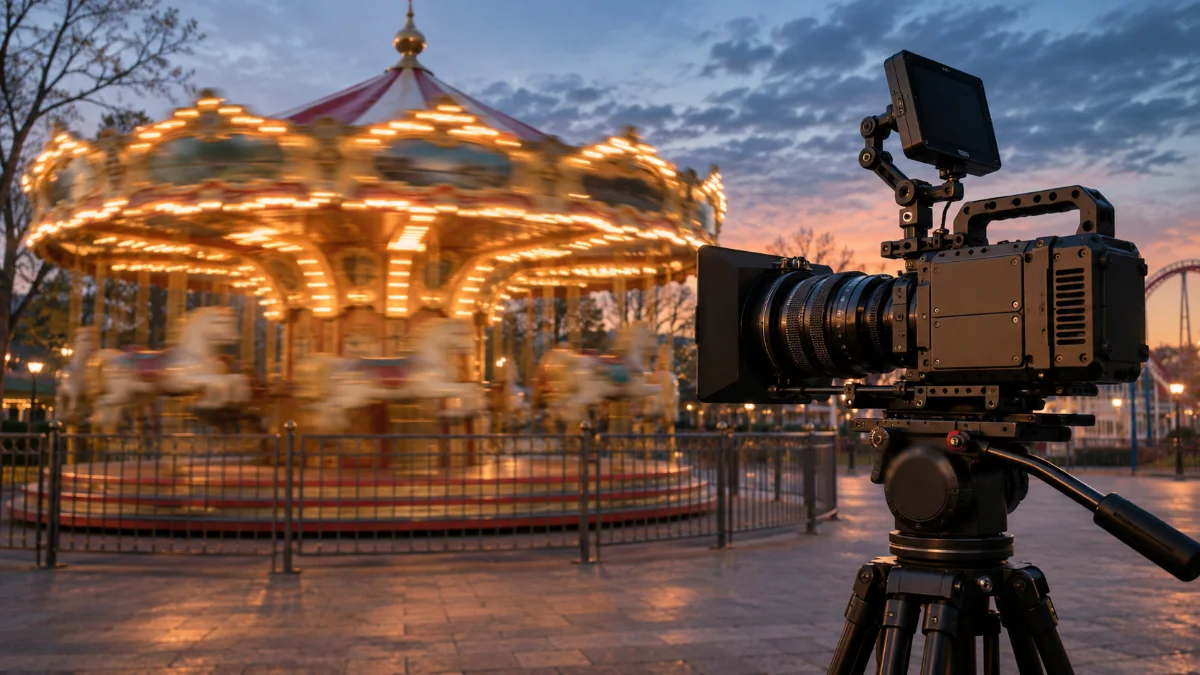
A film camera pulls the film down one frame at a time, 24 frames per second. If light reached the film while it was moving, the image would smear into streaks, so a device was needed to block the light at that moment.
(1) A spinning half-moon disc
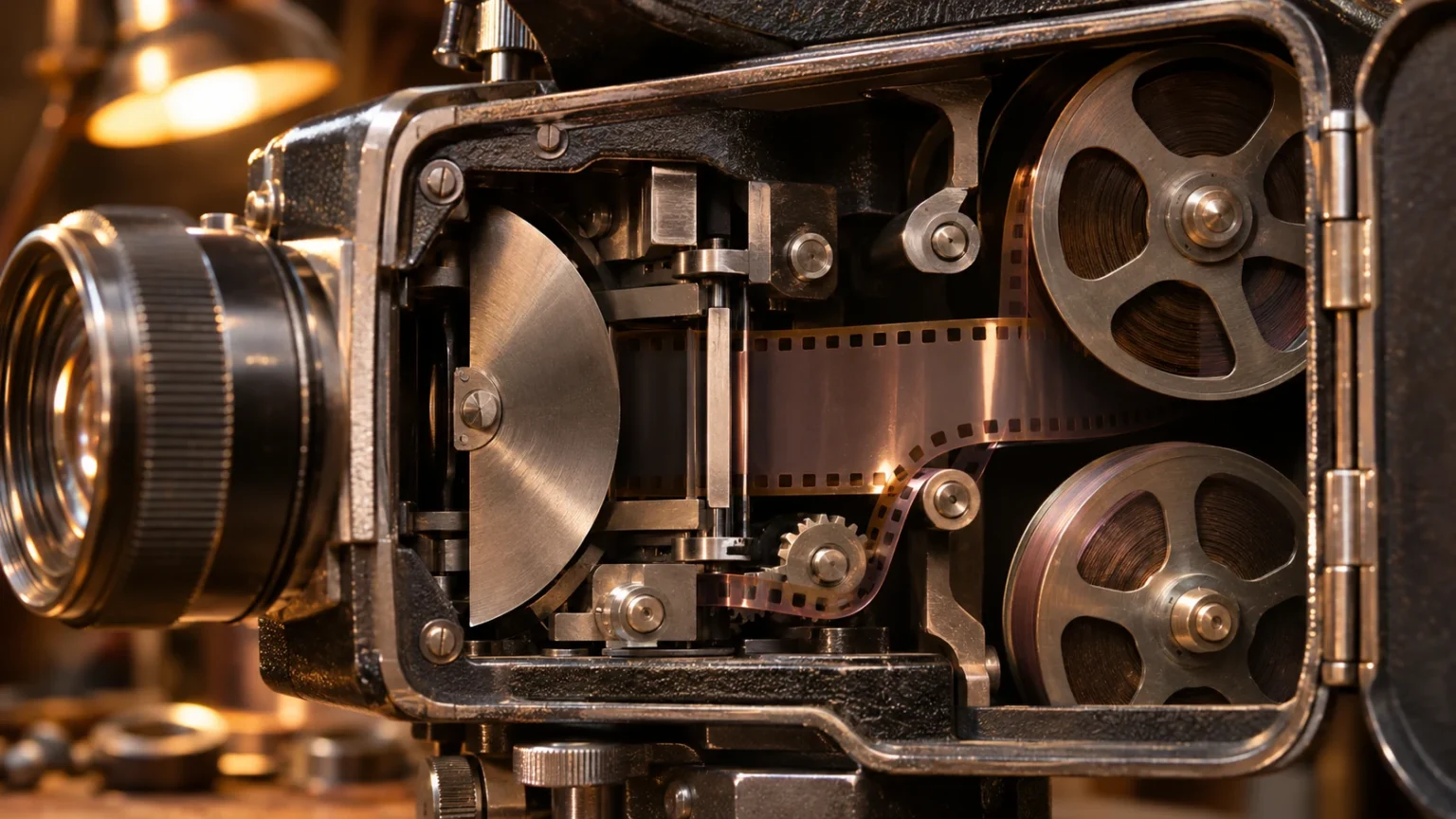
Between the lens and the film, a half-moon disc makes one full turn for every frame. While the open part of the disc passes, light reaches the film; while the solid part passes, the film advances to the next frame. The size of this open part, measured as an angle, is the shutter angle.
(2) Calculating exposure time from the angle
The exposure time of one frame is ‘shutter angle ÷ 360 × 1/frame rate’. Shooting 24 frames per second at 180 degrees means light comes in for half of each turn, so the exposure is half of 1/24 second: 1/48 second.
(3) Why an angle instead of a speed
An angle tells you the same ratio, ‘how much of each frame’s time is spent collecting light’, even when the frame rate changes. When shooting high-speed at 96 frames per second, keeping 180 degrees shortens the exposure to 1/192 second, but the proportion of blur in each frame stays the same as at 24 frames.
2. Why 180 Degrees Became the Standard
Since sound films took hold in the late 1920s, 24 frames per second with a 180-degree shutter has served as the de facto standard in filmmaking. The moderate blur produced at 180 degrees feels like the most natural motion to the human eye.
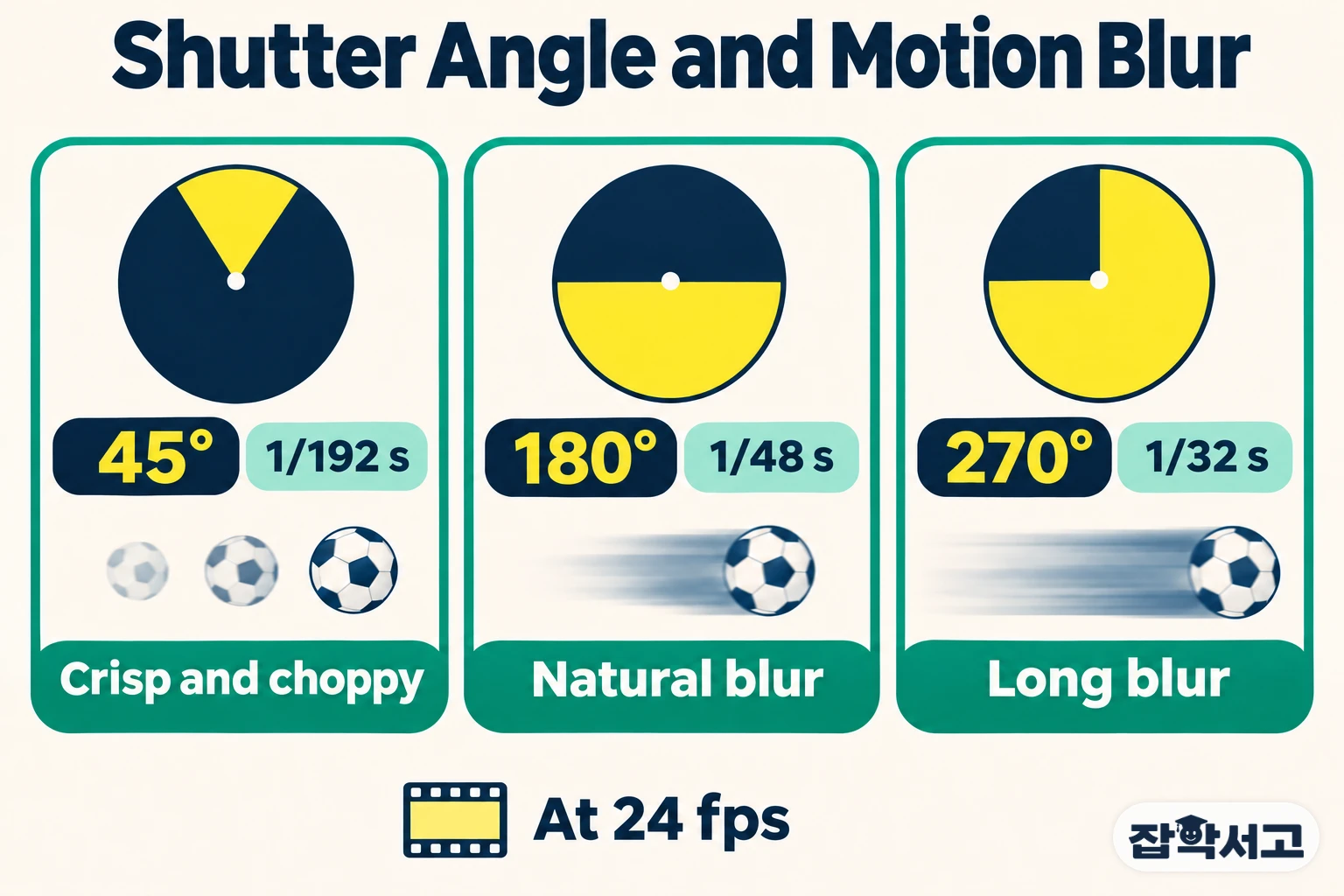
- Shutter Angle: the angle of the open part of a rotary disc shutter through which light passes; it shows what fraction of each frame’s time is spent collecting light.
- Exposure Time: the time a single frame actually collects light; at 24 frames per second, 45 degrees gives 1/192 second, 180 degrees 1/48 second and 270 degrees 1/32 second.
- Motion Blur: the smear created when a subject moves during the exposure; it helps connect the motion smoothly from one frame to the next.
- 180-Degree Shutter Rule: the digital-video convention of setting the shutter speed to ‘1/(frame rate × 2)’ second, so 1/60 second at 30 frames and 1/120 second at 60 frames.
With too little blur, the motion between frames looks jerky; with too much, the picture turns to mush. 180 degrees settled in as the balance point where motion flows smoothly while shapes stay clear.
3. How the Picture Changes with the Angle

Directors and cinematographers sometimes deliberately move away from 180 degrees to change the feel of a scene. The same movement can leave a very different impression on the audience depending on the shutter angle.
(1) Narrow angles: tense, stuttering motion
Narrowing the angle reduces blur, so actions look crisp but choppy. The Normandy landing sequence in the 1998 film Saving Private Ryan is well known for how cinematographer Janusz Kamiński adjusted the shutter to capture even flying dirt and spray with razor sharpness, and many action films later borrowed this look for their fight scenes.
(2) Wide angles: dreamy, smeared motion
Widening the angle makes motion drag and blur. Such images are used to express a dazed or exhausted state, or a dreamlike scene. It is not used often, but a brief touch lets the audience share the character’s blurred senses.
(3) A choice when light is scarce
Widening the shutter angle lengthens the time each frame collects light, making the picture brighter. On a digital camera, going from 180 to 360 degrees doubles the exposure time, the same as gaining one stop of light, so in dark places filmmakers sometimes accept a little more blur in exchange for brightness.
4. Digital Cameras and the Shutter Angle
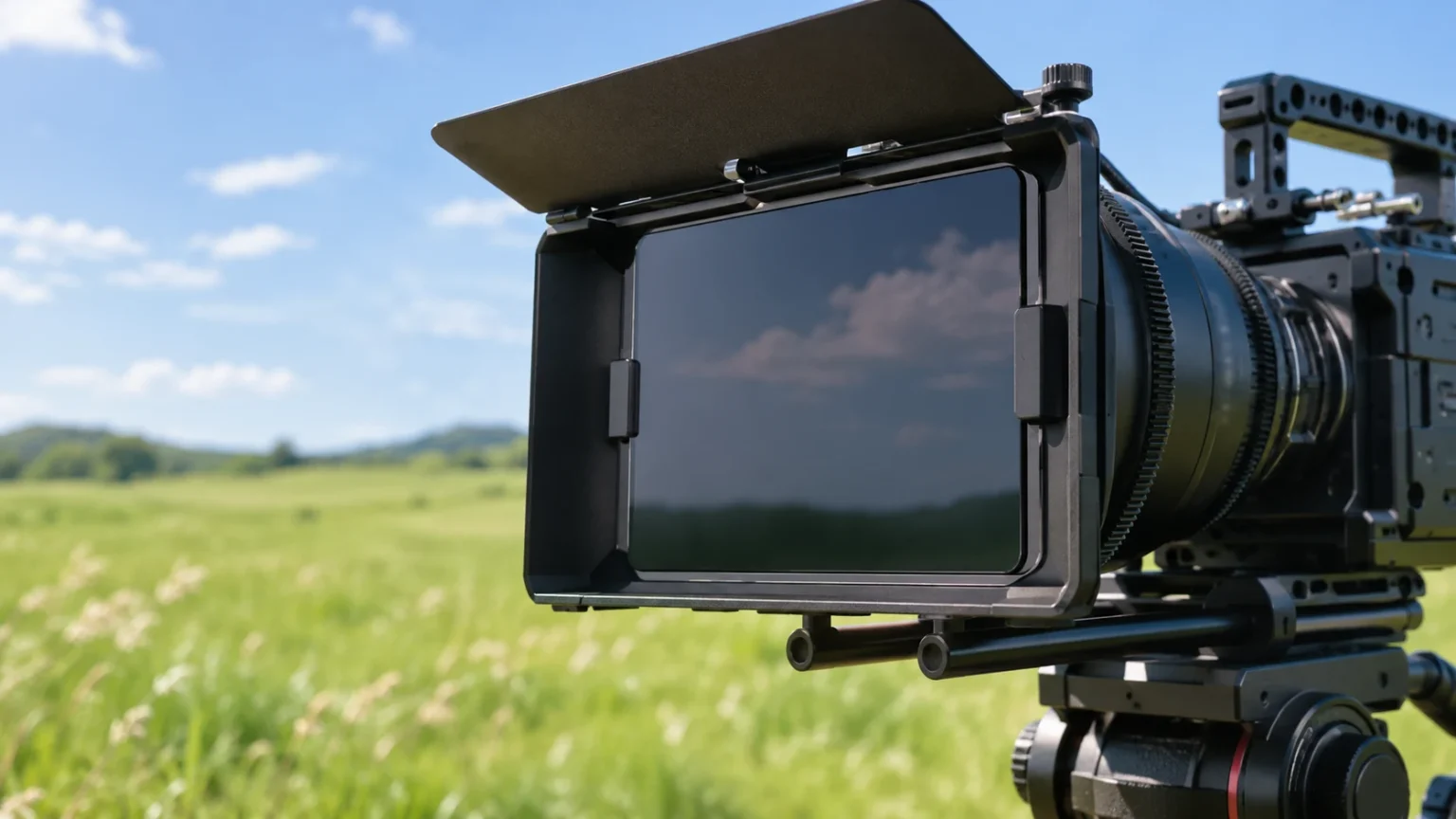
Most digital cameras have no rotary disc and instead control electronically how long the sensor collects light. Even so, the idea of the shutter angle is still in use, and some cinema cameras display the setting as an angle instead of a shutter speed.
(1) The disc becomes an electronic shutter
Because the camera simply sets when the sensor starts and stops collecting light, it can offer a wider range of shutter values than a film camera. However, on cameras that read the sensor line by line, fast-moving objects may appear slanted, a phenomenon known as rolling shutter.
(2) ND filters on bright days
Keeping 180 degrees outdoors at midday easily makes the image too bright. Shortening the shutter at that point would make motion look choppy, so the usual solution is to place an ND filter, which only reduces the amount of light, in front of the lens, or to adjust the aperture and sensitivity.
(3) Avoiding flicker from lighting
Fluorescent lamps and some LED lights flicker at twice the frequency of the mains electricity, which can cause stripes or brightness flicker on screen. That is why, when shooting at 24 frames per second, filmmakers in regions with 50 Hz power often use 172.8 degrees (1/50 second), and in 60 Hz regions such as Korea 144 degrees (1/60 second), matching the exposure time to the flicker cycle.
The shutter angle is a tool that changes the texture and emotion of an image with a single number. The simple idea that ‘motion stays on screen for as long as the shutter is open’ is the first step to understanding the shutter angle.