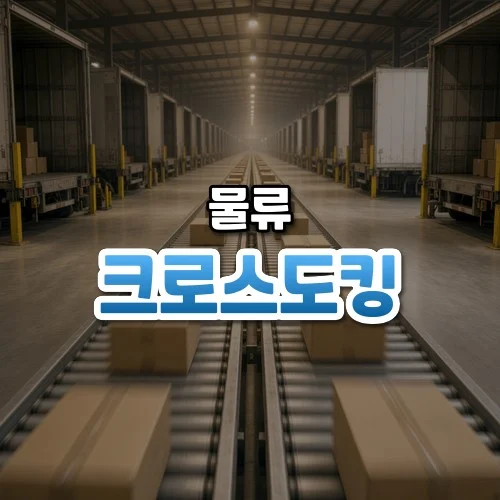
Imagine a factory supplied with parts by ten suppliers. If each supplier sends its own truck, ten trucks with half-empty cargo beds will be on the road, and trucks will line up waiting at the factory gate. What if a single truck went around the suppliers in turn and collected the parts?
In logistics, this way of following a set route, stopping at several places in order to collect or deliver goods, is called a ‘milk run.’ It is widely used in operations that need to move small quantities frequently, as a way to improve transport efficiency and inventory management at the same time.
This article explains, in easy-to-understand terms, how the name milk run came about and what it means, how a milk run works, its uses in production, and points to keep in mind when introducing one.
Understanding and Applying the Milk Run
How the Name Milk Run Came About
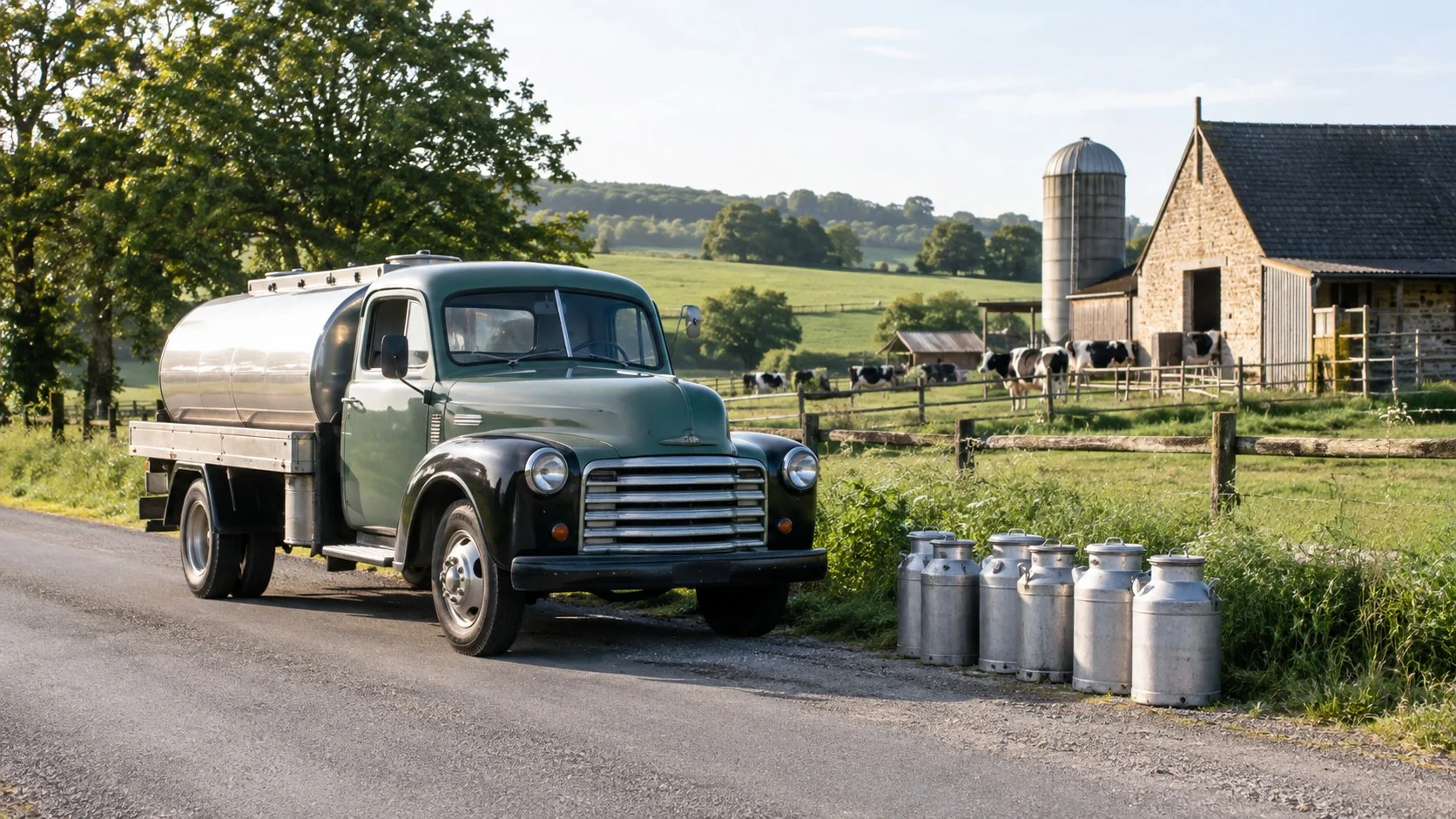
The name milk run comes from the way milk used to be collected in old dairy regions. Milk collection trucks followed a set route at set times, visiting several farms in turn to collect milk and returning the empty cans emptied the time before. The milkman who made the same rounds every morning, leaving milk at each house, worked on the same principle.
Japan's Toyota is often cited as the company that brought this everyday practice into industrial logistics in earnest. The Toyota Production System is based on Just-in-Time, making only what is needed, when it is needed, in the amount needed. Because parts had to be received in small quantities and often, a collection round covering several suppliers at once was a good fit.
When Toyota built plants in North America and Europe from the 1980s, it made the milk run, going around local suppliers on a set schedule and loading a mix of parts, its standard method for procuring parts. The method then spread beyond automobiles to many industries, including electronics and retail.
How a Milk Run Works
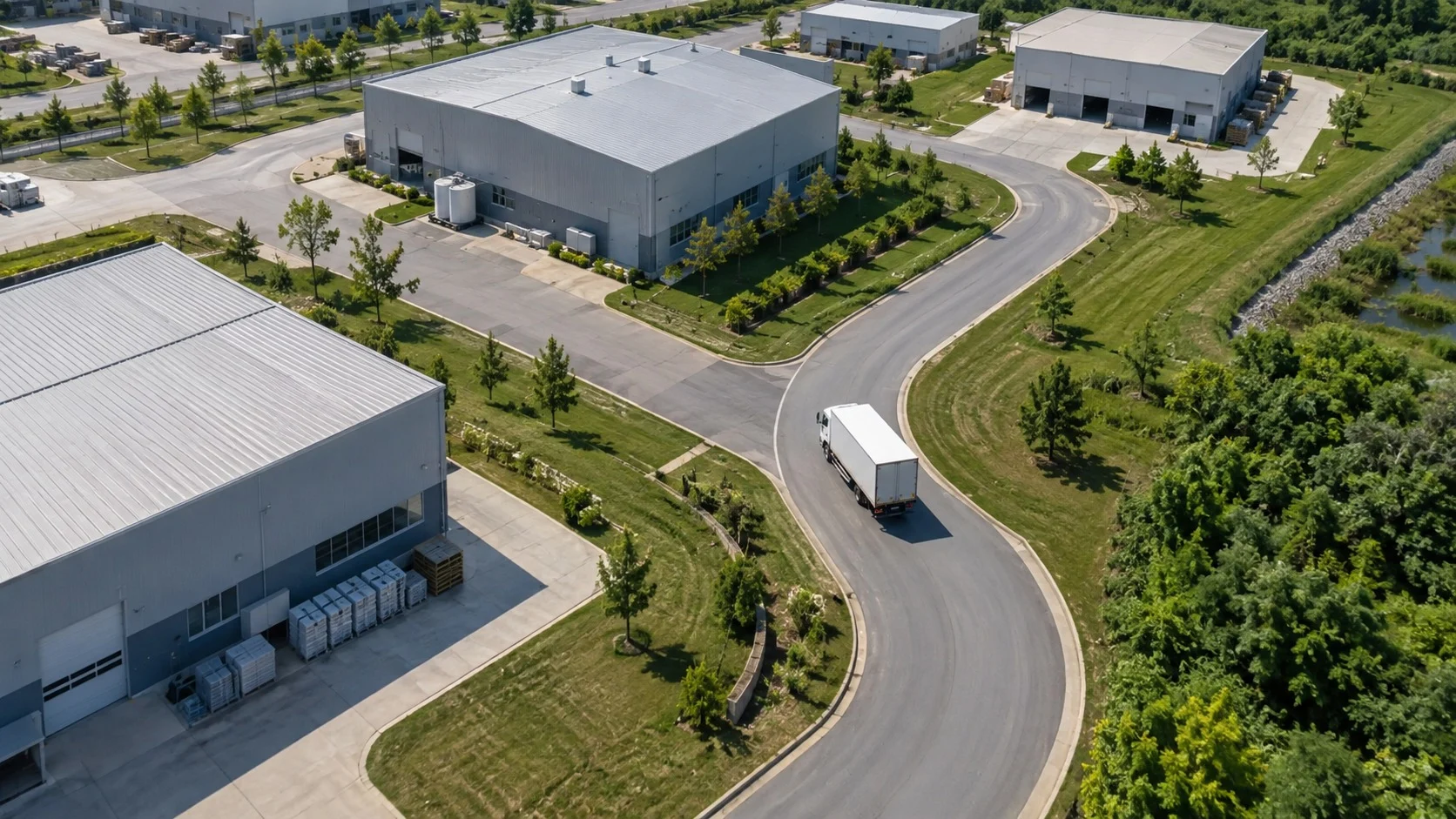
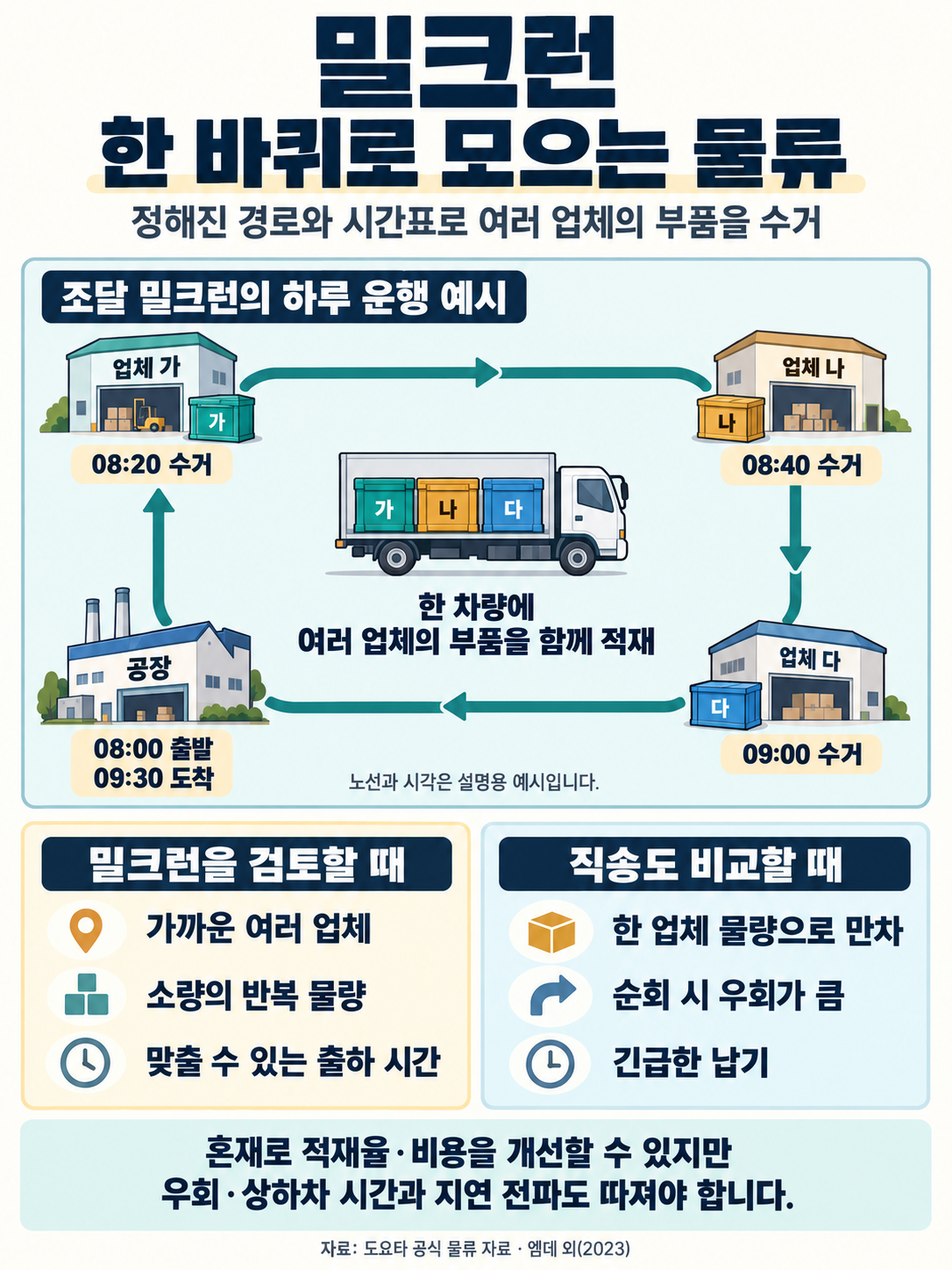
The key to a milk run is deciding the route and timing in advance. The truck does not move according to orders as they come in; like a bus line, it runs in a set order and to a timetable.
(1) A set route
The suppliers the truck will visit and the order in which it visits them are decided in advance. Nearby suppliers are grouped so that the route can be covered in one loop.
(2) A set timetable
How many times a day, and at what time, the truck will arrive at each supplier is decided in advance. Suppliers have the parts to ship ready by that time.
(3) Mixed loading and empty container return
The truck loads parts from several suppliers together in one cargo bed, and on its way around it returns to each supplier the empty parts boxes used last time.
When planning the route, you consider not only where the suppliers are but also how much each one ships, the size of the parts boxes, and the time needed for loading and unloading. The load for one loop has to be grouped so that it fills one truck properly, and the truck must still be able to reach the factory on time after its last stop. Visit frequency may also differ, with high-volume suppliers visited several times a day and low-volume ones once every two days.
This turns the half-empty trucks that each supplier used to send into a single truck filled with several suppliers' loads. The load factor, which shows how full the cargo bed is, rises, and the total distance driven and the number of trucks fall. In fact, Toyota has said that by expanding milk runs together with its suppliers, it raised loading efficiency and reduced total distance driven.
Uses in Production and Distribution
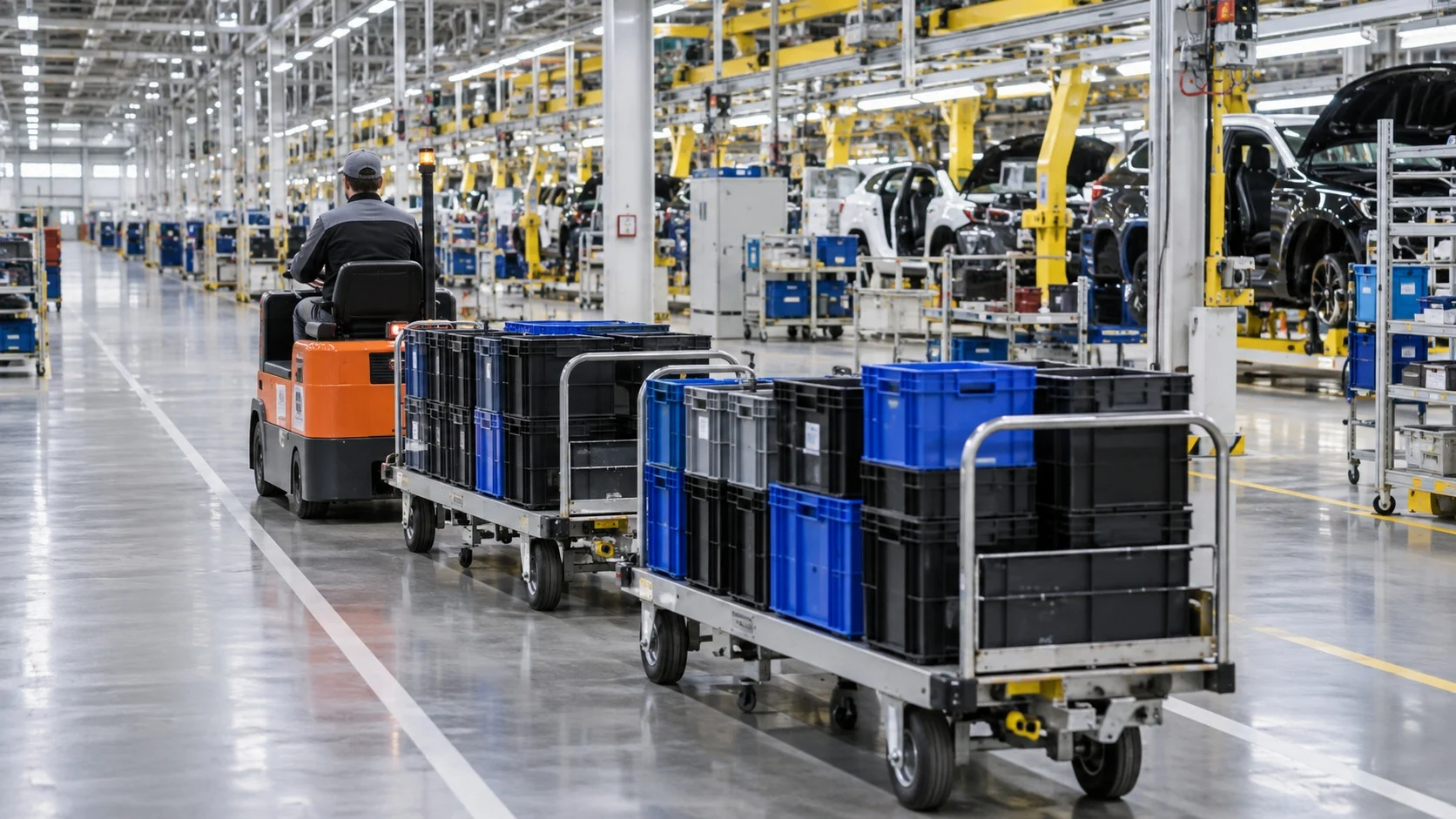
A milk run can be used both for collecting goods and for distributing them. Depending on where it is used, it takes a few different forms.
- Inbound milk run: A single truck goes around several suppliers, collecting parts and bringing them to a factory or cross-docking hub.
- Outbound milk run: A truck leaving a distribution center visits several stores or customers in turn, delivering goods.
- In-plant milk run: Inside the factory, a small tugger vehicle runs a set route between the warehouse and the production lines, replenishing parts.
The in-plant milk run is also called ‘mizusumashi,’ the Japanese word for the whirligig beetle. That is because the worker in charge circles nonstop between lines, like the beetle darting busily across the water, supplying the parts that are needed in the amounts needed.
Similar patterns are easy to see in everyday life. A delivery van that goes around the neighborhood at set times restocking several shops with bread and milk, or a school bus that stops at several stops in turn, works on the same principle as a milk run.
With a milk run, parts arrive in small quantities and often, so the inventory piled up at the factory shrinks. Because arrival times are regular, the unloading dock does not get crowded, and suppliers can plan their shipping preparations. And since fewer trips are made, fuel use and carbon emissions also fall, so it is drawing attention as an eco-friendly logistics method.
Points to Keep in Mind When Introducing a Milk Run
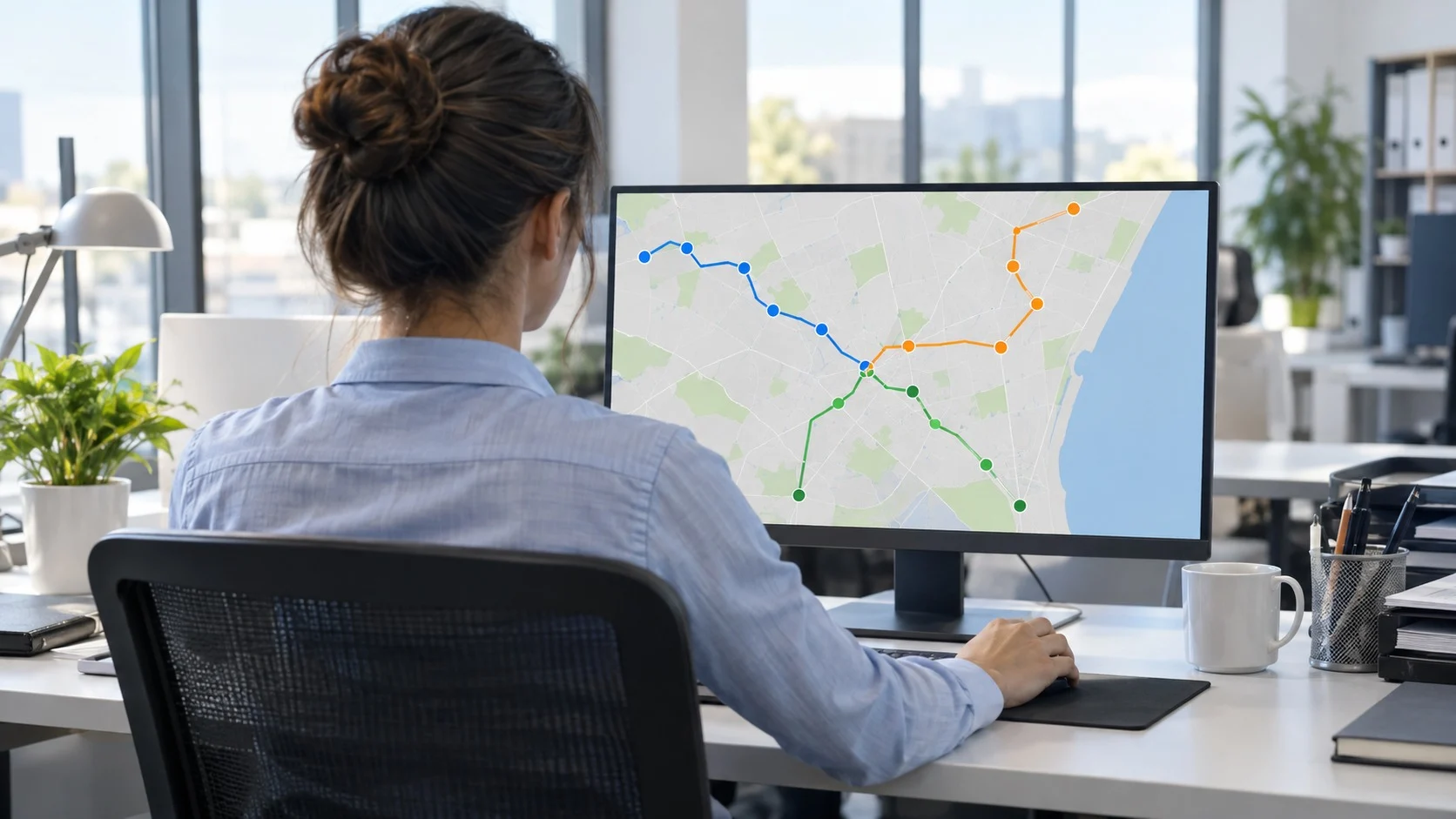
A milk run is highly efficient, but it is not the right method for every operation. If suppliers are far apart from one another, or if a single supplier's volume is enough to fill a truck on its own, direct shipping from the supplier to the factory may be better.
Also, because one loop stops at several places, a delayed shipment at one supplier pushes back the entire schedule after it. So running a milk run well requires sharing information closely with suppliers and a firm commitment to keeping to shipping preparation times.
In operations where volumes swing widely from day to day, a fixed route and timetable can actually become a burden. In such cases, it is better to keep monitoring the flow of volumes, redesign routes and trip frequency, and also keep spare transport available for sudden demand.
The milk run started from the simple idea of a milk collection truck making the rounds of dairy farms, but today it has become an important method supporting Just-in-Time production and eco-friendly logistics. Understanding its principle lets you think through and design even the job of moving goods one more time.
Weaving separate routes into one: that is the first step in designing efficient logistics.