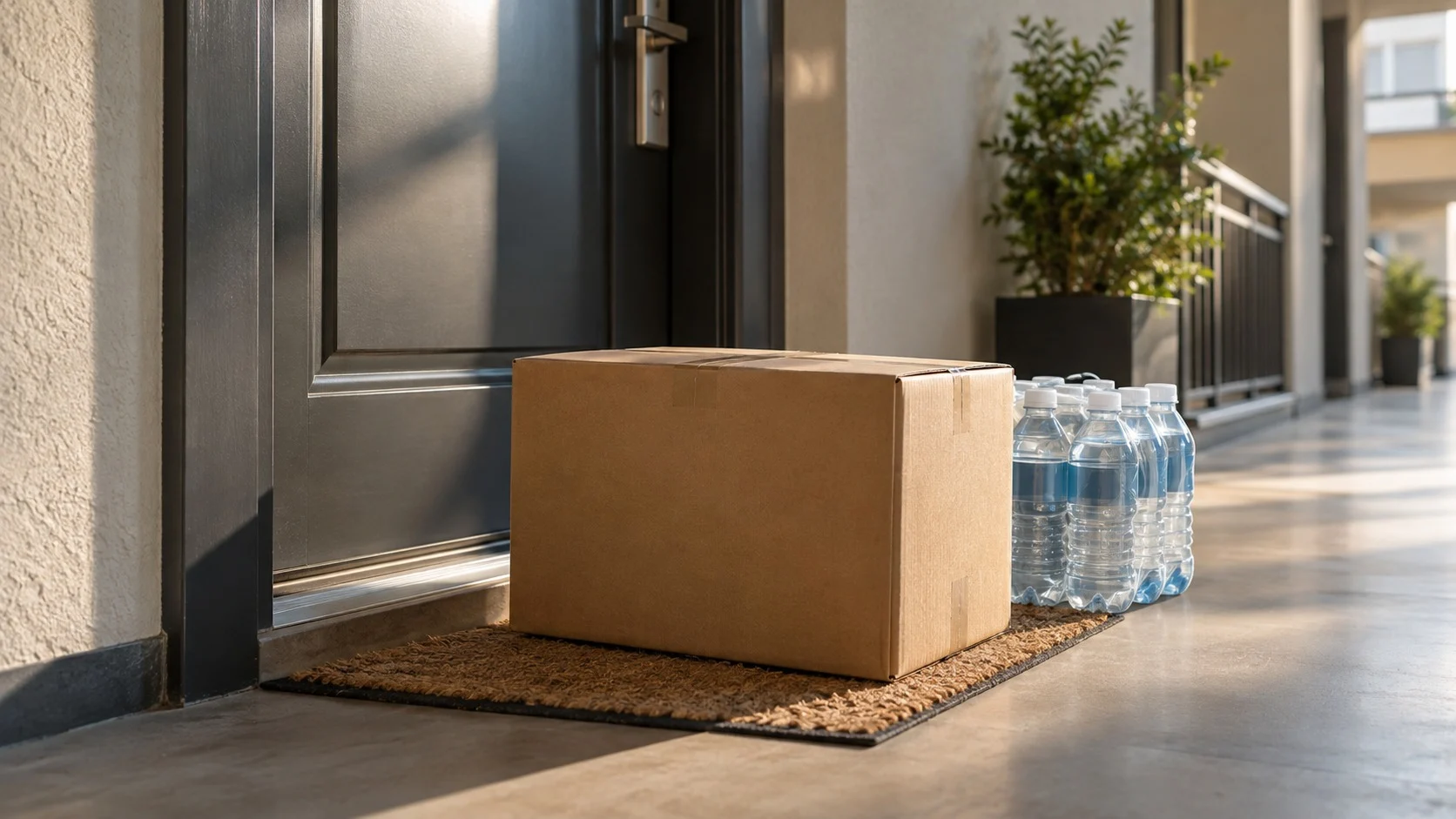
Ordering a pack of bottled water on your phone late at night and finding a box at your front door the next morning is no longer unusual. It may look as if a single tap does it all, but in the meantime someone confirmed the order, took the item off a shelf, put it in a box, attached a shipping label and loaded it onto a truck.
All the work that runs from the moment an order is received until the customer holds the item is collectively called “order fulfillment.” As online shopping has grown, fulfillment has become the core of logistics that sets online stores apart from their competitors.
This article looks in turn at what fulfillment means, its step-by-step flow, the features that set fulfillment centers apart from ordinary warehouses, and the points to weigh when deciding whether to run it yourself or outsource it.
From One Order to Your Front Door: How Fulfillment Works and How It Is Used
What Is Fulfillment?
Fulfillment comes from the English word “fulfill” (to carry out, to fill), and in Korean it is rendered as “order execution.” In a broad sense, it refers to the entire process that begins with receiving customer inquiries and orders and continues through delivering the product and providing after-sales service.
(1) A Bridge Between Logistics and Sales
Fulfillment does not refer only to warehouse work. Order management, inventory management, packing, shipping, payment confirmation and returns all require multiple departments and partners to work in step for a single order to be completed properly.
(2) Where Customers Meet the Company
In online shopping, customers never meet the seller in person. Whether an item arrives on time, accurately and undamaged becomes their impression of the company itself, so fulfillment is regarded as work that shapes the customer experience.
(3) Two Goals
Fulfillment aims to combine accuracy, delivering the right product at the right time and place, with agility, responding to sudden surges in orders and unexpected variables.
(4) Fulfillment That Varies With the Production Method
Order fulfillment in the broad sense also differs depending on when the product is made. Typical approaches are make-to-stock, which ships straight from inventory produced in advance based on demand forecasts; make-to-order, which produces after an order is received; and assemble-to-order, which assembles pre-prepared components to fit each order. Fulfillment in online shopping is mostly based on the make-to-stock approach of quickly shipping inventory that has already been made.
From Shelf to Box: The Stages of Fulfillment

The fulfillment flow generally consists of the following stages.
- Receiving: Inspect the quantity and condition of goods coming in from sellers or suppliers and register them in the system.
- Storage: Place goods in designated shelf locations and manage inventory quantities in real time.
- Picking: When an order comes in, take the relevant items off the shelves and gather them.
- Packing: Choose a box and cushioning that fit the size of the items, pack them and attach the shipping label.
- Shipping: Sort the packed boxes by region, hand them over to the courier’s vehicles and track the delivery status.
- Returns processing: Inspect returned goods and decide whether to resell, repair or dispose of them.
In the field, picking, packing and shipping are sometimes grouped together as “Pick-Pack-Ship.” If even one of these stages goes wrong, the wrong item may be delivered or delivery may be delayed, so many centers scan barcodes to confirm at each stage that the item matches the order.
How It Differs From an Ordinary Warehouse: The Fulfillment Center
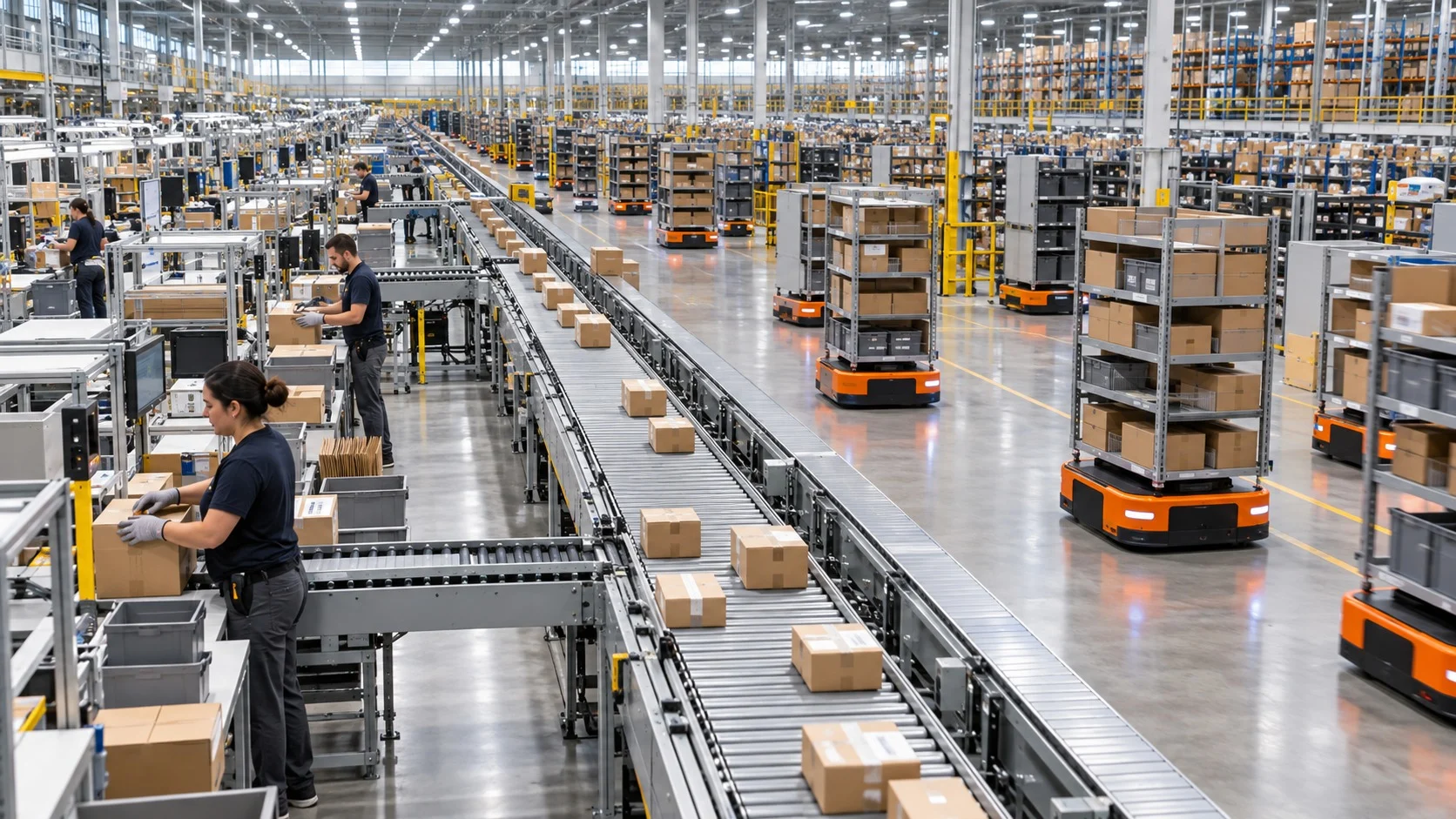
A facility that specializes in fulfillment is called a fulfillment center. It looks much like a large warehouse from the outside, but the way it works is quite different.
(1) Individual Orders Instead of Bulk Lots
Traditional distribution centers mainly gathered goods by the pallet or case and sent them to stores or wholesalers. A fulfillment center has to handle tens of thousands of small orders a day, in which individual customers order just one or two items each.
(2) Flow Over Storage
While an ordinary warehouse focuses on storing goods well for a long time, what matters more in a fulfillment center is how quickly goods come in and go out. Layouts are also planned around speed, for example by placing fast-selling items close to the shipping area.
(3) Choosing Between People and Machines
Handling many small orders is costly in labor if done by people, while automating it requires heavy investment in equipment. That is why many centers combine human work with robots that move shelves or automated sorters.
Do It Yourself or Outsource It: Fulfillment Services
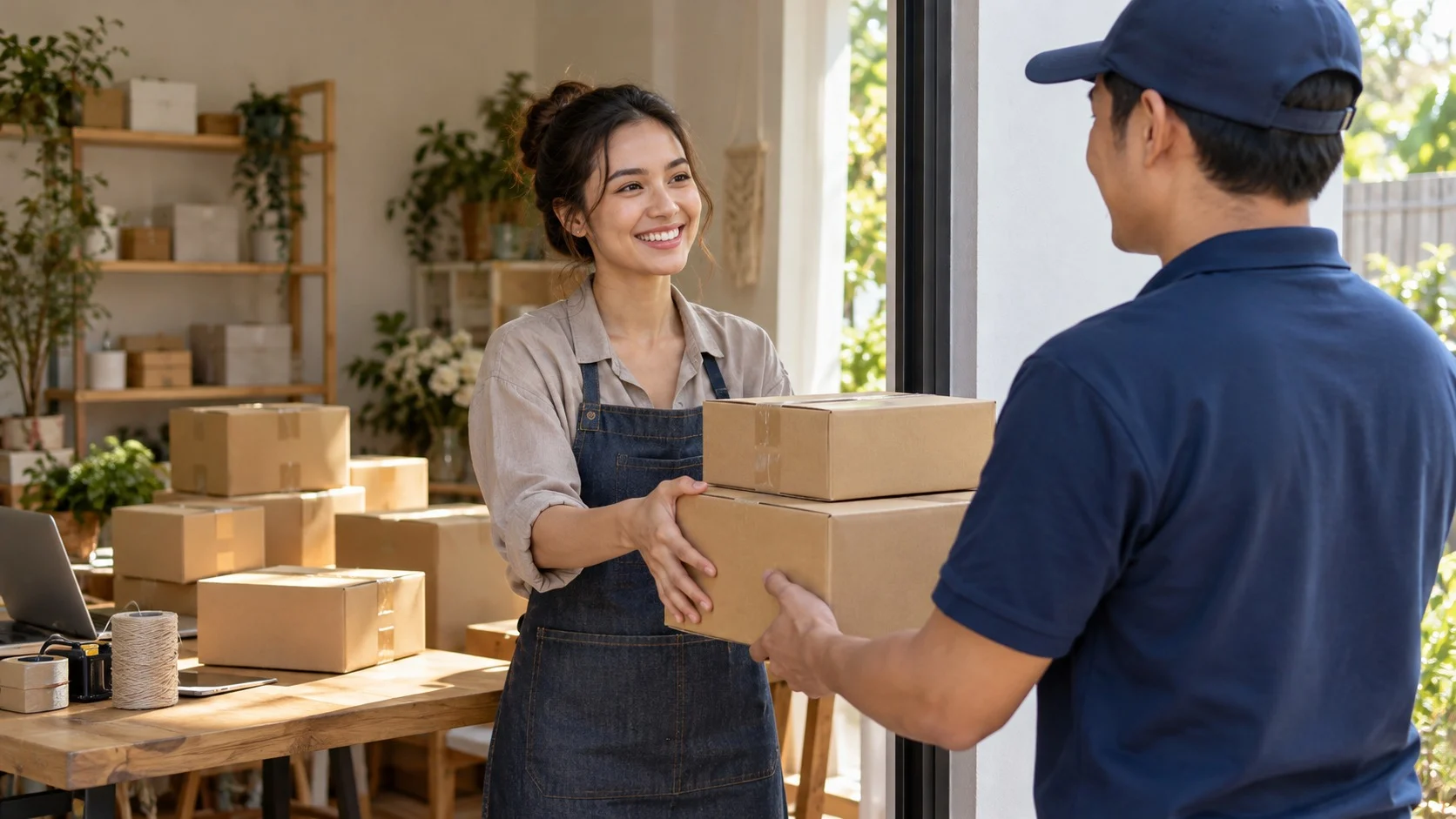
Sellers can run fulfillment themselves or entrust it to specialist companies.
(1) In-House Fulfillment
Running your own warehouse lets you decide even the finest details yourself, such as how items are packed or what free gifts are included. On the other hand, you must provide all the space, staff and systems yourself, which is a heavy burden in the early days when orders are few.
(2) Outsourced Fulfillment
This approach entrusts everything from storage to shipping and returns to an outside logistics company, a role typically taken on by third-party logistics (3PL) providers. A leading example is Amazon’s FBA (Fulfillment by Amazon), launched in September 2006. Once sellers send their goods to Amazon’s centers, Amazon handles storage, packing, shipping, returns and even customer service on their behalf.
(3) What to Weigh When Outsourcing
Outsourcing fees usually depend on a product’s size and weight and on how long it is stored, and additional storage fees may be charged for inventory that goes unsold for a long time. Telling fast-selling products apart from slow ones and stocking the right amount of inventory is the key to keeping costs down.
Fulfillment is the work of completing each and every order as promised, out of the customer’s sight. A single box that arrives accurately and quickly can sometimes hold a customer’s heart longer than glamorous product photos.
Tightly linking the countless hands hidden behind the order button is the first step toward trustworthy online shopping.