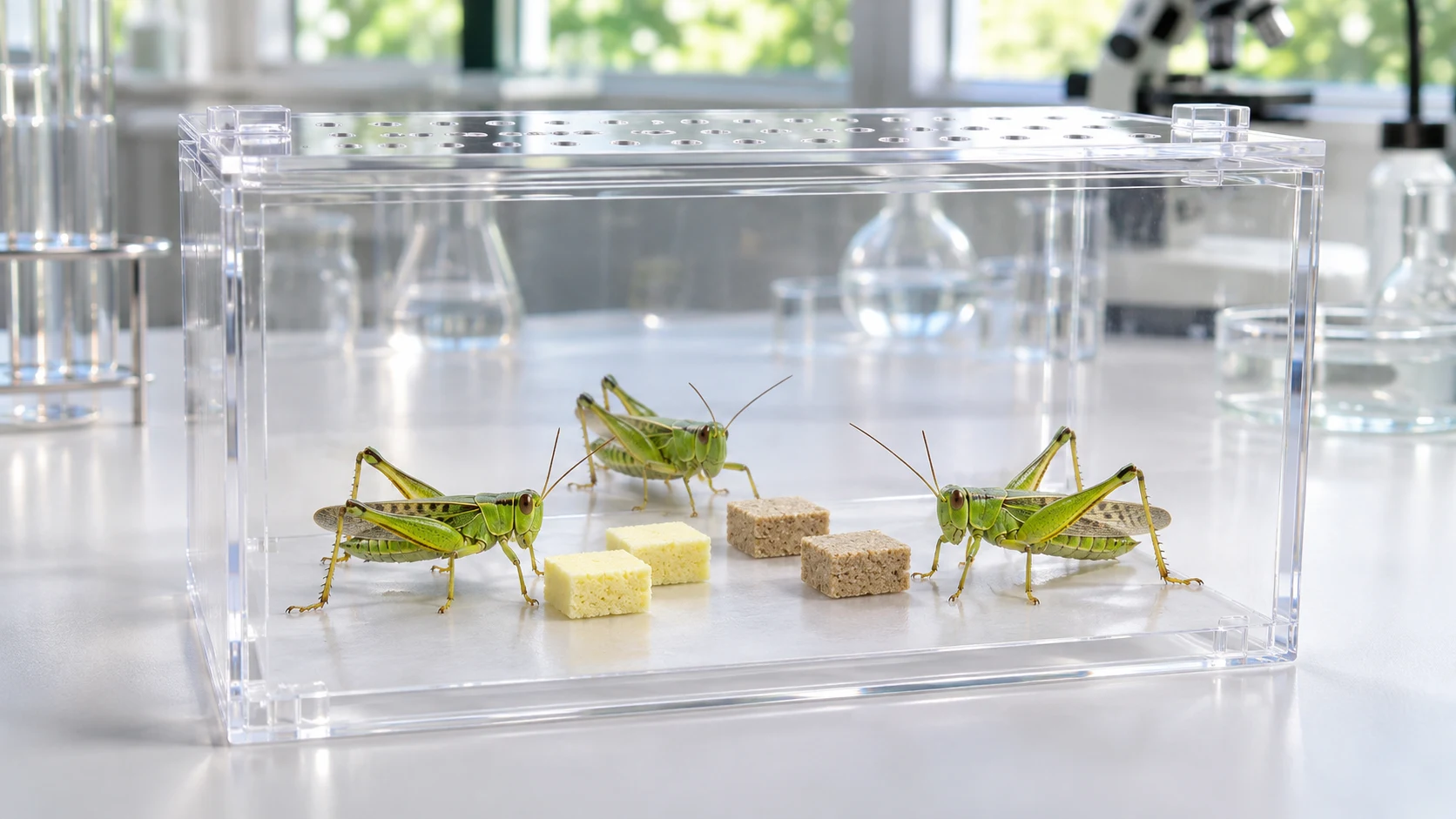
Have you ever filled up on crackers or bread with almost no protein, only to find yourself reaching for more food even though you were full? One explanation is that our bodies keep track of protein before carbohydrates or fat, so when a meal is low in protein, we end up eating extra calories while trying to make up the shortfall. This idea is called the ‘Protein Leverage Hypothesis’.
Put simply, the protein leverage hypothesis means that ‘people tend to keep eating until they reach the amount of protein their bodies need, so when the share of protein in the diet falls, they eat more total calories.’ Stephen Simpson and David Raubenheimer of the University of Sydney in Australia refined the idea through locust experiments starting in the 1980s, and in 2005 they presented it as a hypothesis to explain obesity in the journal Obesity Reviews.
In this article, we will look in turn at how the hypothesis was born from locust experiments, the arithmetic created by the protein target and protein dilution, experiments with people and research on ultra-processed foods, and finally the limits of the hypothesis and how to use it at the table.
The appetite lever that puts protein first
1. A hypothesis born from locust experiments
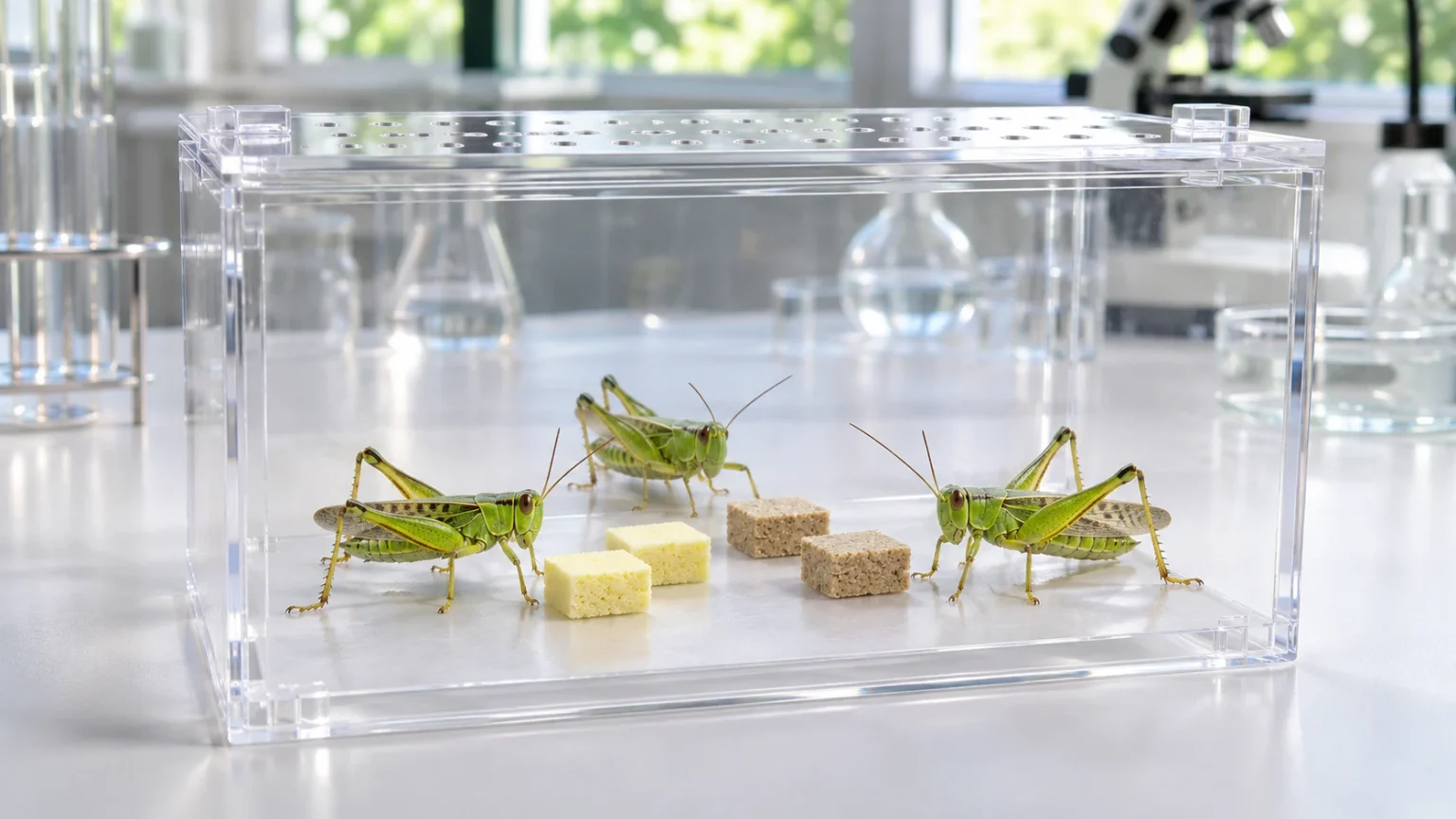
Simpson and Raubenheimer made artificial diets with precisely varied ratios of protein to carbohydrate and recorded exactly what and how much locusts ate. Even when the ratio changed, the locusts adjusted their intake to get close to a fixed amount of protein and carbohydrate, and when given a diet short on protein in particular, they did not easily stop being hungry even after eating plenty of calories.
(1) A separate appetite for each nutrient
The two researchers started from the idea that animals do not count calories alone but have separate appetites for nutrients such as protein, carbohydrate and fat.
(2) From insects to people
Protein-seeking behavior was later observed in many other organisms, including slime molds, birds, rodents and spider monkeys. The two reasoned that if human appetite also responds most strongly to protein, today’s diets, filled with more low-protein foods, could drive overeating.
(3) The 2005 hypothesis
The 2005 paper ‘Obesity: the protein leverage hypothesis’ in Obesity Reviews set out the idea that a strong appetite for maintaining protein intake drags along the overconsumption of carbohydrates and fat. In 2020 the two also published Eat Like the Animals, a book introducing this research to general readers.
2. The arithmetic of the protein target and dilution

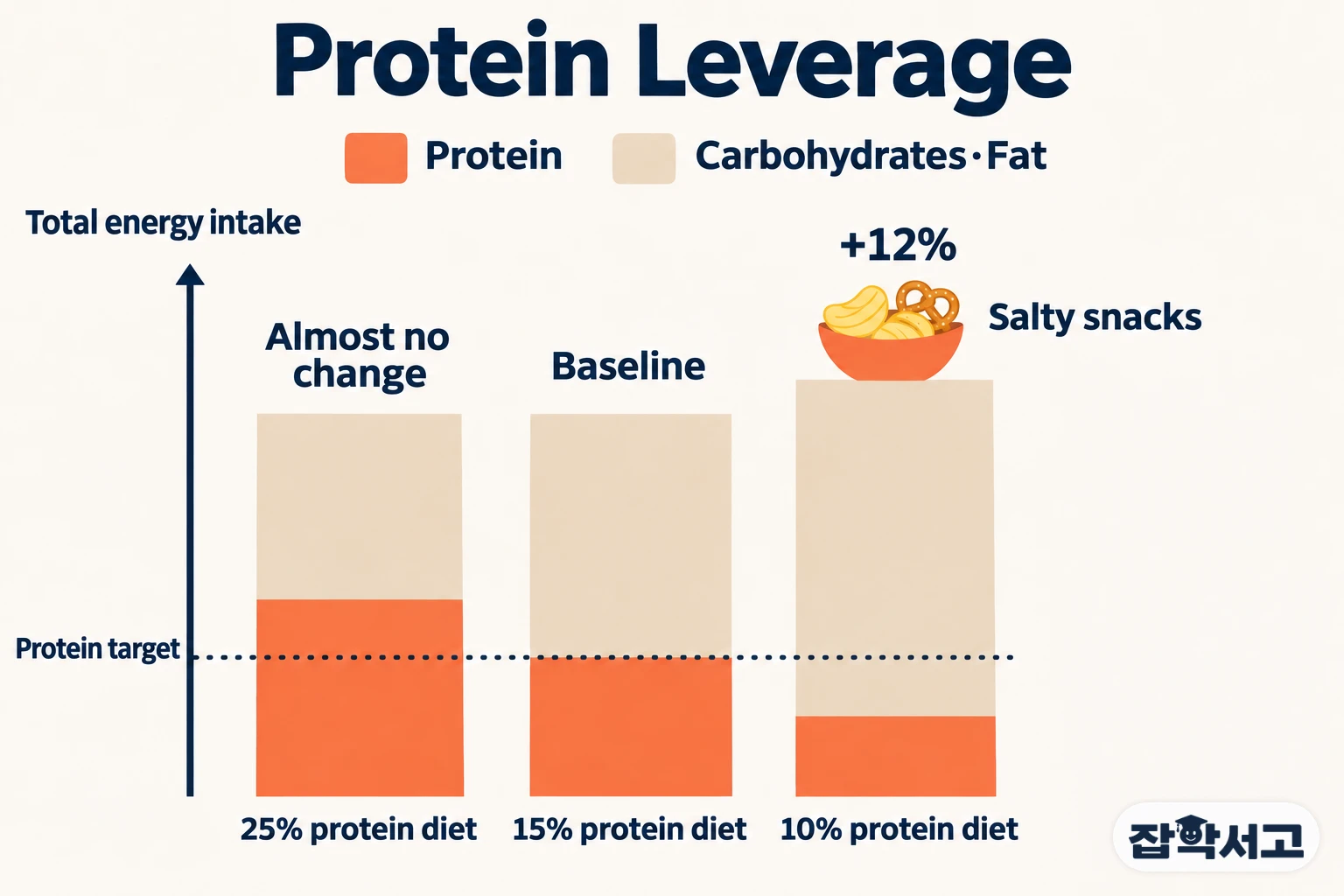
Protein leverage can be explained with two numbers. One is the protein target the body tries to reach, and the other is the share of protein in the diet’s total calories. If the target stays the same but the share falls, you have to eat more food to get the same amount of protein.
- Protein Target: The amount of protein the body tries to reach over a given period; the hypothesis holds that this target is defended more strongly than those for other nutrients.
- Protein Dilution: A fall in the share of protein in the diet’s total calories as carbohydrates and fat increase.
- Nutritional Geometry: A research method that plots protein and carbohydrate intake on two axes and analyzes, as a graph, which point an animal is eating toward.
- Protein Decoy: A processed snack that tastes salty and savory like meat but contains little actual protein, stimulating the appetite for protein without satisfying it.
For example, on a diet whose protein share has fallen from 15% to 12.5%, you would need to eat 20% more total calories to get the same amount of protein (15 ÷ 12.5 = 1.2). Because people usually get only about 10–15% of their daily calories from protein, even a small wobble in this share moves total intake a lot. That is where the name comes from: a lever (leverage) that moves a large weight with a small force.
3. Experiments with people

To test the hypothesis in humans, in 2011 a team led by Alison Gosby at the University of Sydney had 22 lean adults stay at a research facility and eat three diets differing only in protein share, four days each, in random order. The results were published in the journal PLOS ONE.
(1) Eating 12% more on the 10% diet
On the diet with protein lowered to 10%, total energy intake over four days was 12% higher than on the 15% diet, which was set based on World Health Organization recommendations. About 70% of the extra energy came from snacks eaten between meals, and savory-flavored snacks were chosen especially often.
(2) No drop at 25%
Conversely, on the diet with protein raised to 25%, energy intake was hardly different from the 15% diet. In other words, people eat more when protein is short but do not eat less when it is plentiful. In addition, on day 4, hunger one to two hours after breakfast rose more on the 10% diet than on the 25% diet.
(3) The link to ultra-processed foods
A 2018 study in the journal Public Health Nutrition analyzed data from the US National Health and Nutrition Examination Survey (NHANES) and reported that the higher the share of ultra-processed foods in the diet, the lower the protein share and the higher the total energy intake. The interpretation is that ultra-processed foods, as defined by the Nova food classification, may dilute dietary protein and encourage overeating.
4. Limits of the hypothesis and use at the table

The protein leverage hypothesis is one of several hypotheses that try to explain the rise in obesity, and not all studies show an effect of the same size. Even in the Gosby study, the extra eating was not enough to fully restore the reduced protein intake, so the team concluded that the leverage was ‘incomplete.’
(1) It does not mean simply eating more protein
In a mouse study published in 2014 in the journal Cell Metabolism, when mice could freely eat 25 different diets, metabolic health and lifespan were best on diets in which part of the protein was replaced with carbohydrate, while making mice eat less with high-protein diets did not extend lifespan. That is why the researchers themselves recommend a balanced, fiber-rich diet rather than an extreme high-protein one.
(2) The body’s signal FGF21
There is also research suggesting that the hormone FGF21, released by the liver when protein intake is low, can drive behavior that seeks out savory tastes.
(3) How to use it at the table
Putting protein foods such as eggs, tofu, fish and beans first at every meal, and cutting back on snacks that are low in protein but strongly salty, makes it easier to reach your protein target.
Appetite is less a calculator that counts only calories and more a scale with a separate gauge for each nutrient. The simple idea that ‘our bodies try to meet their protein needs before their calorie needs’—that is the first step to understanding protein leverage.