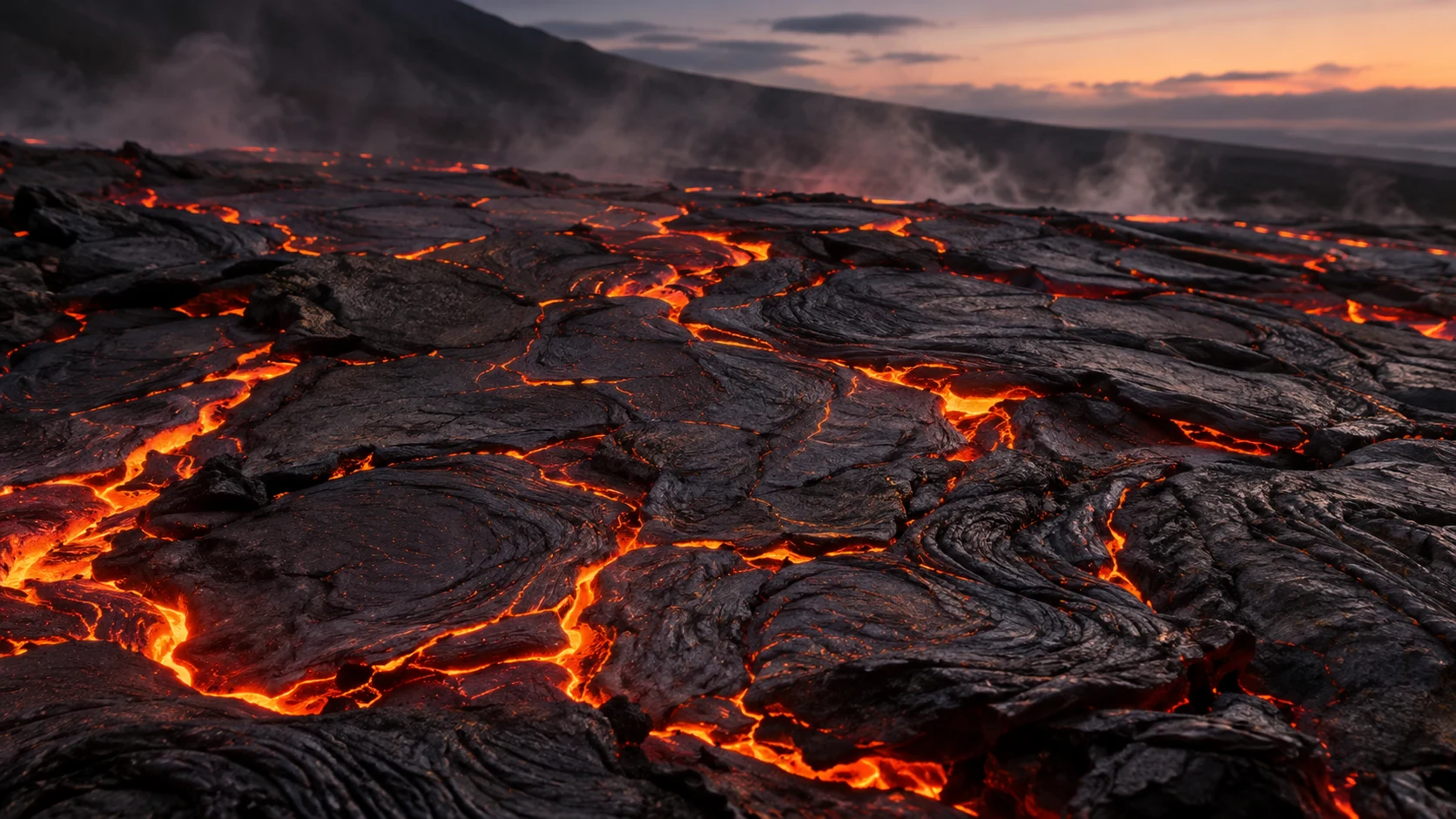
Have you ever seen a sea cliff packed with stone columns, as if thousands of pencils had been bundled together and stood on end? People who first see the coast of Jungmun in Seogwipo, Jeju, or the Giant’s Causeway in Northern Ireland often suspect that someone carved them on purpose. Yet these columns were shaped not by stonemasons but by the cooling lava itself, and geologists call this structure ‘columnar jointing.’
Simply put, columnar jointing means ‘a structure in which the cracks that formed as hot lava cooled and shrank have divided the rock into columns.’ Its Korean name, jusangjeolli, literally means ‘column-shaped (柱狀) joints,’ and a joint is the geological term for a crack in a rock. It is most common in basalt, but it also appears in other igneous rocks such as andesite, rhyolite and tuff.
In this article, we will look in turn at how lava cracks as it cools, why the columns are close to hexagons, the record of cooling left in the thickness of the columns, and finally some famous examples of columnar jointing around the world.
The Geometry of Stone Columns Carved by Cooling Lava
1. How Lava Cracks as It Cools
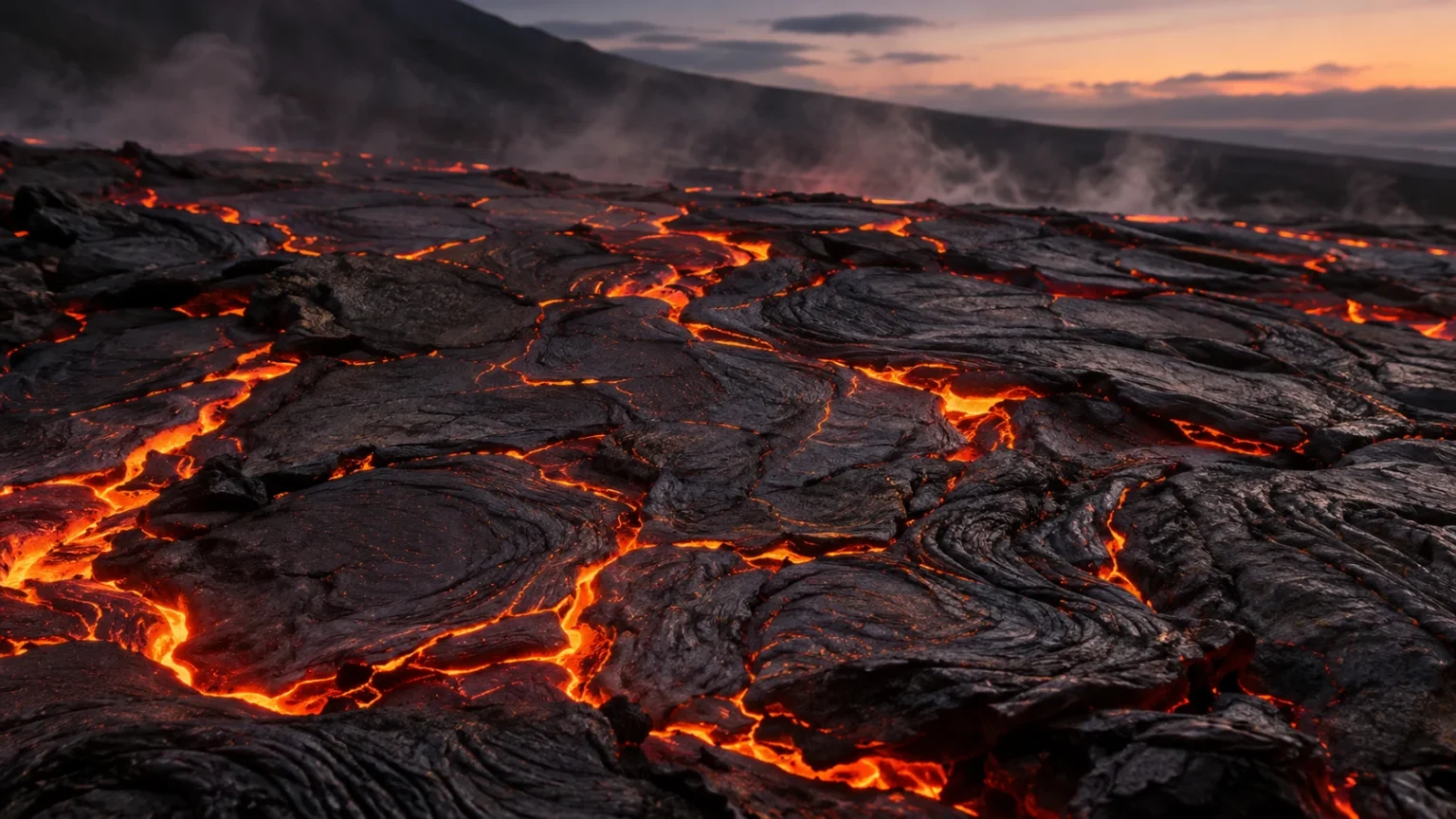
Almost every material expands when hot and shrinks when it cools. Lava is no exception: even after its surface hardens, it keeps cooling and contracting little by little. The problem is that the rock is held in place by the ground beneath it and the surrounding rock, so it cannot shrink freely.
(1) Built-up pulling forces split the rock
Inside rock that is trying to shrink, forces that pull against each other, known as tensile stress, build up. Rock is strong against squeezing but weak against pulling, so once this stress exceeds what the rock can bear, a crack opens and releases it. That is why the process behind columnar jointing is often summed up in three words: cooling, contraction and cracking.
(2) From the cold surfaces into the hot core
Cracks first form on the top and bottom surfaces of the lava, which cool first, and then extend into the still-hot interior. As a result, the columns grow perpendicular to the main cooling surfaces through which heat escapes. In lava that has spread out flat, the columns stand upright, but where the cooling surface is tilted or curved, the columns lean over or bend like a fan.
(3) Little by little, not all at once
A crack does not split open in one go; it advances in a series of short jumps. Scientists studying the Kīlauea Iki lava lake in Hawaii actually heard the rock cracking, and the signals were also recorded by seismometers. The horizontal bands on the sides of the columns, which look as if they were cut with a chisel, are the marks left each time the crack moved forward.
2. Why the Columns Are Close to Hexagons

Looking down on columnar jointing from above, you see interlocking polygons stretching on and on like a honeycomb. Columns can have anywhere from three to eight sides, but the most common is the six-sided hexagonal column.
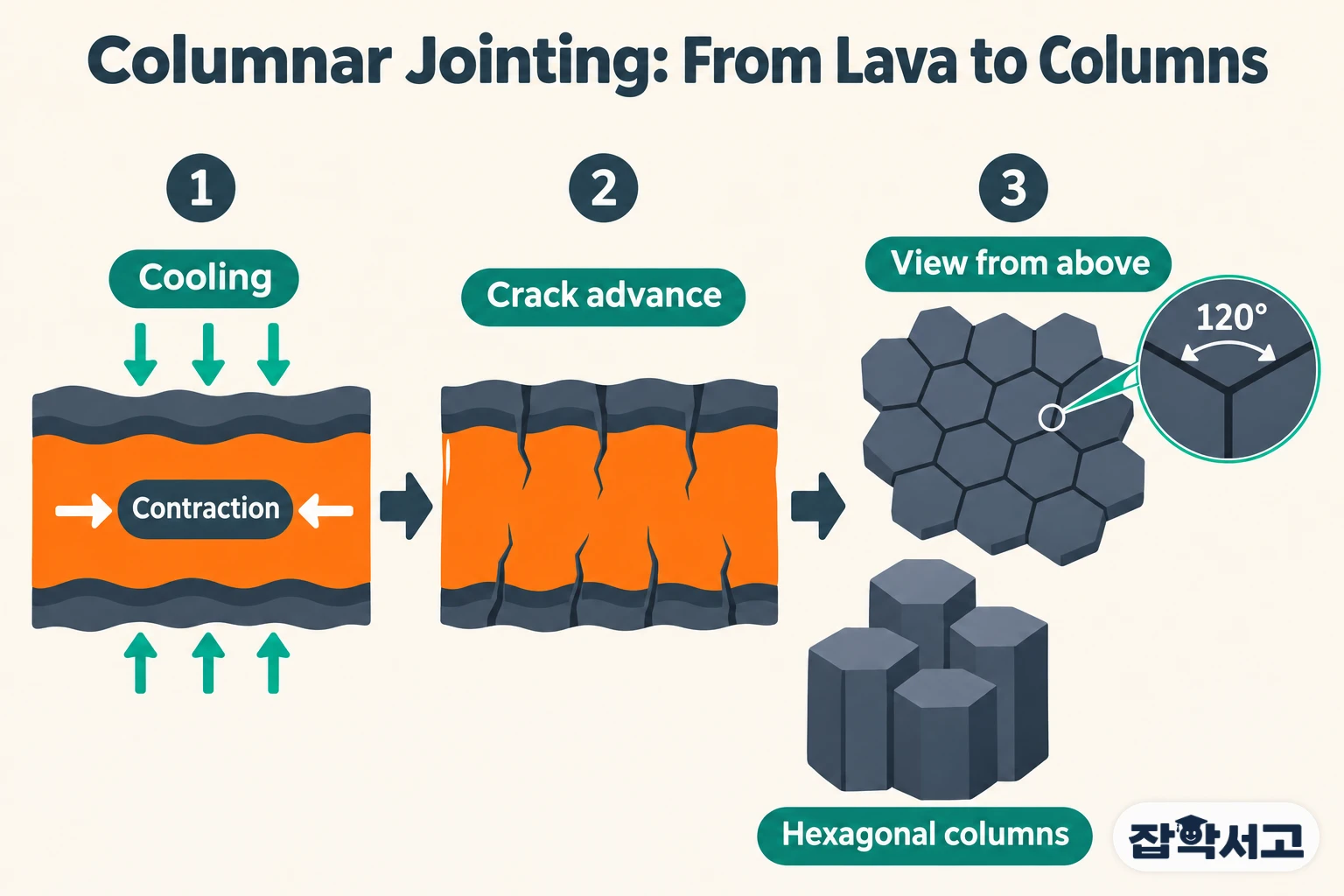
- Thermal Contraction: The shrinking of lava as it cools, which is the starting point for cracking.
- Tensile Stress: The force pulling against itself inside rock that is trying to shrink; when it exceeds what the rock can bear, a crack opens.
- 120° Junction: The point where three cracks meet at about 120 degrees; it relieves contraction stress most efficiently and becomes a corner of the hexagonal pattern.
- Striae: Horizontal marks left on the sides of a column each time the crack makes a short advance, also called chisel marks.
Cracks that first form at the surface often meet in T-shapes, like the cracks in dried mud. As the cracks advance a few meters inward, however, the pattern gradually becomes more orderly and approaches a hexagonal grid of similar widths. At Devils Postpile in California, about 55% of the columns are known to be hexagonal.
3. A Record of Cooling Left in Column Thickness

The thickness and shape of columnar joints alone reveal how quickly the lava cooled. Column diameters range from a few centimeters to 3 m, and columns can grow up to 30 m tall.
(1) Slow cooling makes thick columns, fast cooling thin ones
According to a 2009 study by Lucas Goehring and colleagues published in the Proceedings of the National Academy of Sciences (PNAS), the spacing between columns is inversely proportional to the speed at which the cooling front advances. Thick columns form where the lava cooled slowly, and thin columns where it cooled quickly.
(2) Colonnade and entablature
Cross-sections of thick lava often show two layers. At the bottom, where the ground blocked heat and the lava cooled slowly, a ‘colonnade’ of thick, regular columns forms; at the top, where air, rain and water cooled the lava quickly, an ‘entablature’ of thin, irregular, tangled columns forms. Both names come from ancient Greek temples: the row of columns and the horizontal structure resting on top of it.
(3) Seeping water and a starch-paste experiment
Deep inside, far from the cooling surfaces, water that seeps into the cracks boils up and flows back down, drawing heat away so that the cooling front advances at an almost constant speed. The same research team dried a paste of corn starch and water mixed in equal weights, created tiny millimeter-scale columnar joints, and confirmed this relationship.
4. Famous Examples of Columnar Jointing Around the World
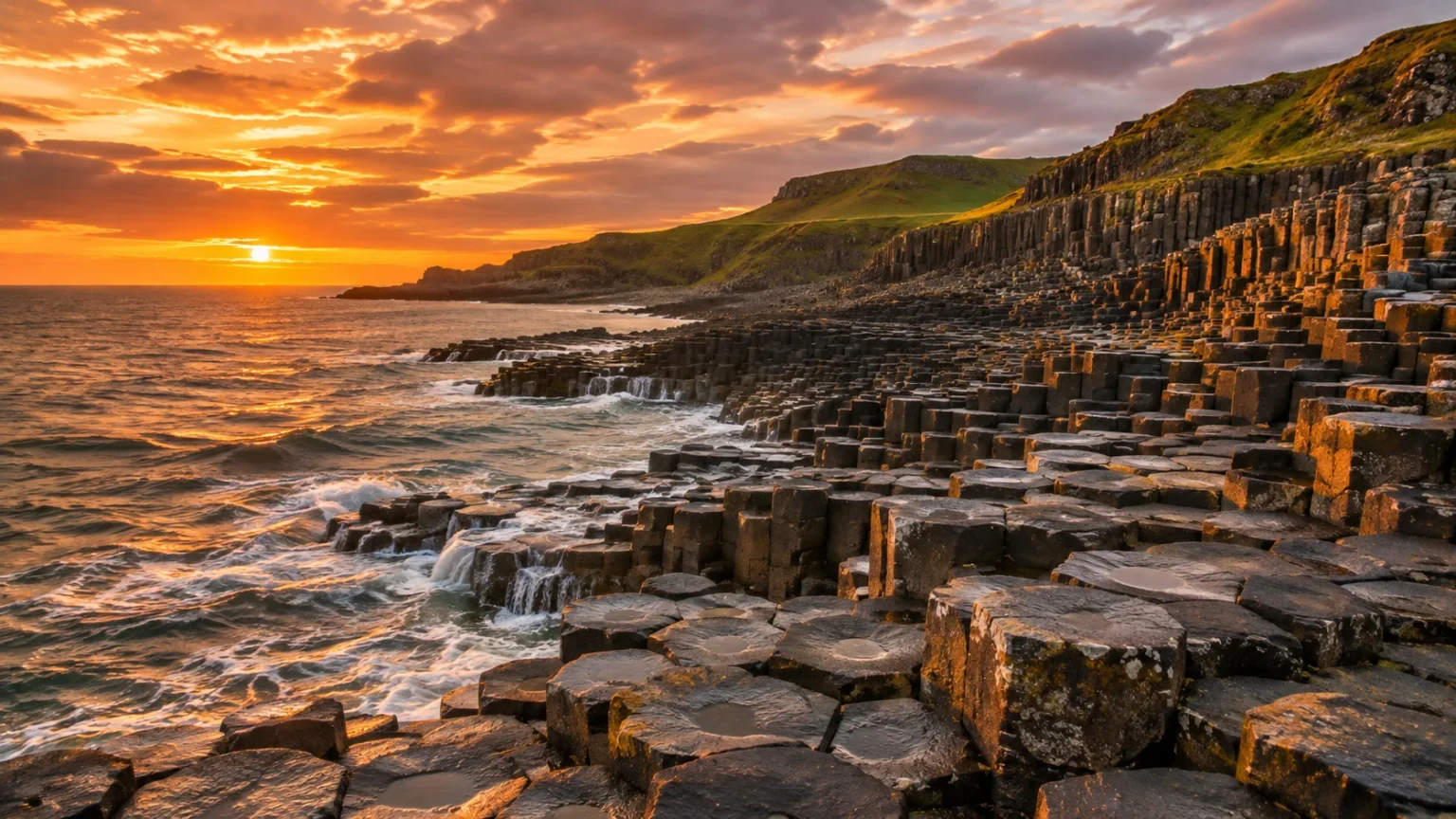
Columnar jointing can be seen all over the world wherever there has been volcanic activity. Thanks to their unique shapes, many of these sites have become tourist attractions and protected areas.
(1) Giant’s Causeway, Northern Ireland
About 40,000 basalt columns interlock along the Antrim coast here, formed by volcanic activity about 50 to 60 million years ago. It became widely known after Richard Bulkeley presented it in a paper to the Royal Society in 1693, and it was added to the UNESCO World Heritage list in 1986. Legend has it that the giant Finn McCool built it as a causeway to face a Scottish giant across the sea.
(2) Devils Tower and Devils Postpile, USA
Devils Tower in Wyoming is a rock tower about 264 m high that formed about 40.5 million years ago, with columns at its base measuring 1.8 to 2.4 m across. At Devils Postpile in California, columns up to 1.1 m in diameter and up to 18 m long stand in basalt that erupted about 100,000 years ago.
(3) The Jungmun–Daepo coast in Jeju, and Mars
In Korea, the columnar joint cliffs along the Jungmun and Daepo coast in Seogwipo are the best-known example and were designated Natural Monument No. 443 in 2005. These cliffs of columns formed as lava flowing from Hallasan cooled at the seashore. Columnar jointing has even been found beyond Earth: the high-resolution camera (HiRISE) on the Mars Reconnaissance Orbiter spotted it on the surface of Mars.
From the stone columns on the coast of Jeju to the cliffs of Mars, these giant patterns are all the result of the same physical law. The simple idea that ‘stone that shrinks as it cools cracks into the shape that takes the least effort’ is the first step to understanding columnar jointing.