People often say that anything labeled “zero” can be enjoyed freely, and that aspartame has already been confirmed to cause cancer. Both claims are only half true.
Ingredients that sweeten food in place of sugar are collectively called sugar substitutes. They share one name, but each type differs quite a bit in how sweet it is and how the body handles it.
Sugar Substitutes, Properly Understood
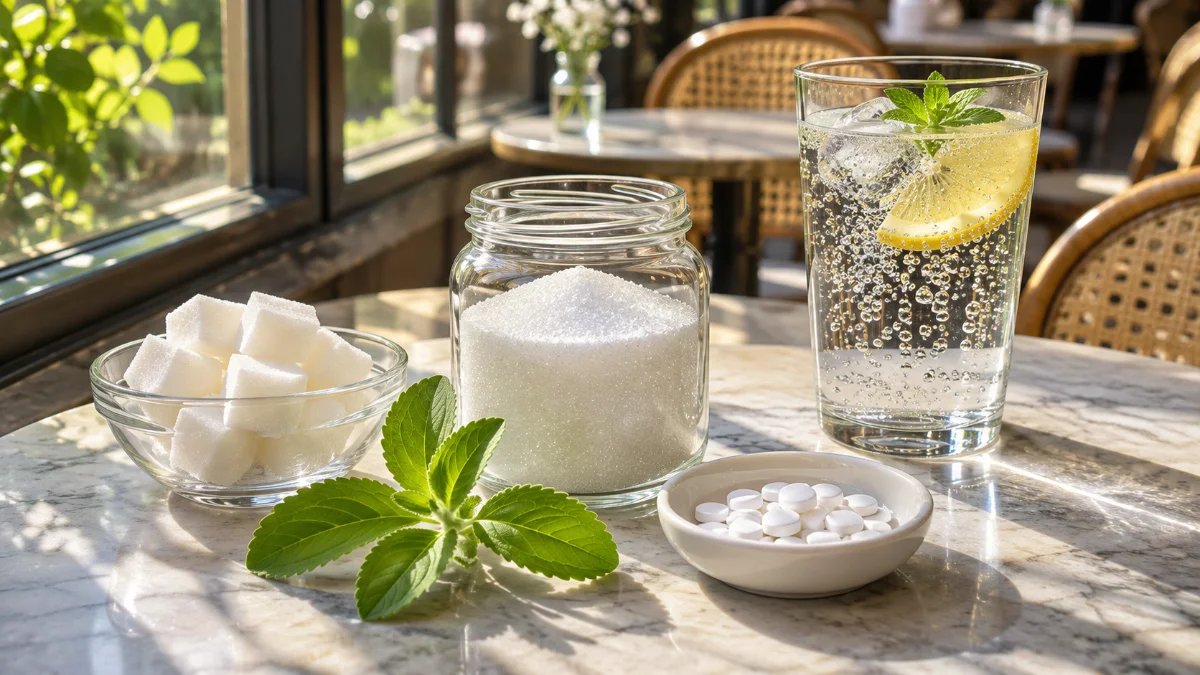
Sugar substitutes fall into two broad groups. The first is high-intensity sweeteners, which are hundreds of times sweeter than sugar, so only a tiny amount is used. Aspartame, sucralose, saccharin, acesulfame potassium and steviol glycosides from stevia leaves belong here.
The second group is about as sweet as sugar or less. It includes sugar alcohols such as erythritol, xylitol and maltitol, and rare sugars such as allulose, which is chemically a sugar but is used differently by the body. The U.S. Food and Drug Administration (FDA) describes sugar alcohols as 25% to 100% as sweet as sugar. A rare sugar is one found only in tiny amounts in nature; allulose occurs in small quantities in fruits such as figs and raisins and is about 70% as sweet as sugar.
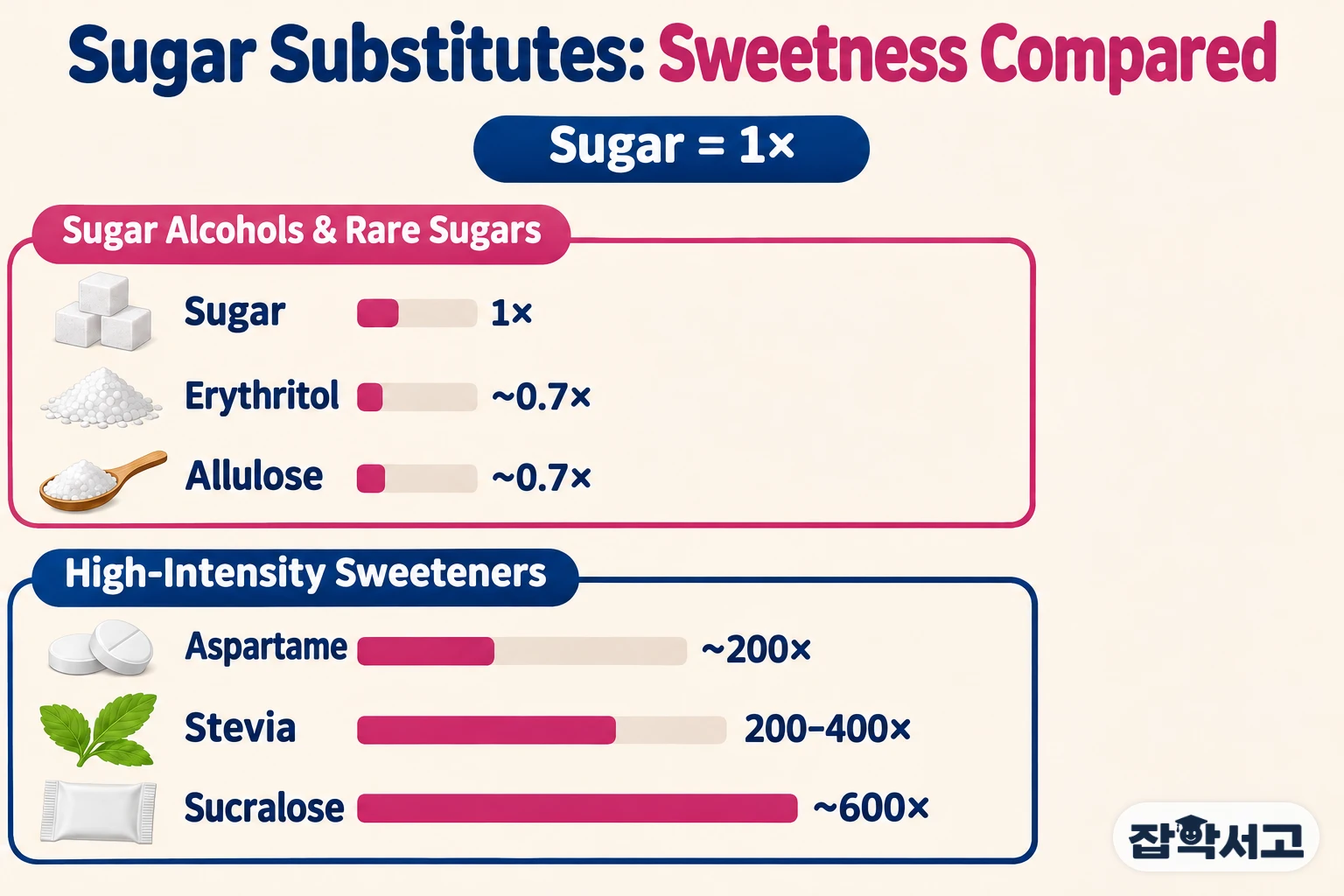
According to the FDA, aspartame and acesulfame potassium are about 200 times sweeter than sugar, steviol glycosides 200 to 400 times, and sucralose about 600 times. That is why far less is needed for the same sweetness, and they add almost no calories.
Myth 1: If It Says “Zero,” You Can Have as Much as You Like
In fact, each sweetener has an acceptable daily intake (ADI), the amount considered safe to consume every day over a lifetime. Normal eating rarely reaches that line, but that does not mean there is no line.
For example, the FDA calculated that a person would need about 75 tabletop packets of aspartame a day to reach its ADI. Put the other way around, small amounts spread across many drinks and snacks can add up to more than you might think.
Also, “zero” mainly means almost no sugar and calories. It does not mean there is no caffeine or acidulant, so it is a good habit to read the ingredient list and nutrition label once more.
Myth 2: Aspartame Has Been Confirmed to Cause Cancer
In fact, this idea spread after the International Agency for Research on Cancer (IARC), part of the World Health Organization (WHO), classified aspartame as “possibly carcinogenic to humans (Group 2B)” in July 2023. Group 2B is used when the evidence that something causes cancer in humans is “limited.” The category reflects how certain the evidence is, not how dangerous something is.
On the same day, the Joint FAO/WHO Expert Committee on Food Additives (JECFA) kept the existing acceptable daily intake of 40 mg per kilogram of body weight. For a person weighing 60 kg, that means up to 2,400 mg a day. The FDA also stated that it has no safety concerns under the currently approved conditions.
Myth 3: Switching to Sweeteners Will Make You Lose Weight
In fact, in a guideline released in May 2023, the WHO recommended against using non-sugar sweeteners to control body weight or prevent chronic disease. The evidence showed no clear long-term benefit in reducing body fat, and the WHO noted that the studies it reviewed also suggested a possible higher risk of type 2 diabetes and cardiovascular disease with long-term use.
The recommendation does not apply to people who already have diabetes, and sugar alcohols and low-calorie sugars, which contain calories, are excluded. Rather than switching to sweeteners, the WHO advises reducing the overall sweetness of the diet, starting early in life.
Myth 4: All Sugar Substitutes Are the Same
In fact, each type behaves differently. High-intensity sweeteners have almost no calories and barely raise blood sugar, but some products leave a bitter taste or aftertaste. In the United States, only highly purified steviol glycosides, not whole stevia leaves or crude extracts, are permitted as sweeteners.
Sugar alcohols rarely cause tooth decay, but eating a lot at once can cause bloating or diarrhea. In the United States, allulose is counted at 0.4 kcal per gram and may be excluded from sugars on the nutrition label. Erythritol drew attention in 2023 after a paper on cardiovascular effects, but the FDA concluded that those observational studies did not establish a causal link.
In Short
- Sugar substitutes split into very sweet high-intensity sweeteners and milder sugar alcohols and rare sugars.
- Even “zero” products have an acceptable daily intake for each sweetener, and other ingredients need to be checked separately.
- Aspartame’s Group 2B label means the evidence is limited, and its acceptable daily intake has not changed.
- The WHO advises cutting back on sweetness itself rather than counting on sweeteners for weight loss.
If giving up sweetness is hard, the first step is knowing which sweetener is in what you choose.
Recommended reading