
Vitamins are essential nutrients for maintaining our health and normal bodily functions. They come in various forms, have different functions, and play important roles in many physiological processes in our bodies.
Vitamins are broadly classified into fat-soluble and water-soluble vitamins, each with different properties and functions.
It is important to use accurate information to understand and practice the vitamin intake methods needed to maintain a healthy body.
This material will explore the importance and functions of vitamins, the differences between fat-soluble and water-soluble vitamins, representative foods for each type of vitamin, and proper vitamin intake methods.
What Are Vitamins?
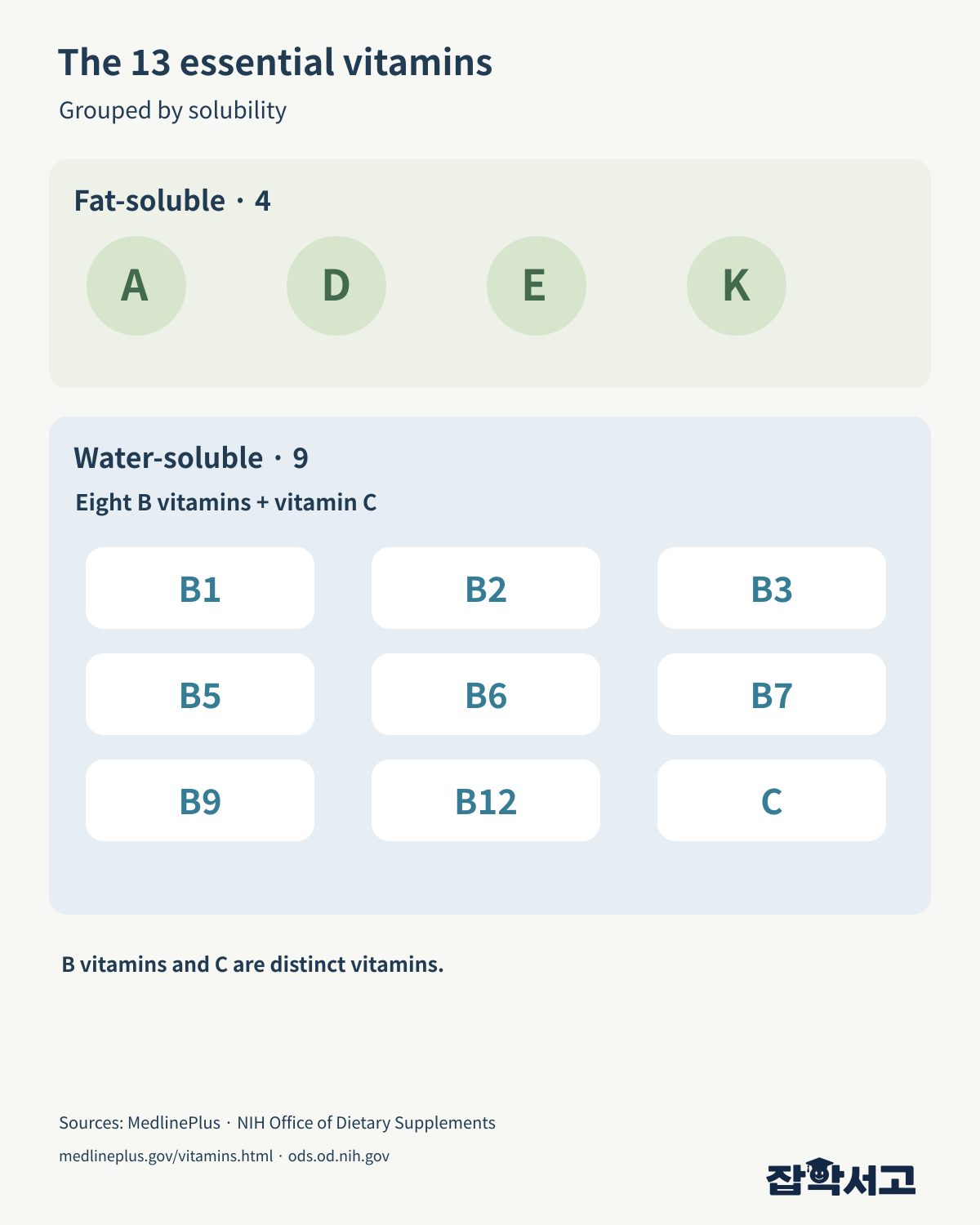 The 13 vitamins our bodies need are classified as four fat-soluble and nine water-soluble vitamins.
Sources: MedlinePlus — Vitamins; NIH ODS — vitamin fact sheets: A · D · E · K.
Vitamins are essential nutrients that maintain normal bodily functions and support growth and development. Because the body generally cannot produce vitamins on its own, they must be obtained from food.
Vitamins play important roles in various physiological processes in our bodies, and each vitamin has specific functions.
For example, vitamin D helps with calcium absorption, vitamin C strengthens the immune system, and vitamin A is needed to maintain vision.
Vitamins are broadly divided into two types according to solubility: fat-soluble vitamins dissolve in fats, while water-soluble vitamins dissolve in water.
Fat-soluble vitamins include vitamins A, D, E, and K, while water-soluble vitamins include the B vitamin group and vitamin C.
Vitamin deficiencies or excessive intake can negatively affect health, so it is important to obtain appropriate amounts of vitamins through a balanced diet.
Fat-Soluble Vitamins
 Vitamins A, D, E and K are fat-soluble. They can be stored in the body, and dietary fat helps absorption.
Fat-soluble vitamins include vitamins A, D, E, and K. They can be stored in the body, and dietary fat helps their absorption.
Each fat-soluble vitamin performs the following functions, and deficiencies can cause various symptoms.
Vitamin A
Functions: Vitamin A plays important roles in maintaining vision, skin health, strengthening the immune system, and cell growth and differentiation.
Deficiency Symptoms: Vitamin A deficiency can cause night blindness (difficulty seeing at night), dry skin, and a weakened immune system.
Vitamin D
Functions: Vitamin D helps with the absorption of calcium and phosphorus and is needed to maintain bone health.
Deficiency Symptoms: A deficiency can cause osteomalacia or, during childhood, rickets.
Vitamin E
Functions: Vitamin E acts as an antioxidant, protecting cells from free radicals and strengthening the immune system.
Deficiency Symptoms: A deficiency can cause nerve damage, muscle weakness, and reduced immune system function.
Vitamin K
Functions: Vitamin K is needed for blood clotting and maintaining bone health, and it is important for activating several proteins.
Deficiency Symptoms: Vitamin K deficiency can cause bleeding disorders and osteoporosis.
Deficiencies in fat-soluble vitamins can have different causes, including problems absorbing nutrients. A healthcare professional can assess the cause and appropriate treatment. Foods rich in fat-soluble vitamins include dairy products, liver, fish oil, eggs, and green leafy vegetables.
Water-Soluble Vitamins
 The B vitamins and vitamin C are water-soluble. Regular intake matters; vitamin B12 is an exception that can be stored in the body.
Water-soluble vitamins dissolve in water and include vitamin C and the B vitamins. Most are not stored in large amounts and need regular intake. Vitamin B12 is an exception: it can be stored in the liver for years.
They perform various physiological roles, including energy metabolism, nerve function, and strengthening the immune system, and deficiencies can cause various symptoms. The functions and deficiency symptoms of water-soluble vitamins are as follows.
Vitamin B1 (Thiamine)
Functions: It is a component of enzymes needed for energy metabolism and is important for nerve function.
Deficiency Symptoms: A deficiency can cause decreased appetite, fatigue, weight loss, anxiety, beriberi (beriberi), peripheral neuropathy, heart disorders, and Wernicke-Korsakoff syndrome (wernike-korsakoff syndrome).
Vitamin B2 (Riboflavin)
Functions: It acts as a coenzyme in the metabolism of carbohydrates, proteins, and fats, and plays important roles in vision and in the growth and maintenance of cells in mucous membranes, skin, and nails.
Deficiency Symptoms: A deficiency can cause eye fatigue, conjunctivitis, cataracts, stomatitis, glossitis, oral inflammation, and dermatitis.
Vitamin B3 (Niacin / Nicotinic Acid)
Functions: It is needed for energy production in the body and is involved in cellular respiration, lipid synthesis, and sugar breakdown.
Deficiency Symptoms: A deficiency can cause a disease called pellagra (pellagra), which begins with symptoms such as fatigue, decreased appetite, weight loss, and diarrhea.
Vitamin B5 (Pantothenic Acid)
Functions: It is needed for the metabolism of fats, carbohydrates, and proteins and for energy production.
Deficiency Symptoms: A deficiency can cause dermatitis, loss of appetite, digestive tract ulcers, drowsiness, fatigue, muscle cramps, abdominal pain, diarrhea, and abnormal sensations in the hands and feet.
Vitamin B6 (Pyridoxine)
Functions: It is needed for the utilization of proteins and amino acids. It is also needed to maintain normal homocysteine levels in the blood.
Deficiency Symptoms: A deficiency can cause dermatitis, anemia, depression, and muscle cramps.
Vitamin B7 (Biotin)
Functions: It is needed for the metabolism of fats, carbohydrates, and proteins and for energy production.
Deficiency Symptoms: A deficiency can cause dermatitis, conjunctivitis, hair loss, glossitis, eczema, loss of appetite, anemia, and muscle pain.
Vitamin B9 (Folic Acid)
Functions: It is needed for cell and blood production and for the normal development of the fetal neural tube. It is also needed to maintain normal homocysteine levels in the blood.
Deficiency Symptoms: A deficiency can cause poor growth, anemia, and an increased risk of giving birth to a baby with congenital malformations.
Vitamin B12 (Cobalamin)
Functions: It is needed for normal folate metabolism. It is also needed for blood production and nerve function.
Deficiency Symptoms: A deficiency can cause macrocytic anemia, neurological disorders, and impaired memory.
Vitamin C (Ascorbic Acid)
Functions: It is needed for the formation and maintenance of connective tissue function and for iron absorption. Its antioxidant action is also needed to protect cells from harmful oxygen species.
Deficiency Symptoms: A deficiency can cause scurvy (scurvy), reduced immunity, anemia, growth disorders, depression, neurological disorders, dry mouth, dry eyes, impaired wound healing, and generalized edema.
Being water-soluble does not make a vitamin harmless in high doses. Excessive vitamin B6 supplements can damage nerves, and high-dose nicotinic acid, a form of vitamin B3, can cause adverse effects. Follow the product label and seek professional advice before taking high doses.
Regular intake of water-soluble vitamins is important. If a deficiency is suspected, its cause and treatment should be assessed by a healthcare professional. Food sources include whole grains, legumes, meat, liver, green leafy vegetables, and fruit.
What Are Representative Foods for Each Type of Vitamin?
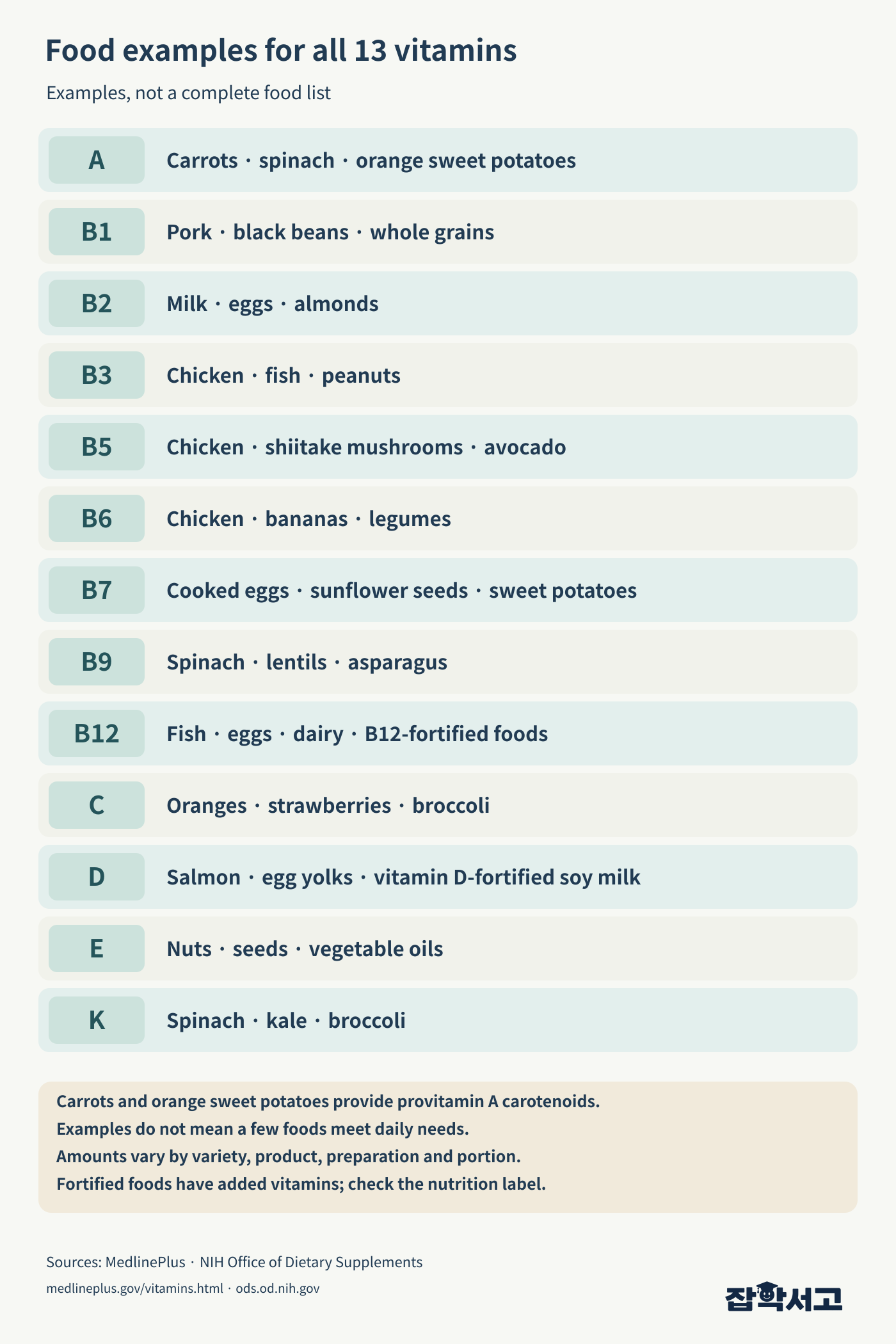 Food examples for each vitamin. Check nutrition labels to confirm that fortified foods contain the specified vitamin. Amounts vary by variety, product, preparation and portion size; these examples do not guarantee that daily requirements are met.
Sources: MedlinePlus — Vitamins; NIH ODS — vitamin fact sheets: A · B1 · B2 · B3 · B5 · B6 · B7 · B9 · B12 · C · D · E · K.
Vitamins are essential nutrients our bodies need and can be obtained from various foods. Representative foods for each vitamin are as follows.
Vitamin A: Carrots, potatoes, spinach, kale, pumpkin, mangoes, liver, animal offal, and others
Vitamin B1 (Thiamine): Grains, beans, seeds, pork, and others
Vitamin B2 (Riboflavin): Beef liver, meat, fish, green vegetables, and others
Vitamin B3 (Niacin): Meat, fish, beans, seeds, and others
Vitamin B5 (Pantothenic Acid): Pork, chicken, beans, seeds, mushrooms, and others
Vitamin B6 (Pyridoxine): Bananas, avocados, nuts, pork, and others
Vitamin B7 (Biotin): Egg yolks, nuts, beans, seeds, and others
Vitamin B9 (Folic Acid): Green leafy vegetables, beans, seeds, oranges, and others
Vitamin B12 (Cobalamin): Animal products (meat, eggs, dairy products), and others
Vitamin C (Ascorbic Acid): Fresh vegetables and fruits (oranges, grapefruit, lemons, red chili peppers, broccoli, strawberries), and others
Vitamin D: Mackerel, salmon, tuna, egg yolks, and foods fortified with vitamin D. Check the label to confirm fortification.
The mushroom name in the Korean original could not be verified, so that example is omitted pending clarification.
Vitamin E: Nuts, seeds, green leafy vegetables, olive oil, and others
Vitamin K: Green leafy vegetables, broccoli, fish, meat, eggs, fermented foods, and others
Each vitamin has different functions, and deficiencies or excessive intake can cause health problems. A varied, balanced diet is important; supplements may be appropriate for some people according to individual needs.
Vitamin Intake Methods
 Consider supplements according to individual needs, and follow the label and professional advice.
Vitamins should primarily be obtained through a balanced diet, and supplements may be used when necessary. Intake methods for various vitamins are as follows.
A Balanced Diet
The ideal approach is to obtain the vitamins you need by eating a variety of foods. For example, you can obtain vitamin A from carrots and spinach, vitamin C from fruits and vegetables, and B vitamins from grains and beans.
Vitamin Supplements
Vitamin supplements may be considered when diet does not provide enough of a nutrient or when they are recommended for a specific need. People with limited sunlight exposure may need vitamin D, and people following a vegan diet may need a reliable source of vitamin B12. A healthcare professional can help assess individual needs.
A Doctor's Advice
It is important to seek a doctor's advice before deciding which vitamin supplements to take. A doctor can identify symptoms of vitamin deficiencies and, when necessary, recommend appropriate vitamin supplements and their dosages.
Timing and Methods of Intake
Follow the product instructions and advice from a healthcare professional about when and how to take supplements. Dietary fat helps the absorption of fat-soluble vitamins. For example, NHS guidance advises taking colecalciferol tablets or capsules with the main meal of the day.
Follow the Indicated Dosage
When taking supplements, be careful not to exceed the indicated dosage. Excessive vitamin intake is harmful to health. For example, excessive vitamin A intake can cause serious side effects such as headaches, malformations, and even death.
Frequency of Intake
Obtain vitamins regularly through a varied diet. Supplement doses and schedules depend on the product and individual needs, so follow the label or prescribed instructions. Fat solubility alone does not determine how often a supplement should be taken; do not assume that vitamin D should be taken weekly or monthly.
Vitamin intake can vary depending on an individual's health, lifestyle, and eating patterns, and proper vitamin intake methods are important for maintaining a healthy body.
This material aimed to help readers understand the various types of vitamins, their functions, and proper intake methods. Maintaining a healthy body and, in particular, recognizing the importance of preventive medicine are more important than anything else.
Proper vitamin intake greatly helps achieve these goals. We hope you will review your lifestyle and eating patterns and, when necessary, seek professional advice to find proper vitamin intake methods.
Through this continued attention and effort, you will be able to enjoy a healthier life.
Sources for these clarifications: MedlinePlus — Vitamins; MedlinePlus — Malabsorption; NHS — B vitamins; NHS — Vitamin D; NHS — Colecalciferol; FDA — Dietary supplements.
Recommended reading