Many people assume that old paintings and classic novels are free for anyone to use. Many also figure that a photo found online must be fine to reuse.
Works whose copyright protection has ended, or that were never protected in the first place, so that anyone may use them without permission, are said to be in the public domain. In Korean they are also called “works with expired copyright.”
Yet a surprising amount of what people believe about the public domain is wrong. Let’s correct five common myths one by one, with the evidence behind each.
The Public Domain, Properly Understood
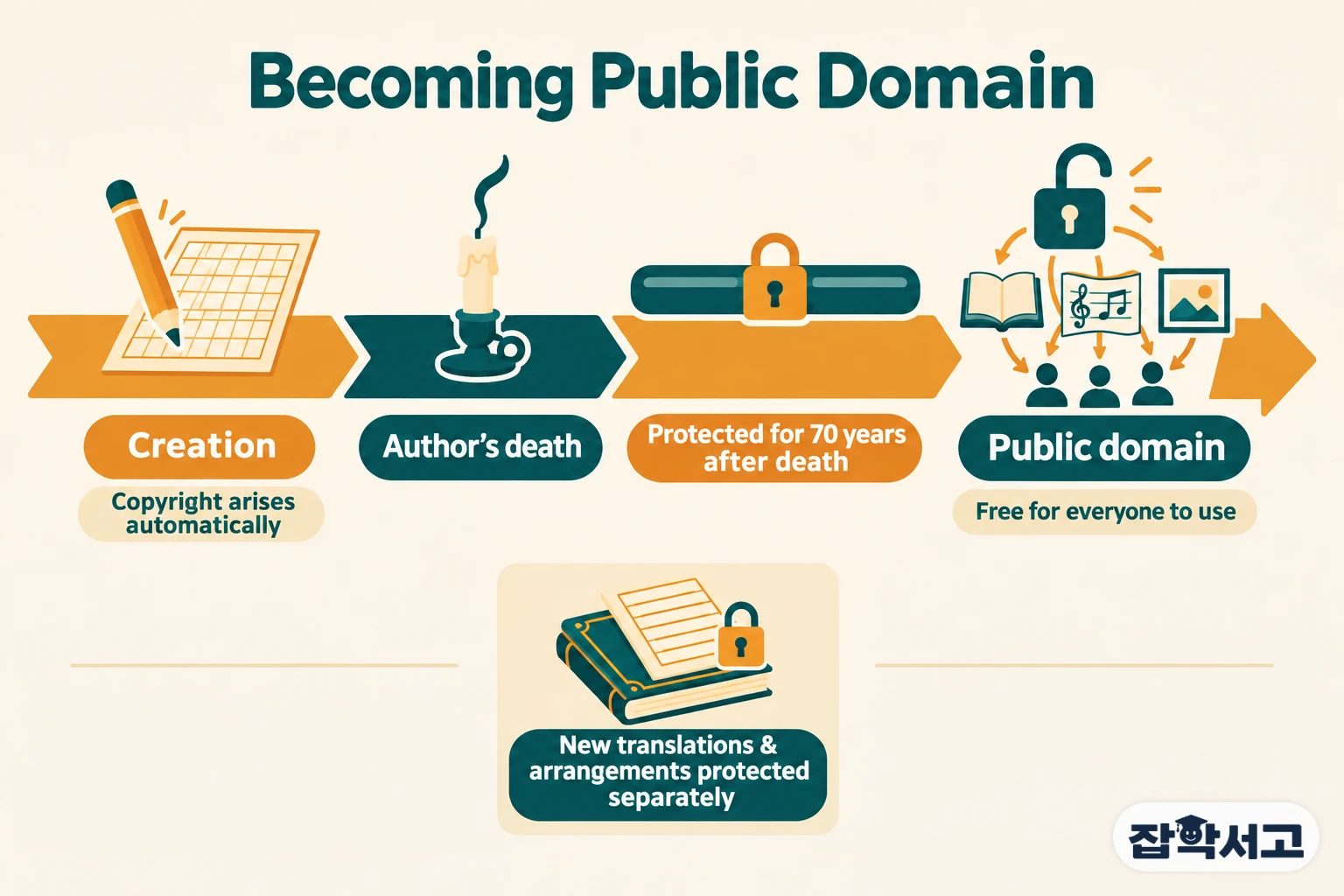
Copyright is the right granted to creative works that express human thoughts and feelings, such as poems, novels, paintings, music and photographs. For a set period, the author can allow or forbid others to copy, perform or transmit the work. Once that period ends, the work enters the public realm—the public domain—where anyone may copy, distribute or adapt it without asking.
Korea’s Copyright Act protects ordinary works for 70 years counted from the year after the author’s death. The term was extended from 50 to 70 years on July 1, 2013, and works whose protection had already expired before then did not regain it. Things that were never protected, such as statutes and court rulings, and works whose authors waived their rights with a mark like CC0, also belong to the public domain in a broad sense.
Myth 1: If It’s on the Internet, It’s in the Public Domain
In fact, being publicly visible and being free to use are two completely different things. Photos in search results, drawings on blogs and videos anyone can watch are mostly still under copyright. Posting something for everyone to see only means the owner is willing to show it, not that copying and redistribution are allowed.
Photos on free image sites also come with terms that differ from site to site. Many are CCL-licensed works that require credit, so checking the license before you download is the safe habit.
Myth 2: No © Symbol Means No Copyright
In fact, copyright arises automatically the moment a work is created. It is protected even without registration or a © symbol, a principle known as “no formalities.” The Berne Convention, adopted in 1886, made this the international standard, and Korea follows the same principle as a member of the convention.
The United States once required copyright notices and registration, but it effectively dropped that requirement when it joined the Berne Convention in 1989. Today the © symbol is not a condition that creates the right; it is closer to a notice that the right exists.
Myth 3: Anything Old Is Free to Use
In fact, the deciding date is not the year the work was made but the year the author died. Even a book published 50 years ago is protected in Korea until the end of 2070 if its author died in 2000. A work merely looking old tells you nothing.
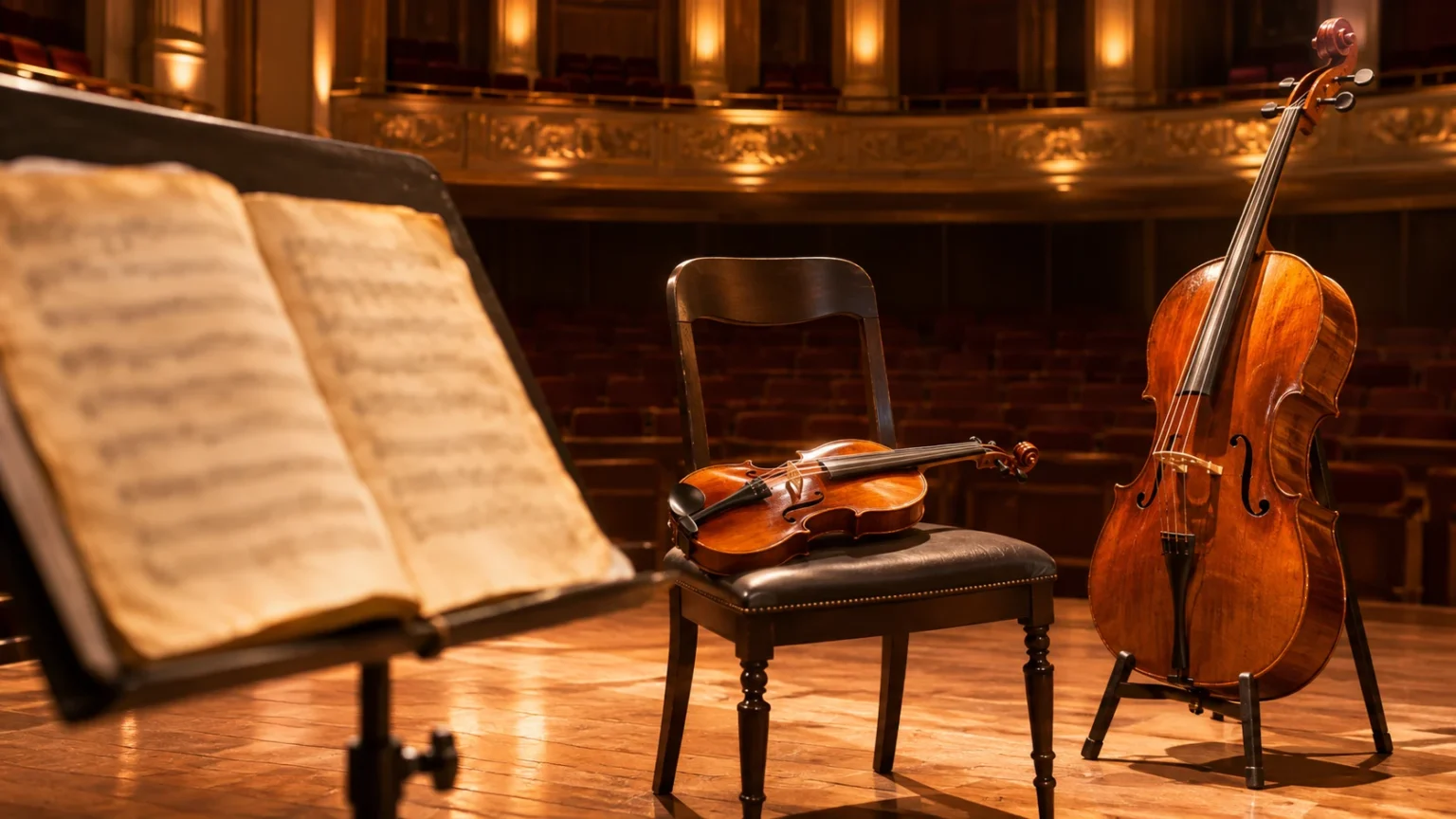
Another point to watch is new creativity added on top of an old original. Beethoven’s symphony scores are in the public domain, but a recent orchestral recording carries separate rights for the performers and the record producer. A new translation of a classic novel is likewise protected separately for the parts that reflect the translator’s own creative work.
Myth 4: Free in One Country Means Free Everywhere
In fact, copyright terms differ from country to country. In the United States, the 1928 animated short “Steamboat Willie” entered the public domain on January 1, 2024, making headlines. That date follows from the US rule protecting works published before 1978 for up to 95 years after publication.

Even the same work can expire on a different date in a country that calculates the term differently. So when you use a foreign work, check the term in the country where you are using it.
Myth 5: A Public-Domain Character Can Be Used in Any Form
In fact, only the version shown in that particular work has been freed. When “Steamboat Willie” entered the public domain, the early black-and-white Mickey Mouse became free for anyone, but later additions such as white gloves and colored clothes remain protected by the copyright of later works.
If a character is registered as a company trademark, trademark rights also remain. Trademarks can be renewed and kept indefinitely, so even a public-domain character can cause trouble if it is used in a way that confuses people about who made a product.
In Short
- The public domain means works whose protection has ended or never existed; whether something is online has nothing to do with it.
- In Korea, 70 years must pass from the year after the author’s death, and new translations, arrangements and recordings may be protected separately.
- Copyright terms vary by country, and characters may still be covered by trademarks.
- Korea’s Copyright Act forbids uses that would harm an author’s moral rights even after death, so it is good practice to credit the original author and not distort the work.
It may feel disappointing that fewer works are free to use than you thought. But once you know the rules, you won’t miss the big gift that arrives every January 1, when a new batch of works is set free.
Recommended reading