Freshly cooked rice is glossy and soft, but leave it in the fridge overnight and the grains turn hard. Soft rice cakes go rock-hard in a day, and even freshly baked bread turns crumbly after a few days. The food has not simply dried out—so why does this happen? The secret is starch retrogradation.
Starch retrogradation, put simply, is the phenomenon in which starch molecules that loosened as they cooked draw tightly together again as they cool. Because grain foods we eat every day—rice, bread, rice cakes, noodles—are mostly starch, this change affects not only taste and texture but also digestion and the blood-sugar response.
In this article, we will look in turn at gelatinization, the process by which starch cooks; how and under what conditions retrogradation occurs; everyday ways to slow it down; and the resistant starch that retrogradation produces.
The Science of How Starch Cooks and Hardens
How Raw Rice Becomes Cooked Rice: Gelatinization
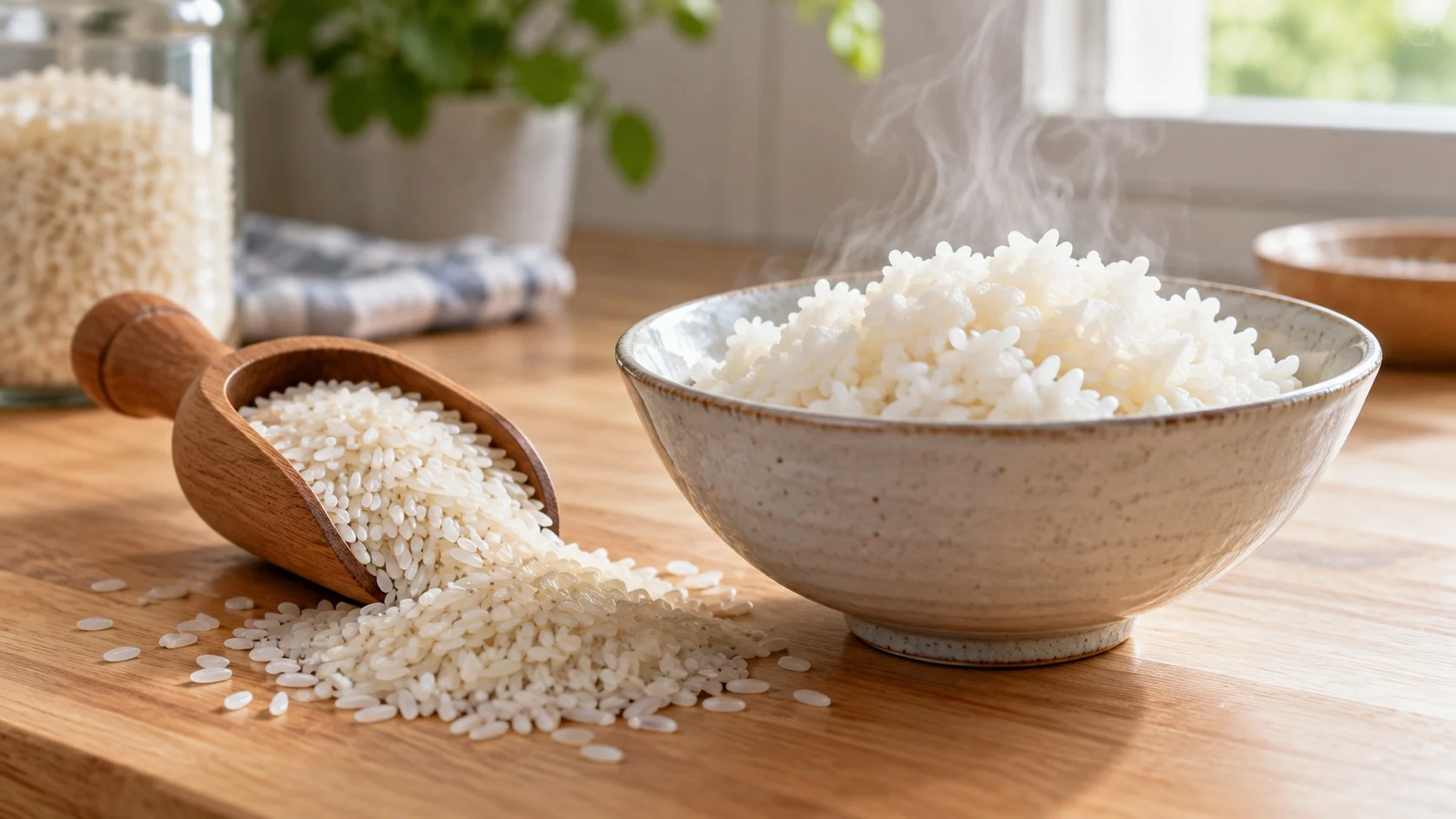
Starch is made of two kinds of long chains of glucose. One is amylose, with a mostly straight chain; the other is amylopectin, branched like a tree.
- Amylose: a molecule in which glucose is linked in a nearly single line; it makes up about 20% of ordinary non-glutinous rice starch.
- Amylopectin: a large, highly branched molecule; it accounts for about 80% of non-glutinous rice and 95–100% of sticky glutinous rice.
In raw rice, starch granules are a hard crystalline structure in which these molecules are lined up in an orderly way, so they are tough to chew and digestive enzymes struggle to get in. When you add water and heat, from roughly 60–70°C the granules soak up water and swell, and the orderly molecules fall into disorder. This process is called gelatinization. Soft, translucent cooked rice and a thickened flour paste both owe their texture to it.
Why Cooling Makes Starch Clump Again: Retrogradation
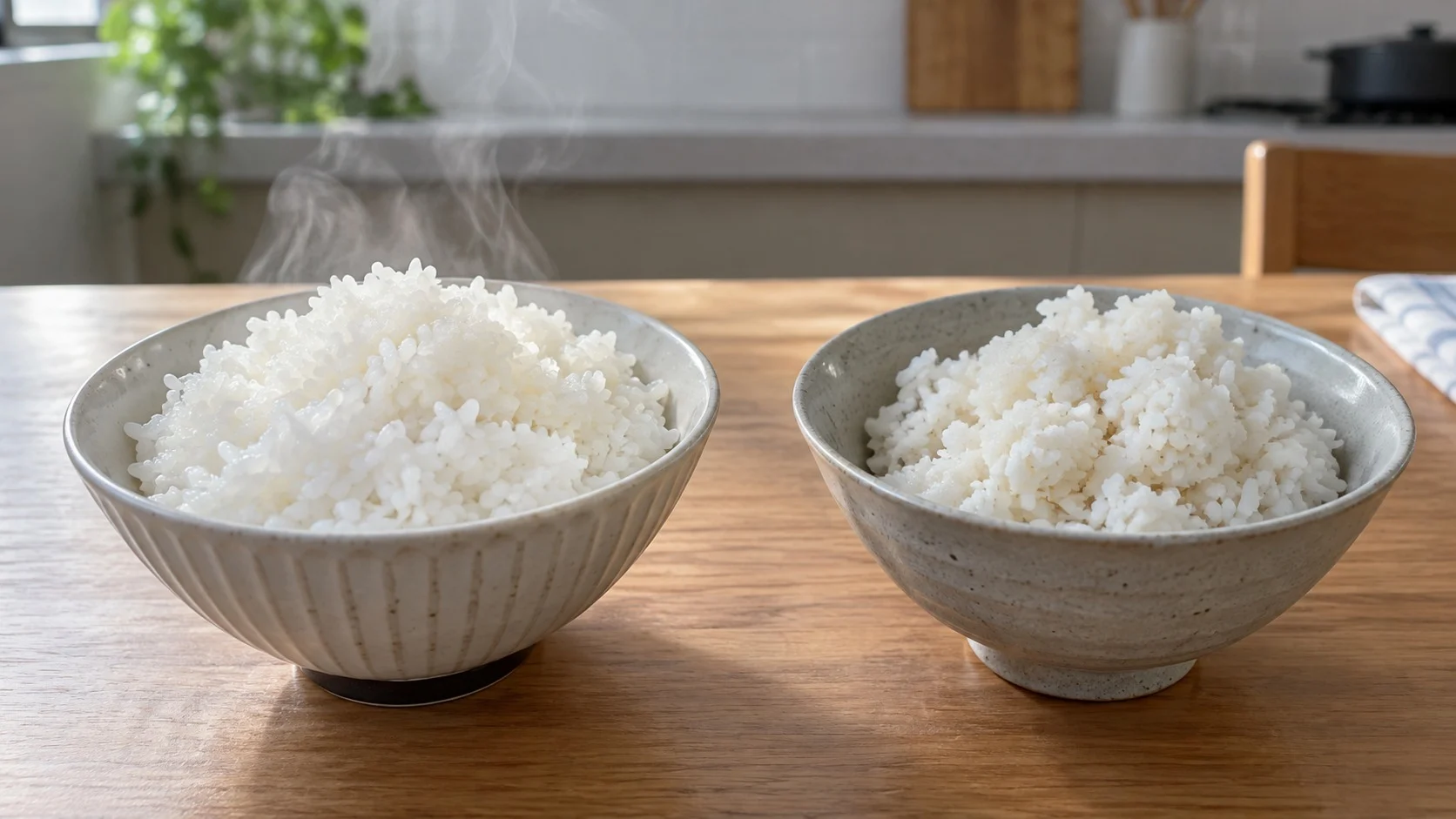
While gelatinized starch is hot, its molecules move freely mixed with water. As the temperature falls, the scattered molecules draw closer, line up again, and push out the water they had held. Soft food becomes firm and rough—that is retrogradation.
(1) Amylose hardens quickly
Because its chains are straight, amylose readily aligns side by side, so most of it sets within a few hours of cooling. Fresh rice that turns firm and chewy as it cools does so mainly because of amylose.
(2) Amylopectin hardens slowly
Highly branched amylopectin takes much longer to line up and hardens gradually over several days. This slow amylopectin retrogradation is the main reason bread turns crumbly day by day.
(3) Why glutinous-rice cakes stay soft longer
Cakes made from glutinous rice, which has almost no amylose, harden far more slowly than sliced rice cakes made from non-glutinous rice. Even with the same grain, the ratio of the two molecules greatly changes how fast retrogradation proceeds.
Conditions That Speed Retrogradation—and Ways to Slow It
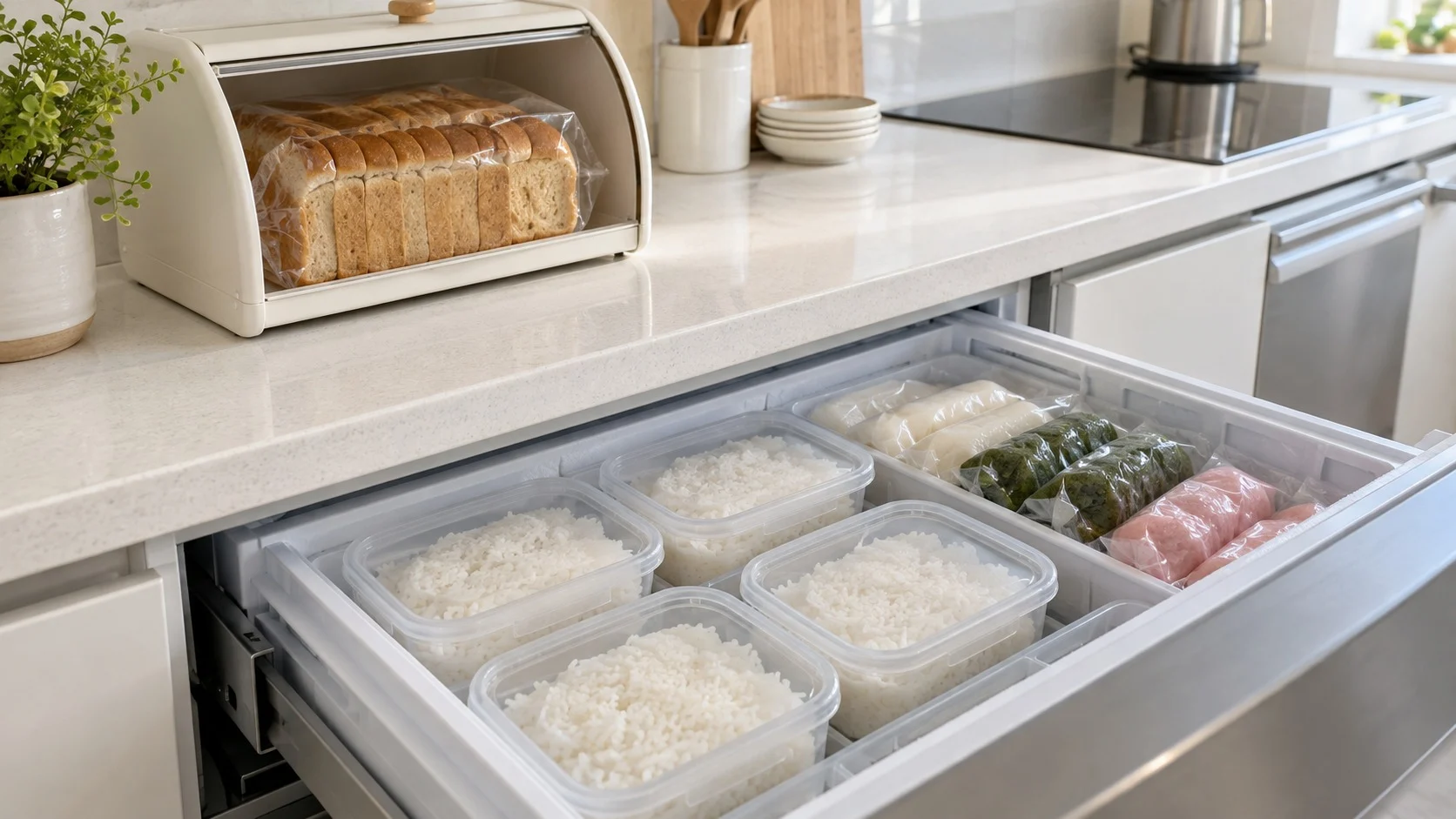
Retrogradation does not proceed at the same pace under every condition. It is fastest when temperature and moisture fall in a particular range.
Conditions that speed retrogradation
- Refrigeration: retrogradation is fastest around 0–5°C. That is why bread or rice left in the fridge hardens faster than at room temperature.
- Moderate Moisture: when moisture is about 30–60%, molecules can move and reassociate readily, so retrogradation proceeds well. Rice, rice cakes, and bread all fall in this range.
- Amylose Content: the more amylose a starch contains, the faster it retrogrades.
Everyday ways to slow retrogradation
- Quick Freezing: below −18°C, molecules barely move, so retrogradation effectively stops. Leftover rice and rice cakes keep better frozen than refrigerated.
- Reheating: warming hardened starch again loosens much of the reassociated structure, so some softness returns.
- Drying: if moisture drops well below 15%, retrogradation hardly occurs. That is why scorched rice crusts and hardtack change little even when stored for a long time.
- Sugar and Emulsifiers: sugar holds onto water, and emulsifiers slip between starch molecules and hinder them from clumping.
Resistant Starch Created by Retrogradation
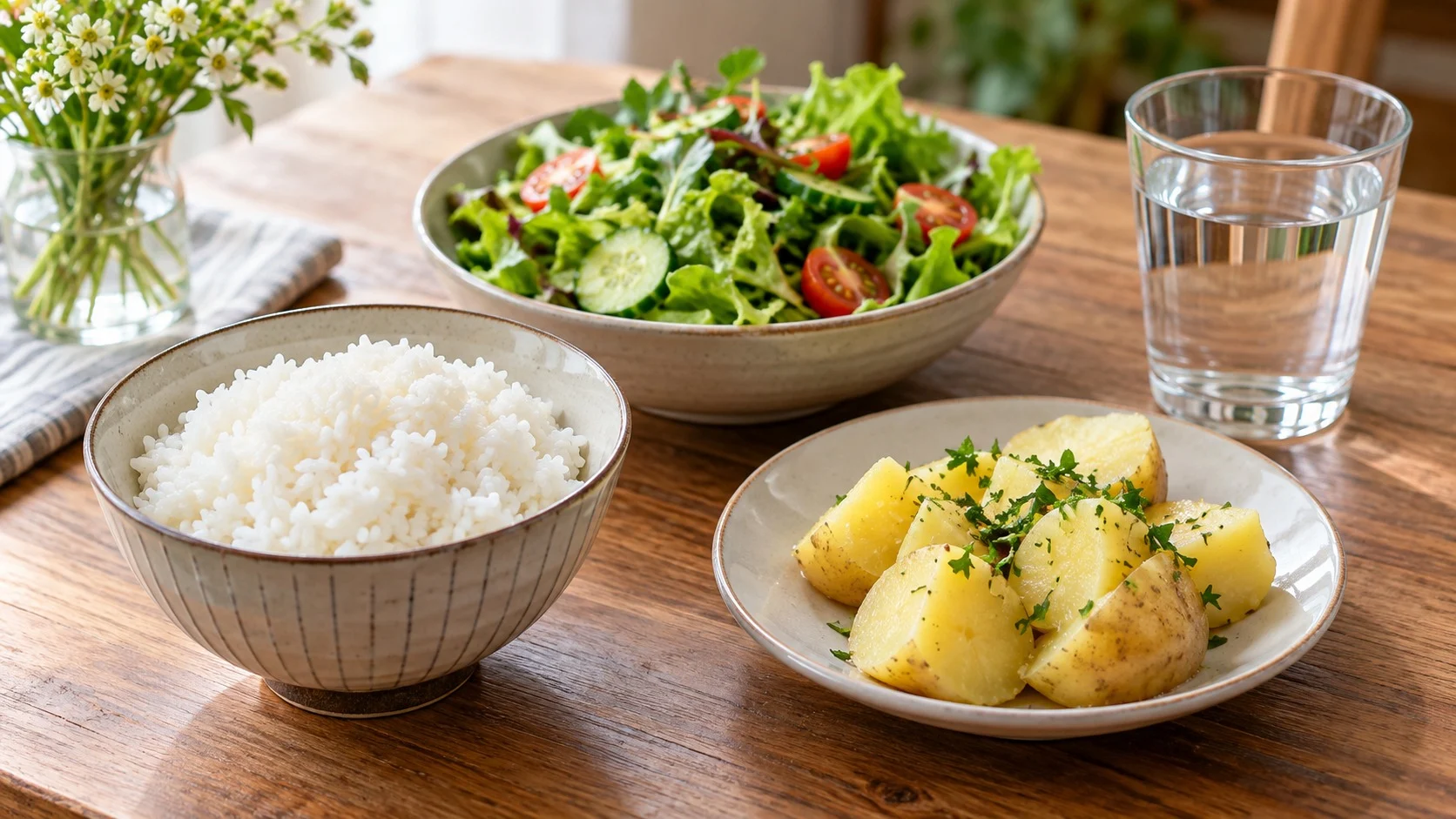
For taste alone, retrogradation is unwelcome—but nutritionally it has an unexpected upside. Some of the starch that has firmly reassociated through retrogradation resists digestive enzymes in the small intestine; that fraction is called resistant starch. The kind formed by cooking and then cooling is type 3 resistant starch (RS3).
Resistant starch is not absorbed as glucose; it travels to the large intestine and feeds gut microbes, so it acts much like dietary fiber. In one study, cooked rice cooled for 24 hours at 4°C and then reheated had more than twice as much resistant starch as freshly cooked rice, and the postprandial blood-glucose response was lower. Other research has found lower glucose and insulin responses after eating cooled potatoes.
Still, the increase is only a few grams per 100 g of food, and reheating can reduce some of it. Cooled leftover rice is not a magic health food, so overall meal size and balance still matter.
Starch retrogradation is the process by which starch molecules that loosened during cooking reassociate as they cool—the reason rice, rice cakes, and bread harden, and also a pathway that creates resistant starch. Knowing how temperature, moisture, and the amylose–amylopectin ratio work helps you store food more tastily and eat more wisely.
Even the small habit of putting leftover rice in the freezer instead of the fridge has science behind it—and knowing that is a first step toward smarter eating.