You may have opened a bottle of perilla oil tucked deep in the cupboard after a long while, only to be hit by a sour, stale smell instead of a nutty aroma. Nuts and snacks still within their expiration date sometimes give off a similar smell. This odor, often called a ‘stale oil smell’, feels like a sign that the food has gone bad, but in many cases it comes not from mold or bacteria but from changes in the fat itself. This phenomenon is ‘Rancidity’.
Put simply, rancidity means ‘the phenomenon in which the fats in food break down by reacting with oxygen in the air, water, or enzymes, producing unpleasant smells and flavors and lowering quality’. It can occur in any food that contains fat, and it is an important factor in setting a food’s shelf life and storage method.
In this article, we will look in turn at the two pathways by which rancidity occurs, how oxidation spreads, the conditions that speed up rancidity, and prevention methods you can practice at home.
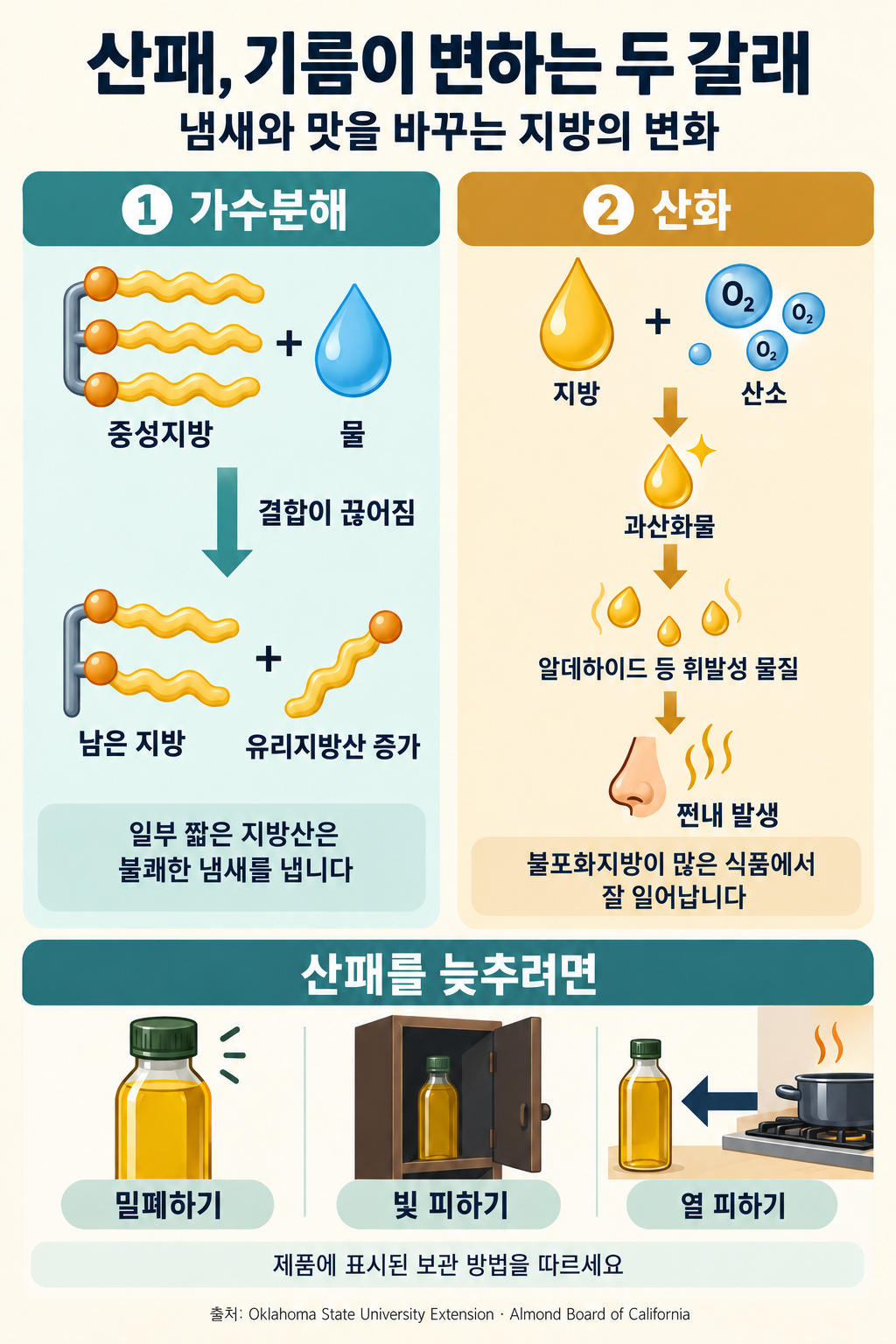
How Fats Lose Their Nuttiness: Rancidity
Two Pathways to Rancidity
Most of the fat in food exists in the form of ‘triglycerides’, in which three fatty acids are attached to one glycerol molecule. Rancidity is broadly divided into two branches depending on how these triglycerides break down.
(1) Hydrolytic Rancidity
This is a reaction in which water and enzymes cut triglycerides and release fatty acids. Lipase, an enzyme that breaks down fat, as well as heat and moisture, help this reaction along. The sour, pungent smell of old butter comes from short fatty acids such as butyric acid that have been released.
(2) Oxidative Rancidity
This change occurs when the double bonds of fatty acids react with oxygen. It happens especially readily in foods rich in unsaturated fatty acids, such as cooking oils, nuts, and fish, and most of what we commonly call rancidity falls into this category.
In addition, enzymes released by microorganisms can sometimes break down fats, but since those enzymes ultimately cause hydrolysis or oxidation, this is linked to the two pathways above.
Oxidation That Spreads Through a Chain Reaction

What makes oxidative rancidity so troublesome is that once it begins, it spreads on its own. This process is called ‘Autoxidation’ and is usually explained in three stages.
- Initiation: With the help of light, heat, or metals, a hydrogen atom is pulled away from a fatty acid, creating an unstable ‘free radical’.
- Propagation: This radical combines with oxygen and then takes a hydrogen from a neighboring fatty acid, producing a peroxide and a new radical so that the reaction continues in a chain.
- Termination: The reaction dies down as radicals combine with each other or antioxidants capture them.
The peroxides formed in the propagation stage have almost no smell or taste. But as they break down further, small volatile compounds such as Hexanal are formed, and these compounds are the true source of the stale smell. For this reason, food research sometimes uses the amount of hexanal as an indicator of how far rancidity has progressed.
Interestingly, oxidation does not proceed quickly from the start. At first there is an ‘induction period’ during which almost nothing changes on the surface, and once peroxides build up to a certain level, the reaction suddenly speeds up. This is why oil that seemed perfectly fine can one day suddenly give off a stale smell.
Conditions That Speed Up Rancidity
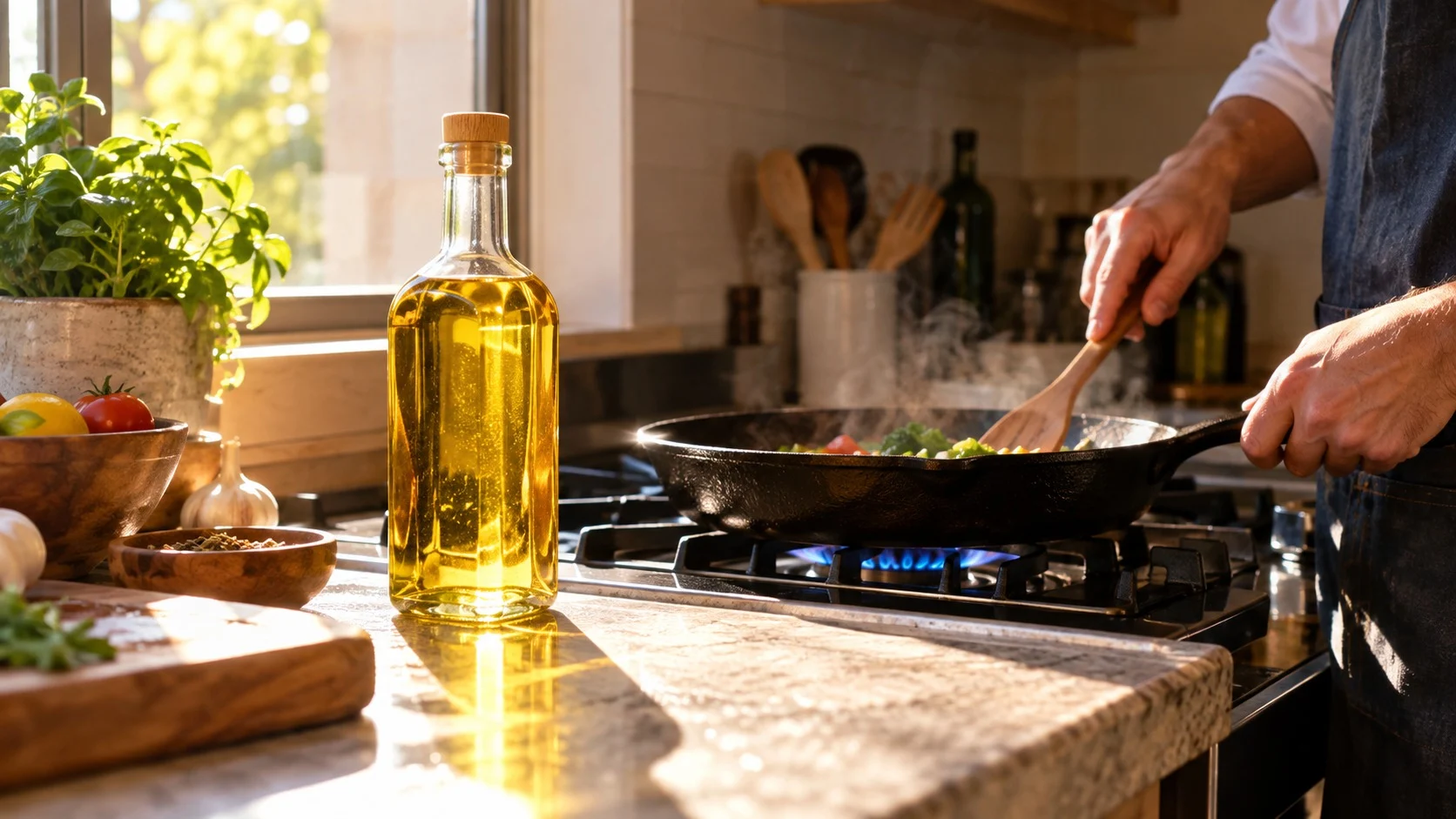
Even the same oil can go rancid at very different speeds depending on the environment it is kept in.
- Oxygen: The larger the surface in contact with air, the faster oxidation proceeds. This is why an oil bottle left open or finely crushed nuts change easily.
- Light: Sunlight and fluorescent light provide the energy that starts oxidation. This is also why oils are sold in dark-colored bottles.
- Temperature: Higher temperatures speed up the reaction, so oil kept next to a gas stove goes rancid faster.
- Metal: Metals such as iron and copper break down peroxides into new radicals and promote oxidation.
- Unsaturation: The more double bonds a fatty acid has, the more vulnerable it is to oxidation. Perilla oil changes faster than sesame oil because it is rich in alpha-linolenic acid, an unsaturated fatty acid.
Sesame oil, on the other hand, contains natural antioxidants from sesame seeds such as Sesamol, so it holds up relatively well. This is why each oil calls for its own storage method.
Everyday Wisdom for Preventing Rancidity
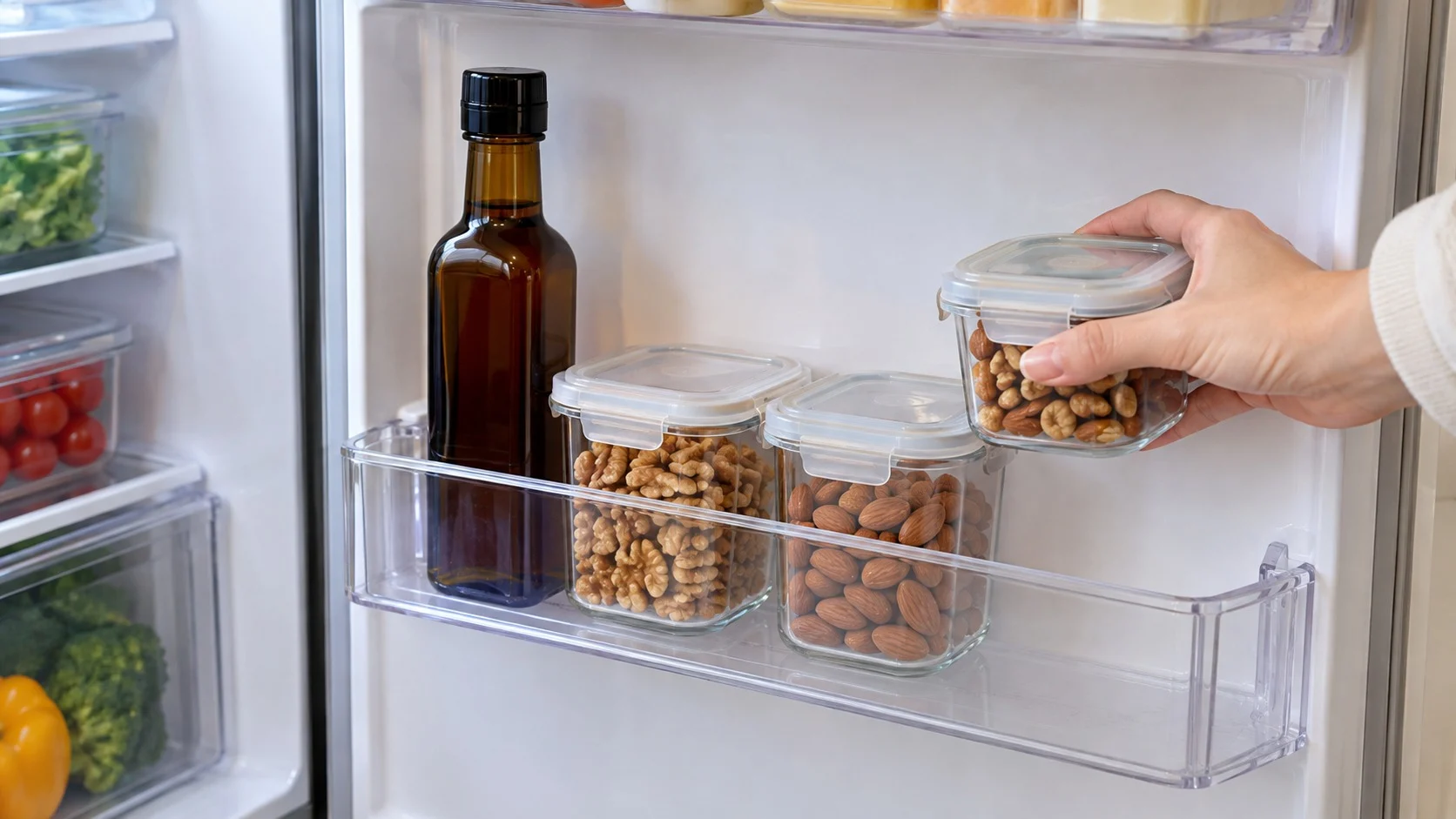
Once rancidity occurs, it cannot be reversed, so the best approach is to slow it down from the start.
Storage Tips to Practice at Home
- Airtight Storage: Close the lid of an oil bottle right after use, and divide nuts into small portions in airtight containers.
- Cool and Dark Place: Keep them away from sunlight and heat; oils that change easily, such as perilla oil, are best kept in the refrigerator.
- Antioxidant: Food companies add antioxidants such as Tocopherol, known as vitamin E, to break the chain reaction of radicals.
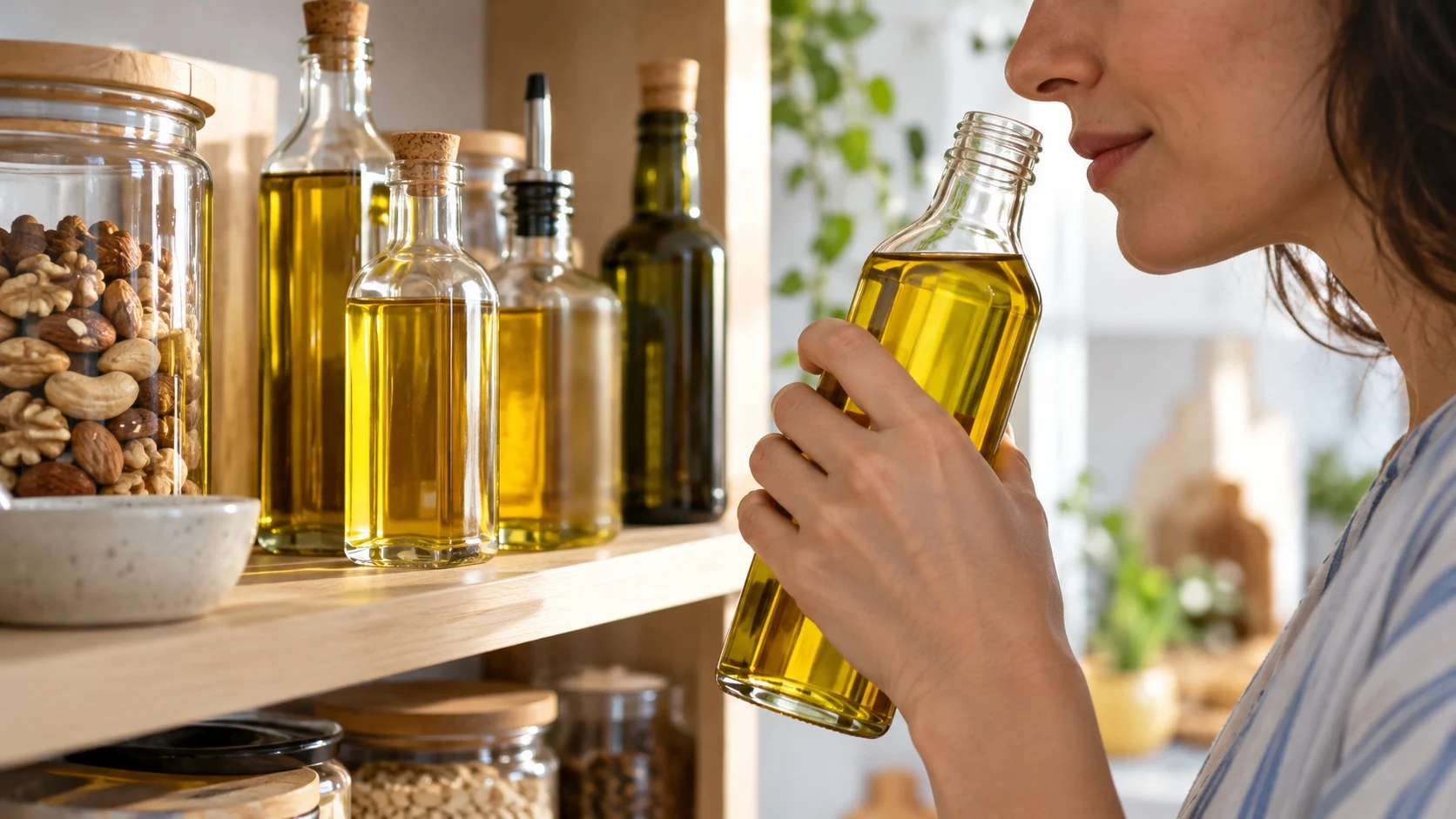
- Sensory Check: If oil or nuts smell stale or taste bitter, it is safer not to eat them, even if it feels wasteful.
Rancid oil not only loses flavor and aroma but also loses nutrients such as vitamins. Eating large amounts of oxidized oil over a long period is also known to be bad for health.
Because rancidity progresses quietly without any visible mold, by the time you notice it by smell, it has often already advanced considerably. Yet small habits of keeping oil away from oxygen, light, and heat can slow it down greatly.
A nutty flavor is a gift you can enjoy only while fats are fresh. Closing even a single bottle of oil on time and keeping it in the right place is the first step in a diet that protects both fresh flavor and health.