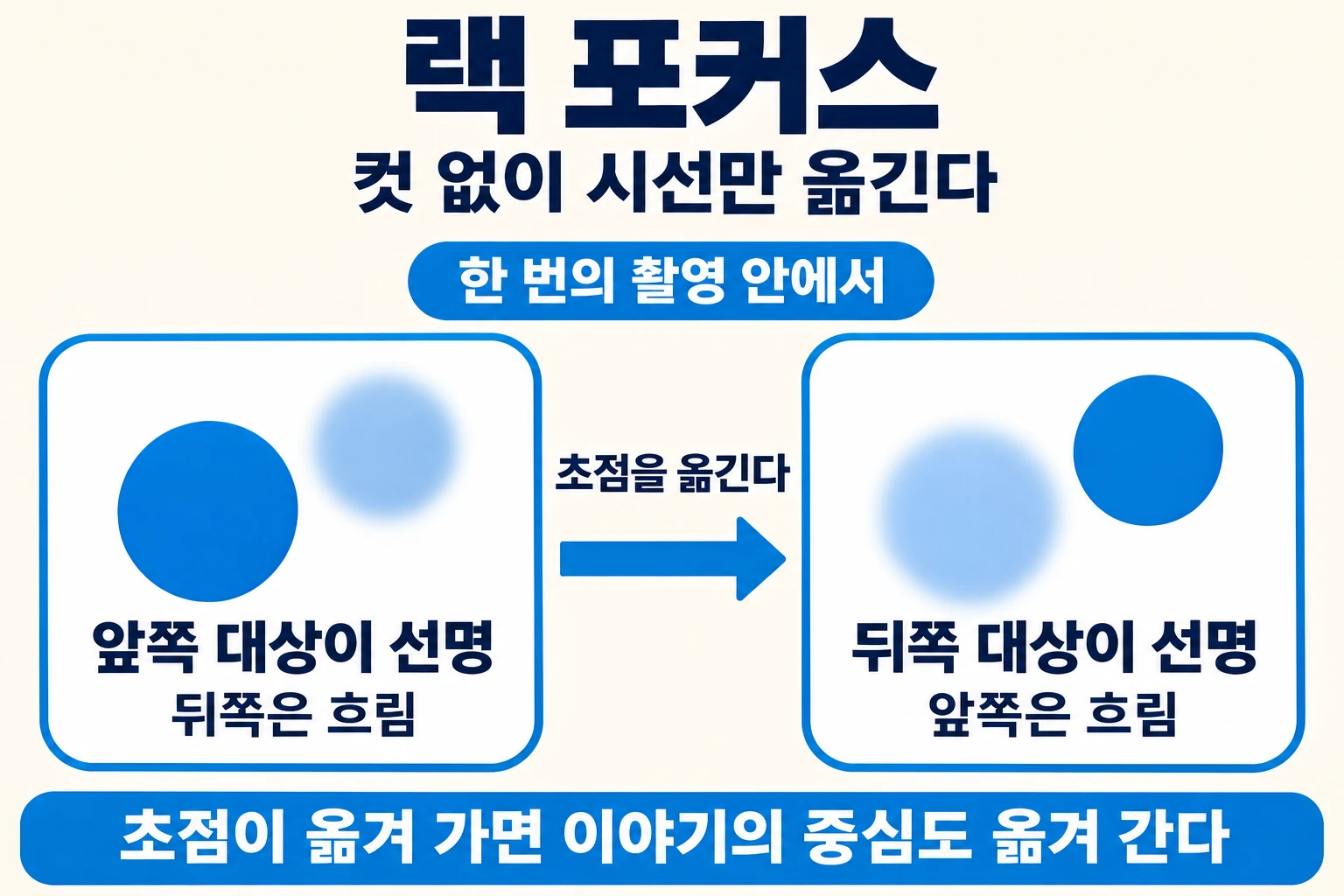
While watching a film, you have probably seen a scene where the person on screen is sharp and everything behind is a soft blur, and then the focus glides to the back and another person’s face becomes clear. The camera stays put, yet it feels as though only the gaze has moved, and without a single line of dialogue the audience senses that the story has just changed direction.
This technique is rack focus. By changing the lens focus within one continuous shot, it moves the sharp subject from one thing to another, and it can lead the audience’s eye exactly where you want it without cutting. Because it involves pulling the focus, it is also called a focus pull.
In this article, we will look in turn at how rack focus works, what kinds of stories it is used to tell, how it has been used in actual films, and who does it on set and how.
The Art of Guiding the Eye by Shifting Focus
How the Focus Shifts
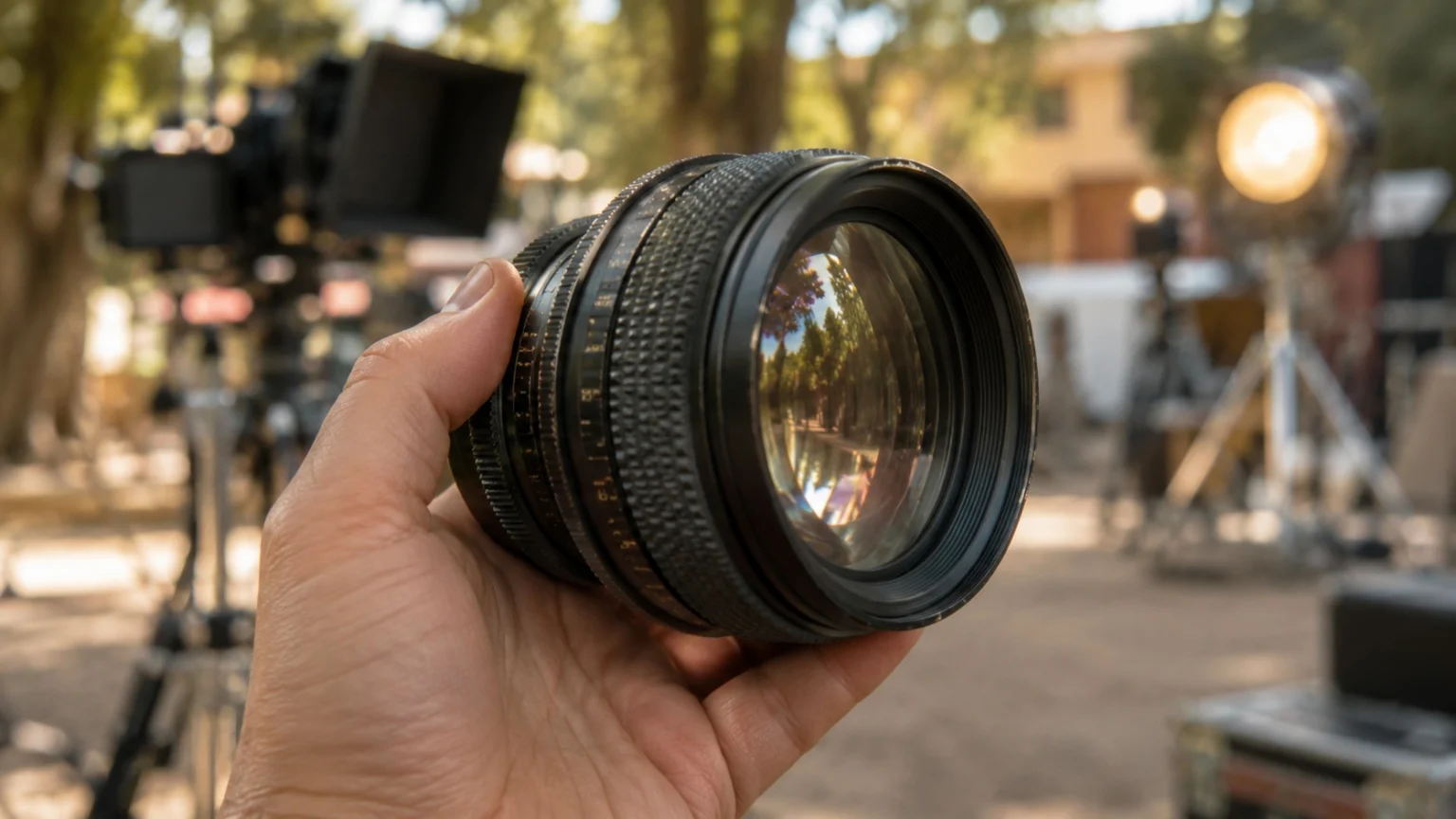
Rack focus means changing the distance at which the lens is in focus in the middle of a shot. For the effect to be visible, though, the out-of-focus parts must be clearly blurred, so it suits conditions where the sharp range of the frame is narrow.
(1) Shallow Depth of Field
Depth of field is the range of distances that appear to be in focus. Opening the aperture wide (around f/1.4 to f/2.8), moving close to the subject, and using a longer telephoto lens all narrow that range, so the foreground and background blur easily.
(2) Two Subjects at Different Distances
To shift focus, the frame needs subjects at different distances from the camera. A person or object sits in front and another person or object behind, and the focus travels between them.
(3) The Effect of Distance
Even at the same aperture, the closer the subject is to the camera and the farther the background, the stronger the blur. That is why the camera crew plans the placement of actors and props with the focus shift in mind from the start.
(4) How It Differs from Shallow Focus
A shot with shallow focus that stays on one spot from beginning to end is not a rack focus. It only gets this name when the focus actually moves during the shot.
The Story That Rack Focus Tells

Focus is a signal that says “look at this now.” So when the focus moves, the center of gravity of the story moves with it. When a scene is divided by cuts, the audience notices that an edit took place, but rack focus shifts only the gaze within the same space, so the flow is much smoother and more natural.
- Shift of Attention: As the focus passes from the front subject to the one behind, it tells the audience where to look next.
- Reveal: A person or object in the blurred background suddenly sharpens, and a fact that had been hidden comes to light.
- Inner Thought: Instead of showing what a character is looking at, the focus shows what the character has on their mind.
- Suspense: A figure approaching from behind the protagonist slowly comes into focus, building unease.
The speed of the shift speaks, too. A slow shift gives the feeling of lost thought or a dawning realization, while a fast one conveys a sudden discovery or shock.
Rack Focus in Film

Rack focus is an old technique used since the early days of cinema, and countless films since have used it as a device to drive the story.
(1) The Graduate (1967)
Just as Benjamin is about to confess something from his past to his girlfriend, the focus shifts from her to her mother standing in the doorway. This scene is often cited as the turning point where it is revealed that the mother is the very woman he had been seeing.
(2) Casino Royale (2006)
In one scene, cinematographer Phil Méheux guided the viewer’s eye by shifting the focus from a card being placed on a table to a woman walking away after a swim, and then to James Bond.
(3) The Prisoner of Shark Island (1936)
In the scene of Lincoln’s collapse, director John Ford had a thin veil hang in front, then slowly moved the focus from the figure to the veil, so the once-sharp figure blurred away. It is introduced as a case that goes beyond moving the gaze, conveying the feeling of one person’s life receding into history.
(4) The Host (2006)
In a long corridor of the quarantine zone, as patients come and go, the focus moves among the people in front, in the middle, and at the back, stacking several layers of story within a single frame.
The People Who Pull Focus on Set
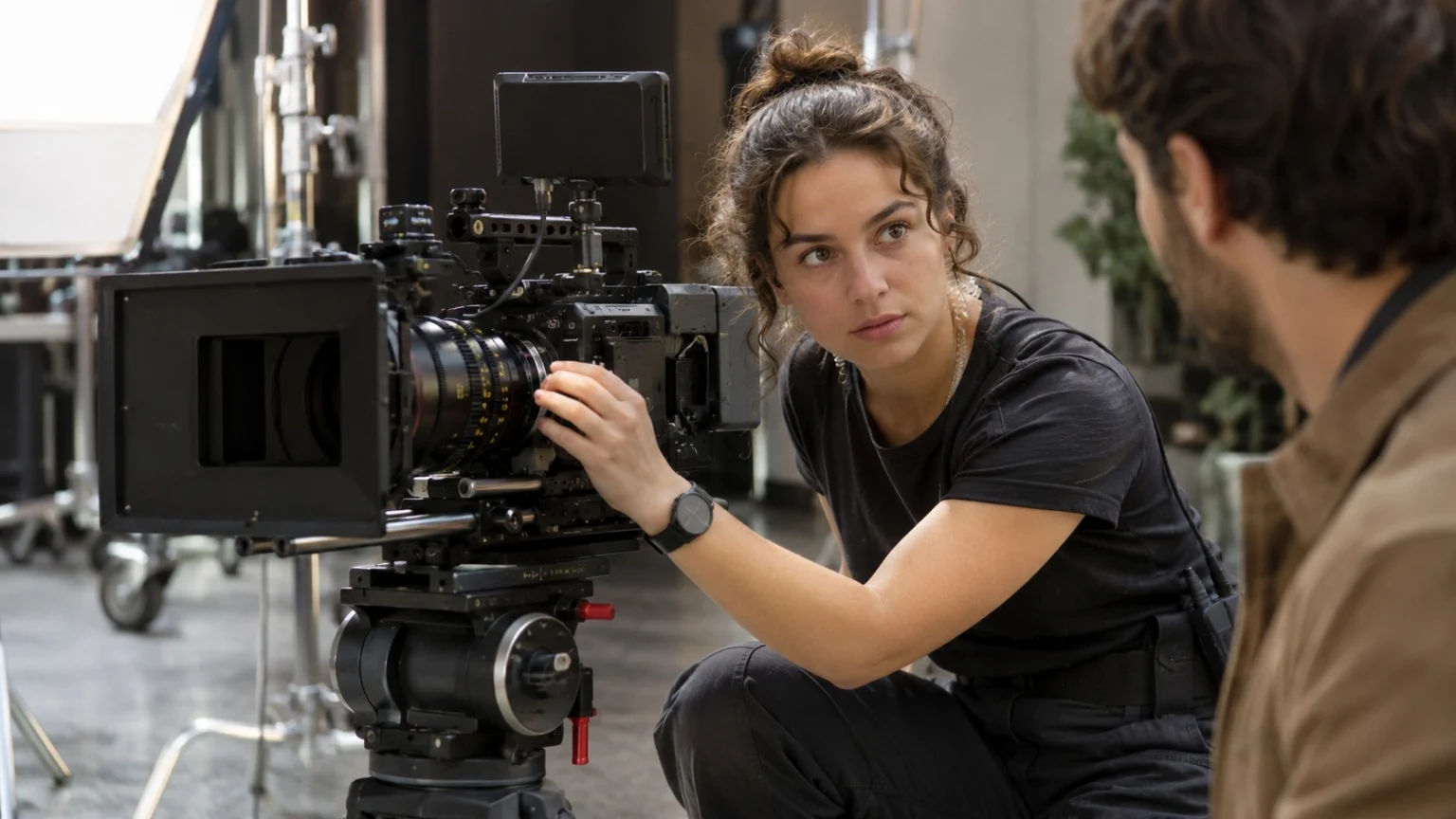
Rack focus looks like something finished with one turn of the lens, but on set it is very delicate work.
(1) The Focus Puller
On a camera crew, the first assistant camera operator usually handles focus and is commonly called the focus puller. Judging by eye the distance at which actors move, they turn the focus ring on the lens.
(2) Focus Marks
During rehearsal, they check the focus distance for each of the actor’s positions and mark it on the lens ring, then during the take they follow those marks and shift at exactly the right moment.
(3) Origin of the Name
The word “rack” is widely explained as coming from the rack and pinion, the toothed gear mechanism that moves the lens. There is disagreement over exactly when the term began, but it is a long-standing term on set.
(4) The Wisdom of Knowing When to Use It
If the focus moves too often, it actually scatters the viewer’s attention. It is most powerful when used once, at a moment the story truly needs.
(5) Shooting Today
Even on a smartphone camera you can now move the focus by tapping the spot you want on the screen. As the tools have become easier, it has become more important to first ask why you are shifting the focus now.
Sometimes the most precise way to move the viewer’s gaze is not to cut the frame but to shift the focus. Rack focus is the camera’s quiet gesture that signals the center of the story has changed without saying a word.
Noticing what sharpens in a scene that has softly receded into blur is the first step to understanding rack focus.