When a character in a film runs up a flight of stairs or dashes through a crowded alley, the camera runs right behind them, yet the image is strangely smooth. If a person ran holding a camera, the picture ought to bounce, so how are scenes like this possible? The device that holds the secret is the “Steadicam.”
Put simply, a Steadicam means “a body-worn camera stabilizer that filters out the operator's body movement so it does not reach the camera.” Thanks to this device, which appeared in the mid-1970s, the camera could walk, run, and move smoothly like a person, without rails or cranes.
In this article, we will look in turn at how the Steadicam came to be, the structure and principles that tame the shake, the landmark scenes it left in film history, and its meaning today as it carries on alongside the gimbal.
The Invention of a Camera That Filters Out the Shake
Before and After the Steadicam
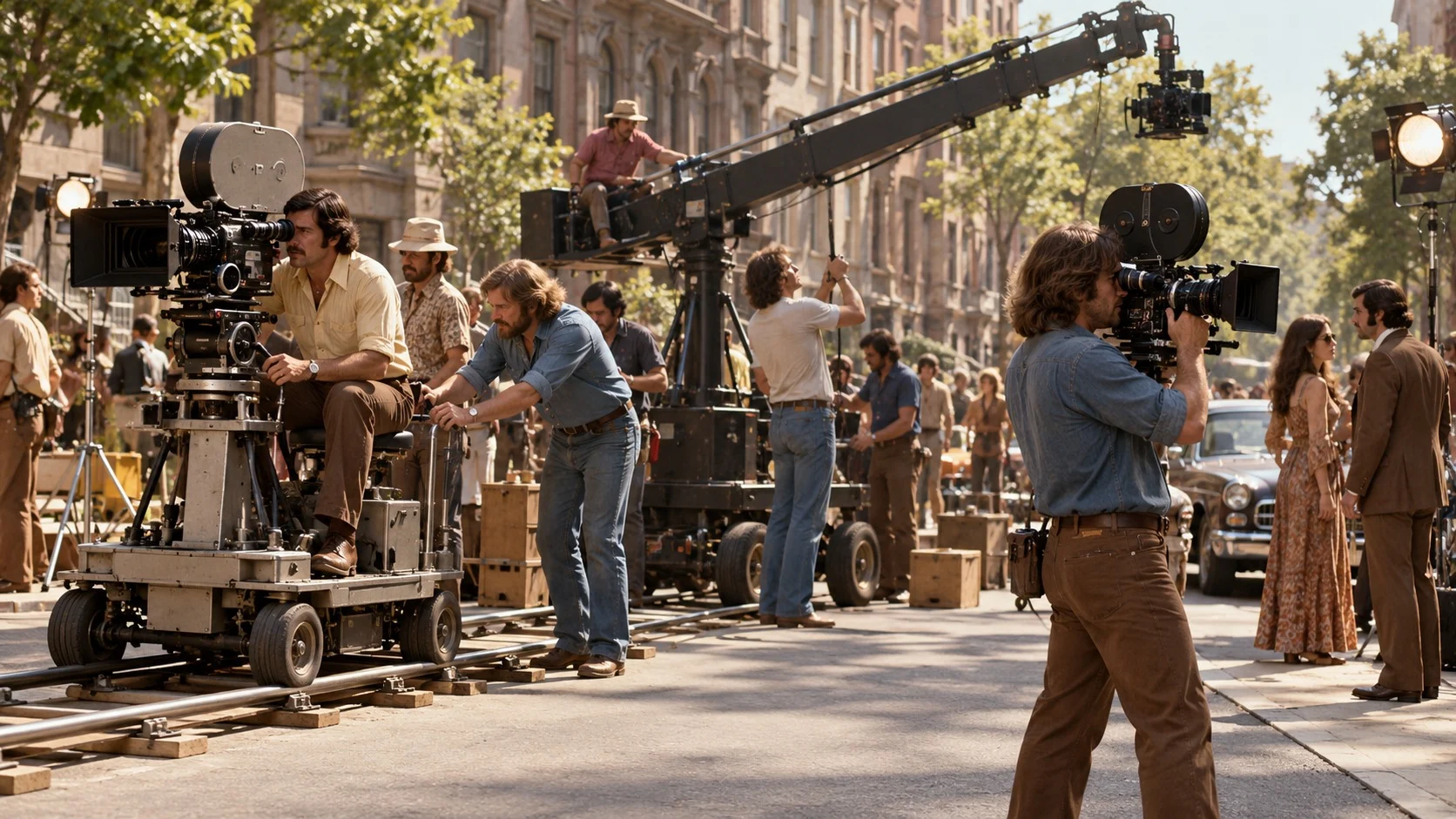
Before the Steadicam, directors had three main ways to film moving shots.
- Dolly: The camera is mounted on a wheeled platform and pushed along rails. It is smooth, but it can only be used where rails can be laid.
- Crane: The camera is attached to the end of a long arm and swept up, down, and sideways. The rig is large and heavy, so it is hard to bring into tight spaces.
- Handheld: The operator holds the camera in the hands or on the shoulder. It can go anywhere, but the image shakes, giving a strong documentary or news-like feel.
The person who filled this gap was the American cinematographer and inventor Garrett Brown. In 1974 he shot a test reel with a prototype, which included scenes running up and down the steps of the Philadelphia Museum of Art. Amid interest from the directors who saw the reel, the device was completed in 1975, and Cinema Products released it under the name “Steadicam.”
The Structure and Principles That Tame the Shake
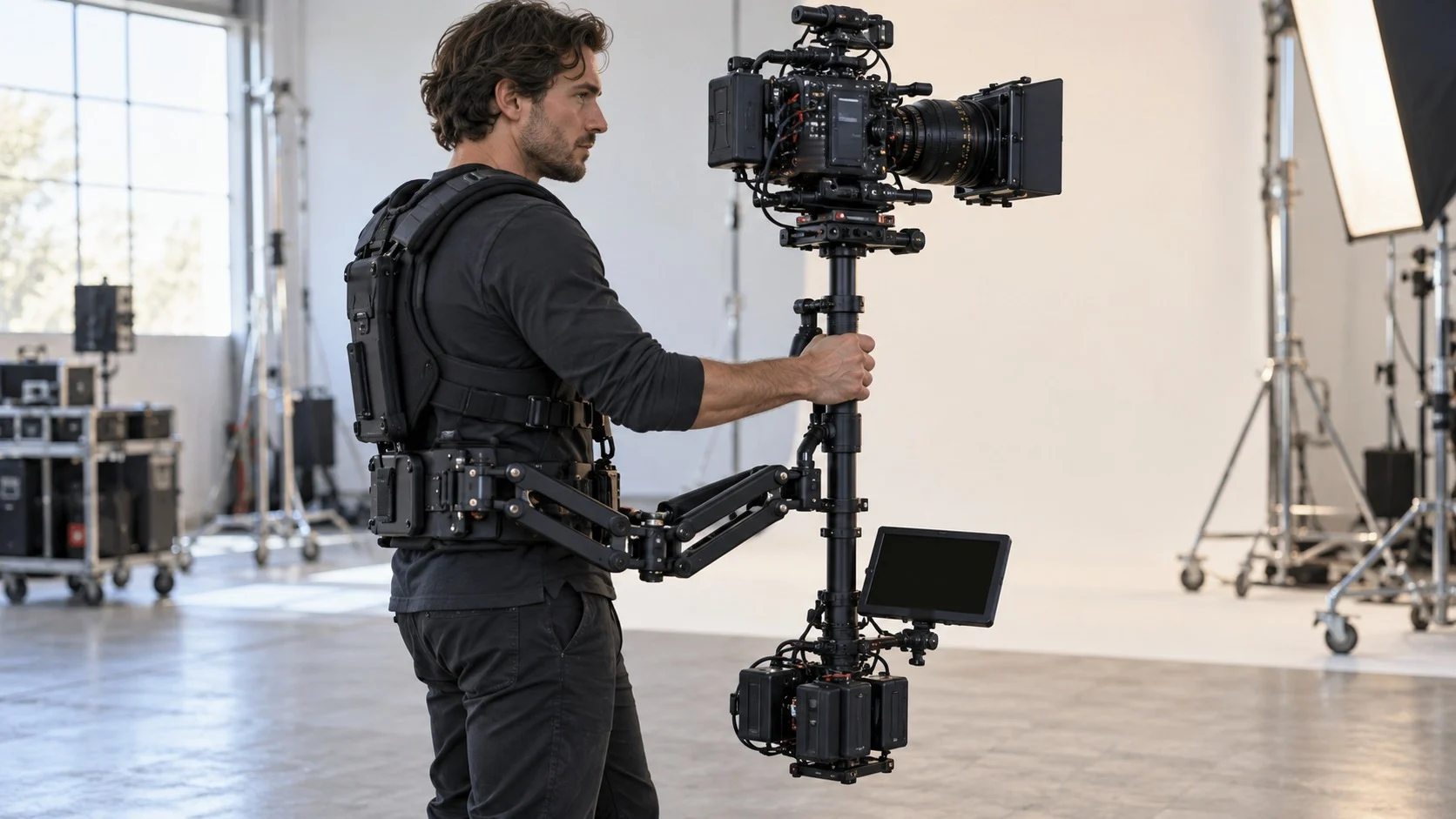
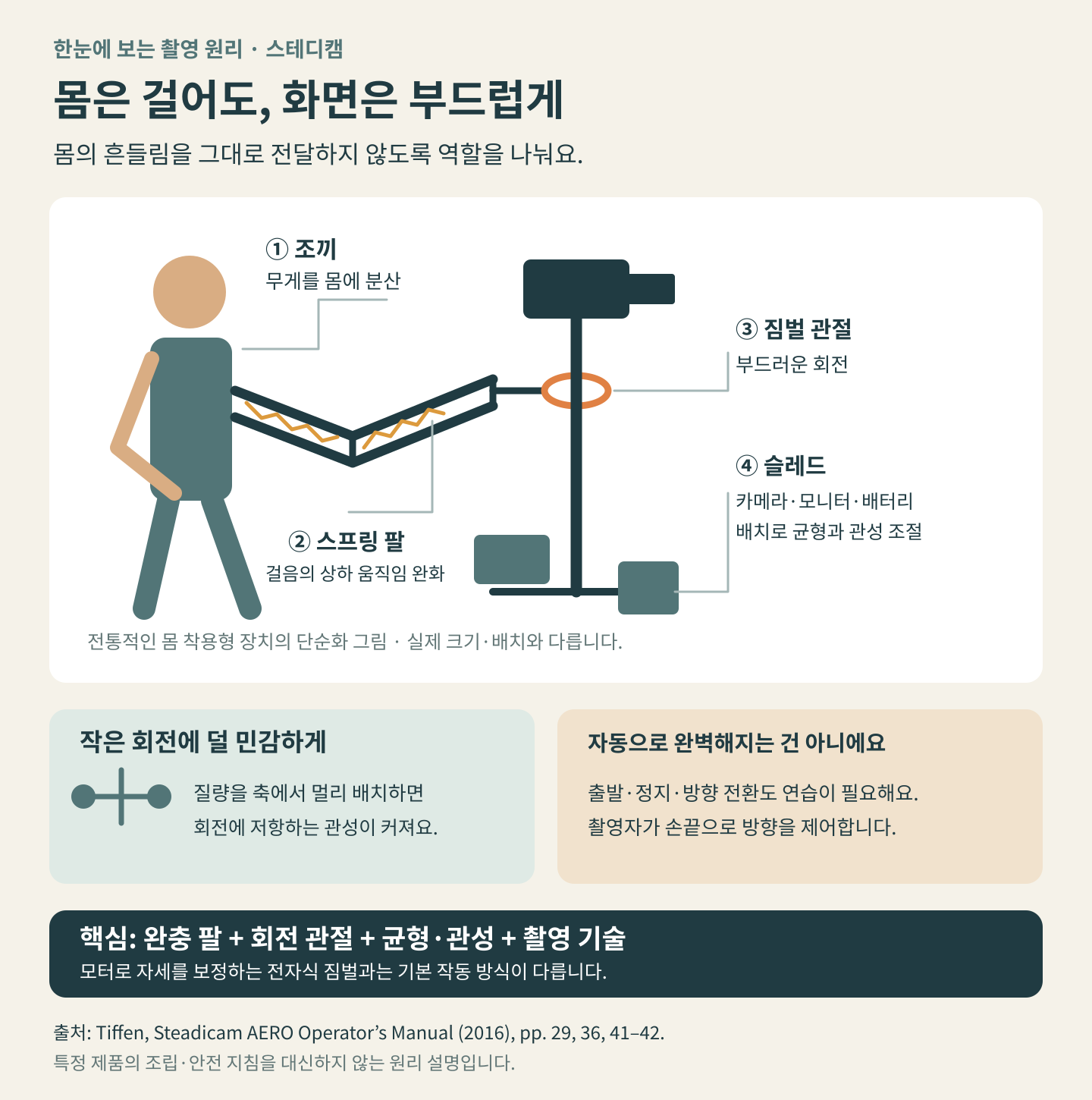
The Steadicam places several layers of cushioning between the operator's body and the camera, filtering out the body's movement and passing only the intended movement to the camera.
(1) Vest
A sturdy vest worn by the operator that spreads the weight of the whole rig across the shoulders and hips. This lets the operator carry even a heavy film camera for long periods.
(2) Iso-Elastic Arm
A spring-loaded arm attached to the vest. Even as the body rises and falls while walking, the springs absorb the jolts and keep the camera at a steady height.
(3) Sled
The main body, a long post with the camera at the top and the monitor and battery at the bottom, balanced against each other. Making the bottom slightly heavier lets it stand upright on its own, like a roly-poly toy. Since the operator cannot look through the camera's viewfinder, they frame the shot by watching the monitor below.
(4) Gimbal
The joint that connects the arm and the sled, turning very smoothly in multiple directions. Because it holds the rig just above its center of gravity, the operator only needs to nudge it lightly with the fingertips to change direction. When it is well balanced, the camera stays in place even if the operator lets go.
A heavy, well-balanced rig strongly resists being moved, which is to say it has great inertia, so it does not budge in response to small tremors. This simple principle is the key to the smooth image.
Steadicam Shots That Made Film History
As soon as it appeared, the Steadicam created new kinds of images in a number of films.
The First Film and the Steps of Rocky
The first film to use the Steadicam was Bound for Glory (1976), and a shot in which the camera descends from a crane and then walks straight on through the set drew attention. In the same year, the New York chase scenes in Marathon Man and the scene in Rocky where the hero runs up the steps of the Philadelphia Museum of Art were also shot with the Steadicam. In all three films, Garrett Brown wore the rig and operated the camera himself.
The Floor-Level Gaze of The Shining
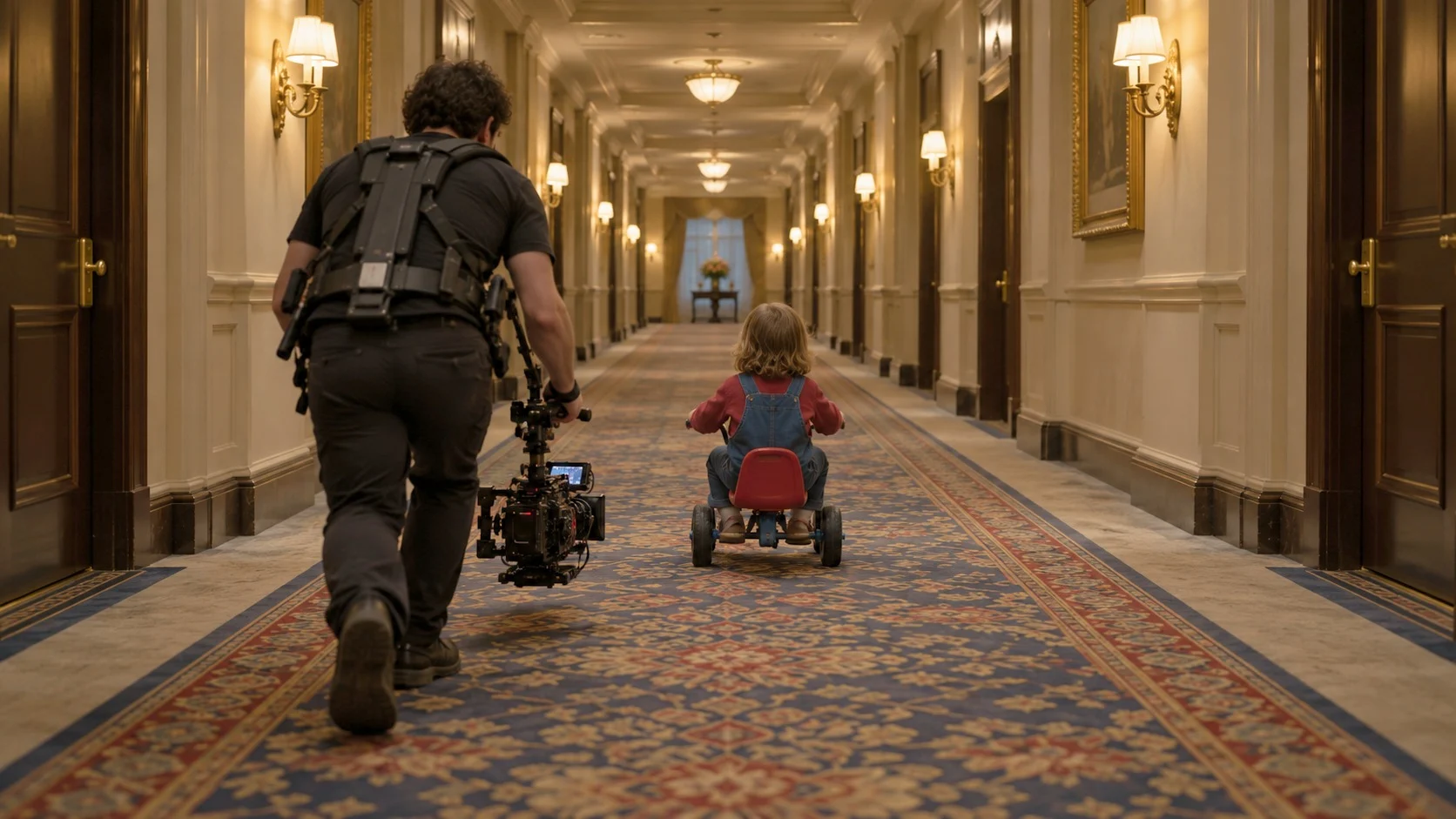
In director Stanley Kubrick's 1980 film The Shining, the shot that follows a child on a tricycle close to the floor is famous. When Kubrick wanted a viewpoint so low it nearly touched the floor, Low Mode, in which the camera is hung upside down, was newly devised. The image gliding down the empty hotel corridor gives the audience an uneasy feeling that someone is watching from behind.
The Age of the Gimbal and the Steadicam's Legacy
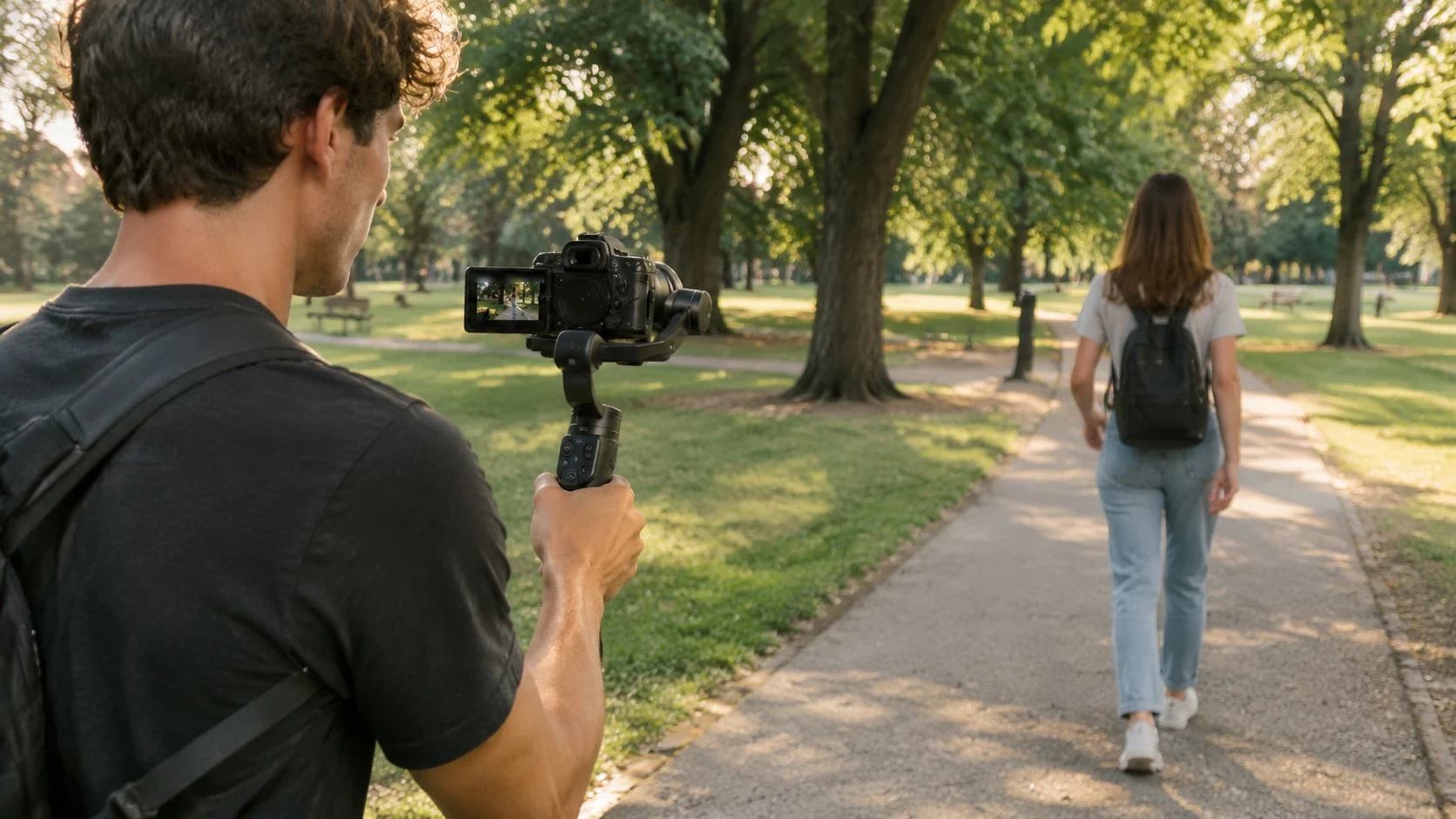
Today, electronic gimbals that correct shake instantly with motors and sensors are widely used, and smartphones have built-in image stabilization as well. Steadicam itself released a smartphone mount in 2012, and smooth moving shots have now become something anyone can try.
(1) Still a Human Skill
Even if the equipment filters out the shake, it is the operator who decides where to stop and how quickly to approach. That is why Steadicam operation is regarded as a specialized field that takes a long time to master physical balance and feel.
(2) A New Visual Grammar
As the camera came to walk alongside characters, audiences began to experience a scene as if walking through it themselves rather than watching it from outside. This change is also why long continuous takes and shots that follow behind a character have become common.
With the simple principles of weight, balance, and inertia, the Steadicam freed the camera from rails and cranes. As a result, the camera became one more character, moving through the story at a human pace.
Thinking first about where to walk, rather than only about removing the shake: that is the first step toward a living moving shot.