This time, I want to put together a resource on CCL, which indicates the permissions for using a creative work. People who create content sometimes go through complicated processes, such as protecting the copyright of the content they have made or asking the original author when they use other content to create a derivative work. CCL is a concept that comes in handy in these situations.
The Concept of CCL
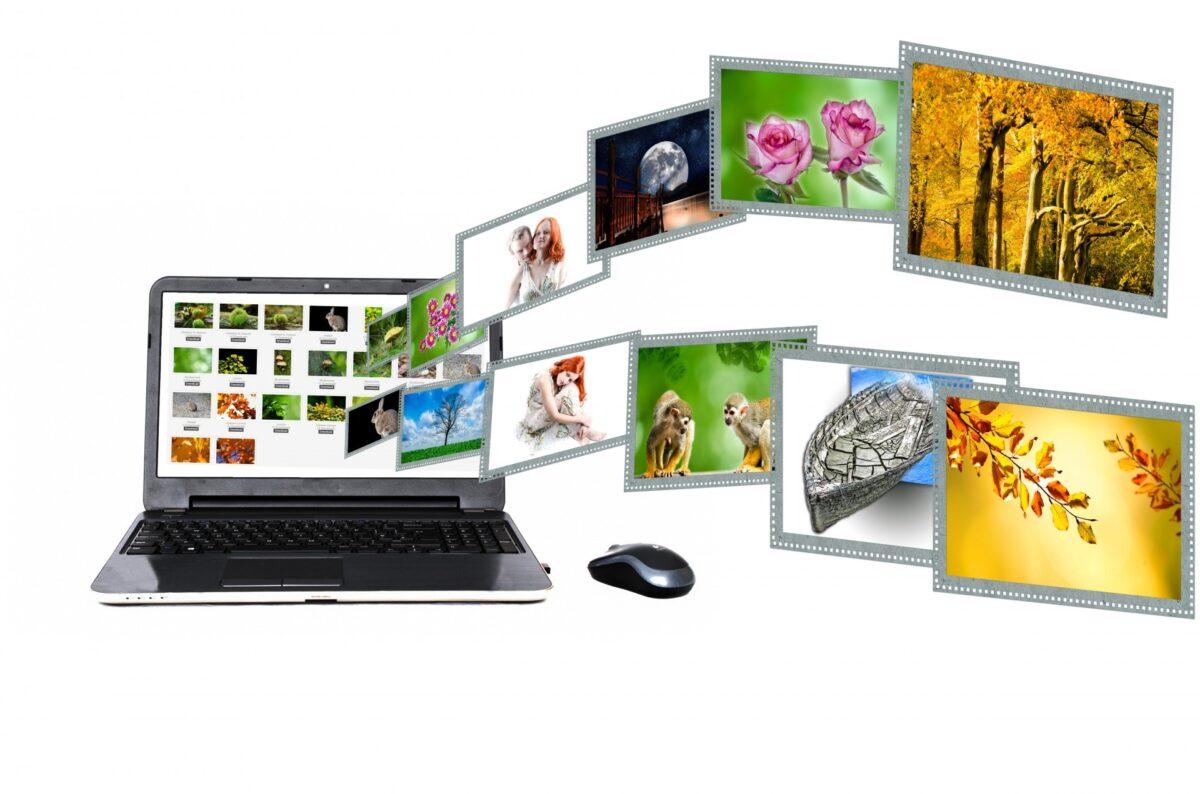 Making content creation easier by cutting down the permission process!
CCL stands for Creative Commons License. It is an open license in which the copyright holder who created the content indicates the conditions of use in advance, so that users who want to use the work can do so through a simple process without separately asking the copyright holder for permission.
It provides a simple yet standardized way for a wide range of people, from individual creators who run blogs and YouTube channels to companies and public institutions, to grant permission to use the content they have created.
If content created by an author, such as a photo, document, or video, carries a CCL mark, you can easily check the conditions for using that work, and you can freely use it according to those conditions without having to contact the original author for permission each time.
 CCL is even more effective for collective intelligence
Representative examples of CCL in use include online encyclopedias that are products of collective intelligence, such as Wikipedia and Namuwiki, and Gongnuri (KOGL) is a site where you can use public works.
Summary of CCL Marks
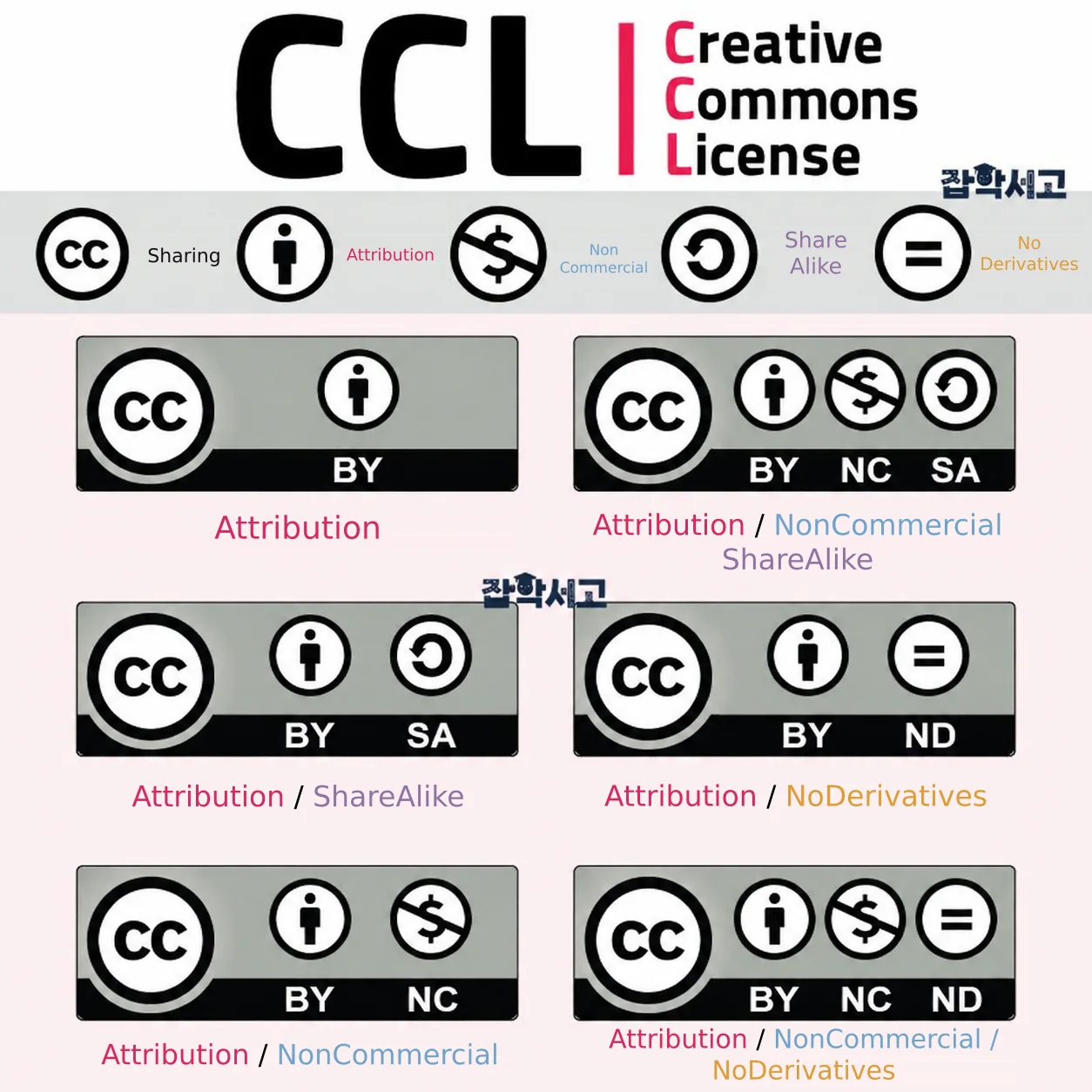 CCL marks at a glance
The above summarizes the CCL marks you should check before using a work. There are five marks in total, and they are combined to create six types of usage permissions.
To use a work, it is essential to check these CCL marks, and using it for purposes beyond the granted permissions is clearly a violation of copyright law and can cause problems.
Detailed Explanation of Each Mark
※ Meaning of the Five Marks
▶ CC (Sharing)
Displayed by default, it means that you are sharing your work.
▶ Attribution
It requires that information about the author always be indicated as the source.
▶ NonCommercial
It does not permit the work to be used for commercial (profit-making) purposes.
▶ ShareAlike
It allows other works to be created, as long as they carry a license with the same conditions.
▶ NoDerivatives
It does not allow the work to be changed or transformed into a derivative work.
※ Six Types of License for Works
▶ Attribution (CC BY)
This is an open license that allows the work to be used not only for non-commercial but also for commercial purposes, as long as the author is credited. It is used when the author strongly wants the work to be widely used. This permission is often granted to public works such as those on Gongnuri (KOGL).
▶ Attribution-ShareAlike (CC BY-SA)
The author must be credited, and the same license applies to new derivative works, which means that derivative works may also be used commercially. Wikipedia is a representative example of where this license is used.
▶ Attribution-NoDerivatives (CC BY-ND)
It allows both commercial and non-commercial redistribution on the condition that the author is credited and the content is not modified.
▶ Attribution-NonCommercial (CC BY-NC)
It allows the work to be modified only for non-commercial (not-for-profit) purposes, on the condition that the author of the original work is always credited.
▶ Attribution-NonCommercial-ShareAlike (CC BY-NC-SA)
The author of the original work must be credited, the same license applies to derivative works, and the work may be modified only for non-commercial purposes.
▶ Attribution-NonCommercial-NoDerivatives (CC BY-NC-ND)
This is the most restrictive of the six CC licenses. The original author must always be credited, no modifications of any kind are allowed, and the work cannot be used commercially. It can only be downloaded and shared.
So far, we have looked at CCL, which simplifies the copyright licensing process so that works can be used conveniently. If content creators and users understand this concept to protect the rights to creative works, they will be able to produce and use derivative works easily and without hassle.
I hope this resource helps you become familiar with the concept of CCL, so that you can create and use content carefully without running afoul of copyright law in the future.