Regular health checkups have become an important means of maintaining personal health and improving quality of life in modern society. Through regular checkups, many people can detect health problems they were unaware of at an early stage and take appropriate action to prevent them from developing into more serious diseases.
This material will examine in detail the definition and purposes of regular health checkups, the examination process, their importance from a preventive perspective, and the diseases that can be detected early through checkups, along with examples.
The Definition and Purposes of Health Checkups: Why Are They Important?
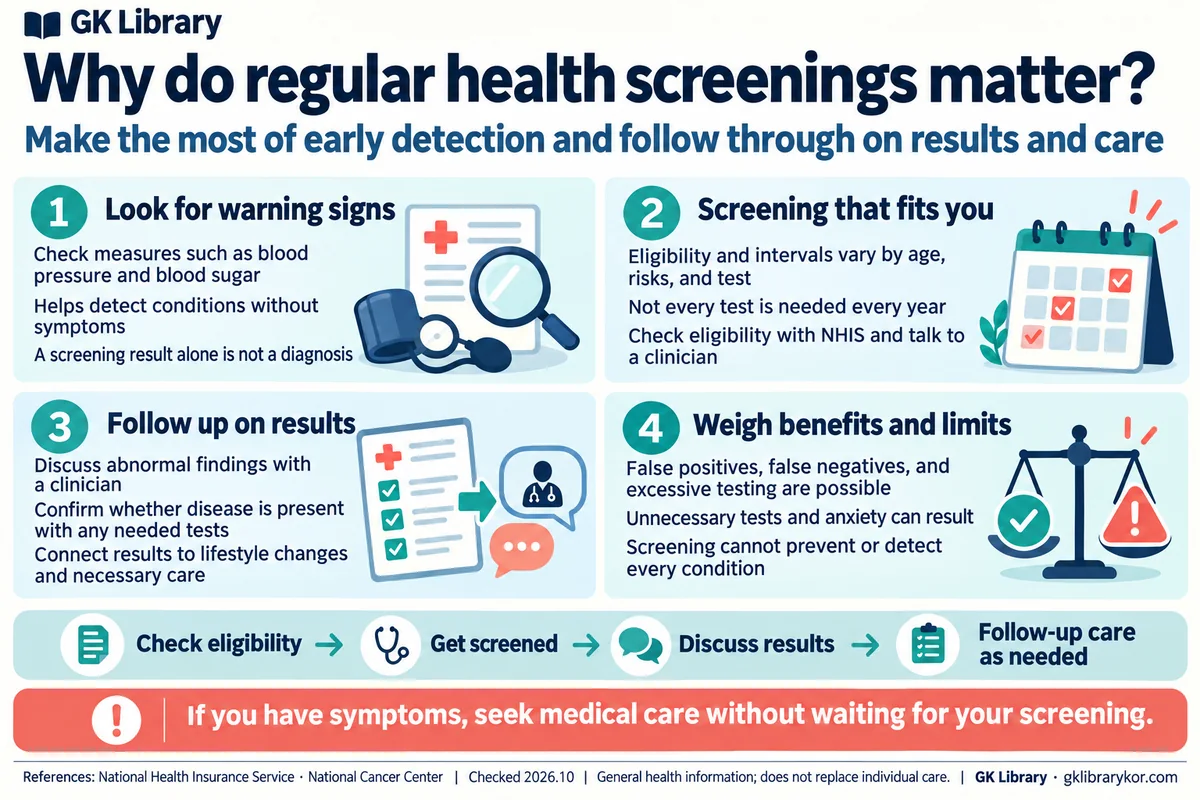

The Definition and Purposes of Health Checkups: Why Are They Important?
Regular health checkups are a systematic process for assessing an individual's health and detecting potential health problems early. These examinations are an important means of maintaining health and preventing disease, focusing on detecting diseases before they manifest to improve opportunities for treatment. Regularly assessing your health through checkups also provides opportunities to improve lifestyle habits.
The main purposes of regular health checkups are early disease detection, prevention, and an overall assessment of health. Through these examinations, individuals can gain a clear understanding of their health and receive appropriate care or treatment when necessary. For example, detecting serious diseases such as chronic conditions or cancer at an early stage plays a crucial role in treatment outcomes and greatly increases the success rate of treatment.
Health checkups also serve as an important means of helping people maintain healthy lifestyle habits. Regularly checking blood pressure, cholesterol, and blood glucose levels provides opportunities to manage chronic conditions such as cardiovascular disease and diabetes early. This offers a reliable way to prevent disease and maintain health.
As population aging accelerates, the importance of health checkups extends beyond personal health to carry significant social and economic implications. Regular health management can contribute to lower medical costs and improved productivity. Health checkups also play an important role in helping individuals understand their health more clearly and take an active role in managing it. This approach to health management directly improves quality of life and makes a better life possible over the long term.
Early Detection Through Health Checkups: Which Diseases Can Be Prevented?
Regular health checkups provide an important opportunity to detect various diseases early. In particular, they can identify diseases that have no noticeable symptoms in their early stages, allowing appropriate action to be taken in advance. Health checkups can detect not only chronic conditions such as hypertension, diabetes, and hyperlipidemia, but also potentially fatal cancers such as liver, lung, and stomach cancer at an early stage.
For example, blood pressure testing is an important tool for detecting hypertension early, helping prevent serious complications such as heart disease and stroke. Diabetes testing monitors changes in blood glucose levels, enabling early diagnosis of diabetes and the development of an appropriate management plan. Cancer screening is also extremely important for detecting cancer at an early stage and maximizing opportunities for treatment.
Diseases detected early are more likely to be treatable, and the time and costs required for treatment can also be reduced. This allows individuals to remain healthy for longer and reduces the economic burden of disease on society. Receiving health checkups regularly without missing them is a very important preventive measure.
Personalized Health Management: Additional Benefits of Health Checkups
Regular health checkups do more than simply detect disease; they also play an important role in providing individuals with personalized health information. For example, personalized health management strategies can be recommended based on an individual's genetic factors, lifestyle habits, and work environment. This personalized information helps establish appropriate preventive measures suited to the individual's health.
Data obtained through checkups can also serve as important resources for setting personal health goals and developing specific plans to achieve them. For example, dietary improvements and an exercise plan are recommended for people with high blood pressure, while those with high cholesterol levels may need appropriate dietary adjustments and medication. This provides direction for maintaining better health.
Personalized health management particularly strengthens a sense of responsibility for managing one's health. This is because it helps individuals accurately understand their health and actively improve their lifestyle habits based on that understanding. These preventive measures make a substantial contribution to ensuring a better quality of life over the long term.
Social Benefits: The Positive Effects of Health Checkups
Regular health checkups have various positive effects on both individuals and society. Detecting and preventing disease early can reduce medical costs, while a healthy population leads to improved productivity. People who maintain their health can work longer and make greater economic contributions.
Health checkups can also reduce the social burden caused by health problems. For example, preventing chronic conditions can reduce long-term dependence on medical services and ease the burden on the healthcare system. If individuals' health is appropriately managed through regular checkups, this can greatly help improve the health of society as a whole.
Regular health checkups are an important means of protecting personal health and bringing about positive changes at the societal level. The preventive measures derived from checkups play an essential role in creating a healthy society.
Regular Health Checkups: An Essential Practice You Should Not Miss
Regular health checkups are essential for protecting personal health and improving quality of life. Preventing and detecting health problems early makes appropriate action possible, which plays an important role in leading a better life over the long term.
Maintaining health by consistently monitoring your health through regular checkups and taking necessary preventive measures is essential in modern society. Because positive changes can be expected for both personal health and society, it is important to make sure you receive health checkups and actively use the information they provide.
The Main Elements and Procedures of Regular Health Checkups

The Main Components and Procedures of Regular Health Checkups
Regular health checkups are a multifaceted process for assessing an individual's overall health and detecting potential health problems early. They are tailored to factors such as age, sex, lifestyle habits, and family history, and include a variety of examinations ranging from basic physical examinations to blood tests, diagnostic imaging, specialist consultations, and detailed examinations. Checkups are essential tools for preventing disease and maintaining a healthy life, providing important opportunities to take preventive measures.
Basic Physical Examination
The first stage of a regular health checkup is a basic physical examination. This includes checking basic physical indicators such as weight, height, blood pressure, vision, and hearing. These physical examinations help establish a basic understanding of health and can detect problems such as hypertension, obesity, and declining vision at an early stage. For example, hypertension can lead to serious diseases such as heart disease and stroke, so detecting and managing it early is very important.
The ratio of weight to height can also be used to calculate body mass index (BMI), which can then be used to determine whether a person is obese or underweight. This basic information serves as a foundation for subsequent detailed examinations and diagnoses and plays an important role in analyzing health more accurately.
Blood and Urine Tests
The next stage involves blood and urine tests. Blood testing is among the most basic and important examinations for checking various indicators within the body. Assessing cholesterol levels, blood glucose levels, liver function, and kidney function can help identify risk factors for cardiovascular disease, diabetes, and liver disease early. For example, high cholesterol levels increase the risk of heart disease, while high blood glucose levels may be a warning sign of diabetes.
Urine testing is essential for assessing the health of the kidneys and urinary system. Urine tests can detect various conditions early, including kidney disease, infections, and diabetes. The kidneys play an important role in the body, and abnormalities in their function can have a major impact on the body, making early detection and management important.
Diagnostic Imaging
Alongside blood testing, diagnostic imaging is an important stage of regular health checkups. Diagnostic imaging uses techniques such as X-ray, ultrasound, CT, and MRI to examine the condition of organs and tissues inside the body. These imaging examinations are particularly important for detecting diseases before symptoms appear. For example, serious diseases such as lung and liver cancer can be detected at an early stage through diagnostic imaging, increasing the success rate of treatment.
Ultrasound is used to check for abnormalities in abdominal organs such as the liver, kidneys, and pancreas, while X-ray is primarily used to examine the lungs and bones. CT and MRI provide more detailed images and are essential for examining important parts of the body such as the brain, heart, and spine. These diagnostic imaging techniques provide opportunities to detect diseases in advance and take preventive measures.
Endoscopy: The Importance of Early Detection of Digestive Diseases
Endoscopy is an important examination included in regular health checkups. It directly examines the condition of the digestive system, including the stomach and intestines, and plays an essential role in detecting digestive diseases early. It is divided into gastroscopy and colonoscopy, which examine the upper digestive tract (esophagus, stomach, and duodenum) and lower digestive tract (colon and rectum), respectively.
Gastroscopy is useful for the early diagnosis of conditions such as gastritis, stomach ulcers, and stomach cancer. Stomach cancer in particular often has almost no early symptoms, so it is frequently detected through regular endoscopic examinations. Early detection increases the success rate of treatment, making regular gastroscopy very important.
Colonoscopy is essential for diagnosing conditions of the lower digestive tract, such as colorectal polyps, colorectal cancer, and inflammatory bowel disease. Colorectal polyps detected through colonoscopy can potentially develop into cancer, so removing them early can prevent colorectal cancer. Colonoscopy is particularly recommended for adults aged 50 and older, and earlier examination is advisable for those with a family history.
Endoscopy is relatively simple, yet it is an important means of detecting and preventing major digestive diseases early. Maintaining the health of the stomach and intestines through regular endoscopic examinations is essential.
Bone Density Testing: The Key to Maintaining Bone Health
Bone density testing measures bone strength and density and can detect bone diseases such as osteoporosis early. Postmenopausal women and older adults are particularly at increased risk of osteoporosis, making it important to assess bone health through regular bone density tests.
Osteoporosis is a condition in which reduced bone strength makes bones prone to fractures. It has almost no symptoms in its early stages, but the risk of fractures increases substantially over time. Bone density testing allows an accurate assessment of bone condition, and bone health can be managed through calcium supplements or exercise when necessary.
Bone density testing is one of the essential examinations for preventing bone disease and enjoying a healthy old age.
Electrocardiography: Assessing Heart Health
Electrocardiography records the heart's electrical signals to assess its rhythm and function. This test can provide early diagnosis of heart-related conditions such as arrhythmia, angina, and myocardial infarction. Electrocardiography identifies abnormal signals that occur when the heart is under strain and plays an important role in preventing more serious cardiovascular diseases.
Consistently monitoring heart health through regular electrocardiography is essential for preventing and managing cardiovascular disease.
Ultrasound: Accurately Assessing the Internal Condition of Organs
Ultrasound is an important diagnostic tool for noninvasively examining the condition of internal organs. It uses high-frequency sound waves that are harmless to the human body to display the condition of organs and tissues in real time, making it useful for identifying abnormalities in major organs such as the kidneys, liver, pancreas, and gallbladder.
Ultrasound is particularly helpful for detecting conditions such as liver disease, kidney stones, gallstones, and cholecystitis early. For example, liver ultrasound can provide early diagnosis of liver cancer, fatty liver, and cirrhosis, while gallbladder ultrasound can identify gallstones so that appropriate treatment can be received.
Ultrasound is also widely used to check for tumors in areas such as the thyroid, breasts, and prostate, and plays an important role in diagnosing digestive and urinary system diseases. For example, abdominal ultrasound can assess abdominal organs such as the liver, kidneys, spleen, and pancreas to detect cancer or inflammation early.
Ultrasound is harmless to the human body, is relatively simple to perform, and is a reliable diagnostic method for examining the internal condition of organs in detail. Using it to detect various diseases early and take appropriate action greatly helps maintain health.
Specialist Consultations and Detailed Examinations
If abnormal findings are identified in the results of a regular health checkup, additional detailed examinations provide a more specific and accurate diagnosis. During this process, a specialist consultation provides a clear explanation of the individual's health, and detailed examinations are performed as needed to confirm whether a disease is present. These examinations help accurately identify the cause of disease and recommend the most suitable treatment.
Specialist consultations go beyond simply reviewing checkup results and play an important role in developing personalized health management plans. Based on problems identified during the checkup, specific plans are developed for lifestyle improvements, medication, and follow-up care. Actively discussing these matters with a specialist to establish the direction of future health management is very important.
Results Analysis and Recommendations for Personalized Health Management
After the checkup is completed, individuals receive personalized health management recommendations based on their results. Checkup results go beyond simply assessing health and provide specific advice on lifestyle improvements, dietary adjustments, and exercise plans. For example, people who need weight management are given recommendations for an appropriate diet and exercise methods, while those who need to manage blood pressure or blood glucose receive medical advice along with strategies for improving lifestyle habits.
This feedback goes beyond the health checkup itself and plays an essential role in maintaining a healthy life and preventing disease over the long term. It is very important to maintain health by accurately understanding your health based on information obtained through checkups and consistently taking necessary preventive measures. Receiving regular health checkups to assess your health and continuing appropriate care are essential conditions for leading a better life in modern society.
The Value of Health Checkups from the Perspective of Preventive Medicine

Regular Health Checkups: The Core of Preventive Health Management
Regular health checkups play an important role in preventing disease by identifying potential risk factors in advance and taking appropriate action before disease develops. From a preventive perspective, this protects personal health and improves overall quality of life. Detecting disease at an asymptomatic stage through checkups makes early treatment possible and can prevent it from developing into a serious illness. In particular, the success rate of treatment for potentially fatal diseases such as cancer increases substantially with early detection, making regular checkups very important.
Early Detection and Management of Lifestyle Diseases
Regular health checkups are highly effective for detecting lifestyle diseases such as hypertension, hyperlipidemia, and obesity early. These diseases are easily neglected because they have no noticeable symptoms in their early stages. However, checking blood pressure, cholesterol, and body mass index (BMI) through regular checkups can identify potential health risk factors in advance. Lifestyle diseases detected early can be effectively managed through lifestyle improvements and appropriate medication. This provides an important foundation for maintaining a healthy life over the long term.
The Economic Effects of Preventive Measures
Preventive medicine provides social and economic benefits as well as protection for personal health. Preventing diseases or detecting them early before they become serious can avoid complex treatment procedures and greatly reduce the burden of medical costs. For example, detecting cancer early can reduce treatment costs and shorten a prolonged recovery period, easing the individual's financial burden. This enables efficient use of medical resources and also contributes to lower healthcare costs for society as a whole.
Improving Health Awareness and the Importance of Preventive Measures
Regular health checkups help individuals recognize their health status and actively manage it. Gaining an accurate understanding of your health through checkups can increase awareness of the preventive measures you need. This strengthens individuals' willingness to take an active role in managing their health and improving their lifestyle habits. By receiving regular checkups, individuals can develop the ability to monitor their health continuously and take appropriate action whenever necessary.
Improving Public Health and Reducing Disparities
From the perspective of preventive medicine, regular health checkups contribute to improving the health of society as a whole. They help reduce health disparities and provide socially disadvantaged groups with opportunities to detect disease early and receive appropriate treatment. When a social structure develops that improves access to checkups and encourages their active use, the health of society as a whole improves and productivity increases. This will ultimately improve quality of life and have a positive impact throughout society.
The Necessity of Regular Health Checkups
Regular health checkups are a core element of preventive medicine and play an essential role in protecting personal health and improving quality of life. Protecting health through early disease detection and taking preventive measures provide substantial long-term benefits to both individuals and society. Preventive health management is the most effective way to prevent disease in advance and maintain a healthy life, so consistently monitoring your health through regular checkups is important.
Diseases That Can Be Detected Early

Major Diseases That Can Be Detected Early and the Importance of Doing So
Regular health checkups provide important opportunities to detect and treat various diseases early, including cancer, cardiovascular disease, and diabetes. Because these diseases have no noticeable symptoms in their early stages, detecting and preventing them in advance through regular checkups is very important. When early detection leads to appropriate action, treatment success rates increase and maintaining health becomes easier.
Cancer: Early Detection of Various Cancers and Improved Survival Rates
Cancer is a disease for which early detection has a major influence on treatment success rates. Regular checkups can detect various cancers early, including breast, colorectal, and prostate cancer, as well as lung, liver, pancreatic, and cervical cancer. Lung cancer in particular has almost no early symptoms, making early detection difficult, but it can be diagnosed through regular lung CT examinations. Regular checkups are essential for smokers and people with a family history of lung disease.
Early detection of liver cancer is also important, and early diagnosis is possible through liver function tests and ultrasound examinations. People infected with hepatitis viruses or living with alcoholic liver disease have an increased risk of liver cancer, making regular checkups essential for maintaining liver health. Pancreatic and cervical cancers can also be detected early through examinations such as ultrasound and cytology, which can greatly improve survival rates.
Cardiovascular Disease: Early Management of Risk Factors
Cardiovascular disease can lead to serious complications if risk factors such as hypertension and hyperlipidemia are not identified and managed early. Detecting hypertension or hyperlipidemia in advance and managing them appropriately can prevent serious diseases such as heart attacks and strokes. Identifying these risk factors early through blood pressure measurements and blood tests is very important.
When there are problems with heart health, electrocardiography and cardiac ultrasound can assess the heart's rhythm and function. These examinations can provide early diagnosis and treatment of risks such as arrhythmia and myocardial infarction. Tests for arteriosclerosis can identify abnormalities involving the narrowing or hardening of blood vessels, allowing the potential for heart disease to be detected early.
Kidney Disease: Early Assessment of Kidney Health
The kidneys play important roles in filtering waste from the body and regulating fluid and electrolyte balance. However, kidney disease is difficult to detect because it has almost no early symptoms. Checking kidney function through regular blood and urine tests makes early diagnosis of kidney disease possible. When conditions such as chronic kidney disease or kidney stones are detected early, appropriate treatment and lifestyle improvements can slow their progression.
In particular, kidney disease that becomes chronic may require major treatments such as dialysis or transplantation, so detecting and managing it at an early stage is very important.
Liver Disease: Essential Checkups for Maintaining Liver Health
The liver is an important organ responsible for detoxifying the body, but most liver diseases have no early symptoms, making early diagnosis essential. Liver function tests and ultrasound examinations can detect conditions such as liver cancer, cirrhosis, and fatty liver early. People infected with hepatitis B or hepatitis C viruses in particular have an increased risk of liver cancer and should closely monitor the condition of their liver through regular checkups.
Liver disease can progress to liver cancer if left without appropriate treatment, so regular checkups and liver health management are necessary.
Lung Disease: Maintaining Respiratory Health Through Early Screening
The risk of lung disease is higher among smokers and people exposed to pollution over a long period. Lung cancer is a major potentially fatal disease; early diagnosis improves survival rates, but treatment is often difficult when it is detected late. Regular lung CT examinations can detect lung cancer and chronic obstructive pulmonary disease (COPD) early.
Respiratory diseases such as emphysema and bronchitis can also have their impact on daily life minimized when they are detected in advance through regular checkups and treated appropriately.
Diabetes: The Importance of Early Detection and Active Management
Diabetes is difficult to diagnose because it has no noticeable symptoms in its early stages, but early detection and management can prevent complications. Blood glucose and glycated hemoglobin tests are essential for the early diagnosis of diabetes, and consistently monitoring blood glucose levels through regular checkups is important. Because diabetes can lead to serious complications such as nerve damage, vision loss, and heart disease if it is not managed appropriately, early detection and management through regular checkups are necessary.
Osteoporosis: Early Diagnosis for Bone Health
Osteoporosis is a condition in which bones weaken and the risk of fractures increases, with postmenopausal women and older adults at particularly high risk. Detecting osteoporosis early through regular bone density testing makes it possible to improve bone health through calcium and vitamin D supplements, exercise therapy, and other measures.
Because osteoporosis has no noticeable symptoms and is difficult to recognize until a bone breaks, detecting it early through regular checkups and taking appropriate preventive measures is important.
Thyroid Disease: Maintaining Metabolic Balance Through Early Detection
The thyroid is an important organ that regulates the body's metabolism, and reduced or excessive thyroid activity can cause metabolic problems. Thyroid function tests and ultrasound examinations can provide early diagnosis of conditions such as thyroid cancer, hypothyroidism, and hyperthyroidism, and regular checkups are necessary to maintain thyroid health.
Thyroid disease can cause symptoms such as fatigue, weight changes, and changes in heart rate, so early diagnosis is needed to provide appropriate treatment and management.
Practical Examples and the Importance of Preventive Medicine
Cases of diseases detected through regular health checkups demonstrate the importance of prevention in practice. Diseases detected early are more likely to be treatable, and the treatment process proceeds more smoothly. This not only protects personal health but also makes a substantial contribution to reducing medical costs.
When early detection makes it possible to prevent a disease or treat it early, the outcomes are bound to be very positive. This enables both individuals and society as a whole to use medical resources more efficiently and contributes to improving overall health. Early detection through regular checkups is central to preventive medicine and allows a healthy life to be sustained.
Regular health checkups play an essential role in protecting personal health and improving quality of life. Prevention and early detection, the two key elements that checkups can provide, contribute to preventing health problems in advance and managing them effectively.
This improves not only personal health but also the health of society as a whole, and positive effects such as lower medical costs can be expected over the long term. We hope you will recognize the importance of regular health checkups and actively incorporate them into your life to continue living a healthy and energetic life.