Imagine a stormy sea where the waves are fairly even in height, and then, right in front of a ship, a wall of water more than twice as tall as anything around it suddenly rises. For a long time this kind of wave was dismissed as a sailor’s tall tale, but it is real, and scientists call it a ‘rogue wave’.
Put simply, a rogue wave is ‘a single wave that rises without warning to more than twice the height of the larger waves around it’. It is often called a monster wave, and unlike a tsunami set off by an earthquake, it forms among ordinary wind-driven waves. It became a serious research subject after it was first measured precisely by an instrument on the Draupner platform in the North Sea in 1995.
In this article, we will look at how rogue waves are identified, the Draupner wave that changed scientific thinking, the mechanisms that create rogue waves, and the efforts to observe and predict them.
A Wall of Water Rising Alone
1. How a Rogue Wave Is Defined
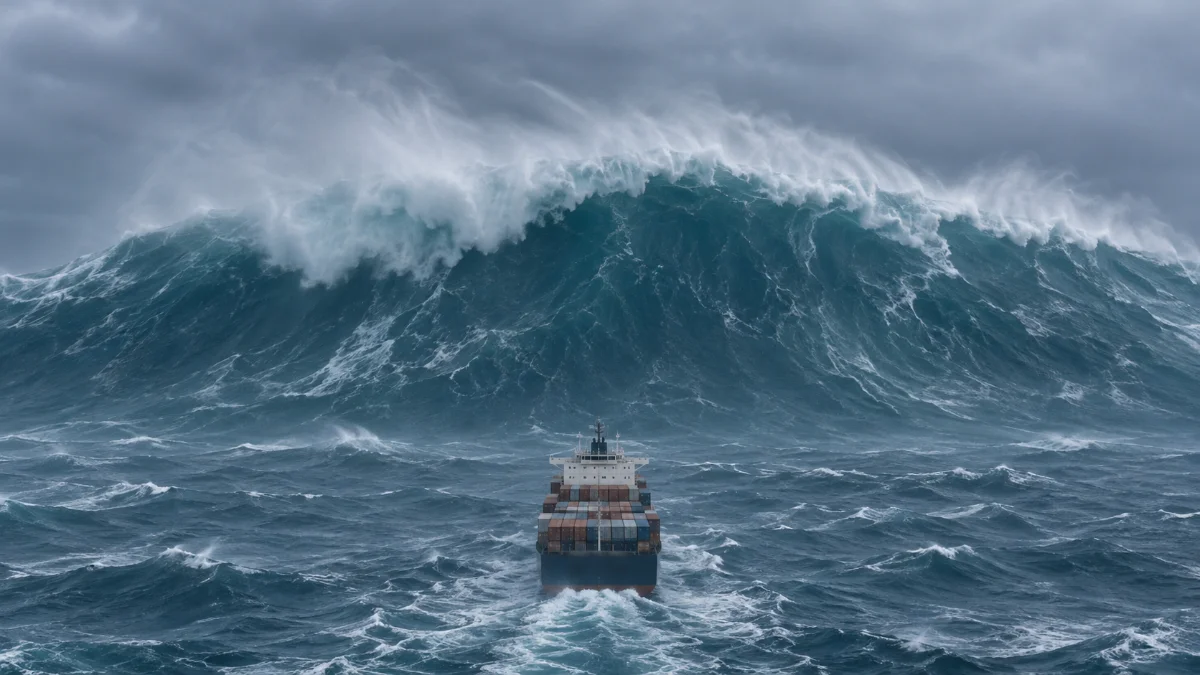
Every wave in the sea has a different height. So to say how big a wave must be to count as unusual, we first need a measure of the normal wave height in that sea.
(1) Significant wave height as the yardstick
Oceanographers take the waves observed over a set period, pick only the highest third, and average them. This value is called the significant wave height. Because it comes out close to the wave height people estimate by eye, it is used in weather forecasts and navigation information as the standard measure of sea state.
(2) A wave more than twice as high
A rogue wave is usually defined as a wave whose wave height, measured from trough to crest, is more than twice the significant wave height. In a sea with a significant wave height of 6 m, a single wave taller than 12 m is a rogue wave. Because the standard is a comparison with the surrounding sea rather than an absolute height, rogue waves can appear even in seas that are not especially rough.
(3) Sailors’ long-standing accounts
In 1826 the French explorer Dumont d’Urville reported seeing waves up to 33 m high in the Indian Ocean and was ridiculed by the scientist François Arago. For a long time afterward, such accounts were often treated as exaggerations by people who had lived through rough seas.
2. How the Draupner Wave Changed Minds
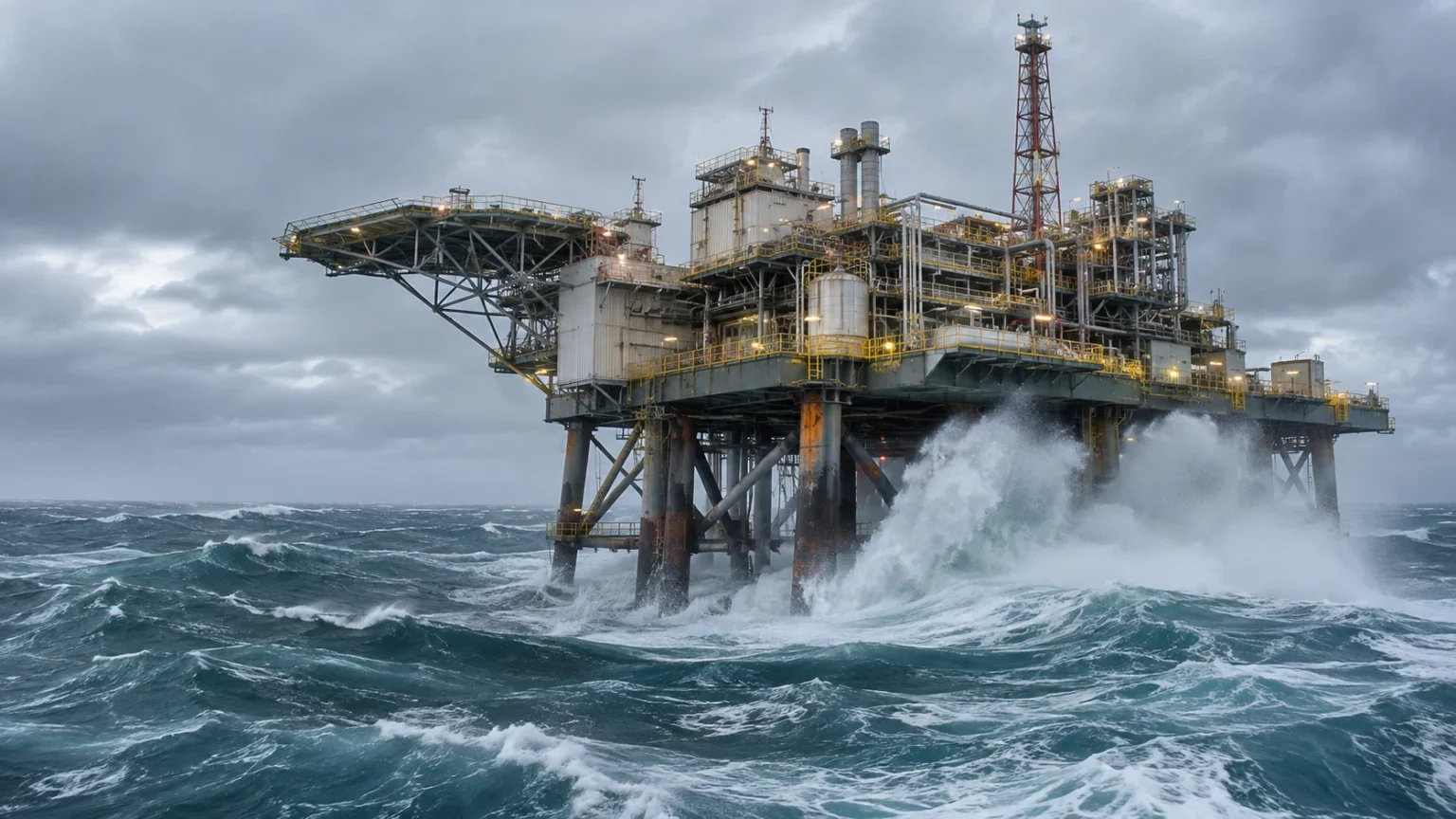
On the afternoon of 1 January 1995, a downward-pointing laser instrument on the Draupner gas platform in the North Sea, about 160 km southwest of the southern tip of Norway, recorded an astonishing value. In a sea with a significant wave height of about 12 m, a single wave 25.6 m high passed the platform. The platform had been designed on the assumption that a once-in-10,000-years wave would be 20 m, so a far larger wave had actually been recorded.
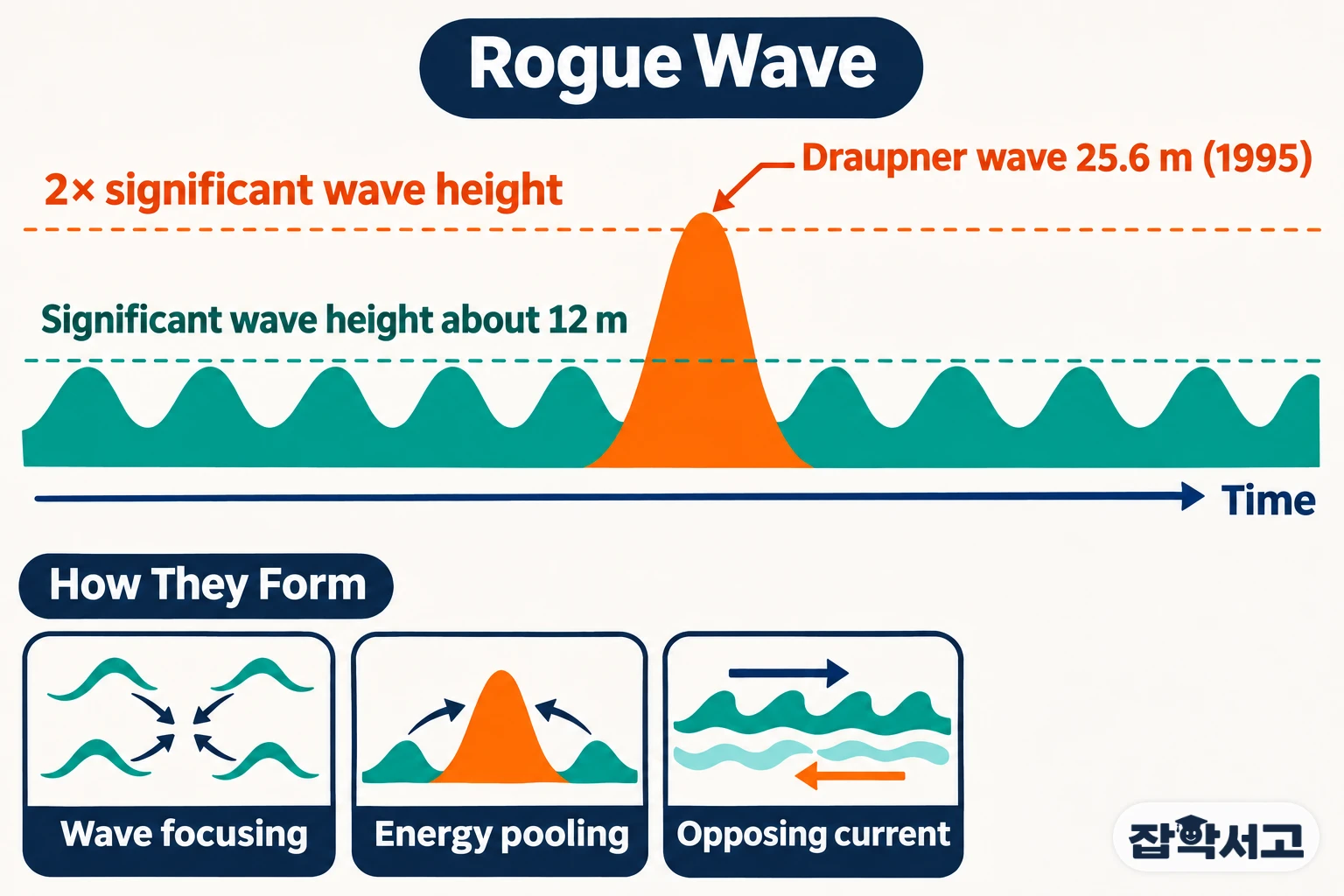
- Significant wave height: The average height of the highest third of the observed waves, used as the standard measure of sea state.
- Wave height: The vertical distance from the lowest trough of a wave to its highest crest.
- Crest height: The height from the still-water sea level to the top of a wave; for the Draupner wave it was about 18.5 m.
- Design wave: The largest wave that an offshore structure is set in advance to withstand.
The Draupner wave is regarded as the first rogue wave confirmed by an instrument, and it clearly showed that rogue waves really do occur in nature. In 2019, researchers from the University of Oxford and the University of Edinburgh in the UK recreated the wave in a test tank by sending two groups of waves to cross at about 120 degrees.
3. How Do Rogue Waves Form?
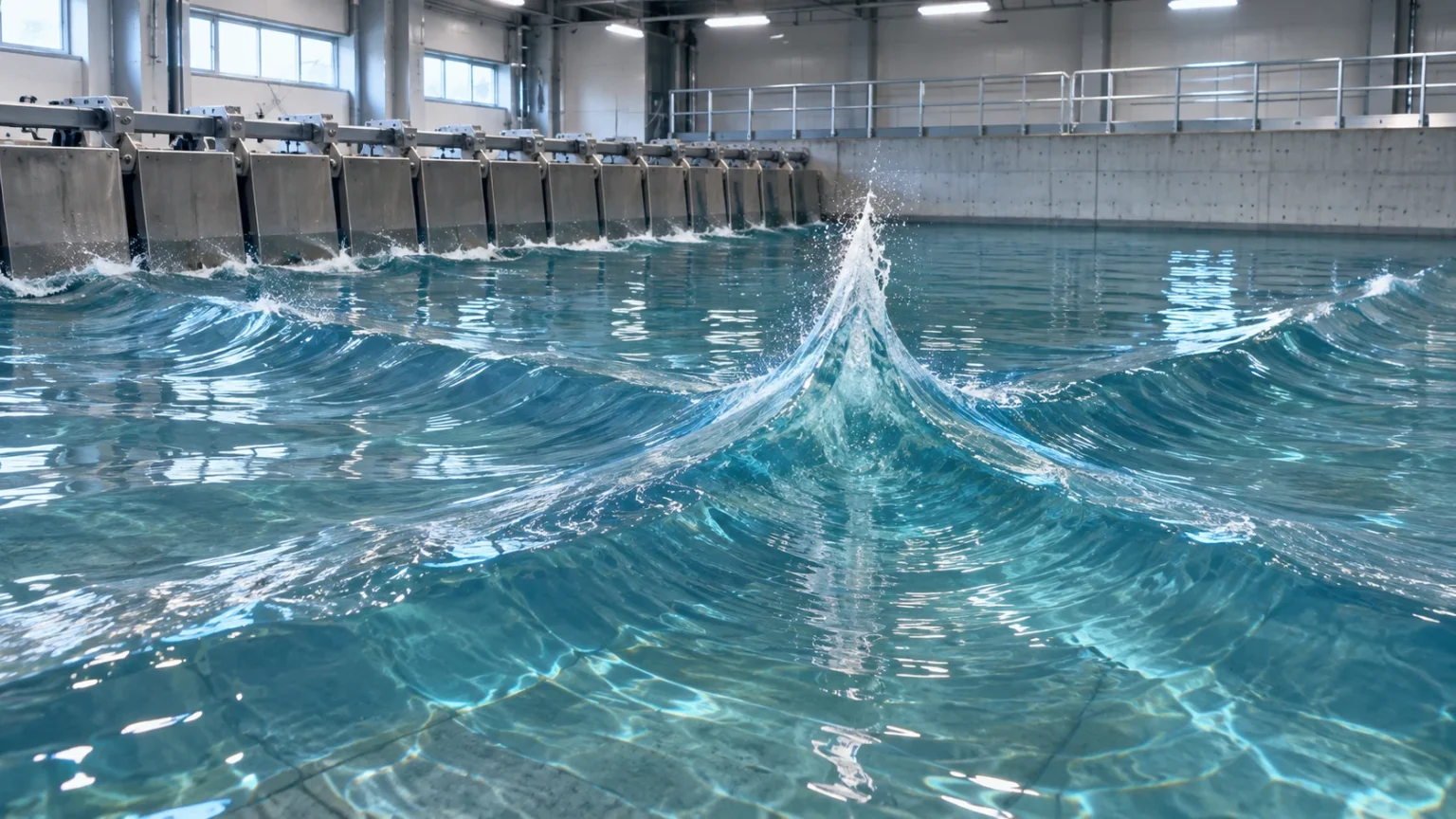
The cause of rogue waves has not yet been settled into a single explanation. However, scientists believe several mechanisms act separately or together.
(1) Focusing, where many waves overlap in one place
The sea contains countless waves with slightly different speeds and directions. Most of the time their crests and troughs are out of step and cancel each other out, but on rare occasions the crests of many waves line up at the same time and place, and their heights add up into one huge wave. The shape of a coastline or the seabed can also gather waves into one spot like a lens.
(2) Nonlinear effects that draw energy from neighboring waves
When waves are steep enough, nonlinear effects appear that simple addition cannot explain. As an evenly spaced group of waves becomes unstable, one wave gathers energy from the waves on either side and keeps growing, a process called modulational instability. In 2011, the Peregrine soliton, which describes this process mathematically, was actually produced in a test tank.
(3) Waves meeting currents and crossing seas
When waves run into a strong current flowing the opposite way, their wavelength shortens and their height grows. Off South Africa, the southwest-flowing Agulhas Current collides with large swells driven by the westerlies, so the area is regarded as a high-risk zone for rogue waves. Seas where two groups of waves from different directions cross are another condition that helps rogue waves grow.
4. Observation, Prediction and Open Questions
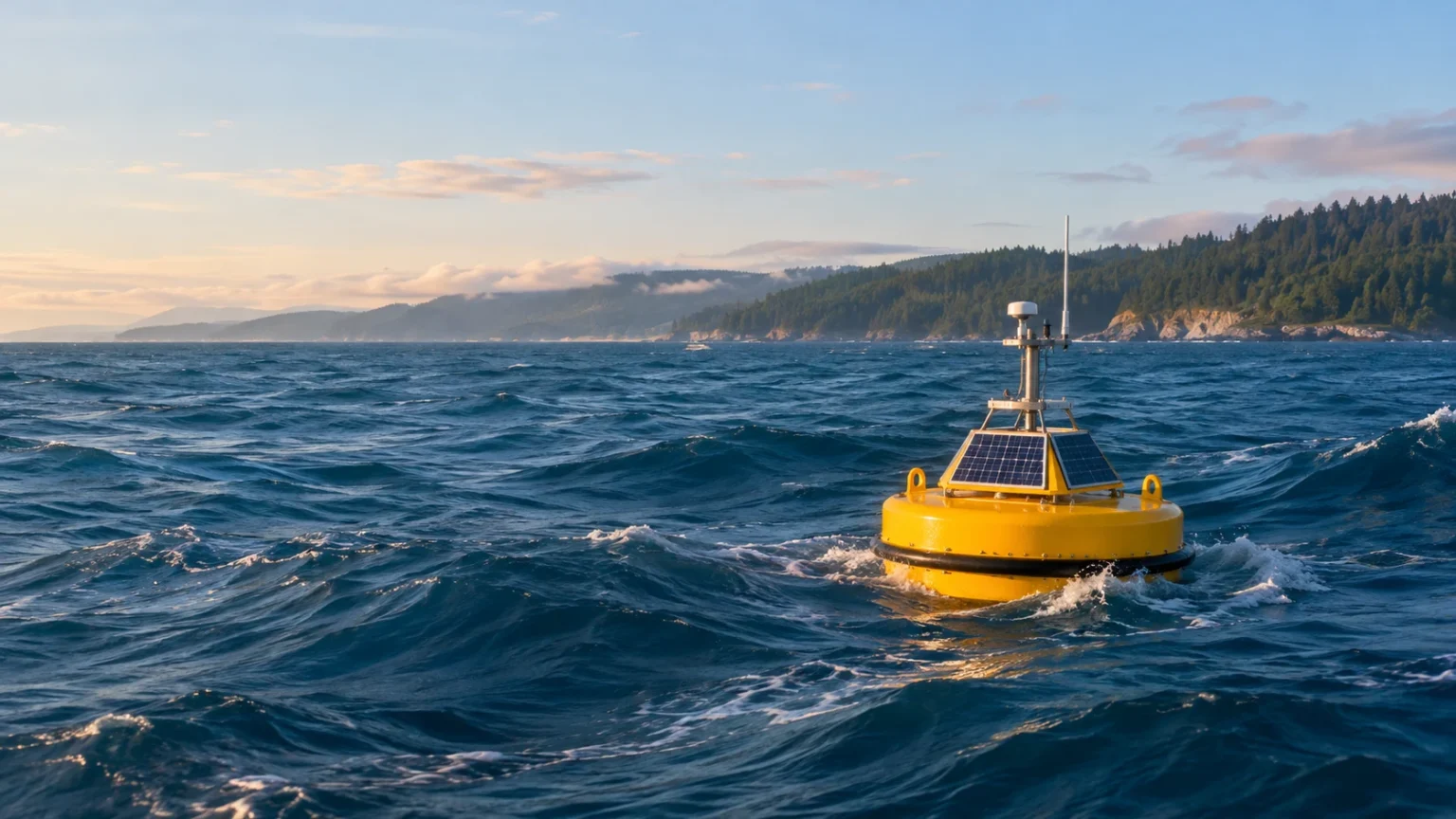
Rogue waves appear alone for a brief moment and then vanish, which makes them hard to catch. Even so, as observation technology improves, it is becoming clear that these waves are not as rare as once thought.
(1) Giant waves found by satellite
The MaxWave study announced by the European Space Agency (ESA) in 2004 used satellite radar images to survey part of the South Atlantic for three weeks and found more than ten waves taller than 25 m. It was a result that estimated the frequency of rogue waves across the open ocean, something the rare records left by ships and platforms could not reveal.
(2) A record-breaking ratio caught by a buoy
In November 2020, an observation buoy off Ucluelet on Vancouver Island, Canada, recorded a single 17.6 m wave among waves about 6 m high. At about 2.9 times the surrounding significant wave height, it was a clear example showing that the essence of a rogue wave lies less in its height itself than in how much it stands out from the waves around it.
(3) Clues for prediction
Recent studies suggest that rogue waves often do not appear entirely without warning but instead pass through a short phase in which the waves briefly fall into an orderly pattern just beforehand. Efforts are continuing both to read the shape of wave groups in real time to give a warning a few minutes ahead, and to design ships and offshore structures for larger waves.
The simple idea that ‘even ordinary waves can become a wall twice their height when they happen to overlap and gather energy’ is the first step toward understanding the rogue wave.