At the movies, when an actor’s expressionless face is followed immediately by a bowl of soup, we feel that the person is ‘hungry.’ When the same face is cut next to a shot of a coffin, we read it as ‘sad,’ and after a shot of a child playing, we feel it as ‘warm.’ The face has not changed at all, yet emotion is created purely by how the shots before and after are connected. This phenomenon is the ‘Kuleshov Effect.’
Put simply, the Kuleshov Effect refers to ‘the phenomenon in which, when the same shot is joined to different shots, the audience creates new meaning and emotion from that connection on their own.’ Emphasized by the Soviet film experimenter Lev Kuleshov in the 1910s–1920s, this principle still explains why editing in film, TV dramas, advertising, and short-form video treats ‘what you connect’ as just as important as ‘what you show.’
In this article, we lay out—in an easy-to-understand way—the concept of the Kuleshov Effect and the story of the experiment, its relationship to montage, the mechanisms by which emotion is created, and its practical uses and cautions on set and in the editing room.
The Kuleshov Effect: How Editing Creates Emotion
What Is the Kuleshov Effect?
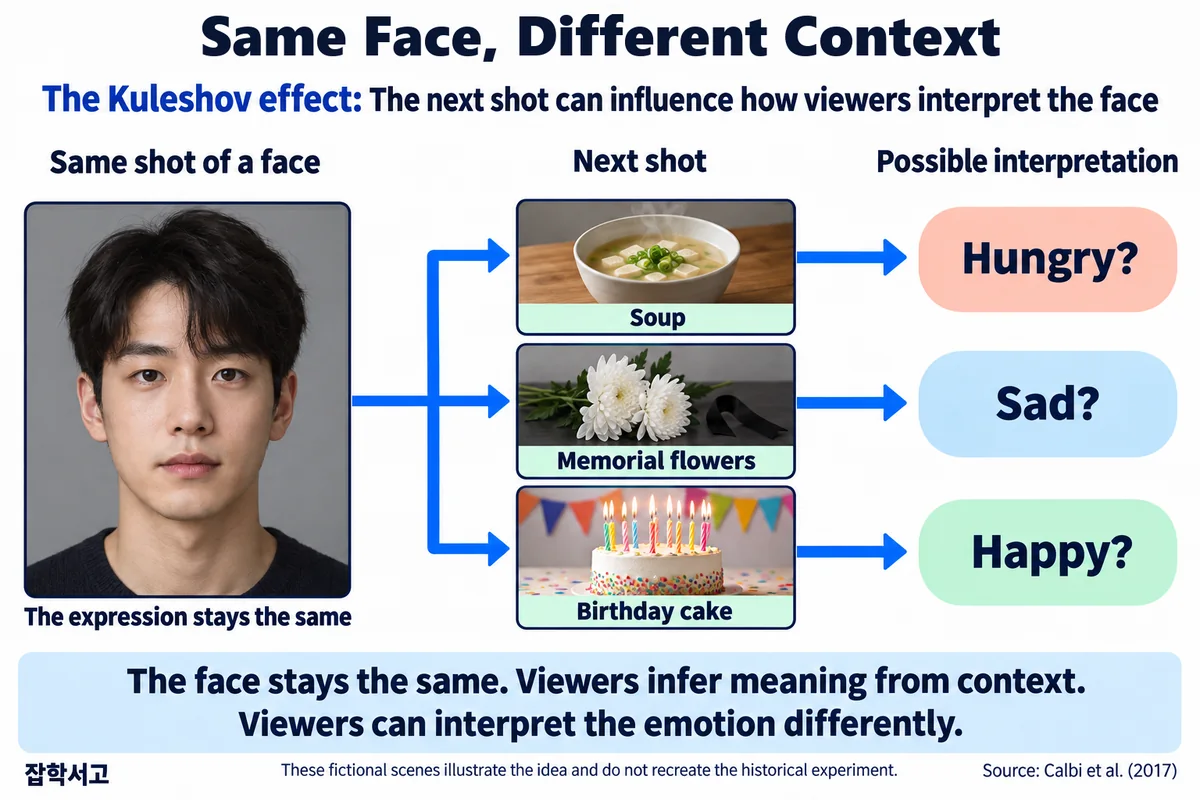
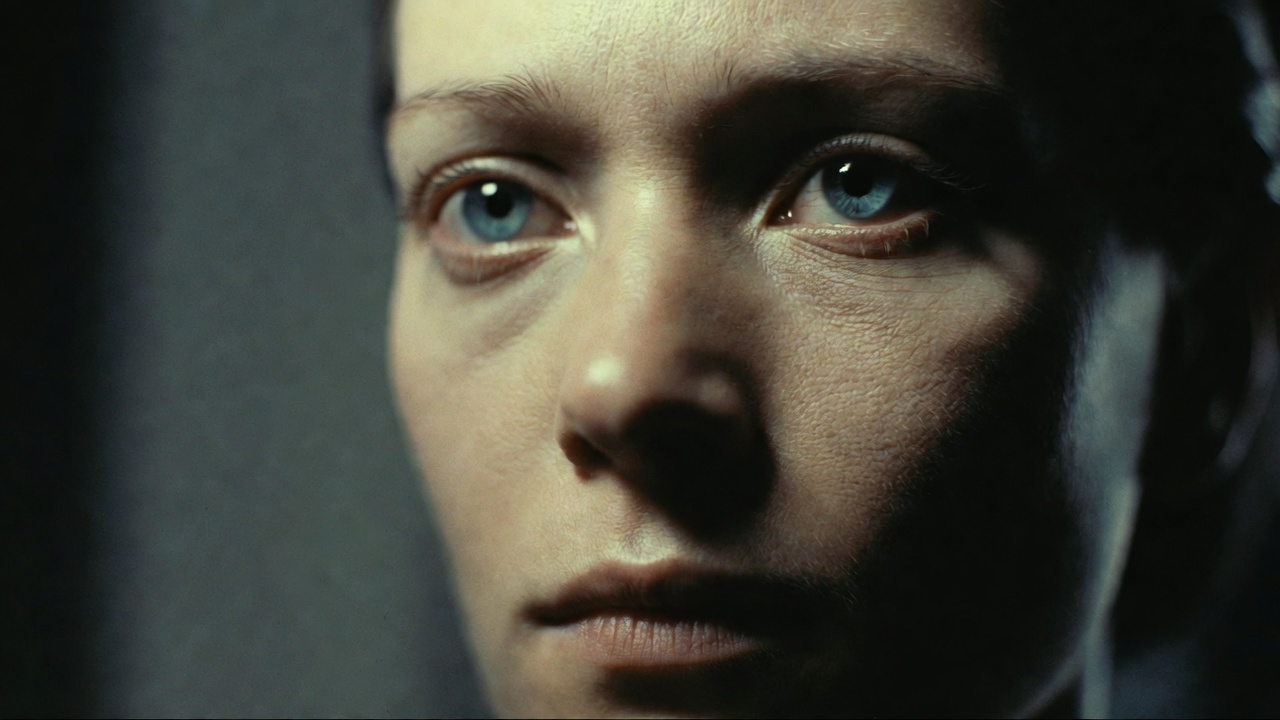
Lev Kuleshov questioned the common belief that emotion is conveyed by an actor’s performance alone. Through an experiment that joined a shot of actor Ivan Mozzhukhin’s expressionless face to a variety of different scenes, he sought to show that ‘meaning arises less from the shot itself than from the relationship between shots.’ Accounts differ slightly on the details of how the experiment was reproduced, but the key conclusion is consistent: audiences fill in the gaps and complete the story.
The key concepts that help in understanding this effect are as follows.
- Shot: A continuous unit of footage from the moment the camera starts rolling until it stops.
- Cut: The point of transition where one shot moves to the next.
- Juxtaposition: An arrangement that places two images side by side so that each interprets the other.
- Spectator Inference: The activity in which viewers fill in, on their own, emotions and causal links that are not on screen.
The important point is that the impression depends less on ‘whether the actor made a sad face’ than on ‘what context the face was placed in.’ Even the same image becomes an entirely different story depending on what comes before and after it.
The Lessons of the Experiment and Its Relationship to Montage

Kuleshov’s experiment is often cited as one of the starting points of Soviet montage theory. Filmmakers such as Sergei Eisenstein developed montage that joins colliding images to give birth to new ideas, while Vsevolod Pudovkin emphasized editing that builds narrative through connection. The Kuleshov Effect shows, in its simplest form, the ‘power of relationships’ that lies beneath all of this.
(1) Meaning Lies in Relationships Rather Than in a Single Shot
A face shot alone determines neither ‘hunger’ nor ‘sadness.’ The shot that follows provides the key to interpretation.
(2) The Audience Is Not a Passive Recipient
Viewers construct cause and emotion by filling in the gap between two shots. Editing is the work of designing that gap.
(3) Acting, Art Direction, Lighting, and Editing Are One Team
A strong Kuleshov Effect does not mean acting is unnecessary. It does, however, tell us that editing can greatly change the range of ways a performance is interpreted.
(4) It Overlaps with Montage, but the Focus Differs
If montage is the broad practice of ‘creating ideas through the collision and combination of images,’ the Kuleshov Effect is closer to the psychological and cognitive core of ‘the meaning of the same shot changing depending on the adjacent shot.’
Four Mechanisms That Create Emotion
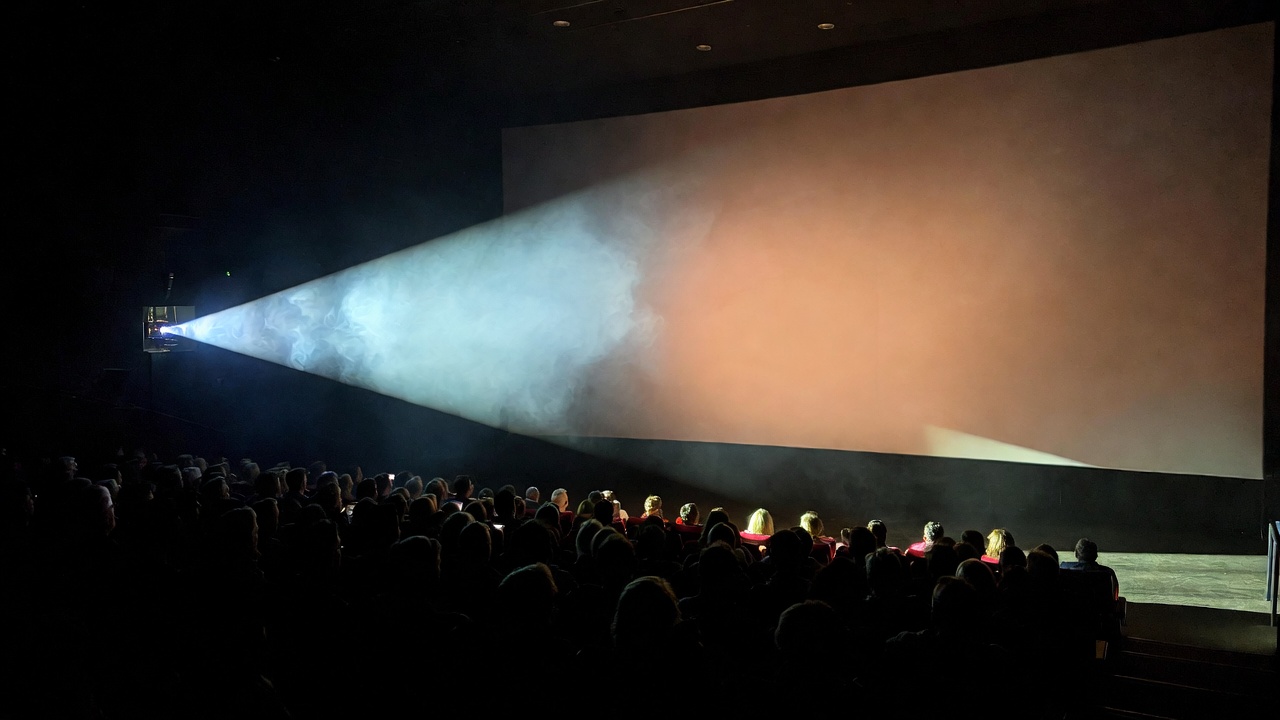
From the perspective of film studies and cognitive psychology, the Kuleshov Effect is tied to our ‘habit of filling in the blanks.’ We try to read a sequence of scenes as a single story, and in the process we attach emotional labels.
- Context Effect: Information before and after pulls on how the current image is interpreted.
- Emotional Attribution: Viewers project the emotions they feel onto the inner life of the character on screen.
- Expectation: Expectations built up just before a cut color the meaning of the next shot in advance.
- Temporal Contiguity: The more directly shots follow one another, the stronger the causal and emotional connection.
As an easy example, if a shot of the protagonist looking out the window is followed by a storm, ‘anxiety’ is easily read, whereas if it is followed by a sunlit alley, ‘hope’ is easily read. In many cases, the design of the connection determines the emotion before any subtle change in the face does. The same principle explains why advertisements place a happy mealtime scene before a product shot.
Practical Uses and Points of Caution

The Kuleshov Effect does not apply only to theatrical films. It works every day in the cut that follows a YouTube thumbnail, in stitched-together reaction clips in short-form video, and in insert editing in the news. Used well, it can create rich emotion even from a small amount of footage; used poorly, it breeds misunderstandings that run contrary to the intended meaning.
[Use 1] Amplifying Emotion with Reaction Shots
If you attach a brief shot of a character’s face after a shot of an event, viewers fill in for themselves what the event means to that character. Even without dialogue, ‘shock,’ ‘relief,’ or ‘suspicion’ can come across.
[Use 2] Shifting Meaning with Inserts and Cutaways
Short insert shots—hands, a clock, a letter, the view outside a window—change the weight of the preceding conversation. Even the same conversation varies in tension depending on ‘what you show when you cut away.’
[Use 3] Guarding Against Misunderstanding and Manipulation
If you change the context drastically, you can plant in viewers intentions or emotions that never actually existed. In documentary, news, and interview editing in particular, ethical standards are needed so as not to distort the original context.
Editing is invisible direction. Choosing what to connect and what to leave out shapes the emotion of a story just as much as choosing what to show.
The Kuleshov Effect shows most vividly that video goes beyond ‘shooting’ to ‘connecting.’ The same face or the same object becomes an entirely different story depending on the neighboring shot. Asking yourself once more before choosing the next scene—that is the first step toward a sophisticated visual language.