When watching animation, you sometimes come across a character that moves unusually naturally, just like a person. Their shoulders sway slightly as they walk, and when they dance, the hem of their skirt follows along as if it were real. Behind this movement, too vivid to have been drawn from imagination alone, there is often an old secret.
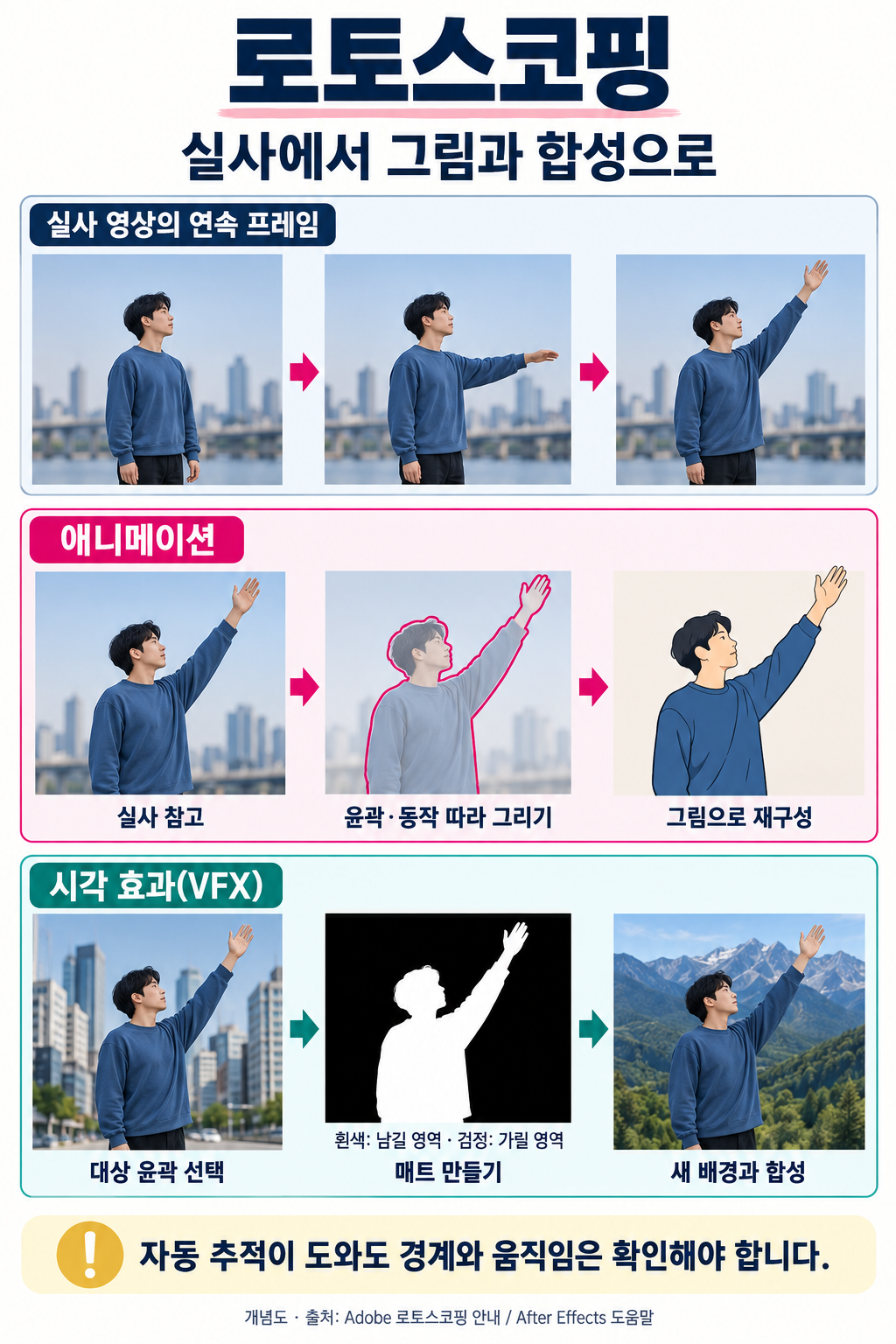
This ‘technique of displaying actually filmed footage on screen one frame at a time and tracing over it to create realistic movement’ is called ‘Rotoscoping’. In today’s visual effects industry, the word is also used for the work of cutting out the outline of a person or object in footage frame by frame to separate it.
In this article, we will look in turn at how rotoscoping was first created, how it works, representative examples in animation and film, and how it has changed in the digital age.
The Technique of Tracing Live Action to Create Movement: Rotoscoping
The Beginning of Movement Traced One Frame at a Time
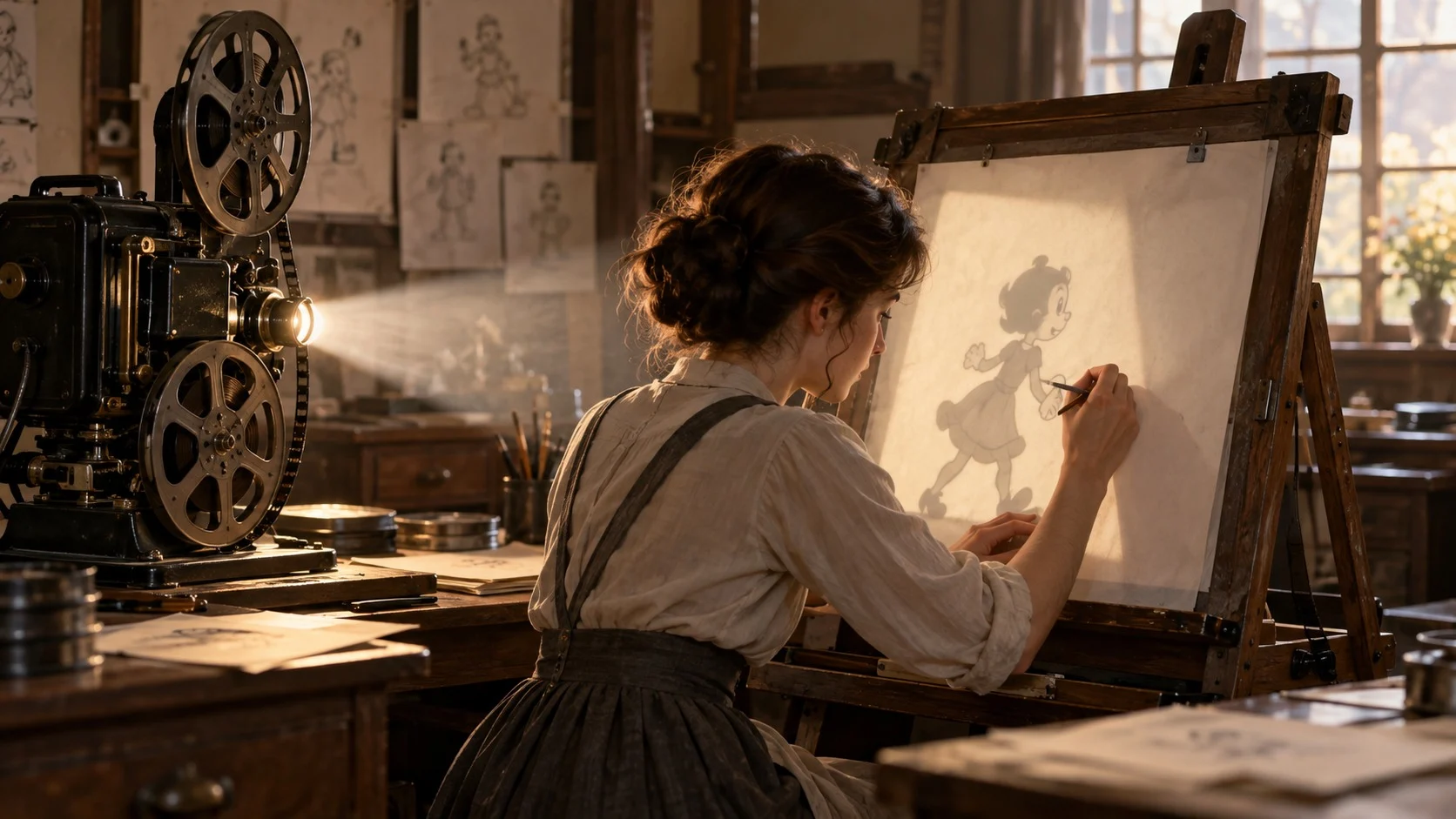
Rotoscoping was devised in 1915 by the American animator Max Fleischer. He obtained a patent for the device, which was granted in October 1917.
(1) The projector and the glass pane
The principle of the device was simple. A projector shone the film one frame at a time, the image landed on a transparent glass pane, and the animator placed paper over it and traced the outlines. When one drawing was finished, the film was advanced one frame and the next scene was drawn.
(2) A brother in a clown suit
Fleischer used this technique in the animated series Out of the Inkwell, which ran from 1918 to 1927. The movements of the main character, who would later come to be called ‘Koko the Clown’, came from footage of his brother Dave Fleischer dressed in a clown suit.
(3) A few years of exclusivity
In the credits of the early works, the method was listed only as the ‘Fleischer Process’, and for several years until the patent expired, it was practically a technique used only by Fleischer Studios.
How Does Rotoscoping Work?
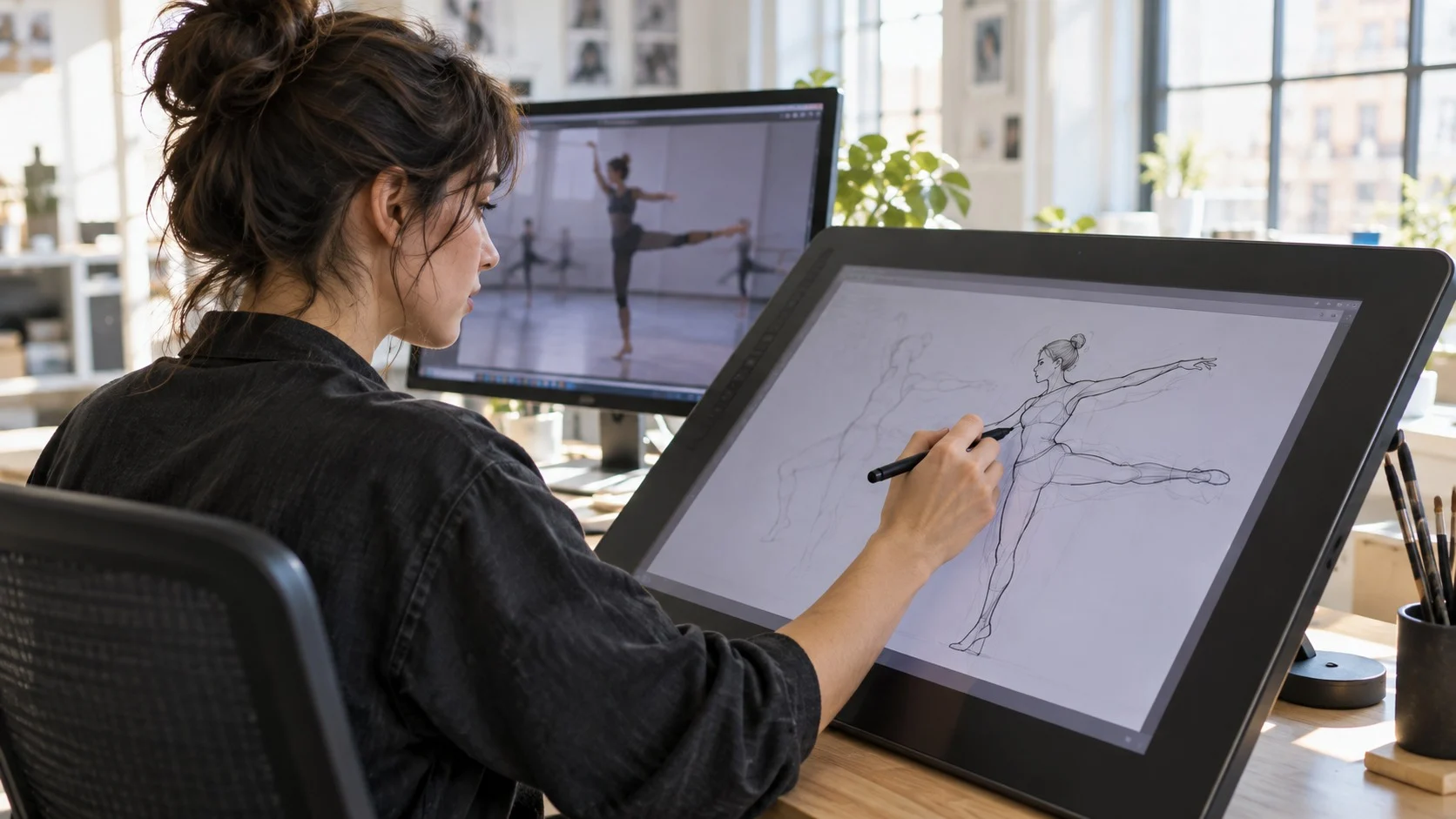
Rotoscoping falls broadly into two branches depending on how it is used.
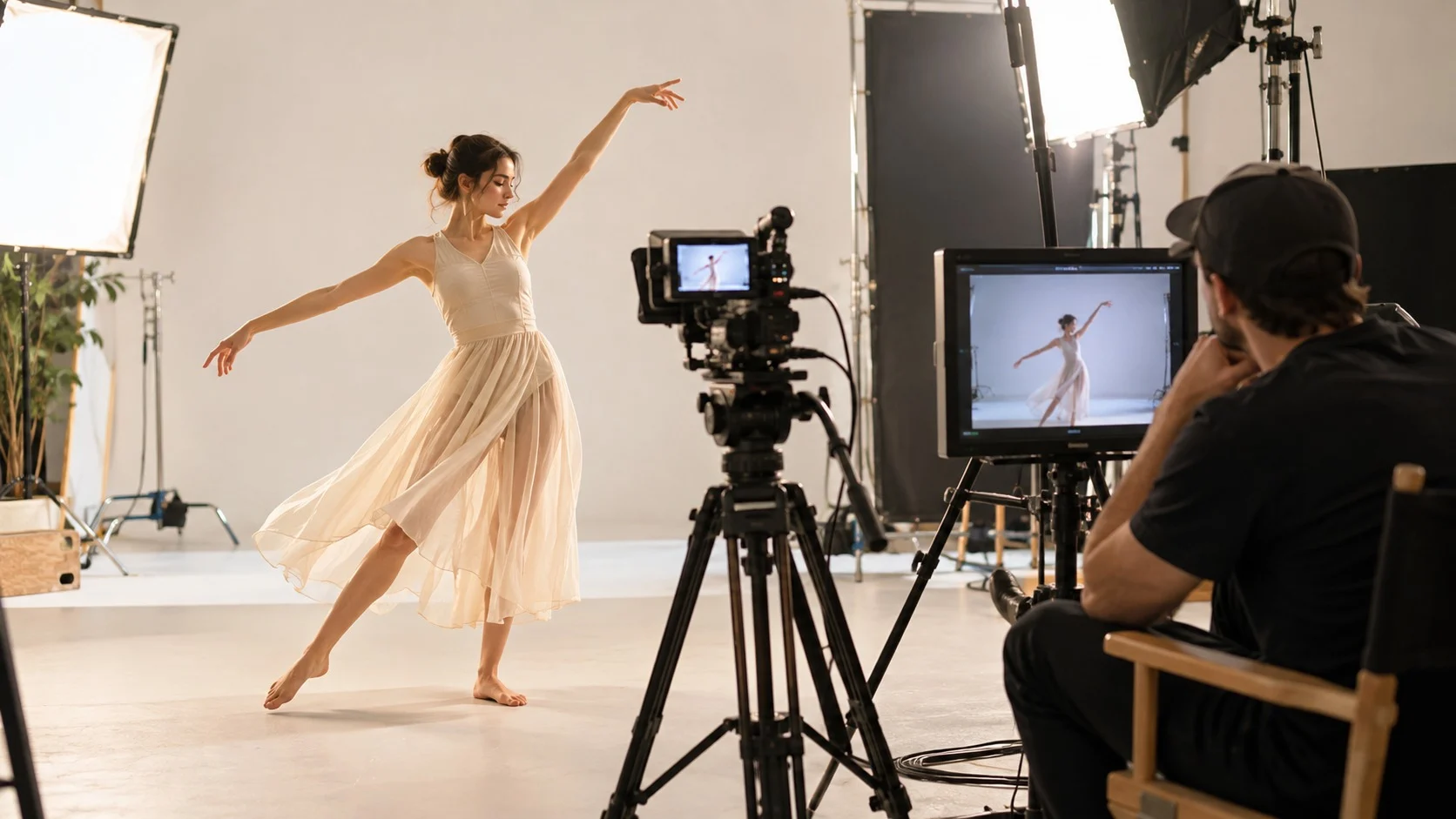
- Animation Rotoscoping: An actor’s performance is filmed, and its movement is then traced and turned into a character’s motion. Rather than copying it exactly, animators often use the timing and poses as a reference and redraw them to fit the character’s proportions.
- VFX Rotoscoping: The outline of a person or object in footage is traced frame by frame to make a cut-out frame called a ‘Matte’. This matte is used to separate the subject and composite it onto a different background, or to apply effects to a specific part only.
It is also more labor-intensive than you might think. Even one second of footage usually consists of around 24 images, so tracing a few minutes’ worth means working on thousands of drawings. It was originally a shortcut meant to save working time, but it was said to take even longer because of the precise tracing involved. Lines often drifted slightly so that the picture appeared to tremble, and animators had to refine them again.
Famous Rotoscoping Scenes on Screen
Rotoscoping has been used across animation, film and music videos alike.
Animated Films
After Fleischer’s patent expired, other studios were also free to use the technique. Disney made extensive use of rotoscoping in Snow White and the Seven Dwarfs (1937) to portray the movements of its human characters realistically. Director Ralph Bakshi drew large-scale scenes based on live-action filming in his 1978 animated The Lord of the Rings.
Film and Music Videos
The lightsabers in the original Star Wars trilogy were made by tracing a line over the sticks the actors swung, frame by frame, then enlarging those lines and adding glow. The 1985 music video for ‘Take On Me’ by the Norwegian band a-ha was hugely popular for scenes that move back and forth between a pencil-sketch-like drawn world and live action.
Rotoscoping in the Digital Age
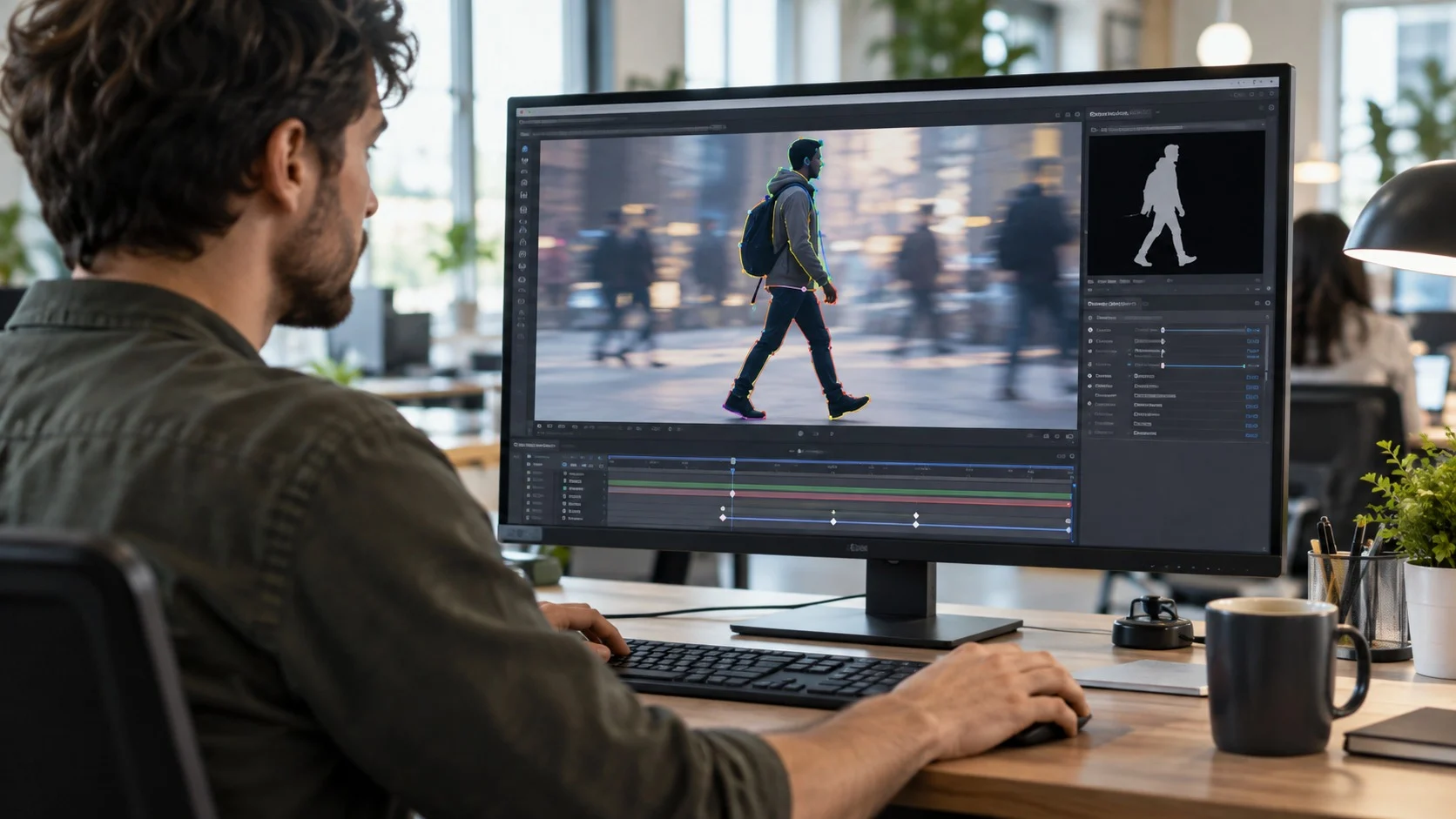
As computers replaced the glass pane and the projector, rotoscoping changed greatly as well.
- Interpolated Rotoscoping: The American animator and computer scientist Bob Sabiston created a program in which you draw only a few frames and the computer fills in between them. Director Richard Linklater used this method to complete Waking Life (2001) and A Scanner Darkly (2006).
- Tracking and Automation: Today, tracking features that follow movement and AI segmentation technology help with outlining. Scenes where chroma key is hard to use, and delicate edges such as hair, still need a human touch.
- Motion Capture: A technology that records the movements of an actor’s body with sensors or cameras and transfers them to a 3D character. In that it moves characters based on real movement, it can be seen as a technology that carries on the idea of rotoscoping.
Rotoscoping is a technique that borrows the movements of real people to breathe life into drawings. Begun on a pane of glass, the method is still in use today in visual effects and digital animation.
Behind the natural movement on screen are hands that built it up one drawing at a time. Recognizing the effort contained in familiar scenes is the first step toward the pleasure of reading moving images more deeply.