When the hero of a film walks along a snow-covered forest path, is that crunching sound really the sound of someone stepping on snow? In many cases, it was made in a recording studio after filming wrapped, by squeezing cornstarch packed in a leather pouch by hand. The craft of having people perform sounds that fit the screen exactly and layering them onto the picture is what we call ‘Foley.’
Put simply, Foley means ‘recording everyday sounds such as footsteps, rustling clothes, and doors opening and closing anew in post-production to match the picture.’ The name comes from Jack Foley, the American sound effects specialist who refined this method, and the people who do this work are called Foley artists.
In this piece we will look in turn at the background from which Foley was born, why it is so necessary, the three categories into which its sounds are divided, and the ingenious props used in the recording studio.

The Film Sound Craft That Brings Unheard Sounds Back to Life
How Did Foley Begin?
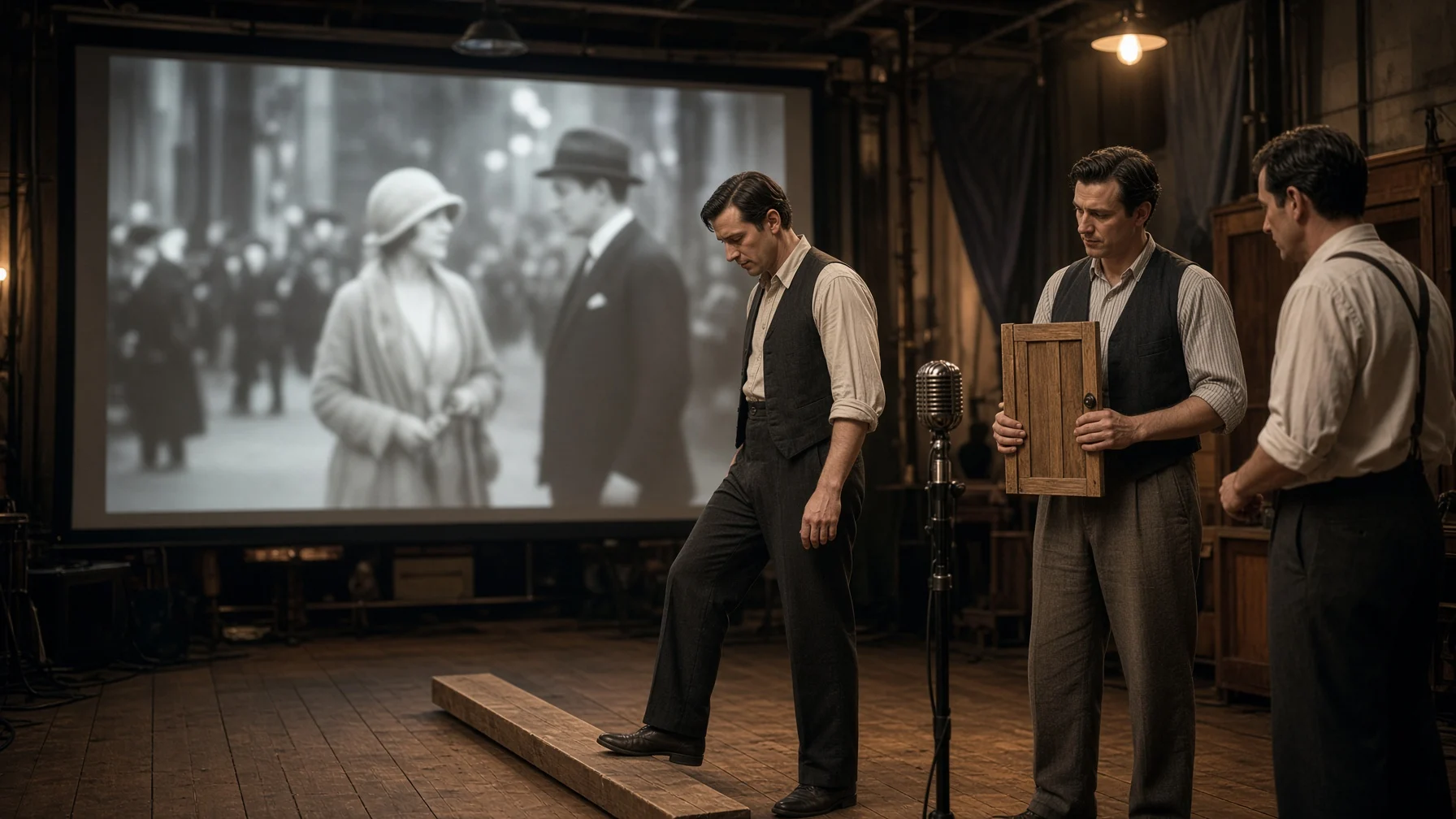
The roots of Foley lie in radio drama of the 1920s. At the time it was hard to play recorded sound effects at exactly the right moment, so sound effects people created sounds such as ringing telephones or closing doors themselves during the broadcast.
(1) The Change Brought by Sound Film
When Warner Bros. released the sound film ‘The Jazz Singer’ in 1927, Universal Studios hurried to prepare films with sound as well. Jack Foley, answering the company’s call for staff with radio experience, joined the sound team and took on the job of adding sound to ‘Show Boat (1929),’ which had been made as a silent musical.
(2) Performing Sound While Watching the Screen
Microphones of that era could not properly capture anything other than the actors’ lines. So Foley and his colleagues projected the film on a screen, made the sounds themselves in time with the actors’ steps and gestures, and recorded them onto a single track. Because every single footstep and every door closing had to match the actors’ movements exactly, timing mattered above all. Jack Foley is said to have calculated that over his lifetime he walked more than 8,000 km while making sounds.
Why Is the Sound From the Set Alone Not Enough?
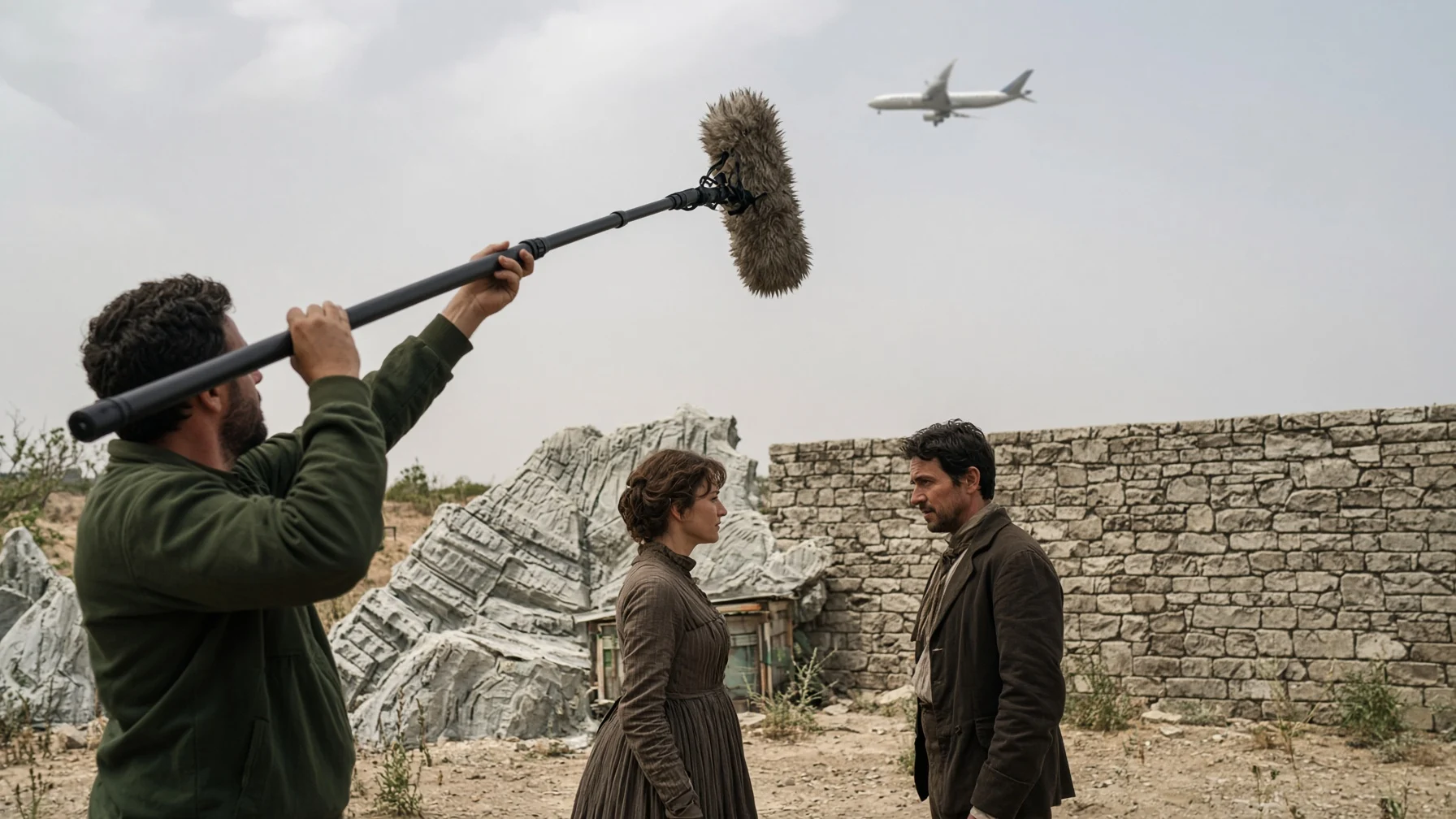
Filming equipment has improved enormously today, but film sound is still completed by mixing production recordings and Foley together. That is because there are gaps that production sound alone cannot fill.
- Dialogue Recording: On-set microphones are tuned to the actors’ voices, so footsteps and clothing sounds are captured only faintly, and noise from passing airplanes or cars can creep in.
- Prop: Many props and sets are made of light materials that only look real on the outside, so they sound different from the real objects, and in action scenes the punches do not actually land, so there is no impact sound.
- International Dubbing: Dubbing into another language means removing the original dialogue track, and the surrounding sounds recorded by the same microphone disappear along with it.
When sounds are recorded separately, editors can adjust the texture and volume of each one as they wish. Even the same footstep, given a different reverberation, can let the audience sense whether it is a wide hall or a small room. Today sounds are recorded on separate tracks and then matched precisely to the picture, making far more delicate work possible than in Jack Foley’s day.
Three Categories of Foley Sound
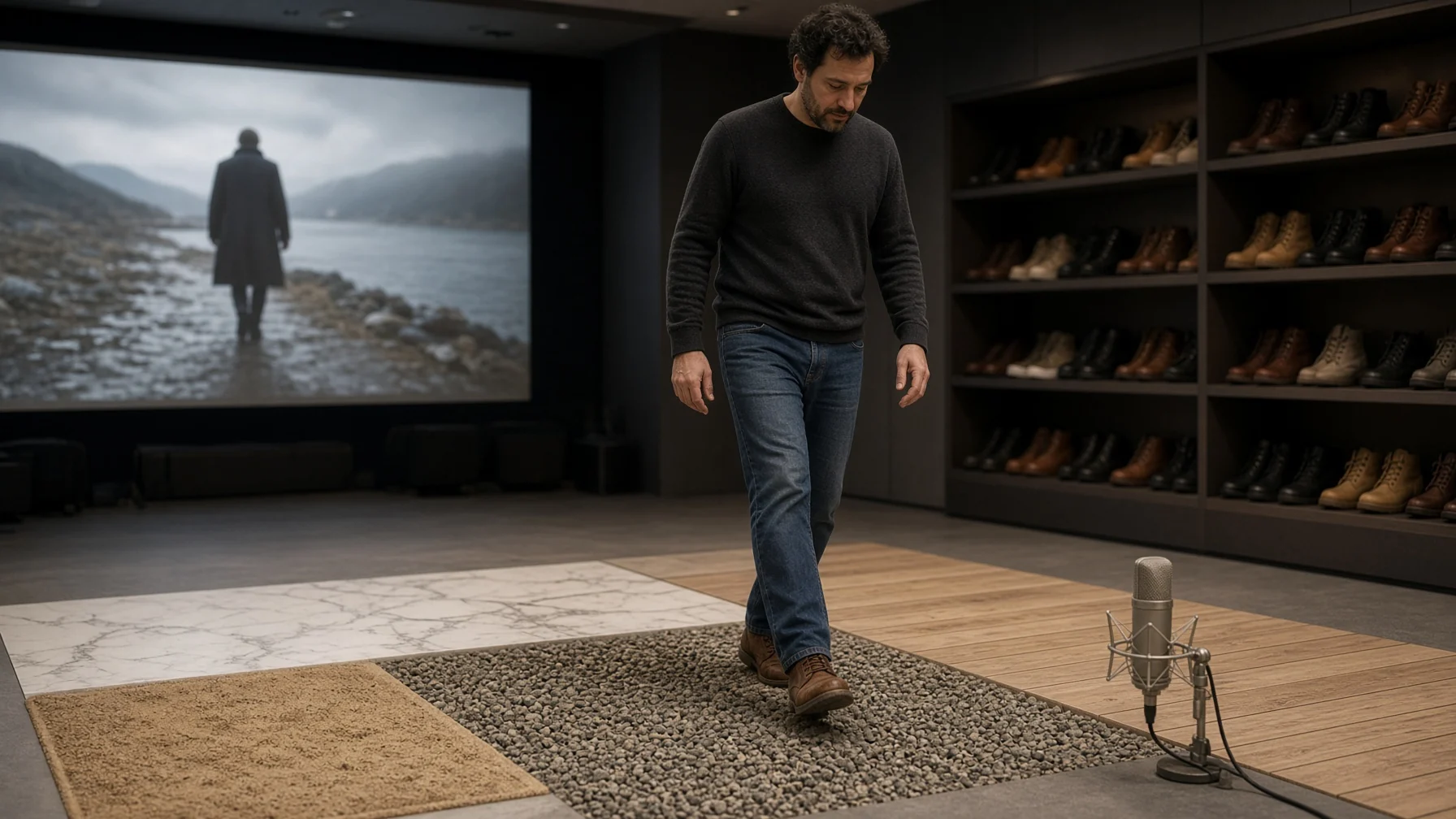
Foley recording is usually carried out in three categories. Since even a single scene contains countless small sounds, it is efficient to divide them by category and record them step by step.
Footsteps: Feet
This is the work of making footsteps in time with the actors’ walking. The studio has many kinds of shoes and a Foley Pit with a variety of floor surfaces from marble to gravel, so the right sound can be chosen for the ground and shoes in the scene. The person who mainly handles this work is sometimes called a ‘Foley Walker.’
Body Movement Sounds: Moves
This captures subtle movements, like the rustle of clothing when two people brush past each other. Two pieces of the same fabric are rubbed together close to the microphone at the pace at which the actors’ legs cross.
Particular Sounds: Specifics
These are the sounds of objects each scene needs, such as a cup being set down or a bunch of keys jingling. For doorbells or door slams, sound effects libraries collected in advance are often used.
Ingenious Sound Materials in the Studio
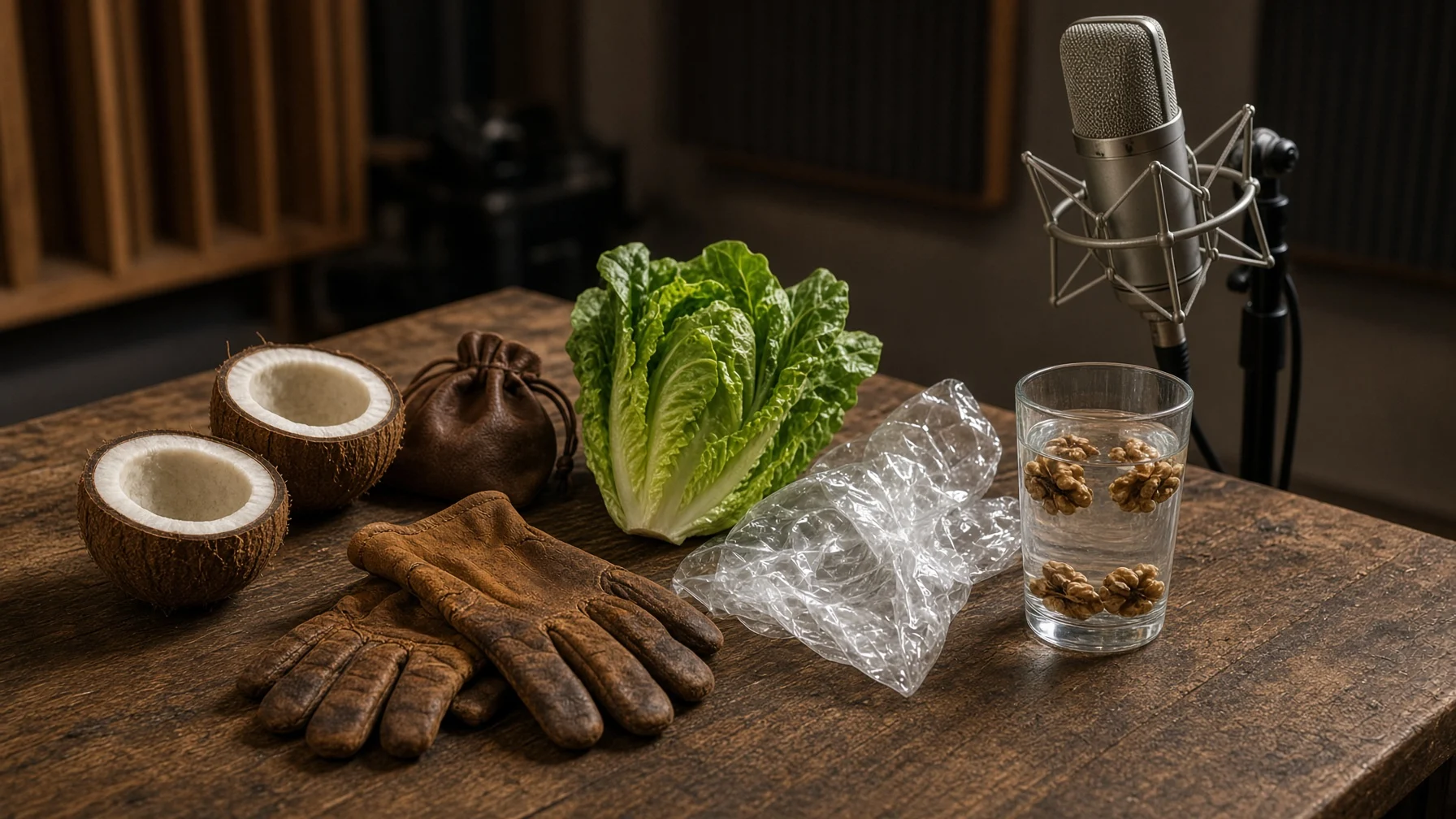
A Foley artist’s true skill shows in finding convincing sounds with completely different objects. Because the audience listens while watching the screen, as long as a sound is convincing, they believe it is real no matter what the actual material is.
- Snow Crunch: Put cornstarch in a leather pouch and press it by hand, and it sounds like walking on snow.
- Wing Flaps: Flap a pair of gloves, and it becomes the sound of a bird taking off.
- Bone Crack: Twist and snap frozen romaine lettuce, and it makes a chilling sound.
- Hoofbeats: Made by knocking together coconut shells cut in half.
- Crackling Fire: Slowly crumple cellophane in your hand, and it makes the sound of a crackling, blazing fire.
- Ice Cubes: Instead of ice in a glass of water, walnuts, which do not melt, are used to make the same sound over and over.
Coconut hoofbeats are so famous that in the film ‘Monty Python and the Holy Grail,’ knights traveling with servants who bang coconuts instead of riding horses were played for laughs.
It is said that the best Foley is Foley the audience never notices. A film without footsteps and the rustle of clothing feels strangely quiet and awkward, and these small sounds play a bigger part than we think in making us accept a scene as real.
The next time you watch a film, try closing your eyes for a moment and listening closely. Behind each of those sounds are the hands of people who watched the screen as they stepped on floors and rubbed fabric together.
Listening to sounds made out of sight is the first step toward enjoying films more deeply.