Today's dining tables are more varied and delicious than ever. Crispy fried chicken, golden-brown grilled pork belly, and bread that is crisp outside and moist inside. But behind these delicious foods we casually enjoy every day lies an invisible danger. These are glycotoxins (advanced glycation end products, AGEs: Advanced Glycation End-products).
Glycotoxins go beyond the simple concept of nutrients, acting as a kind of 'biological waste' that accumulates in the body and damages cells and tissues. This article takes a detailed look at what glycotoxins are, how they affect our bodies, and practical ways to reduce them in everyday life.
What Are Glycotoxins (AGEs)?
The Dangerous Bond Between Overheated Blood Sugar and Protein
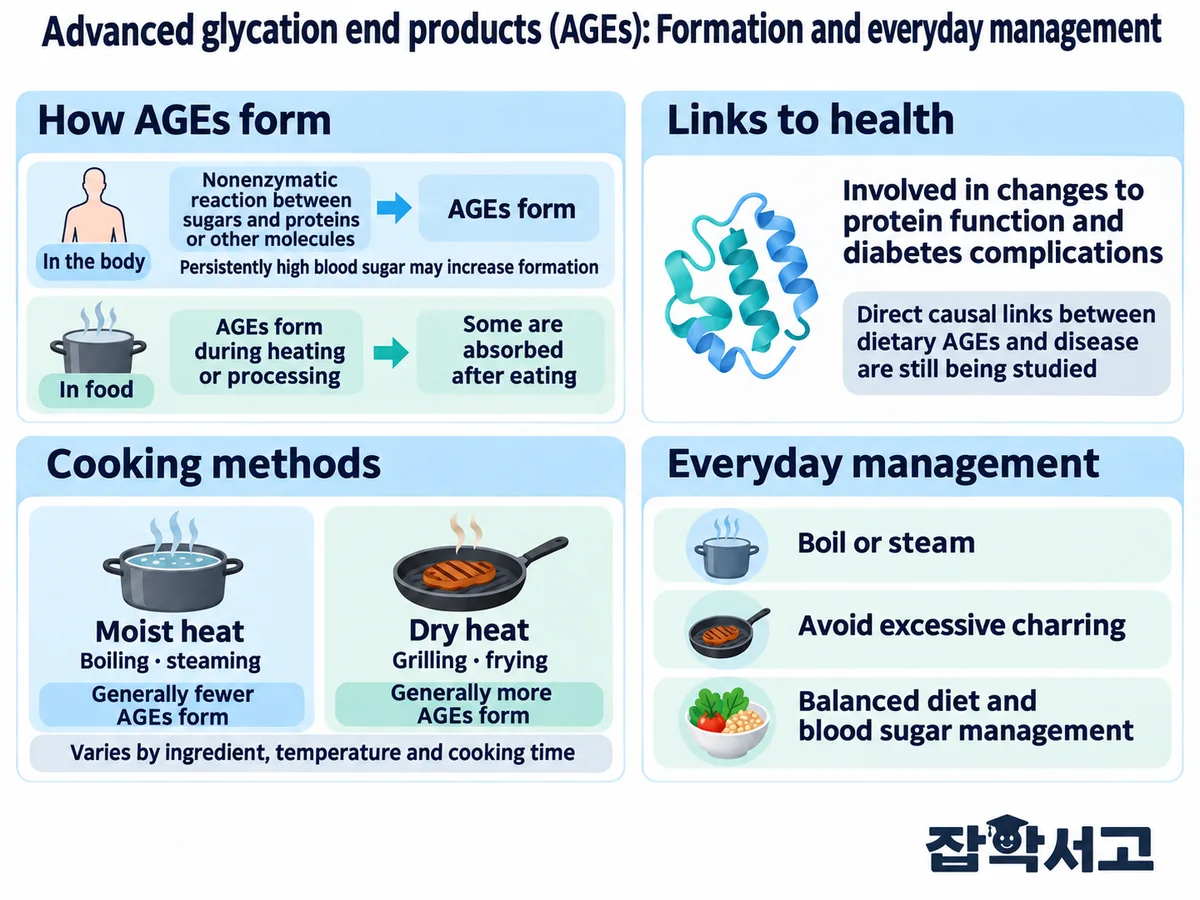
Simply put, glycotoxins are substances altered when proteins or fats combine with sugar (Sugar).
Protein is a major component of our bodies. When there is excessive sugar in the blood (elevated blood sugar levels), this sugar begins to bind to protein molecules. Initially, this binding is reversible (a state that can return to its original condition), but exposure to high heat or prolonged high blood sugar transforms it into advanced glycation end products (AGEs) with diverse structures.
An Easy-to-Understand Example: What Happens When Bread Is Baked
When flour dough (protein/carbohydrates) is baked in an oven, its surface turns golden and crisp and gives off a sweet aroma. In chemical terminology, 'the Maillard Reaction'is the name for this process.
The problem is that this reaction does not occur only outside food; when we eat food cooked at high temperatures, it also occurs in the same way in the cells and blood vessels inside our bodies. The protein tissues in our bodies become stiff, just like the browned, burnt surface of bread.
The Deadly Effects of Glycotoxins on the Human Body

Once glycotoxins form or enter the body, they are not easily eliminated, and they attach to various parts of blood vessels and organs, causing inflammation. Their main harmful effects are as follows.
① Reduced Blood Vessel Elasticity and Cardiovascular Disease
Our blood vessels are made of a protein called collagen, allowing them to expand and contract freely. However, when glycotoxins bind to collagen, the blood vessels become stiff. This directly causes high blood pressure, atherosclerosis, and heart attacks.
② Skin Aging and Wrinkle Formation
When collagen and elastin, which make up at least 70% of the skin's dermis, bind to glycotoxins, they lose their elasticity and are destroyed. As a result, skin fatigue increases sharply, wrinkles deepen, and skin tone becomes dull.
③ Reduced Pancreatic Function and Worsening Diabetes Complications
Glycotoxins attack the pancreatic β-cells that secrete insulin, causing dysfunction. In people with diabetes, high levels of glycotoxins in the body sharply increase the incidence of complications such as reduced kidney function, diabetic retinopathy, and neuropathy.
④ Brain Cell Damage and Increased Dementia Risk
The accumulation of glycotoxins in brain tissue may contribute to changes in neural function and inflammatory responses. This has been reported to promote the accumulation of amyloid beta protein, which causes Alzheimer's dementia.
How Are Glycotoxins Formed and Introduced into the Body?

There are two main pathways through which glycotoxins increase in the body.
- Endogenous glycotoxins: These form within the body when blood sugar levels remain high. Diabetes and rapid rises in blood sugar (blood sugar spikes) are the main causes.
- Exogenous glycotoxins: These enter the body from outside through the consumption of food cooked at high temperatures. About 10% of the amount consumed is absorbed into the body unchanged and accumulates.
In particular, the differences in glycotoxin content depending on the cooking method are very large and deserve attention.
- Dry-heat cooking (grilling over an open flame, deep-frying, oven roasting): The higher the temperature at which food is cooked without water, the more dramatically glycotoxin levels increase. (Examples: breaded pork cutlets, French fries, barbecue)
- Moist-heat cooking (boiling, steaming, cooking in broth): Cooking with water at around 100°C minimizes glycotoxin formation. (Examples: suyuk, samgyetang, steamed dishes)
4 Practical Lifestyle Guidelines for Reducing Glycotoxins

To escape the dangers of glycotoxins, two strategies are needed: 'inhibiting formation' and 'promoting elimination.'
[4 Steps to Combat Glycotoxins]
- Change cooking methods (deep-frying and grilling → boiling and steaming)
- Use acidic ingredients (add vinegar or lemon juice)
- Prevent blood sugar spikes (eating order: vegetables → protein → carbohydrates)
- Consume antioxidant nutrients and anti-glycation compounds
1) Switch to 'Moist-Heat Cooking'
Develop the habit of eating boiled meat instead of grilled meat.
- The difference between grilled and boiled chicken breast: Even with the same ingredient, glycotoxin levels are several times higher or more when it is grilled over an open flame or cooked in an oven.
- Even when using an air fryer, avoid cooking for long periods at excessively high temperatures (180°C or higher).
2) Use Vinegar or Lemon Juice When Cooking
Adding acidic ingredients (vinegar, lemon juice, highly acidic fruit) when marinating meat can reduce glycotoxin formation by at least 50%. This is because an acidic environment inhibits the Maillard reaction.
3) Control Blood Sugar Spikes by Changing Your Eating Order
To prevent glycotoxin formation inside the body, you must prevent blood sugar from rising rapidly.
Eating in the order of dietary fiber (vegetables) → protein (meat, fish, tofu) → carbohydrates (rice, noodles) slows the rate of blood sugar absorption and can effectively inhibit endogenous glycotoxin formation.
4) Consume Anti-Glycation and Antioxidant Nutrients
It is advisable to regularly consume nutrients that help break down or inhibit glycotoxins that have already formed.
- Vitamins B1 and B6: Help interrupt the glycation reaction process.
- Polyphenols (such as green tea catechins and quercetin) and vitamin C: Reduce oxidative stress in the body and prevent glycotoxin binding.
Small Changes Starting at Tonight's Dinner Table
Glycotoxins do not make the body ill overnight. But glycotoxins that accumulate daily over years and decades eventually stiffen blood vessels and cause chronic inflammation and various diseases.
We cannot completely give up delicious food. But even small changes in behavior, such as "eating boiled dishes instead of grilled dishes 3 times a week," "using lemon juice when eating meat," and "developing the habit of eating vegetables first," can dramatically lower glycotoxin levels in the body.
Why not start a glycotoxin-reducing diet today to clear out your body and make your cells healthy?