Every day, we live amid countless advertisements and marketing campaigns. Within this flood, there are figures with the power to instantly capture our attention and move our hearts: characters. Beyond simply being cute drawings, characters shape a brand's identity, leave a lasting impression on consumers, and sometimes create value that goes beyond the product itself.
This article takes an in-depth look at the importance of character design as a field of design, its creation process, and the key elements of a successful character through the original approach of vegetable characters.
Characters: Value Beyond a Simple Drawing
A character is a figure that gives personality and life to a human form, an animal, a plant, or even an inanimate object. From a design perspective, however, a character is a 'communication tool' that goes beyond visual form. It serves as a bridge that allows consumers to experience the messages, values, and emotions a brand wishes to convey in an intuitive and approachable way.
In modern marketing in particular, characters function as a brand's 'persona (Persona).' In other words, consumers come to perceive a brand as a being with a personality through its character, which leads to greater affinity for and trust in the brand. For example, we remember a company's cute mascot longer and feel more familiar with it than with the company's logo. This is because of the powerful 'storytelling' ability characters possess.
A Step-by-Step Approach to Character Design
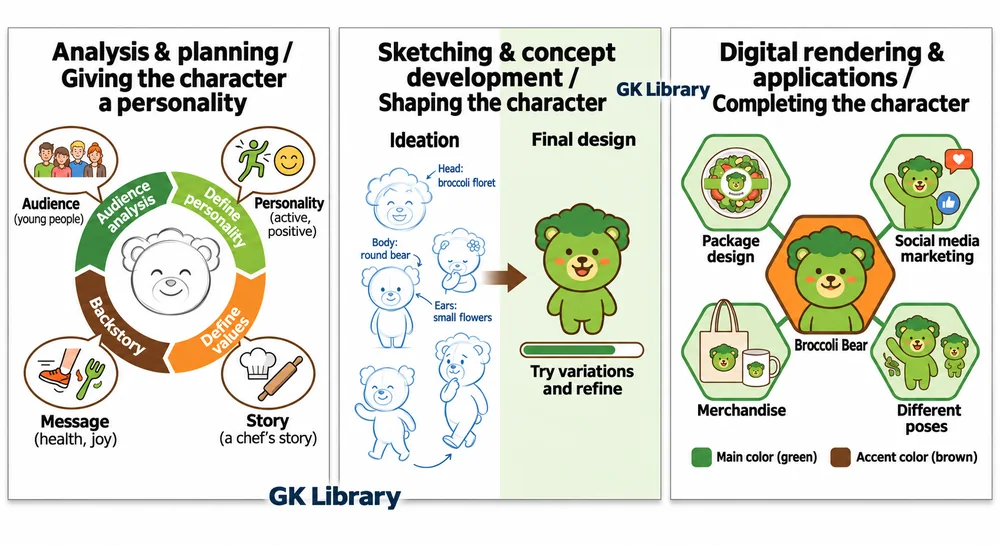
Drawing skills alone are not enough to design a successful character. Systematic analysis and strategic planning are necessary. We will examine this process step by step through the engaging theme of 'vegetable characters.'
Stage 1: Analysis and Planning (Concept & Strategy) — Creating the Character's 'Soul'

Before starting the design, the first task is to clarify 'who' the character is for and 'what' message it should convey. This is the stage of establishing the character's personality, traits, and backstory, and can be described as the process of creating the character's 'soul.'
Example: 'Broccoli Bear,' a Character for a Salad Brand That Promotes a Healthy Lifestyle
- Goal: To connect in an approachable way with young people who want to look after their health amid their busy daily lives, and encourage them to see salads as 'delicious and enjoyable healthy meals.'
- Personality: Energetic and positive, with a love of cooking and a fondness for sharing health information. ('Broccoli Bear,' inspired by the shape of broccoli flowers)
- Story: A 'chef' bear who lives in 'Salad Forest,' harvests fresh vegetables every day, and makes salads using his own secret recipe.
These specific details serve as a compass, guiding not only the character's appearance but also a consistent voice when creating marketing content later on.
Stage 2: Idea Sketching and Concept Development (Sketch & Concept Art) — Giving the Form Definition
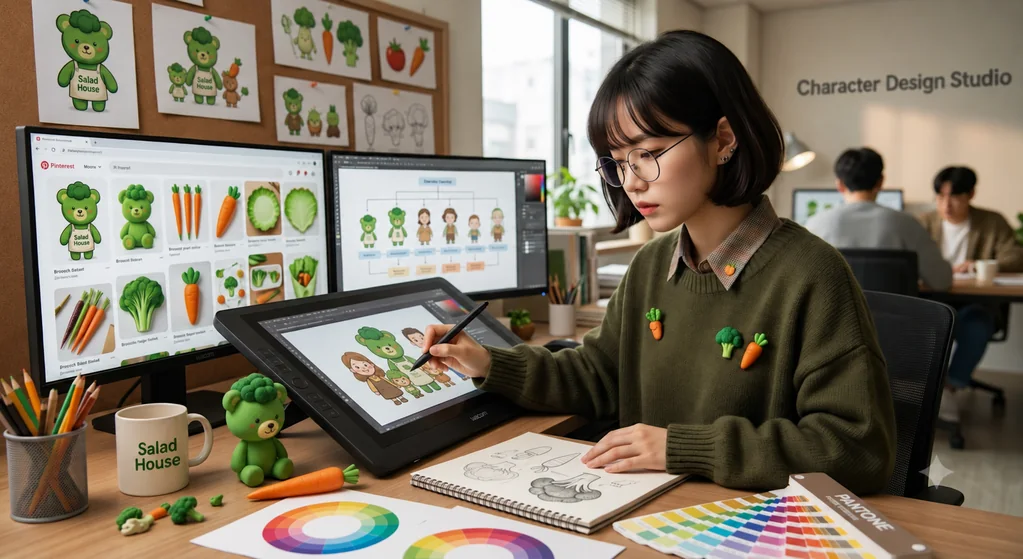
This is the stage of exploring various visual possibilities based on the concept established during planning. Throughout this process, the character's basic form, proportions, expressions, and movements are freely explored to find the best concept.
What matters at this stage is 'originality' and 'readability.' The character must stand out among countless other characters while also allowing viewers to understand intuitively what kind of character it is.
Through these sketches, we establish Broccoli Bear's core design elements. For example, we decide how to represent the 'flower' portion of the broccoli as the bear's 'ears' or 'hair,' and where on the torso to incorporate the 'stem' portion.
Stage 3: Digital Coloring and Detailed Design (Digital Rendering & Detailing) — Putting on Its 'Clothes'
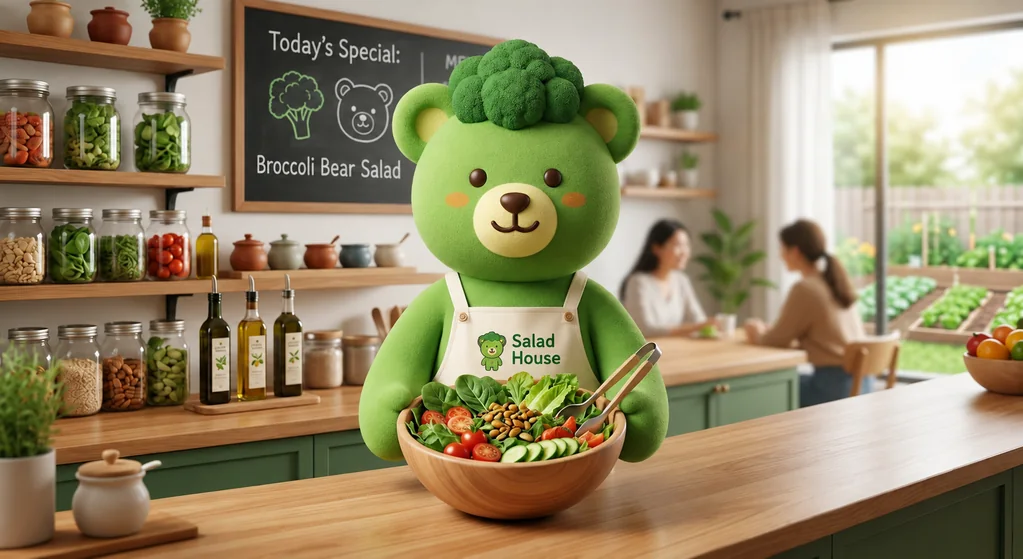
Based on the concept finalized through the sketching stage, digital tools are used to create a polished image. This is the stage of bringing the character to life by adding color, texture, light, and shade.
Choosing the character's colors is very important at this stage. For broccoli, green is the key color, and the impressions of 'freshness' and 'health' it conveys should be maximized. It is also common practice to specify precise color codes so that the character maintains consistent quality across various media, such as websites, SNS, printed materials, and merchandise, and to create it in a vector format that accommodates different resolutions.
Stage 4: Application and Guideline Development (Application & Style Guide) — The Character's 'Life'
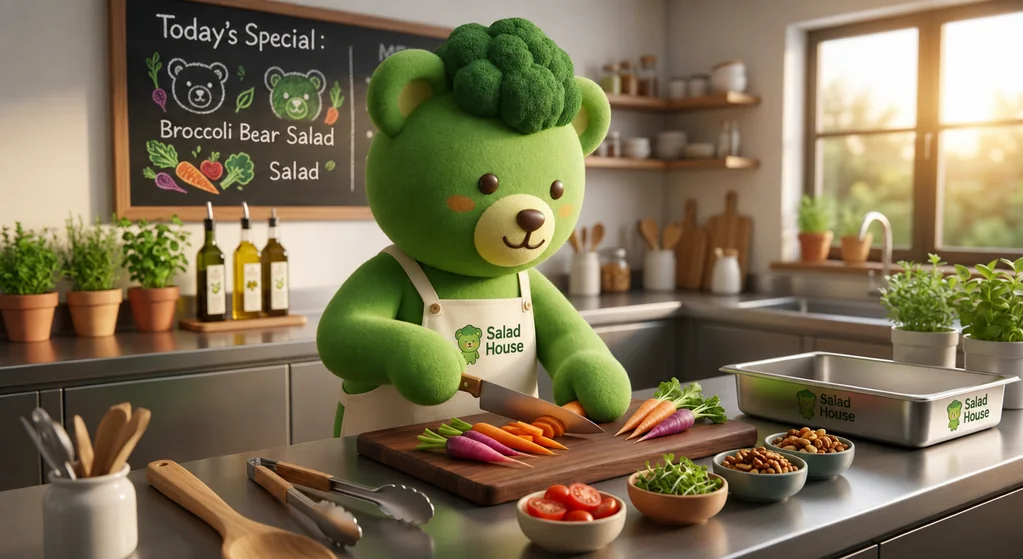
This is the stage of ensuring that the designed character can be used effectively in the brand's various activities. Various poses, such as happy, sad, angry, or cooking, as well as items, such as cooking utensils and salad bowls, and background images are created for the character.
A set of 'character guidelines (Style Guide)' is also created to prevent indiscriminate use of the character and maintain the brand's identity. The guidelines specify the character's minimum size, proportions, color usage, and examples of prohibited uses.
These guidelines are an essential tool that helps everyone who uses the character, including brand staff and partner companies, convey a consistent image.
Key Elements of a Successful Character
Character design is more than the skill of drawing cute pictures. It is a strategic process that embodies a brand's values and builds an emotional bond with consumers. As we have seen through the original experiment of 'vegetable characters,' successful characters have the following three key elements.
- Clear Concept: The character's identity, personality, and story must align with the brand's goals. (The importance of the planning stage)
- Original Visual Design: The character must have a distinctive design that stands out among countless characters, along with readability that intuitively communicates its traits. (The importance of the sketching and design stages)
- Consistent Use: The character must be adaptable to various media and situations, and brand consistency must be maintained through character guidelines. (The importance of the application stage)
A character can become a brand's most approachable face and its most powerful marketing weapon. A character born through meticulous planning and creative design will create lasting value as time passes and continue to live and breathe in consumers' hearts for years to come. What story does your brand hold, and through what kind of character would you like to communicate with consumers? Take on the challenge of exploring the limitless possibilities of character design.