Green chemistry is a key field that can achieve environmental protection and economic development simultaneously, playing an important role in creating a sustainable future. As industrialization and technological development advance rapidly, problems such as environmental pollution and resource depletion are becoming more serious, highlighting the importance of green chemistry as a way to address them.
This article examines innovations in green chemistry and the challenges they bring, seeking to explore concrete ways to protect the environment while achieving economic results.
A Sustainable Future: The Role and Importance of Green Chemistry
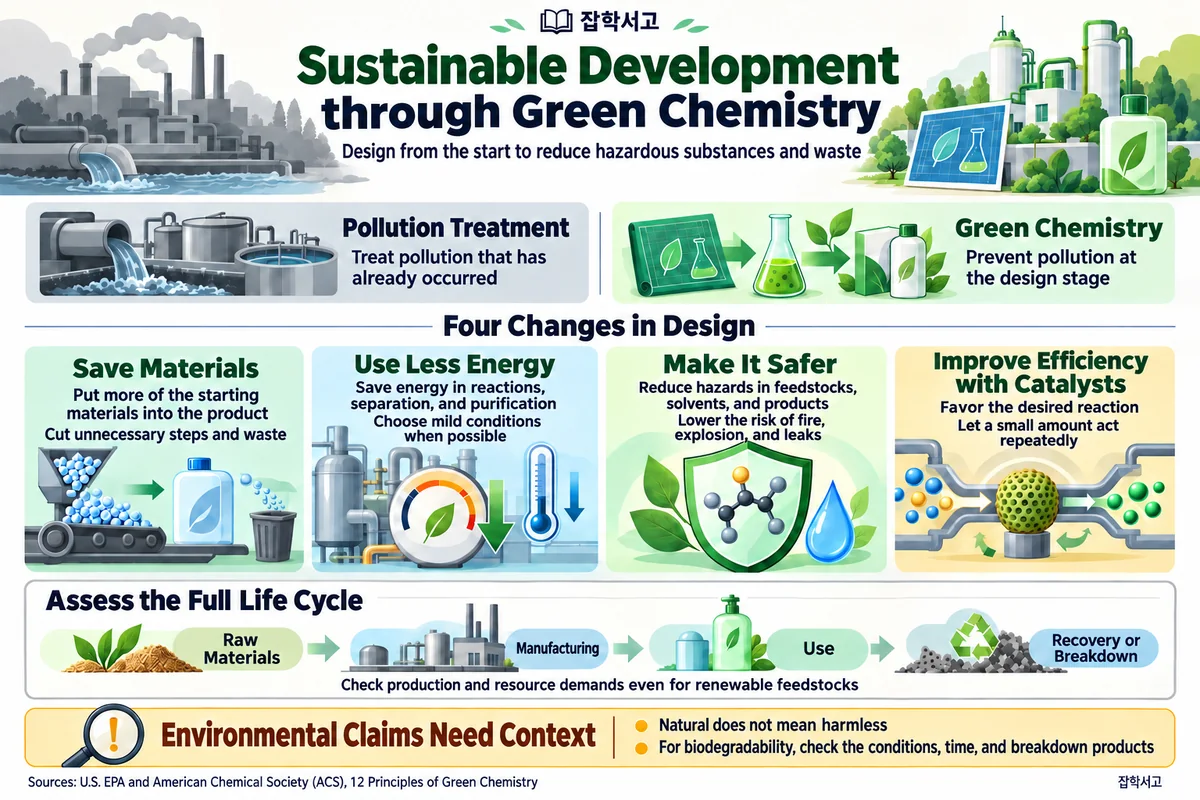
The Role of Green Chemistry in a Sustainable Future
Green chemistry plays an important role in achieving a sustainable future. It focuses on minimizing the release of harmful substances from conventional chemical processes and reducing environmental impacts by using renewable resources. These activities are key means of protecting Earth's ecosystems and promoting the efficient use of resources. As a result, green chemistry is becoming established as an important approach to protecting the environment while promoting economic development.
Resource Depletion and Green Chemistry's Response
The excessive use of conventional nonrenewable resources, particularly fossil fuels, has worsened the problem of resource depletion. In contrast, green chemistry offers ways to reduce the use of these nonrenewable resources and replace them with renewable resources. This makes sustainable resource management possible and opens a path toward economic stability over the long term. This approach to resource use mitigates the economic risks associated with resource depletion and enables sustainable growth.
Improving the Efficiency of Industrial Processes
Green chemistry also plays a role in substantially improving the efficiency of industrial processes. Environmentally friendly processes optimize energy consumption and raw material use, reducing unnecessary resource waste and laying the groundwork for lower production costs. This ultimately improves businesses' competitiveness and helps companies that adopt sustainable production methods achieve better results over the long term. Green chemistry technology can achieve both environmental protection and economic benefits.
Contributing to Sustainable Product Development
Green chemistry also makes a major contribution to developing sustainable products that reduce environmental impacts. Using biodegradable or recyclable materials can minimize environmental impacts throughout a product's entire life cycle. This provides consumers with more environmentally friendly products and also plays an important role in establishing a culture of sustainable consumption. In this way, green chemistry raises awareness of environmental protection throughout society.
The Importance of Education and Research for Future Generations
The importance of green chemistry is also evident in education and research. By developing sustainable chemical processes and integrating them into educational curricula, future generations can acquire the knowledge and skills needed to solve environmental problems. This education should go beyond theory alone and focus on developing practical problem-solving abilities. Through this, the next generation will be able to take an active role in environmental protection and sustainable development.
The Need for Global Cooperation
Finally, the advancement of green chemistry requires cooperation on a global scale. When countries develop green chemistry technologies and share them with one another, they open the way for a collective response to worldwide environmental problems. Through international cooperation in research and development, countries can advance green chemistry and thereby achieve the shared goal of protecting Earth's environment. This is one of the international community's essential tasks for a sustainable future.
Innovative Green Chemistry Technologies: Environmental Protection and Economic Benefits

The Importance of Innovative Green Chemistry Technologies
Green chemistry is an essential technology for achieving environmental protection and economic benefits simultaneously. Conventional chemical processes have often placed a heavy burden on the environment, but green chemistry technologies play a significant role in resolving these problems and promoting sustainable development. Going beyond technologies for environmental protection alone, green chemistry is driving positive changes across a range of industries by contributing to economic growth and more efficient resource management.
Advances in Catalysis Technology: Energy Savings and Environmental Protection
Catalysis technology is one of the most important innovations in green chemistry. Catalysts accelerate chemical reactions, which can substantially reduce the amount of energy required. Advances in catalysis technology not only reduce energy consumption but also help minimize the amount of harmful byproducts generated during reactions. For example, catalysts can be used to produce the same chemical products with far less energy than before, reducing costs and preventing environmental pollution. This is an important means for companies across industries to improve energy efficiency and gain greater economic benefits over the long term.
Using Biomass: Replacing Fossil Fuels and Reducing Carbon Dioxide Emissions
Using biomass is one of the core technologies of green chemistry and an important way to achieve sustainable resource use. Biomass refers to chemicals obtained from plant resources, which can be used to replace conventional fossil fuels. Fossil fuels are a major cause of global warming and environmental pollution, but producing chemicals through biomass can reduce carbon dioxide emissions. Biomass is also a renewable resource, and technologies that use it help address resource depletion and play an important role in securing economic stability over the long term.
Recycling and Reuse Technologies: Resource Circulation and Waste Reduction
Green chemistry helps minimize resource waste and reduce environmental impacts through technologies that maximize resource recycling and reuse. These include technologies that extract useful chemicals from waste or recycle used products to make new ones. For example, technologies that extract new chemicals from waste plastics or reduce raw material consumption by recycling metal resources promote a circular economy for resources. These technologies reduce environmental pollution while lowering the costs of resource use, providing economic benefits. Companies that recycle resources develop an environmentally friendly image, which also helps increase consumer trust and strengthen their competitiveness in the market.
Introducing Nanotechnology: Improving Efficiency and Removing Pollutants
Nanotechnology is another innovative approach in green chemistry, playing an important role in maximizing the efficiency of chemical reactions and removing pollutants. Catalysts developed using nanoparticles work more efficiently than conventional catalysts and can reduce both chemical reaction rates and the amount of byproducts generated as a result. Purification technologies using nanotechnology can also be applied to address air and water pollution. For example, nanoparticles can remove harmful substances from the air or effectively remove pollutants that have entered rivers and oceans. These technologies not only help reduce environmental pollution but can also positively affect public health and economic benefits over the long term.
The Contribution of Sustainable Energy Production Technologies
Green chemistry also makes an important contribution to the advancement of sustainable energy production technologies. Clean energy sources such as solar and wind power are currently attracting attention worldwide, and green chemistry technologies provide chemical solutions that can further improve their efficiency. For example, technologies that improve the performance of solar panels or enhance the durability of wind turbines can increase energy production efficiency. This is an important means of reducing dependence on fossil fuels and increasing economic benefits over the long term. Sustainable energy also plays an important role in responding to climate change, and green chemistry provides an essential technological foundation for this process.
The Role of Green Chemistry in Sustainable Agriculture
Green chemistry also plays an important role in agriculture. In particular, by developing environmentally friendly pesticides and fertilizers, it provides technologies that reduce environmental impacts while maintaining agricultural productivity. Conventional pesticides and fertilizers have caused soil and water pollution, but green chemistry is developing agricultural chemical products based on harmless ingredients that can replace them. These technologies contribute to sustainable agriculture and become an important means of increasing agricultural productivity while achieving environmental protection over the long term. These environmentally friendly agricultural technologies also create social value by reducing farmers' financial burdens and providing consumers with safer agricultural products.
Challenges in Developing Environmentally Friendly Technologies

The process of developing environmentally friendly technologies involves various challenges. These problems can hinder the commercialization and sustainability of technologies, requiring a range of approaches to address them.
The Burden of Initial Research and Development Costs
The first challenge in developing environmentally friendly technologies is the high cost of initial research and development. Developing and commercializing environmentally friendly technologies, particularly green chemistry technologies, requires substantial capital. This may be a relatively manageable issue for large corporations with considerable capital, but it can impose a heavy financial burden on small and medium-sized businesses or startups. Government support or private investment is essential to address these financial problems, and it is important to establish strategic financing plans from the earliest stages of research and development.
Compatibility Problems with Existing Infrastructure
Incompatibility between existing chemical processes and new environmentally friendly technologies is another major challenge. Many industrial companies operate using infrastructure that is already in place, and introducing new technologies can require substantial costs and time. Addressing this requires exploring ways to integrate new technologies smoothly with existing infrastructure. For example, it is important to develop ways to use new catalysts or processes without replacing existing equipment, or to find methods for applying environmentally friendly technologies with minimal modifications to existing equipment.
Balancing Technological Efficiency and Economic Profitability
Environmentally friendly technologies aim to protect the environment, but economic profitability must also be considered for commercialization. Even if a technology solves environmental problems, companies may find it difficult to adopt if its costs are excessively high. Designs that take economic feasibility into account are therefore important from the technology development stage onward. To this end, researchers and companies must collaborate to develop efficient technologies aimed at reducing costs and improving profitability. It is also important to set the direction of development by examining not only technological efficiency but also the potential for commercialization.
The Need for Regulation and Standardization
The commercialization of environmentally friendly technologies can be delayed by a lack of regulation and standardization. If national governments and international organizations do not provide clear regulations and standards, companies will find it difficult to make long-term plans amid uncertainty. Addressing this requires governments and international organizations to establish clear regulations and standards for environmentally friendly technologies and create conditions that enable compliance. Companies must also develop technologies in line with these regulations and prepare to commercialize their products in accordance with the rules.
Public Awareness and Acceptance
Public awareness and acceptance are also important factors in the commercialization of environmentally friendly technologies. However advanced a technology may be, the adoption of green chemistry technologies can remain limited if consumers do not properly recognize their value. Addressing this requires stronger educational and promotional activities that inform the public about the importance and advantages of environmentally friendly technologies. Companies must establish strategies to raise public awareness so that environmentally friendly products are easy to understand and accept, and governments and educational institutions also need to support these activities.
The Need for Ongoing Research and Workforce Development
Finally, because environmentally friendly technologies are advancing rapidly, it is important to continue researching them and training personnel. Various environmentally friendly technologies, including green chemistry technologies, are advancing through continuous research, creating a need for professionals who have mastered the latest technologies. Cooperation between academia and industry is essential to promote this research and workforce development. Sharing the latest technological trends and training professionals who can apply them in practice are key elements in the continued advancement of environmentally friendly technologies.
Policy and Industry Cooperation Approaches for Sustainable Development

Policy Support for Sustainable Development
Government policy support is essential to achieving sustainable development. Governments can provide tax incentives and subsidies to promote research and development in green chemistry technologies. This financial support eases the economic burdens that companies face during the initial stages of research and development and, beyond that, plays an important role in promoting the development of innovative technologies. Government support is also an important factor in ensuring that green chemistry technologies have positive effects over the long term, both in economic profitability and environmental protection.
Establishing Environmental Regulations and Standards
Establishing precise and consistent environmental regulations and standards is a key policy tool for promoting the commercialization of green chemistry technologies. By providing clear environmental regulations and standards, governments enable companies to adopt green chemistry technologies more actively and offer products and services that meet environmental protection goals. These regulations and standards serve not merely as restrictions but as guidelines that companies should follow for sustainable development. They also create conditions that allow companies to move in an environmentally friendly direction while maintaining their competitiveness in the market.
Technological Advancement Through Cooperation Across Industries
Cooperation across industries is an important means of accelerating the advancement of green chemistry technologies for sustainable development. Different industries can promote one another's development by cooperating and sharing technologies and information. For example, the chemical and energy industries can collaborate to develop technologies that improve energy efficiency and thereby offer sustainable energy solutions. Such cooperation allows advances in one industry to have positive effects on others and can ultimately encourage broader cooperation for sustainable development.
The Importance of International Cooperation
International cooperation across borders is also important for sustainable development. By sharing experience and knowledge about developing green chemistry technologies, countries gain opportunities to address worldwide environmental problems together. International academic conferences and consultative bodies provide important platforms for this cooperation, promoting technological exchange and collaboration between countries. International cooperation can contribute to solving environmental problems on a global scale and plays a major role in achieving shared goals for global environmental protection.
Cooperation Between Businesses and Academia
Cooperation between businesses and academia is also essential for advancing green chemistry technologies. Universities and research institutions provide the latest technologies and research findings, while companies help apply these technologies in industrial settings through their practical experience in commercialization. This cooperation increases the pace of technological development and provides an important foundation for accelerating the commercialization of innovative green chemistry technologies. Cooperation between academia and businesses serves as a bridge linking theoretical advances in technology with practical applications and becomes an important driving force for sustainable development.
The Need for Cooperation with Civil Society
Cooperation with civil society is also important for achieving sustainable development. It is necessary to increase acceptance of green chemistry technologies by raising public awareness and providing products and services tailored to consumers' needs. Conducting public education and campaigns in cooperation with civic organizations is an effective way to do this. When consumers understand the importance of environmentally friendly products and actively choose them, green chemistry technologies can spread more widely. Cooperation with civil society plays an important role in establishing a culture of sustainable consumption and promoting social responsibility for environmental protection.
Green chemistry is becoming established as an important technology for achieving a sustainable future. Green chemistry technologies, which address environmental problems while pursuing economic benefits, are regarded as a key to overcoming the various environmental challenges currently faced.
However, there are various challenges in developing and commercializing these technologies, and overcoming them requires governments, industry, academia, and civil society to cooperate and coordinate their responses closely. These efforts toward sustainable development will be able to provide future generations with a healthier environment and economic opportunities.