The moment you twist the cap off a soda, there is a hiss, and small bubbles rise endlessly from the inside of the bottle. You may have wondered why a drink that was clear and quiet while sealed changes so much just because the lid came off. The gas in the bottle did not change; the pressure inside the bottle did.
The single equation that explains this is Henry's Law. It states that, at a constant temperature, the amount of gas that dissolves in a liquid is proportional to the pressure of the gas in contact with that liquid, and it applies widely, from a single bottle of soda to diving deep under the sea.
In this article, we will look in turn at what Henry's law says, what happens inside a diver's body, and when the law does not work well.
How Pressure Keeps Gas Held in a Liquid
What Happens the Moment You Open the Lid

A carbonated drink is one in which carbon dioxide has been pressed in under high pressure and dissolved into the liquid. The roots of this method go back to the late 18th century, when Joseph Priestley of England dissolved carbon dioxide in water to make carbonated water. The empty space at the top of the bottle is filled with carbon dioxide at a pressure higher than atmospheric pressure, and that pressure holds a large amount of gas inside the drink.
When you open the lid, the pressure above drops abruptly to atmospheric pressure. At the new pressure the liquid cannot keep that much gas dissolved, so the surplus carbon dioxide escapes as small bubbles. This is what the fizz is. A drink that is shaken and then opened foams over harder because the small bubbles formed during shaking act as seeds, and the dissolved gas gathers onto them all at once. An open drink goes flat over time for the same reason: gas keeps leaving until it reaches the equilibrium amount for the new pressure.

What Henry's Law Says
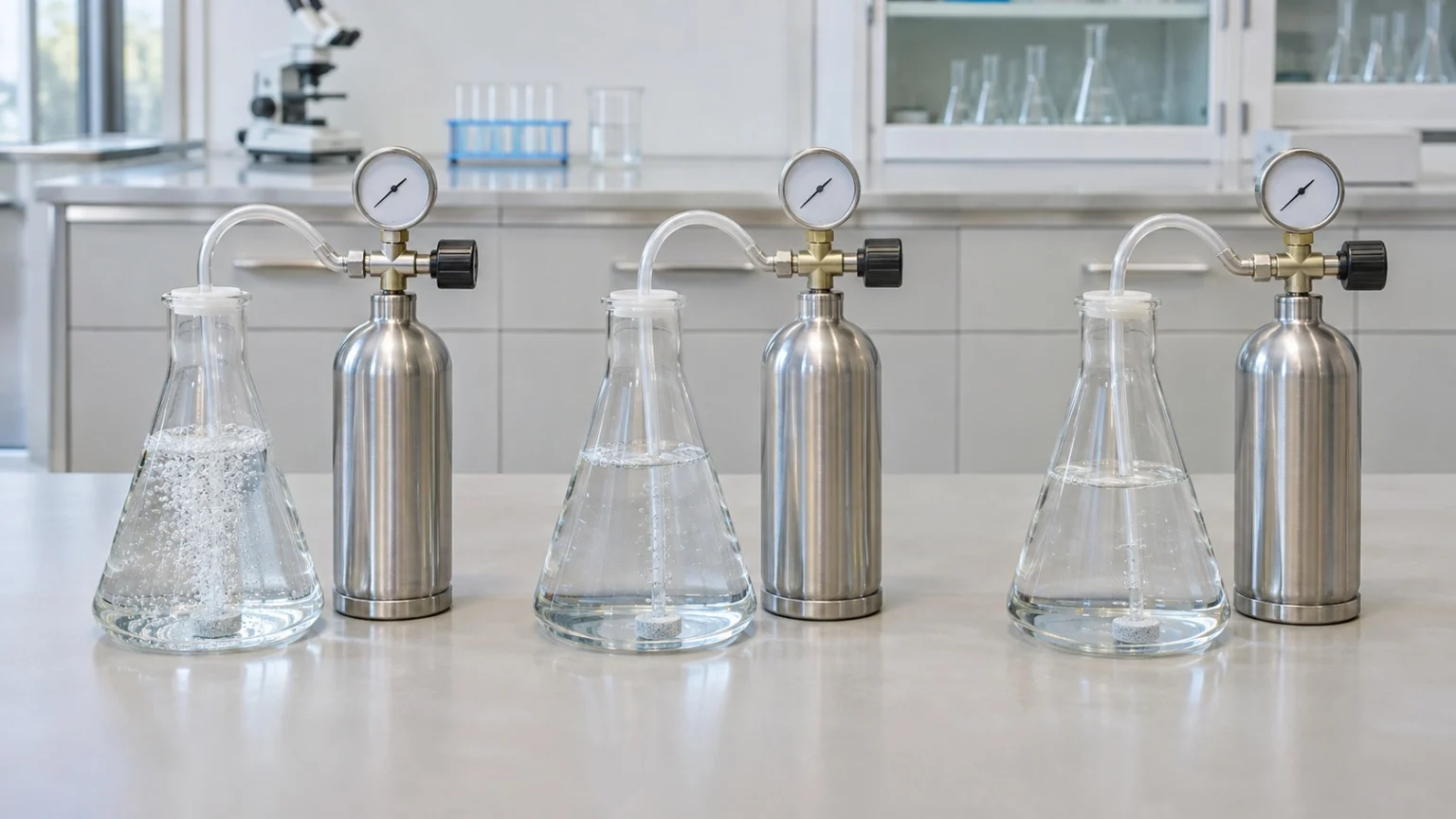
The law came out of an experiment in 1803 in which the English chemist William Henry measured how much gas dissolves in water while changing the pressure and temperature. The results were published that same year in the journal of the Royal Society of London, and he showed that when the pressure is raised to two or three times, the amount of gas the water absorbs also becomes two or three times. The formula is written C = k × P, meaning that the concentration C of the gas is directly proportional to the pressure P. For example, if the pressure rises from 1 atm to 4 atm, the amount of carbon dioxide that dissolves at the same temperature also becomes four times as much.
- Solubility: the amount of gas that can dissolve in a given amount of liquid.
- Partial Pressure: the pressure that one gas accounts for in a mixture of gases; the law applies to the partial pressure of each individual gas, not to the total pressure.
- Henry's Law Constant: the value corresponding to k in the formula above; it differs for each gas–liquid combination and also changes with temperature.
The reason that, at the same pressure, some gases dissolve well in water and others poorly is precisely that this constant differs. The law does not tell you how well a gas dissolves; it tells you the proportional relationship that doubling the pressure doubles the amount dissolved.
What Happens Inside a Diver's Body

Henry's law is also directly tied to the safety of people who work underwater. For every 10 meters of additional depth, the pressure increases by roughly 1 atm, and in the blood and tissues of a diver breathing air, more nitrogen dissolves in proportion to the added pressure.
The problem comes on the way up. If a diver surfaces too quickly, the pressure drops suddenly, and the nitrogen dissolved in the tissues cannot escape in time and turns into bubbles in the blood vessels. This is decompression sickness (Decompression Sickness), commonly called the bends, and it can cause anything from joint pain and skin rashes to paralysis in severe cases.
(1) Ascend slowly
A diver rises slowly at a set speed and stops to rest along the way, giving the nitrogen in the body time to leave through the breath.
(2) Swap nitrogen for another gas
When working at great depth, a gas mixture with helium in place of nitrogen is sometimes used, because helium dissolves less in blood than nitrogen does.
(3) Restore the pressure
If symptoms have already appeared, the person enters a treatment chamber with raised pressure so the bubbles in the body dissolve again, and the pressure is then lowered slowly.
All three follow the same principle, in that they control how fast the pressure drops or make the gas dissolve less. What one equation explains is not only a fizzing drink but also what happens inside the human body.
When the Law Does Not Hold
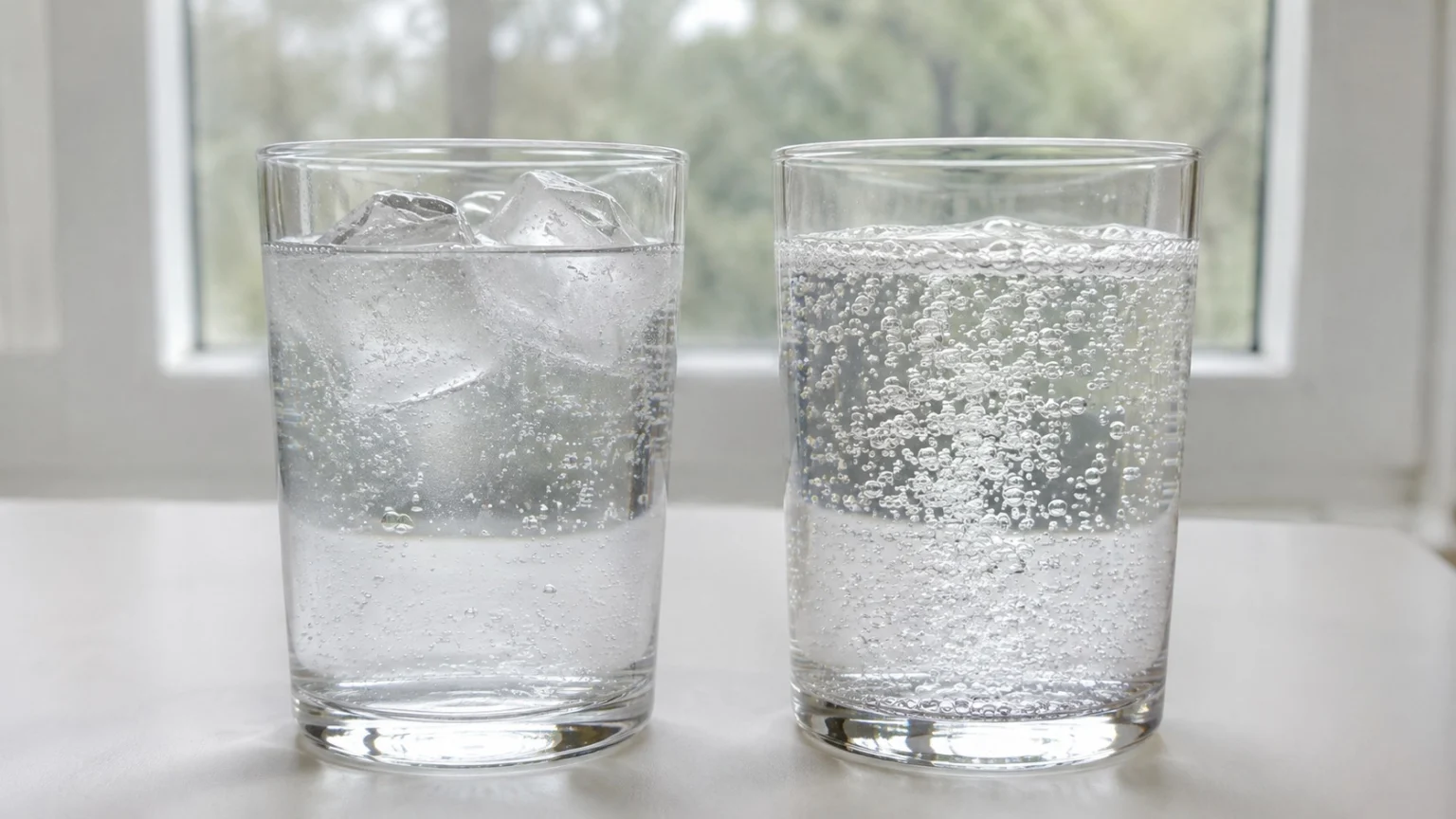
Henry's law holds well when certain conditions are met, and it does not apply everywhere. In real solutions, the proportional relationship drifts slightly depending on how gas molecules interact with the liquid molecules. Knowing when it drifts keeps you from misreading the values.
(1) When the temperature changes
Even at the same pressure, a warmer liquid generally dissolves less gas. A lukewarm soda going flat more easily is also because the Henry's law constant changes with temperature.
(2) When the gas reacts with the liquid
Gases that react with water and split into ions, such as hydrogen chloride or ammonia, depart from the simple proportional relationship. This is because some of the dissolved gas has been turned into another substance.
(3) When the pressure is very high or the solution is concentrated
When a gas is under very high pressure, or so much dissolves that the solution is no longer dilute, the proportional relationship breaks down. The law is most accurate for dilute solutions and moderate pressures.
Meanwhile, the fact that deeper water is under higher pressure and can hold a lot of dissolved carbon dioxide is also a danger in nature. In 1986 at Lake Nyos in Cameroon, carbon dioxide that had built up deep in the lake suddenly erupted, killing at least 1,700 people. Gas being dissolved also means it can be released at any moment.
Knowing how far a law holds is as important as knowing the law. A law used with its conditions in mind is the most trustworthy. The eye that can read how long invisible gas stays and when it leaves with pressure is the first step in understanding Henry's law.