Everyone knows that when a mountain has several trails, the height difference between the foot and the summit is the same no matter which path you climb. What if the heat that comes out of or goes into a chemical reaction worked the same way—totaling the same whenever the start and finish match, no matter which route you take? Thanks to that simple property, heat you cannot measure directly can be found by calculation.
That rule is Hess's Law (Hess's Law). Whether a chemical reaction happens in one step or is split into several, the overall change in enthalpy is the same if the starting and ending substances are the same.
In this piece we will look, in order, at who Hess—the person who established this law—was, why this property holds, how to calculate the heat for carbon monoxide and diamond, and what to watch out for when you calculate.
Finding Heat You Cannot Measure Directly by Adding It Up
A Doctor Born in Switzerland Who Measured Heat in Russia
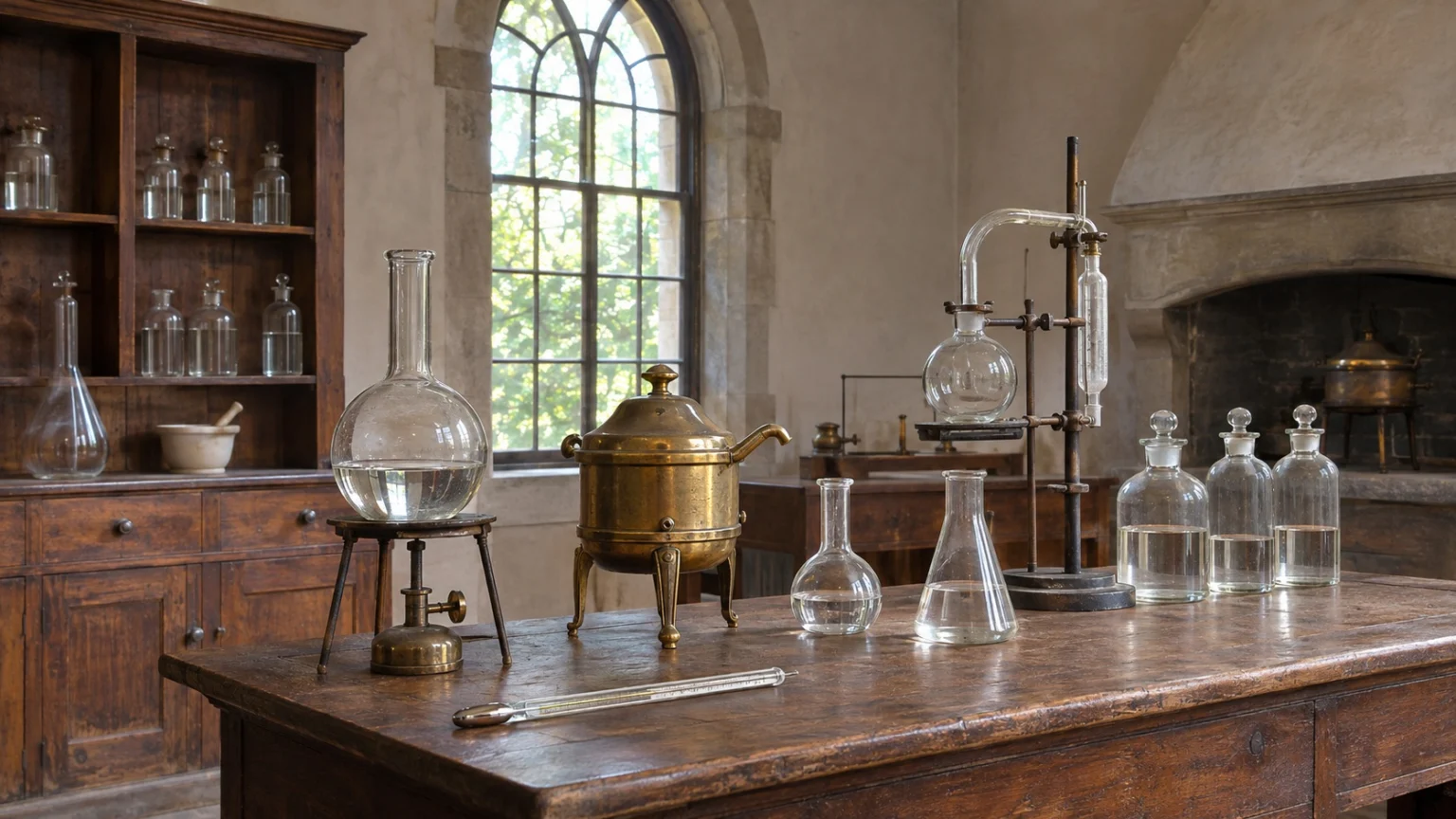
This law was published in 1840 by Germain Henri Hess (Germain Henri Hess), born in 1802 in Geneva, Switzerland. Hess moved with his family to the Russian Empire at the age of three and grew up there; he studied medicine at the University of Dorpat in what is today Tartu, Estonia, and became a physician in 1825.
(1) Taking the Path of a Chemist
After qualifying as a doctor he went to Sweden, met the chemist Jöns Jakob Berzelius (Jöns Jakob Berzelius), and settled his mind on chemistry. In 1826 he took a post as a physician in Irkutsk, Siberia, then from 1830 devoted himself to chemical research and teaching, working at the St. Petersburg Academy of Sciences.
(2) A Rule Confirmed with Sulfuric Acid and Water
Hess measured heat while adding water to sulfuric acid in stages to make various sulfuric acid hydrates. Whether he made them in one go or through intermediate substances, the sum of the heat released was the same, and that became the basis of the law.
This discovery came two years before Julius Robert von Mayer (Julius Robert von Mayer) stated the conservation of energy more generally in 1842. Hess died in 1850 at the age of forty-eight, but the textbook he wrote, Fundamentals of Pure Chemistry, remained the standard chemistry text in Russian universities until 1861. His name also remains in hessite (Hessite), a mineral in which silver and tellurium combine.
Why Every Path Gives the Same Value

Hess's law is understood today as an expression of the fact that enthalpy (Enthalpy) is a state function (State Function). A state function is a quantity whose value is fixed solely by the present state, regardless of how you got there.
(1) A Quantity Like Height
Just as a mountain's height does not depend on the path you climbed, once the reactants and products are fixed, the difference in enthalpy is fixed as one value. If each path had a different value, energy would appear for free on every loop that went one way and returned another—and the law of conservation of energy does not allow that.

(2) Heat at Constant Pressure
The change in enthalpy equals the heat a reaction releases or absorbs under constant pressure. So by adding and subtracting heats measured with a calorimeter step by step, you can obtain the heat of the overall reaction.
(3) It Scales with Amount
Enthalpy is a quantity proportional to the amount of substance. Double the number of moles in the reaction, and the heat doubles as well.
Calculating the Heat of Carbon Monoxide and Diamond
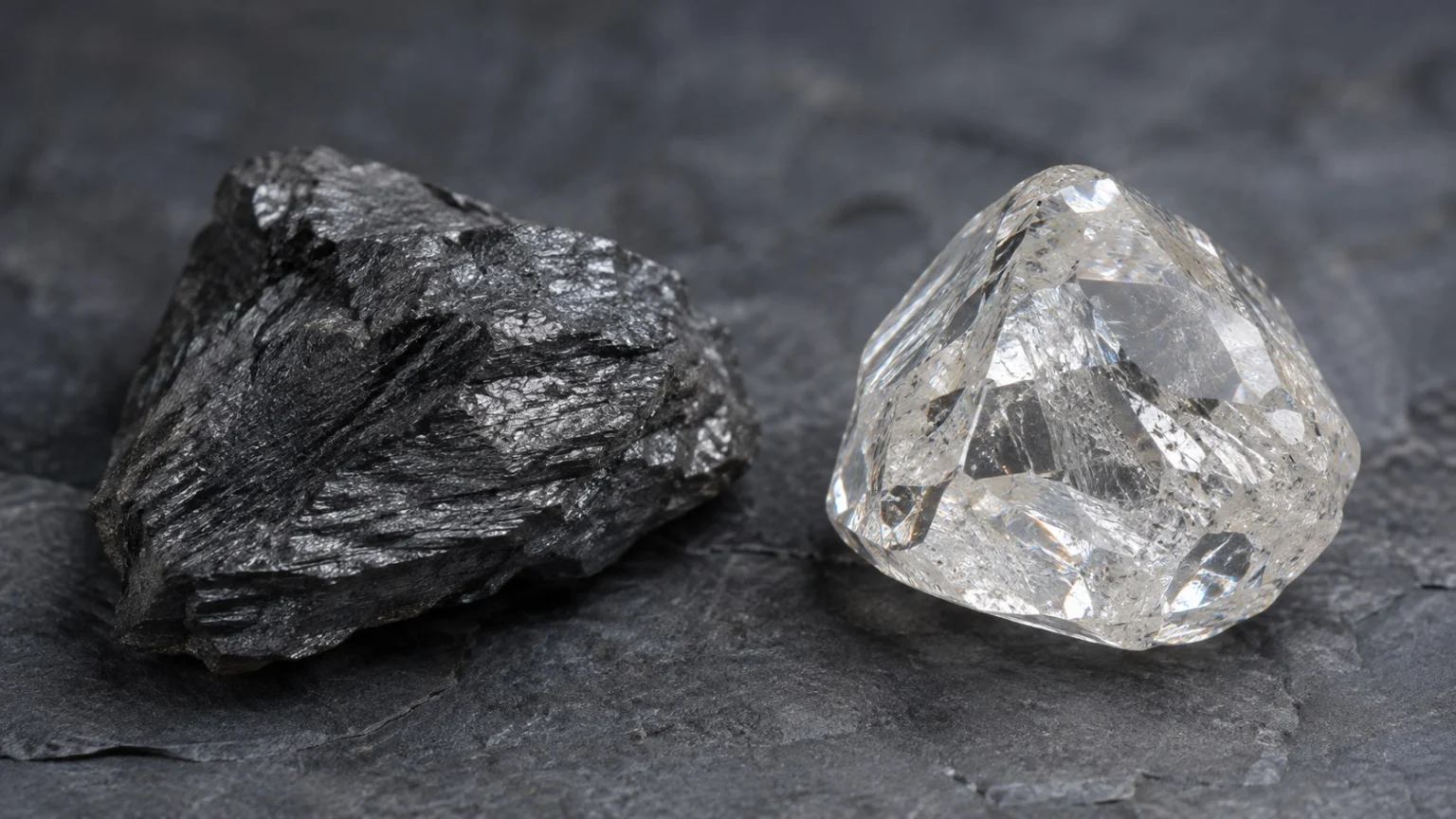
Even if you try to burn graphite to get only carbon monoxide, some of it burns on to carbon dioxide, so the heat of this reaction is hard to measure directly. That is when you use the heats of two reactions you can measure.
- Complete Combustion of Graphite (Graphite Combustion): When graphite reacts with oxygen to become carbon dioxide, the heat change is minus 393.5 kilojoules per mole.
- Combustion of Carbon Monoxide (Carbon Monoxide Combustion): When carbon monoxide reacts with oxygen to become carbon dioxide, the heat change is minus 283.0 kilojoules per mole.
Subtracting the second value from the first gives minus 110.5 kilojoules as the heat of the reaction in which graphite becomes carbon monoxide—a value found without measuring it directly.
The same method can find the heat of graphite turning into diamond. The heat of combustion of graphite is minus 393.5 kilojoules and that of diamond is minus 395.4 kilojoules, so the difference, plus 1.9 kilojoules, is the heat needed for the conversion. The conversion requires very high temperature and pressure, so it is hard to measure directly in the laboratory.
The same principle is used in the Born-Haber cycle (Born-Haber Cycle) for finding the lattice energy released when an ionic crystal forms. Tables that gather the standard enthalpies of formation of many substances could also be built thanks to this kind of calculation.
Where the Calculation Goes Wrong

Hess's law is a simple rule of adding and subtracting, but the values drift unless you keep a few conventions.
(1) Reverse Direction and Coefficient Together
If you write a reaction equation backwards, the sign of the heat flips as well. If you multiply the equation by 2, you must multiply the heat by 2 too.
(2) Match the State of the Substance
When hydrogen and oxygen react to form water, liquid water gives about minus 285.8 kilojoules per mole, and water vapor gives about 44 kilojoules less because of the heat of vaporization. So a reaction that makes 2 moles of water is about minus 571.6 kilojoules as liquid and about minus 483.6 kilojoules as vapor.
(3) It Tells You Only About Heat
The law tells you how much heat a reaction releases, but not how fast the reaction runs. Heat coming out also does not mean the reaction must happen on its own, so you also have to look at entropy, the change in disorder.
The habit of finding a hard-to-measure value from a combination of values you already know is useful outside chemistry too. Believing that even when the path in front of you is blocked, you can reach the same answer by a roundabout route if the start and finish match—that is the first step of Hess's law.