Thermodynamics is an important discipline that seeks to understand and explain the interaction between energy and matter. It studies the conversion and distribution of energy through chemical reactions and physical changes, and it is an essential subject across many fields of science and engineering.
This article explores a range of concepts, from the basic theory of thermodynamics to state functions and path functions, enthalpy and entropy, and Gibbs free energy.
Basic Theory of Chemical Thermodynamics
Basic Concepts of Energy and Matter
The first step in thermodynamics is to understand the basic concepts of energy and matter. Energy means the capacity to do work, and it can exist in many forms. Typical forms include heat, light, electricity, and kinetic energy. Matter refers to anything that occupies space and has mass, and it is made up of molecules, atoms, ions, and so on.
The law of conservation of energy is one of the core principles of thermodynamics. This law means that energy is neither created nor destroyed; it only changes form. For example, when the chemical energy of the reactants in a chemical reaction is converted into the products, the total energy does not change. This principle is essential for explaining the efficient use and conversion of energy.
Classification of Thermodynamic Systems
Thermodynamic systems can be classified into three types according to how they exchange energy and matter with their surroundings.
- An isolated system is a system that exchanges neither energy nor matter with its surroundings.
- A closed system exchanges energy but not matter.
- An open system is a system that exchanges both energy and matter with its surroundings.
This classification of systems plays a very important role in analyzing the energy flow of chemical reactions and physical changes. For example, to understand how reactants and products exchange energy in a chemical process, it is essential to identify the characteristics of the system.
Internal Energy and the State of a System
Internal energy is the total energy stored within a system. It is the sum of the kinetic and potential energy of the particles that make up the system, and it is an important variable for describing the state of a system. Internal energy is affected by thermodynamic variables such as temperature, pressure, and volume. For example, when the temperature rises, the internal energy can also increase.
In thermodynamics, the concepts of state functions and path functions are used to describe the state of a system.
- A state function considers only the current state of a system; temperature, pressure, and volume are typical examples. It regards only the final state as important, regardless of the path by which the system reached that state.
- A path function takes into account the path a system follows to reach its state. For example, work and heat are path functions, and their values can vary depending on the process the system goes through.
Conversion and Distribution of Energy
One of the important areas of study in thermodynamics is analyzing how energy is converted and distributed within a system. For example, in chemical reactions, an exothermic reaction generates heat and releases it to the surroundings, while an endothermic reaction absorbs heat, increasing the energy of the system. Understanding this energy flow makes it possible to predict or improve the efficiency of chemical reactions.
Enthalpy and Entropy
Enthalpy is the internal energy (U) plus the product of pressure (P) and volume (V), defined as H = U + PV. It is an important concept that indicates how exothermic or endothermic a reaction is, and it is useful for describing energy changes under given conditions.
Entropy is a state function related to the dispersal of energy and the number of possible microscopic states. When a system changes from a highly ordered state to a disordered state, its entropy increases. It is an important measure for predicting the direction in which spontaneous changes in nature will proceed.
Gibbs Free Energy
Gibbs free energy represents the amount of energy in a thermodynamic system that is available for useful work. It is an important indicator for determining whether a chemical reaction can occur spontaneously. When the Gibbs free energy decreases, the reaction occurs spontaneously; when it increases, external energy is required. This concept is essential for predicting the efficiency of reactions and, in practice, is also used to find optimal reaction conditions in industrial processes.
Thermodynamics is a powerful tool for explaining the interaction between energy and matter. Concepts such as the law of conservation of energy, the classification of thermodynamic systems, internal energy, state and path functions, enthalpy, entropy, and Gibbs free energy clearly explain the flow of energy within a system. On this basis, we can understand complex phenomena in nature and grasp how energy acts in chemical reactions and physical changes.
State Functions and Path Functions: How Thermodynamic Variables Differ
The Concept of a State Function
A state function is a thermodynamic variable determined by considering only the current state of a system. Temperature, pressure, volume, and internal energy are typical state functions. A state function is determined solely by the current state, regardless of the process by which the system reached that state. For example, the boiling point of water is determined by temperature and pressure, and under the same conditions water always has the same boiling point, regardless of the path by which it reached the boiling state. State functions are very useful for describing physical states, and they play an important role in describing the current state of a system when analyzing chemical reactions or physical changes.
The Concept of a Path Function
Unlike a state function, a path function is a variable that takes into account the path a system follows to reach a particular state. Heat and work are typical path functions. The value of a path function depends on which path the system followed while undergoing a change of state. For example, even with the same initial and final states, the values of heat or work can differ depending on which path the system took in reaching that state. Path functions are essential for a concrete understanding of thermodynamic changes.
Differences Between State Functions and Path Functions
State functions and path functions differ in a very important way when it comes to describing thermodynamic changes. A state function's value is determined solely by the current state of the system, whereas a path function depends on the process by which the system reaches that state. This means that both concepts are needed to describe chemical reactions and physical changes. State functions are useful for describing the current state of a system, while path functions play an important role in understanding the process of reaching that state.
The Zeroth Law of Thermodynamics: Thermal Equilibrium
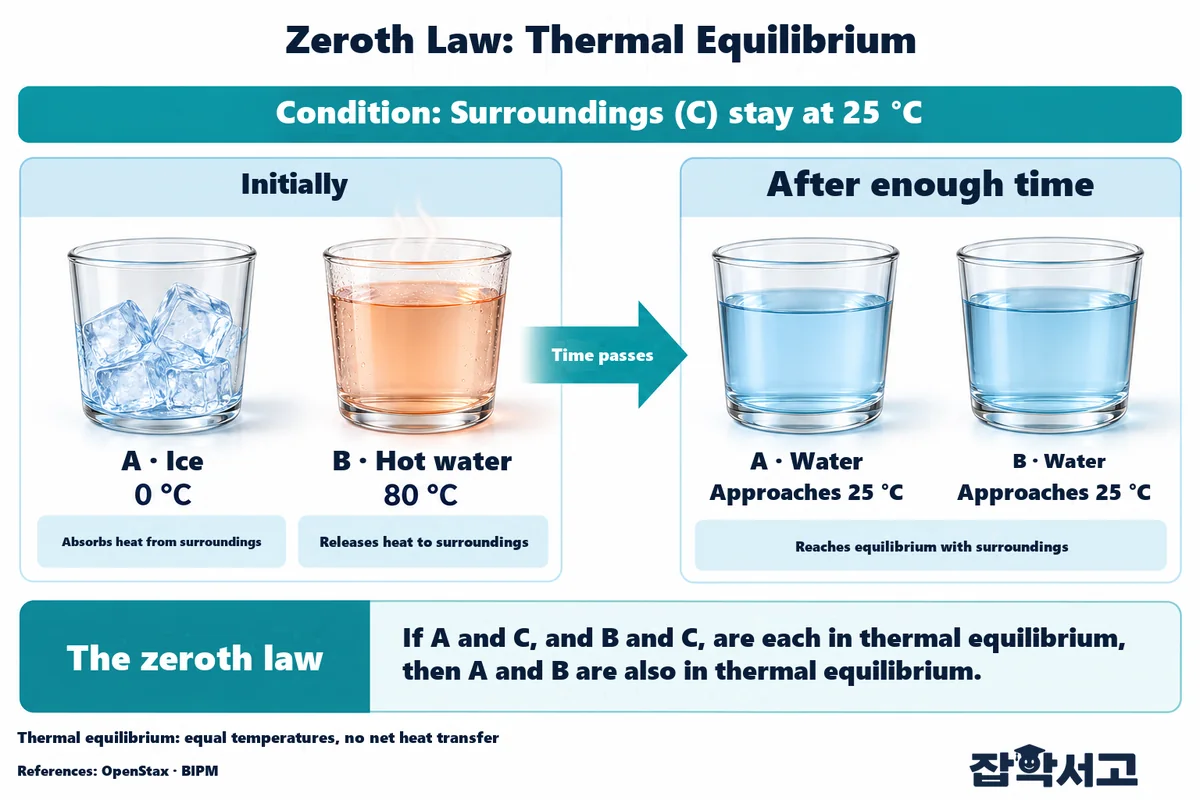
The zeroth law of thermodynamics states that if two systems are each in thermal equilibrium with a third system, then those two systems are also in thermal equilibrium with each other. This plays an essential role in defining the concept of temperature. The zeroth law provides the standard by which temperature can be measured and compared in thermodynamics, and it provides a basic framework for explaining the transfer of energy between multiple systems.
The First Law of Thermodynamics: The Law of Conservation of Energy
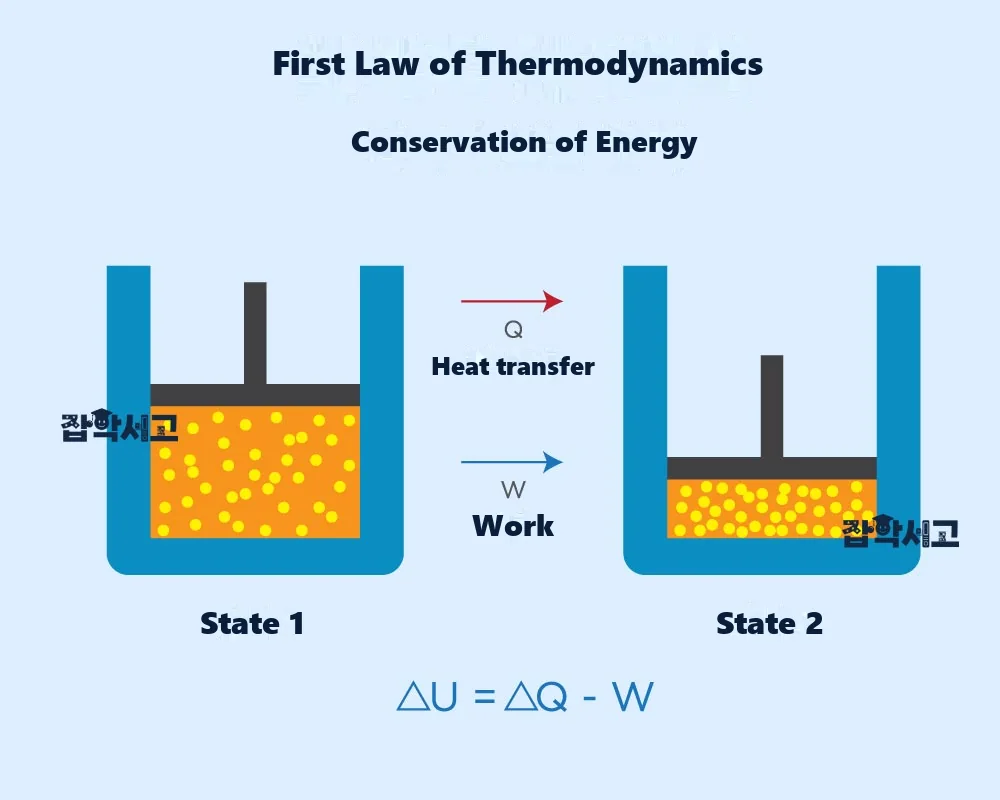
The first law of thermodynamics describes the law of conservation of energy, which states that energy is neither created nor destroyed but only changes form. According to this law, the internal energy of a system changes through the exchange of energy between the system and its surroundings. Here, heat and work act as path functions, while internal energy, which is determined solely by the initial and final states of the system, is described as a state function. For example, the heat energy released during a chemical reaction or the work done by a system is expressed as a path function, but the change in internal energy is represented as a state function.
The Second Law of Thermodynamics: The Increase of Entropy
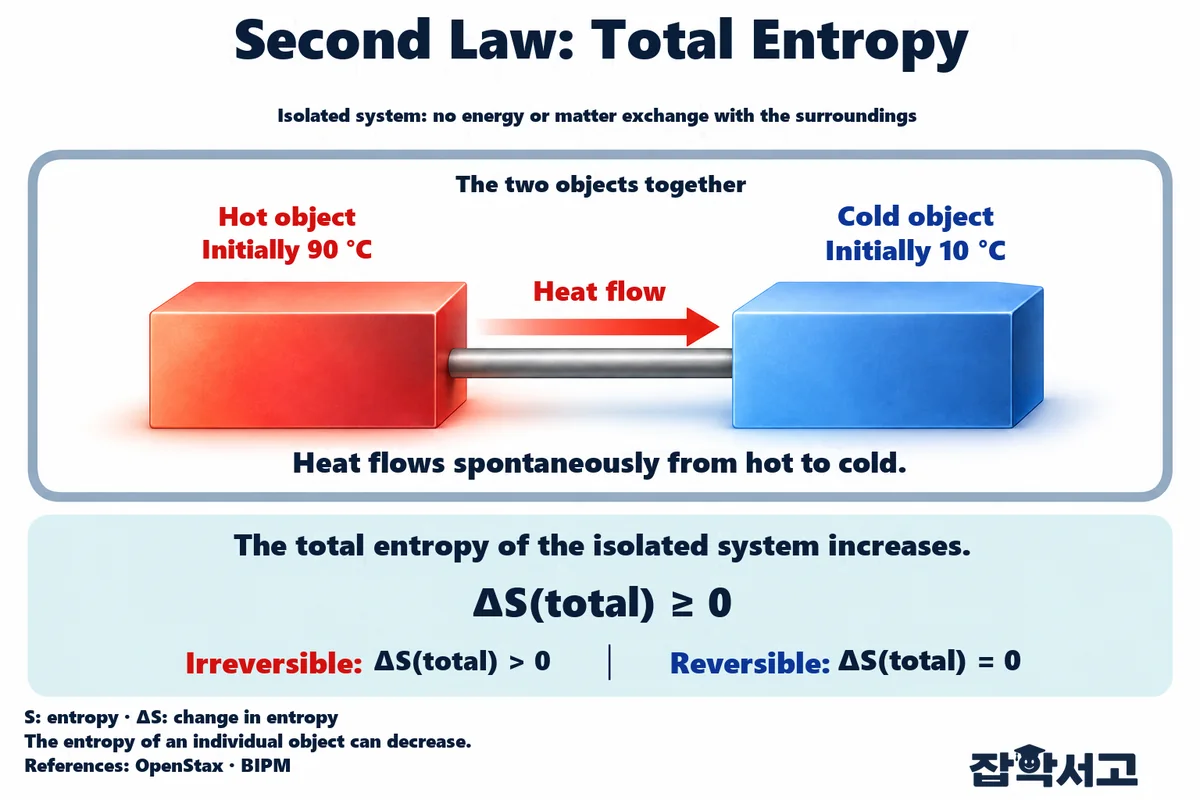
According to the second law of thermodynamics, the total entropy of a system and its surroundings increases in a spontaneous irreversible process. Entropy is a state function, and the entropy of an individual system can decrease. This has important implications for the qualitative aspect of energy, and an increase in entropy means an increase in the disorder of the system. For example, when a hot object comes into contact with a cold object, heat flows and entropy increases. This law serves as an important indicator for predicting the direction in which spontaneous processes occur.
The Third Law of Thermodynamics: Absolute Zero and Entropy
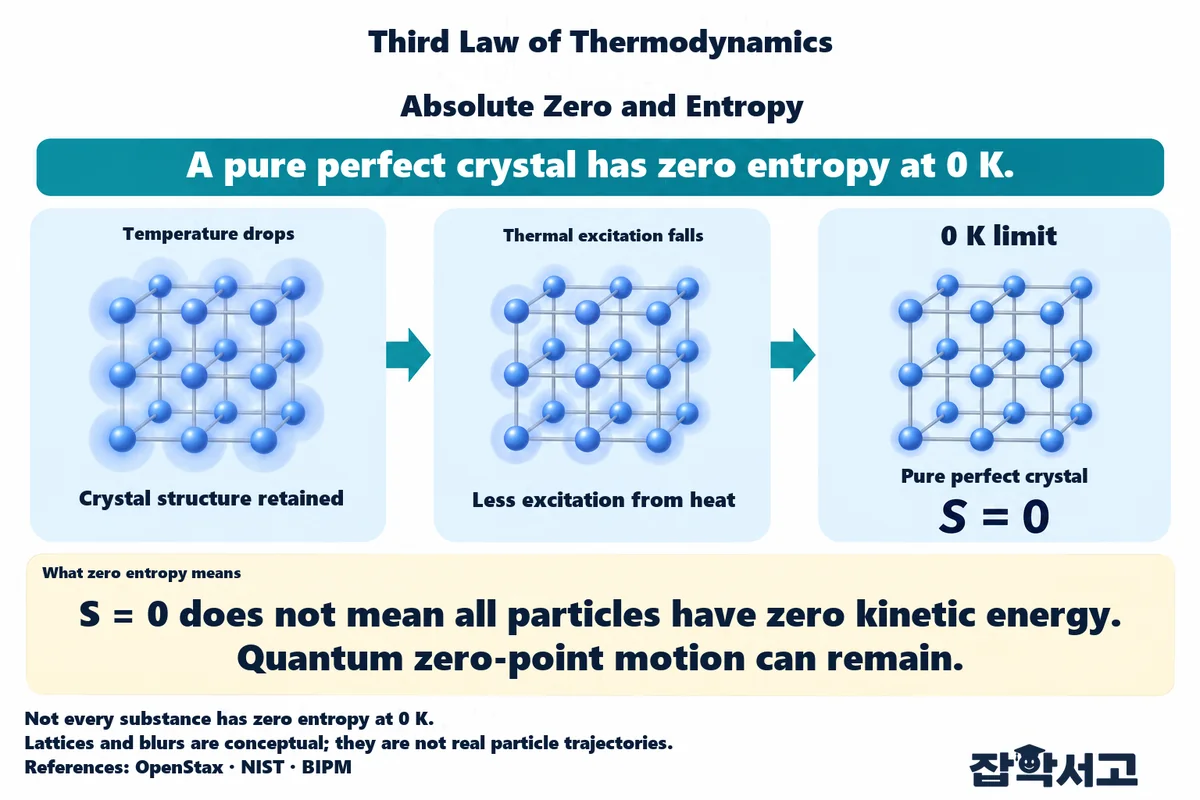
According to the third law of thermodynamics, the entropy of a pure, perfect crystal is zero at absolute zero (0 K). This does not mean that the entropy of every substance necessarily becomes zero. This law plays an important role in explaining the properties of matter at extremely low temperatures.
State functions and path functions are key concepts for understanding changes in thermodynamic systems. State functions are used to describe the current state of a system, while path functions are essential for understanding the process of reaching that state. The laws of thermodynamics serve as important principles explaining the conservation of energy, spontaneous reactions, changes in entropy, and physical properties under extreme conditions. Taken together, these principles make it possible to accurately grasp the energy flow and changes of a system and to analyze a wide variety of chemical and physical changes.
Enthalpy and Entropy: The Relationship Between System Energy and Disorder
The Concept and Role of Enthalpy
Enthalpy is a state function equal to the internal energy of a system plus the product of its pressure and volume. It is mainly useful for analyzing heat exchange that occurs under constant pressure. In chemical reactions and physical changes, enthalpy is used as an important indicator for measuring the amount of heat produced.
In chemical reactions, the enthalpy change (ΔH) is used to determine whether a reaction is endothermic or exothermic.
- An endothermic reaction absorbs energy, and its enthalpy change is positive. This means that energy is absorbed from the surroundings as the reactants are converted into products.
- An exothermic reaction releases energy, and its enthalpy change is negative. This means that energy is released out of the system during the reaction.
In this way, the enthalpy change is essential for understanding how energy flows in chemical reactions, and it serves as a key factor in analyzing the thermodynamic properties of a reaction.
The Concept and Meaning of Entropy
Entropy is a state function that represents the degree of disorder or randomness of a system. Entropy plays an important role in spontaneous processes occurring in nature, and in spontaneous irreversible changes, the total entropy of a system and its surroundings increases. This is clearly explained by the second law of thermodynamics: in nature, energy gradually becomes evenly distributed, and systems change toward increasingly disordered states.
Entropy is also closely related to the distribution of energy within a system.
- In a high-entropy state, energy is distributed more evenly, which means the system is more stable and less likely to change.
- In a low-entropy state, energy is distributed less evenly, which means the system is less stable and more likely to undergo change.
Entropy is an important concept that explains changes in a system through energy distribution and disorder, and it is essential for predicting energy flow in chemical reactions.
The Relationship Between Enthalpy and Entropy
Enthalpy and entropy are closely related, and by combining these two concepts we can explain Gibbs free energy. Gibbs free energy is used to predict spontaneous reactions occurring within a system. Gibbs free energy is expressed by the following equation.
ΔG = ΔH - TΔS
Here, ΔG is the change in Gibbs free energy, ΔH is the change in enthalpy, T is the absolute temperature, and ΔS is the change in entropy. Through this equation, the interplay between enthalpy and entropy determines whether a reaction in the system can occur spontaneously.
- When ΔG is negative, the reaction occurs spontaneously and the energy of the system decreases.
- When ΔG is positive, the reaction does not occur spontaneously, and external energy is required.
Predicting Changes in System Energy and Disorder
Understanding the relationship between enthalpy and entropy makes it possible to better predict energy conversion and changes in disorder within a system. Enthalpy describes the heat produced in a reaction, and entropy describes the change in disorder during that process. Combining these two factors to predict the reactivity of a system and to analyze how energy flows is one of the core goals of thermodynamics.
Based on enthalpy and entropy, we can gain an in-depth understanding of the many chemical reactions and physical changes that occur in nature, and these principles can also be applied in a wide range of industrial and technological applications.
Gibbs Free Energy: Predicting Spontaneous Reactions and Equilibrium
Definition of Gibbs Free Energy
Gibbs free energy is a very important concept in thermodynamics, used to predict whether a spontaneous reaction will occur within a system. Gibbs free energy is defined as a combination of enthalpy (H), absolute temperature (T), and entropy (S), and it is expressed by the following equation.
G = H - TS
Here, G represents Gibbs free energy, H enthalpy, T absolute temperature, and S entropy. Using this equation, we can determine whether the energy of a system can change spontaneously.
Spontaneous Reactions and Gibbs Free Energy
The change in Gibbs free energy (ΔG) is an important indicator that determines whether a chemical reaction occurs spontaneously. When ΔG is negative, the reaction occurs spontaneously and proceeds without any additional energy input from outside. This is a process in which a chemical reaction releases energy or moves toward a stable state. On the other hand, when ΔG is positive, the reaction is not spontaneous and requires external energy. When ΔG is zero, the system is in equilibrium: the forward and reverse reactions occur at the same rate, so no change is visible on the macroscopic level.
This concept is useful for explaining how energy flows in various chemical reactions. In particular, in metabolic reactions occurring inside living organisms, exothermic reactions release energy and make spontaneous reactions in biological systems possible. For example, the process in which ATP is broken down to release energy occurs spontaneously because ΔG is negative.
Gibbs Free Energy and Chemical Equilibrium
Gibbs free energy also plays an important role in predicting chemical equilibrium. At equilibrium, the concentrations of reactants and products remain constant, and ΔG is zero. In this state, the reaction proceeds in the forward and reverse directions at the same rate, so no further change occurs. Gibbs free energy is closely related to the chemical equilibrium constant (K). The ratio of reactants to products at equilibrium can be predicted from K: when K is large, products predominate, and when K is small, reactants predominate.
Through this relationship, we can predict when a system will reach equilibrium, which is an important factor in determining the direction in which a chemical reaction proceeds.
Gibbs Free Energy in Electrochemistry
Gibbs free energy is also used in electrochemistry to predict the voltage of a cell. In electrochemical reactions, ΔG is closely related to the voltage (E). The efficiency of a cell can be predicted from ΔG, and the relationship between ΔG and voltage is expressed by the following equation.
ΔG = -nFE
Here, n is the number of electrons involved in the reaction, F is the Faraday constant, and E is the cell voltage. This equation describes how much of the energy produced in a cell reaction is converted into voltage, and it plays an important role in predicting cell performance.
Practical Applications of Gibbs Free Energy
Using Gibbs free energy, we can effectively predict spontaneous reactions and chemical equilibrium. This makes it possible to analyze the efficiency of chemical reactions and to clearly understand the energy flow that occurs in living systems and electrochemical reactions. In electrochemical systems such as batteries, Gibbs free energy can also be used to predict voltage and optimize system performance.
Gibbs free energy is a central concept in thermodynamics and can be put to practical use in many scientific and industrial fields. Through it, we can gain a deeper understanding of complex chemical and physical phenomena and design more efficient uses of energy.
Thermodynamics is a powerful tool for understanding the interaction between energy and matter. From basic theory to state and path functions, enthalpy and entropy, and Gibbs free energy, all of these concepts play an important role in explaining the conversion and distribution of energy in a system.
This understanding is essential in many scientific fields, including chemistry, biology, physics, and engineering, and it has a great impact on our daily lives and on technological progress. Through in-depth exploration of thermodynamics, we can better understand the complex phenomena of nature and use that understanding to build a better future.