Liposomes are artificial vesicles with a bilayer structure similar to biological membranes and have potential for a wide range of biological applications. These vesicles are attracting considerable attention in the chemical and pharmaceutical industries and are the subject of extensive research, particularly for their innovative role in drug delivery systems.
This document provides an in-depth discussion of various characteristics of liposomes, including their structure and composition, stability, and role in drug delivery systems, and also presents recent research trends and prospects for future applications.
Liposome Structure and Composition: Understanding Chemical Properties
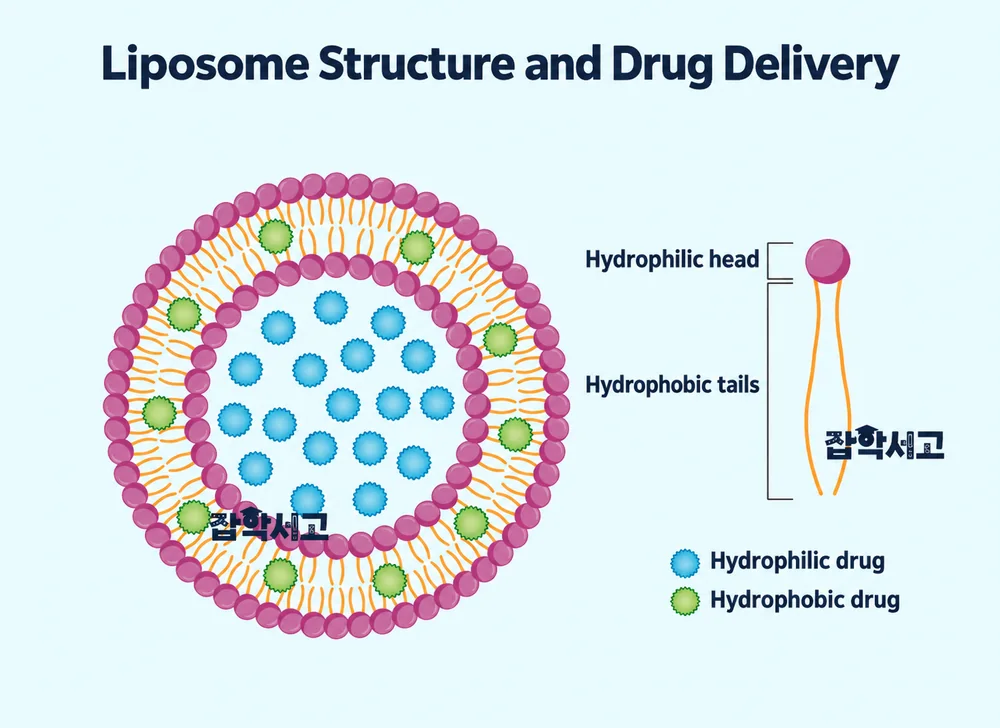
Basic Structure and Properties of Liposomes
Liposomes are formed from a phospholipid bilayer membrane structure, which has properties similar to biological membranes. Phospholipid molecules consist of a hydrophilic head and hydrophobic tails, and these structural characteristics allow liposomes to encapsulate both water-soluble and fat-soluble substances. This gives liposomes the ability to deliver a variety of drugs and compounds efficiently.
Liposome Diversity in Size and Shape
Liposomes can have various structures depending on their size and shape, which vary mainly according to the type and concentration of phospholipids. Small liposomes are rapidly taken up by cells, while large liposomes degrade slowly or can carry more drugs. Liposomes can also take shapes ranging from spherical to various nonspherical forms, and this diversity of shape significantly affects both their physical properties and their drug delivery efficiency.
Flexibility and Stability According to Phospholipid Composition
The flexibility and stability of liposomes vary considerably depending on the type of phospholipids. Phospholipids containing saturated fatty acids provide high stability but low fluidity, whereas phospholipids containing unsaturated fatty acids have high fluidity and provide greater flexibility. These differences in composition influence how liposomes function in the body and how effective they are in specific drug delivery processes.
Liposome Surface Charge and Interactions in the Body
Surface charge is one of the important chemical properties of liposomes. Liposomes can be cationic, anionic, or electrically neutral, and these charges directly influence how liposomes function in the body. Cationic liposomes can bind more readily to negatively charged cell membranes, while anionic liposomes have the advantage of being able to circulate longer in the blood. Therefore, their binding affinity for target cells and the uptake process during drug delivery are strongly governed by surface charge.
Chemical Modification of Liposomes and Potential Applications
Liposomes have properties that allow them to be chemically modified as needed. For example, attaching polyethylene glycol (PEG) to the surface of liposomes gives them immune evasion properties, allowing them to circulate longer in the body. This prevents drugs from being cleared by the immune system before they reach target cells, thereby increasing drug bioavailability. Such chemical modifications can be applied not only to drug delivery systems but also to various fields, including vaccines and gene therapy.
Liposome Stability: Analyzing Responses to External Factors

Liposome Stability
Liposome stability is an important factor that determines their potential applications and governs whether they can be used in various biotechnology and pharmaceutical fields. Liposomes respond sensitively to various external environmental factors in the body, which directly affect their physical and chemical properties. These factors include pH, temperature, ionic strength, and the presence of enzymes and proteins in the body. Finding ways to improve liposome stability is a key challenge in designing effective drug delivery systems.
pH Changes and Liposome Responses
pH is one of the external factors with the greatest influence on liposome stability. Under certain pH conditions, the bilayer structure of liposomes may become unstable or break down. This is particularly important in drug delivery systems. For example, liposomes designed to break down and release drugs in highly acidic environments, such as cancerous tissue, may be effective in cancer treatment. Designs that use this pH sensitivity help minimize side effects by allowing drugs to become active only under specific conditions without affecting normal cells.
In addition, the pH sensitivity of liposomes can be used in strategies that selectively release drugs in the acidic environments of specific intracellular organelles, such as lysosomes. This is developing into a technology that enables precise targeted drug delivery and can maximize therapeutic efficacy.
Temperature and the Thermal Stability of Liposomes
Temperature is another important factor that significantly affects the physical properties of liposomes. Liposome stability varies considerably with changes in temperature, and the phospholipid bilayer is particularly likely to break down in high-temperature environments. This can cause substances contained within liposomes to be released unexpectedly. By using this property to design thermosensitive liposomes, drug release can be controlled so that it occurs only at specific temperatures. For example, liposomes designed to release drugs only at temperatures above body temperature can be used alongside treatments that employ elevated temperatures, such as hyperthermia therapy.
Such temperature-sensitive drug delivery systems may be particularly useful in cancer treatment. Because cancer cells die within a temperature range to which they are more sensitive than normal cells, combining hyperthermia therapy with liposome-based drug delivery systems can maximize therapeutic efficacy.
Ionic Strength and Liposome Stability
Ionic strength is another important factor that affects the structural stability of liposomes. When ion concentrations in the external environment increase, the bilayer structure of liposomes becomes unstable, which can cause substances stored inside them to leak. This is a particularly important issue when liposomes travel through the bloodstream in the body. This is because interactions with the various ion concentrations in the blood can affect liposome stability.
Therefore, liposomes used for drug delivery must be designed to withstand these changes in ion concentration. To achieve this, researchers are studying methods such as coating the outer surface of liposomes with specific substances or using combinations of phospholipids that can maintain stability even in environments with high ion concentrations.
Interactions Between Enzymes in the Body and Liposomes
Liposomes interact with various proteins and enzymes in the body. In particular, their bilayer structure can be degraded by enzymes in the body, which can reduce liposome stability. To prevent this enzymatic degradation, the surface of liposomes can be coated with specific substances, or chemical modifications can be made to block access by enzymes. For example, attaching polyethylene glycol (PEG) to liposomes prevents enzymatic degradation and allows them to circulate longer in the body.
External Factors to Consider in Liposome Design
Various external factors must be carefully considered to ensure liposome stability. pH, temperature, ionic strength, and enzymes in the body significantly affect liposome structure and function, and effectively controlling these factors determines the success of liposome-based drug delivery systems. In particular, designing liposomes to break down or release drugs only in specific environments is an important strategy for maximizing the efficiency of drug delivery systems.
In conclusion, liposome stability is determined by various external factors, and appropriately controlling these factors can maximize the potential applications of liposomes. When designing drug delivery systems using liposomes, it is important to consider these factors thoroughly to ensure optimal stability and effectiveness.
The Role and Potential of Liposomes in Drug Delivery Systems
The Role of Liposomes in Drug Delivery Systems
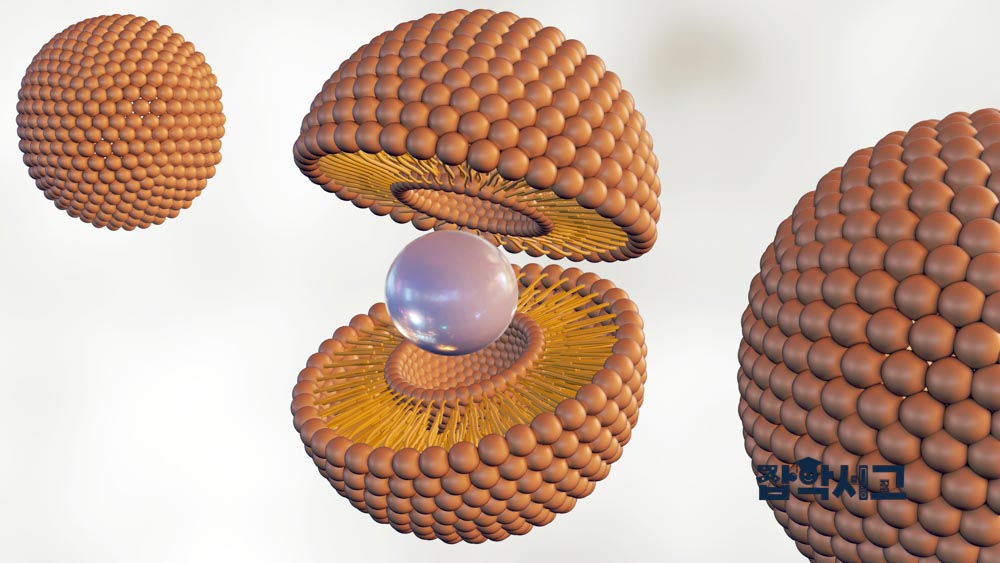
Liposomes play an important role in drug delivery systems. Their bilayer structure can encapsulate both water-soluble and fat-soluble substances, making them suitable for delivering a variety of drugs. This allows liposomes to extend the half-life of drugs in the body and selectively deliver drugs to target cells. These characteristics help drugs remain in the body longer and contribute to maximizing drug efficacy while reducing side effects.
Innovations in Anticancer Drug Delivery Using Liposomes
Liposomes have considerable potential, particularly in anticancer drug delivery. Because anticancer drugs are often toxic to normal cells as well, it is important to deliver drugs selectively to target cells alone. Liposomes are a powerful tool for achieving this. Attaching specific antibodies or ligands to the surface of liposomes can increase their binding affinity for cancer cells and enable drug delivery in a way that has minimal effects on normal cells. This is an important strategy for reducing side effects and maximizing therapeutic efficacy in cancer treatment.
The Potential of Liposomes to Overcome Drug Resistance
Liposomes can also contribute to overcoming drug resistance. Drugs may not be adequately taken up by resistant cells, and liposomes have the potential to address this problem. Efficiently delivering drugs into cells using liposomes can promote drug uptake and increase the likelihood of overcoming resistance. In particular, methods of further increasing intracellular drug uptake by modifying the surface properties of liposomes are being studied. This is an important technology that can help minimize treatment failure caused by resistance.
Applications of Liposomes in Vaccine Development
Liposomes also play a major role in vaccine development. Delivering antigens using liposomes can strengthen immune responses and increase antigenicity. This can induce stronger immune responses in the body and improve immunity against specific diseases. Liposome-based vaccines can elicit more efficient immune responses than traditional vaccines and can also be applied to developing vaccines for new diseases.
The Role of Liposomes in Gene Delivery Systems
Liposomes also play an important role in gene therapy. Safely delivering specific genes into cells is important in gene therapy, and liposomes can deliver genes into cells stably and efficiently. Gene delivery systems using liposomes improve the safety of gene therapy and help deliver the desired genes precisely to target cells. These technologies are particularly useful in treating genetic diseases and are expanding the possibilities of gene-based therapies.
The Diverse Potential Applications of Liposomes
In conclusion, liposomes are becoming established as innovative tools in various drug delivery systems, and their potential applications are extensive. Their distinctive chemical structure and physical properties allow them to serve as ideal carriers for delivering various drugs, genes, and vaccines. Future research will further expand the potential of liposomes, and they are expected to play an important role in treating and preventing a variety of diseases.
Liposome Research Trends and Prospects for Future Applications

Recent Trends in Liposome Research
Liposome research is evolving rapidly alongside technological advances. In particular, various methods are being explored to improve targeting accuracy, with ligand-based targeting technologies attracting attention among these approaches. Attaching ligands to the surface of liposomes can improve their binding affinity for specific cells or tissues. This enables personalized treatments that increase drug delivery efficiency and minimize side effects.
Research into controlling liposome size and surface properties is also actively underway. Making liposomes smaller allows them to travel more easily through blood vessels and increases their likelihood of reaching target cells. These technological advances are significantly improving the precision of drug delivery in treating diseases such as cancer.
Development of Environmentally Sensitive Liposomes
Recently, the development of environmentally sensitive liposomes has been actively pursued. These liposomes are designed to release drugs only under specific environmental conditions, enabling more precise drug delivery. A representative example is pH-sensitive liposomes, which have been designed to release drugs selectively in the acidic environment of tumors. This technology can improve the targeting specificity of therapeutic agents such as anticancer drugs, reducing side effects on normal cells and allowing drugs to concentrate only in cancer cells.
Liposomes that respond to various environmental factors, including temperature, ion concentration, and enzyme activity, are also being developed. Because these environmentally sensitive liposomes function only under specific conditions, they are regarded as a technology that can maximize the precision of drug delivery.
Improving Biocompatibility and Biodegradability
Research aimed at improving the biocompatibility and biodegradability of liposomes is also progressing rapidly. Biocompatibility refers to the ability of liposomes to deliver drugs safely in the body without triggering an immune response, while biodegradability refers to their ability to break down naturally in the body without leaving residues. These properties are particularly important in long-term treatment.
By using new biocompatible materials or coating liposome surfaces with specific substances, researchers are developing liposomes that circulate stably for extended periods in the body while evading immune responses. To improve biodegradability, technologies are also being studied that use naturally degradable phospholipids so that liposomes are completely broken down in the body and eliminated from it.
Development of Multifunctional Drug Delivery Systems
Multifunctional drug delivery systems using liposomes are also being developed. Researchers are studying systems that load multiple drugs or therapeutic agents into a single liposome to achieve combined therapeutic effects. This is useful for treating conditions with complex etiologies or chronic diseases, and a single liposome can function as a multidrug delivery system that performs several roles.
These multifunctional liposomes can simultaneously carry anticancer drugs, anti-inflammatory drugs, immunomodulators, and other agents to provide comprehensive treatment. This allows multiple treatment processes to be addressed at once, potentially shortening patients' treatment periods and improving therapeutic efficacy.
Liposome Design Using Artificial Intelligence and Big Data
In the future, liposome design using artificial intelligence (AI) and big data is anticipated. AI-based data analysis is useful for predicting not only the physical and chemical properties of liposomes but also their behavior in the body. Big data analysis can enable more precise design of liposome structures and drug delivery patterns, which can accelerate the development of new drug delivery systems.
AI can be used as an important tool in liposome design and optimization, and it will help identify optimal drug delivery methods by testing and analyzing various scenarios. This is regarded as an approach that can reduce the cost and time involved in drug development and provide better treatment outcomes.
Future Prospects for Liposome Research
In conclusion, liposome research is advancing continuously, and its potential applications are extensive. Various studies are underway on targeting technologies, environmental sensitivity, and improvements in biocompatibility and biodegradability, which will bring innovation to drug delivery systems. The introduction of artificial intelligence and big data will make liposome design more precise, and liposome-based technologies are expected to play a major role in the medical and pharmaceutical industries in the future.
Liposomes demonstrate considerable potential for applications in various fields thanks to their chemical properties and structural flexibility. This document has explored their structure and composition, stability, and role in drug delivery systems in depth, and has also examined recent research trends.
These properties of liposomes and advances in research will provide an important foundation for various future biotechnology applications, and further research is expected to expand the potential of liposomes and make a major contribution to human health and well-being.