Put water in a pot and heat it, and it stays liquid until it reaches 100°C, then turns into steam and escapes. Raise the pressure, as in a pressure cooker, and the boiling point goes up, so the water holds out as a liquid even as it gets hotter. Conversely, on a high mountain the pressure is low, so water boils below 100°C and rice can come out undercooked. So what happens to water if you keep raising both temperature and pressure without end?
Past a certain point, the boundary that separated liquid from gas vanishes, and a state appears that is hard to call either one. A substance held above its critical temperature and pressure, where the distinction between liquid and gas disappears, is called a “Supercritical Fluid.” Thanks to its unusual nature, spreading like a gas while dissolving other substances well like a liquid, it is used in many places, from coffee factories to power plants.
In this article, we will look in turn at what the critical point that gives rise to supercritical fluids means, the properties that sit between gas and liquid, examples of industrial use, and supercritical fluids found in nature.
Neither Liquid nor Gas: Supercritical Fluid
What Is the Critical Point?
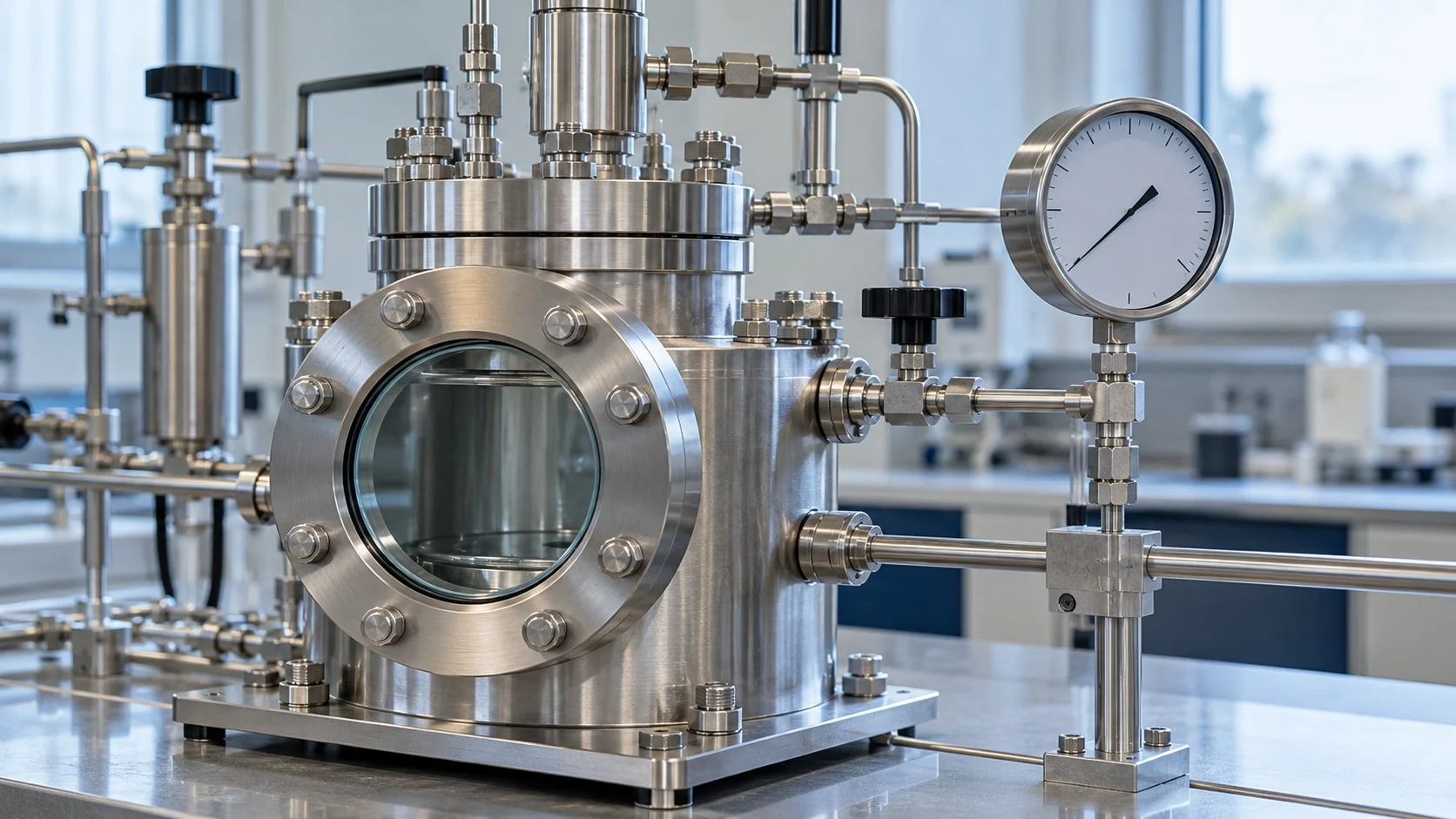
To understand supercritical fluids, you first need to know about a special temperature and pressure called the critical point.
(1) The End of the Boiling Curve
The higher the pressure, the higher a substance's boiling point. If you trace the boundary where liquid and gas divide according to pressure and temperature, you get a single curve, but this curve does not go on forever; it stops at one particular point. That end point is the critical point.
(2) The Moment the Boundary Disappears
As you approach the critical point, the liquid grows thinner and the gas grows denser. When the critical point is finally reached, their densities become equal, liquid and gas can no longer be told apart, and only a single fluid remains. A gas hotter than its critical temperature will not turn into a liquid no matter how hard it is compressed.
(3) A Different Critical Point for Each Substance
Water's critical point is about 374°C and about 22MPa, more than 200 times atmospheric pressure. Carbon dioxide, by contrast, reaches its critical point at about 31°C and about 7.4MPa, so a supercritical state can be created relatively easily. On top of that, carbon dioxide has low toxicity, does not burn, and is cheap, which has made it the most commonly used supercritical solvent in industry.
Properties Between Gas and Liquid
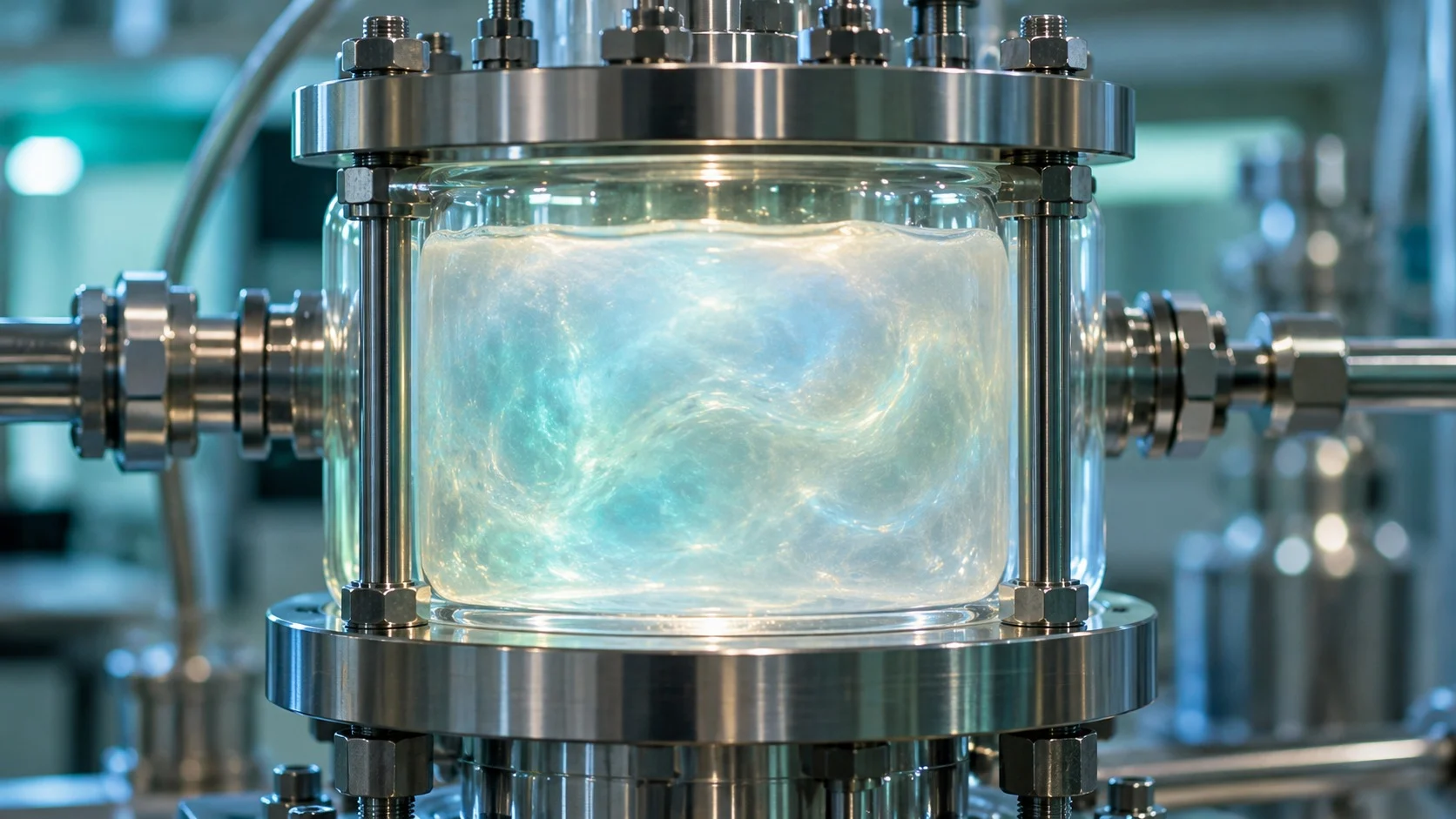
Supercritical fluids combine the strengths of gases and liquids, which makes them a substance chemists take a particular interest in.
(1) Seeping In Like a Gas
A supercritical fluid has a viscosity low enough to be close to that of a gas, and its molecules spread out quickly. As a result, it can seep into porous solids as easily as a gas and reach every corner. This lets it pull out even components hidden deep inside a raw material in a short time.
(2) Dissolving Like a Liquid
Its density can rise close to that of a liquid, so its power to dissolve other substances is far greater than a gas's. And because there is no interface between liquid and gas, no surface tension arises either.
(3) Tunable Like a Dial
Near the critical point, even a small change in pressure or temperature changes the density greatly. When the density changes, the dissolving power changes with it, so by adjusting the pressure you can selectively dissolve only the components you want, or drop them out again. Being able to separate several components one after another with a single solvent is a major advantage.
Where Supercritical Fluids Are Used
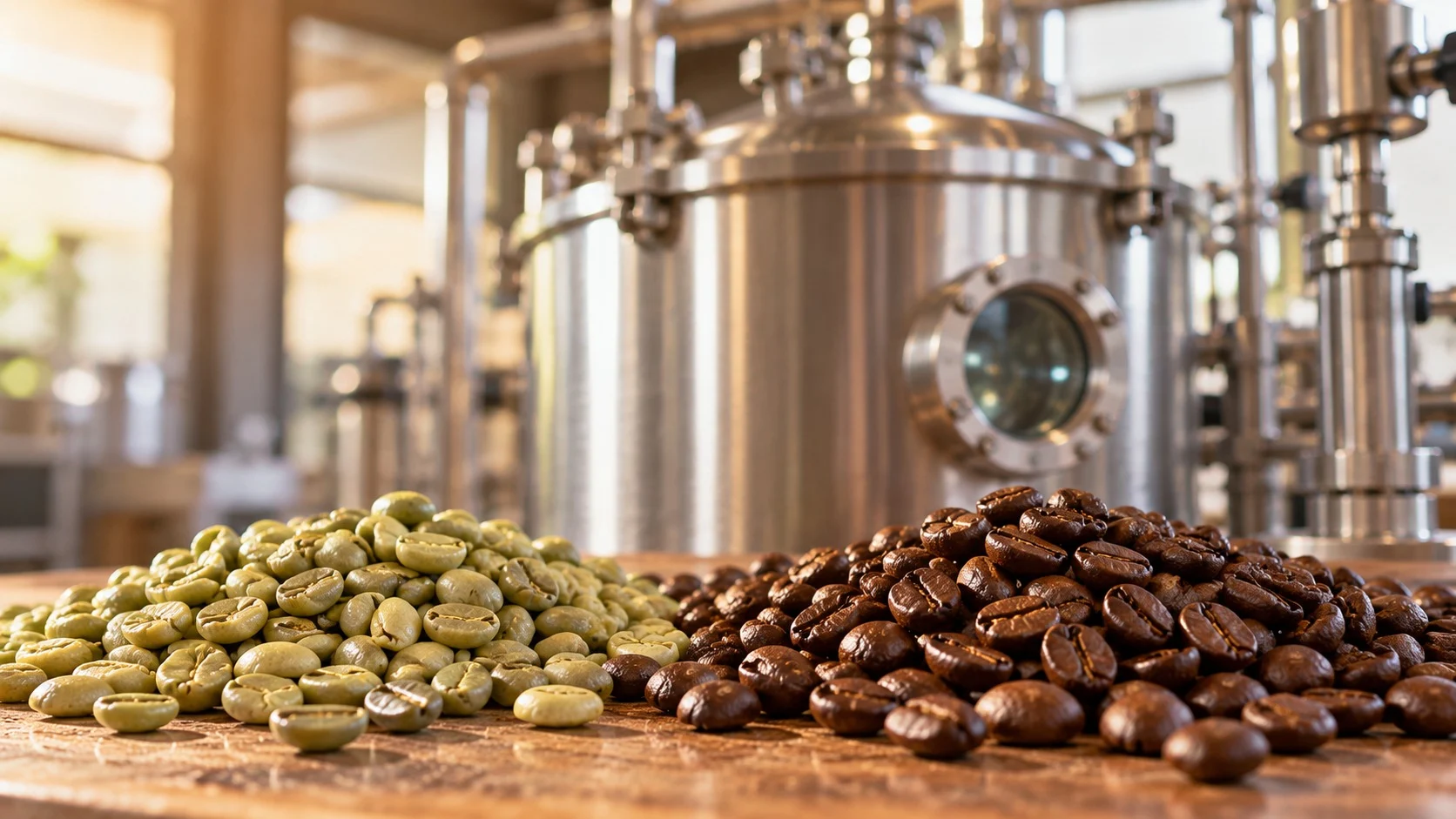
Thanks to these properties, supercritical fluids are widely used as clean solvents that replace harmful organic solvents.
- Decaffeinated Coffee: Supercritical carbon dioxide extracts caffeine from green coffee beans before roasting. When the pressure is lowered, the carbon dioxide escapes as a gas, leaving almost no solvent behind.
- Hops and Fragrance Extraction: The same method is used to extract components of the hops used in beer, the scent of flowers, and oils from plants.
- Supercritical Drying: Because the solvent can be removed without surface tension, it can dry extremely light, highly porous aerogels and delicate biological specimens without damaging them.
- Supercritical Fluid Chromatography: An analytical method that separates a mixture into its components. Because it can handle heat-sensitive substances, it is used to tell apart drug molecules that resemble each other like mirror images.
- Supercritical Power Generation: Heating water into a supercritical state to turn turbines can raise thermal efficiency from about 39% with conventional generation to about 45%.
Supercritical Fluids in Nature
Supercritical fluids are not found only in laboratories and factories; they form naturally on Earth and on other planets as well.
(1) A State First Discovered Inside a Cannon
In 1822, Charles Cagniard de la Tour of France heated a sealed cannon barrel containing a liquid and a stone ball and listened to the sound of the ball rolling. Noticing that the sound changed at a certain temperature, he discovered for the first time the critical point, where the distinction between liquid and gas disappears.
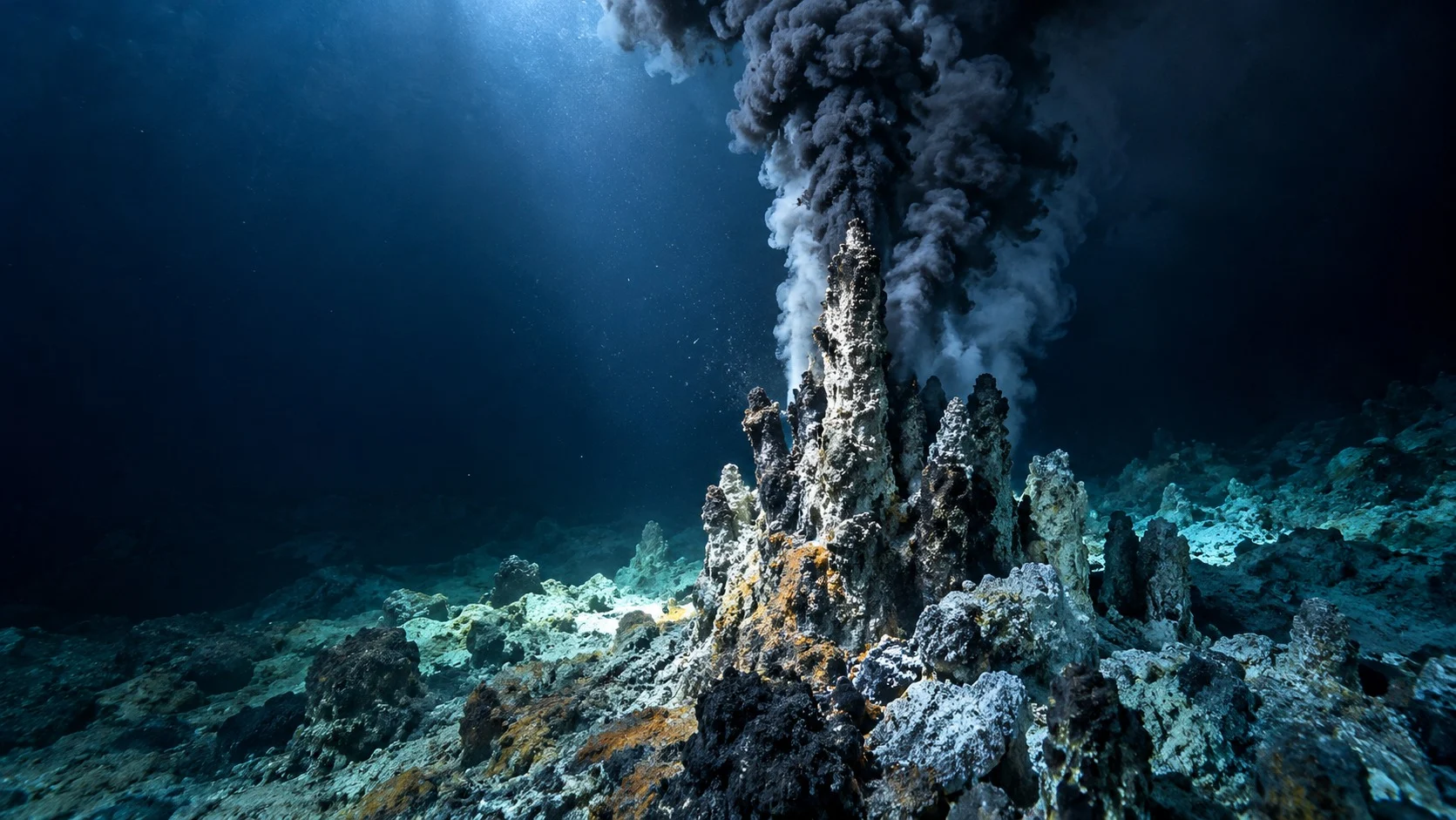
(2) Hydrothermal Vents in the Deep Sea
Hydrothermal vents on the seafloor spew out water as hot as about 400°C. Under the high pressure of the deep sea, some of this water is known to reach a supercritical state.
(3) The Hot Atmosphere of Venus
Venus's atmosphere is mostly carbon dioxide, with a surface temperature of about 462°C and a pressure about 90 times that of Earth. These conditions are far beyond carbon dioxide's critical point, so the atmosphere blanketing Venus's surface is a supercritical fluid.
Supercritical fluids show that the familiar division into solid, liquid, and gas does not always fit neatly. The fact that a substance's properties can be changed with just two dials, temperature and pressure, is also offering a major clue in the search for cleaner chemical processes.
Understanding the state beyond the boundary: that is the first step in a chemistry that handles matter in new ways.