Adventure tourism is a rapidly growing field that occupies an important place in modern tourism studies. This article first examines the definition and historical background of adventure tourism, then analyzes the major trends in modern adventure tourism.
It will also examine the impact of technological advances on adventure tourism and discuss its economic and sociocultural effects in depth.
The Definition of Adventure Tourism

The Concept and Characteristics of Adventure Tourism
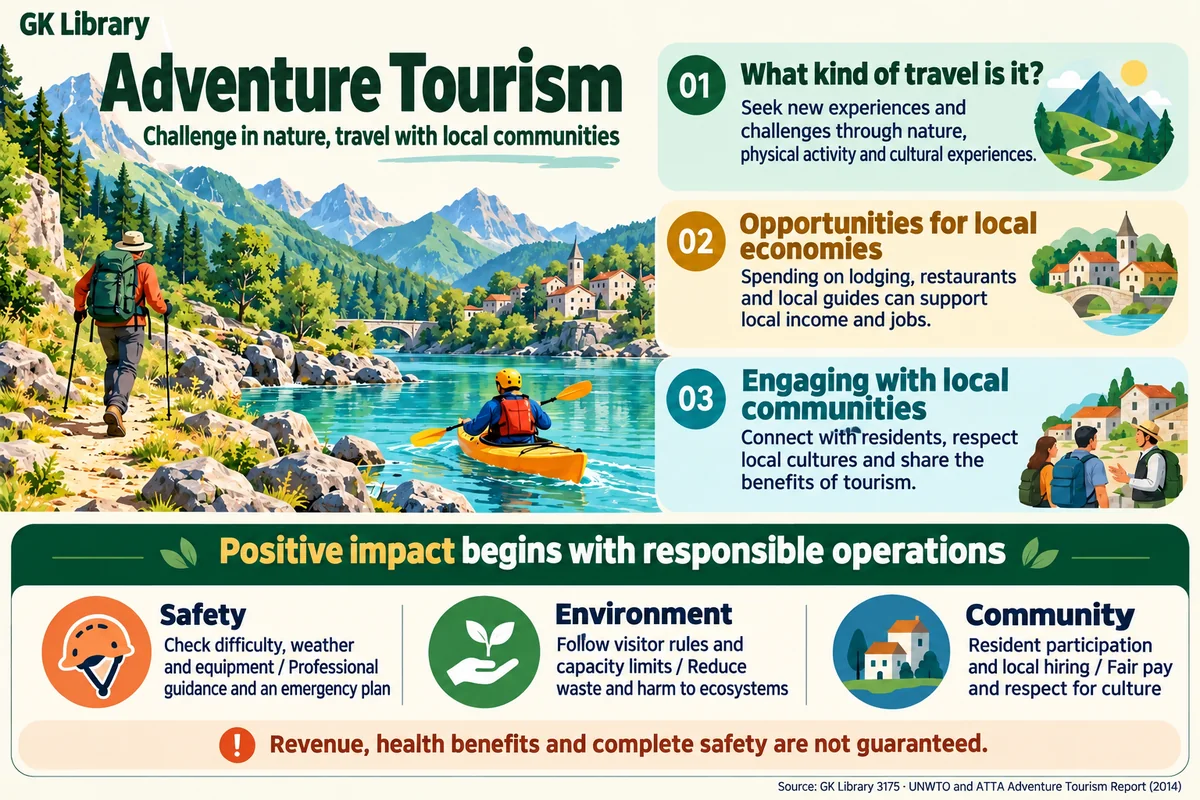
Unlike conventional tourism, adventure tourism is a form of tourism in which travelers seek new experiences and challenges. At its core, adventure tourism involves gaining distinctive experiences through various activities that include physical and mental challenges in natural settings, such as hiking, skydiving, and scuba diving. This form of tourism goes beyond simple relaxation or sightseeing, emphasizing firsthand experiences and exploration. Although adventure tourism involves risks and requires careful planning and safety measures, it offers travelers a profound sense of accomplishment in return.
The Historical Background of Adventure Tourism
Adventure tourism originated in the human desire to explore. In ancient societies, people undertook adventures and explorations to discover new lands or find resources, forming the foundation of modern adventure tourism. In particular, these activities began to gain popularity among small groups of adventure enthusiasts in the mid-20th century. Later, in the 1970s and 1980s, adventure travel packages accompanied by professional guides emerged, improving safety and organization.
This made adventure tourism accessible to more people and popularized adventure travel. In particular, from the 1990s onward, the development of the internet and information technology played an important role in the growth of adventure tourism by providing travelers with easy ways to plan and book their trips. As a result, the market expanded rapidly as the number of travel agencies specializing in adventure tourism increased worldwide.
Major Activities in Adventure Tourism
Representative adventure tourism activities include hiking, skydiving, scuba diving, mountain biking, rafting, and ice climbing. Set in natural environments, these activities offer travelers physical and mental challenges and excitement, allowing participants to experience the wonders of nature while testing their own limits. Some activities are also linked to ecosystem protection and contribute to environmental conservation.
The Future Outlook for Adventure Tourism
Adventure tourism is expected to continue growing. As interest in environmental protection increases, adventure tourism linked to ecotourism will attract greater attention. Adventure tourism is also likely to develop into more diverse forms as the number of travelers who prefer personalized experiences increases. Alongside these developments, greater technological support that takes safety and convenience into account will continue to improve the accessibility of adventure tourism.
Adventure tourism continues to grow by satisfying the desire of people today for new experiences and challenges. This increases its economic and sociocultural effects, positively influencing both local communities and individuals. Understanding the various aspects of adventure tourism and making efforts toward sustainable development can be considered the tasks ahead.
An Analysis of Major Trends in Modern Adventure Tourism

The Spread of Ecotourism
One of the most prominent trends in modern adventure tourism is the spread of ecotourism. Ecotourism is a form of tourism that allows people to enjoy adventures while protecting the natural environment, aligning with the values of people today who prioritize sustainability. This type of tourism goes beyond simple leisure activities and is highly popular among people who value harmony with nature. As interest in environmental protection grows, ecotourism, which emphasizes experiencing and conserving nature at the same time, is becoming an essential element of adventure tourism.
The Growth of Experiential Adventure Tourism
Adventure tourism involving firsthand experiences and participation, beyond simply viewing tourist attractions, is increasing. Various sports activities, such as surfing, paragliding, and snowboarding, provide physical challenges and give travelers distinctive experiences and a sense of accomplishment. This experiential adventure tourism maximizes the enjoyment of travel and is becoming established as a travel trend in which adventure itself is the purpose. Through it, travelers can escape their daily routines, find new challenges and renewed energy, and create their own special memories.
Technological Advances and Innovation in Adventure Tourism
Technological advances are opening up new possibilities for adventure tourism. Drone photography and VR (virtual reality) and AR (augmented reality) technologies offer travelers more vivid experiences and are becoming major factors in increasing the popularity of adventure tourism. Using drones to photograph scenery makes travel records more original and varied, while VR allows travelers to experience destinations virtually in advance, helping them plan their trips. These technological innovations raise travelers' expectations and enable more immersive travel.
The Influence of Social Media
Social media plays an important role in the growth of adventure tourism. Through various platforms, such as Instagram and Facebook, travelers can easily share their adventures, inspiring others and spreading awareness of the appeal of adventure tourism. Social media has also become a major source of travel information, helping travelers plan their own personalized trips using a variety of reviews and information. Through this, new destinations and activities are becoming widely known alongside the growth of adventure tourism.
Travel That Prioritizes Health and Well-Being
Travel aimed at relieving the stress and tension of modern society and finding balance between body and mind is gradually gaining popularity. Adventure tourism that pursues health and well-being, such as hiking, yoga retreats, and meditation trips, is receiving an enthusiastic response from travelers who seek mental calm as well as physical challenges. This adventure tourism centered on well-being goes beyond simple experiences to emphasize the healing process through travel, emerging as a trend that fulfills the desire for both relaxation and health at travel destinations.
The Popularity of Personalized Adventure Tourism
Customized adventure tourism tailored to individual tastes and needs is attracting attention. Travelers want experiences specifically suited to them, and travel agencies are offering a variety of options to meet this demand. Travel packages are designed around individual preferences, and personalized services that allow travelers to freely choose the difficulty of the adventure, types of activities, and schedules are increasing traveler satisfaction. This personalized adventure tourism adds a special quality to travel and offers an appealing choice for travelers who want to design their own original adventures.
Modern adventure tourism continues to develop, reflecting various trends such as environmental protection, technological innovation, health and well-being, and personalized experiences. These trends broaden the scope of adventure tourism, meet the needs of diverse travelers, and further expand its popularity. Adventure tourism will continue to offer new challenges and possibilities and provide distinctive experiences to many people around the world.
The Impact of Technological Advances on Adventure Tourism

Innovation in Access to Information
Technological advances have made it easy for travelers to obtain information about their destinations. The widespread availability of the internet and smartphones has made travel planning more efficient and created an environment in which travelers can book various adventure activities in advance or join them immediately on site. Information that was once available only after arriving at a destination is now accessible at travelers' fingertips, further improving the planning and flexibility of adventure tourism.
Improved Safety
Technology is greatly improving safety, the most important element of adventure tourism. Technologies such as GPS location tracking systems, drones, and satellite communications make it possible to accurately determine travelers' locations and respond quickly to emergencies. This is an important development that reduces the risks that may arise in adventure tourism and helps more people enjoy it safely. In particular, real-time monitoring and rescue operations using drones make a major contribution to ensuring safety even in isolated areas.
Expanded Experiences
The introduction of VR (virtual reality) and AR (augmented reality) technologies is further expanding the experiences available through adventure tourism. Travelers can use VR to experience places they have never visited in advance or use AR to obtain more vivid information at places they actually visit. By offering immersive adventures beyond ordinary travel, these technologies leave a deeper impression on travelers and further enhance the appeal of adventure tourism.
Integration with Social Media
Social media plays an important role in the spread of adventure tourism. Through Instagram, Facebook, YouTube, and other platforms, travelers can easily share their experiences in photos and videos. This content inspires others and contributes to the growing popularity of adventure tourism. At the same time, social media provides platforms where travel information can be checked in real time, helping travelers plan their trips more easily. Real-time feedback and recommendation features serve as useful sources of information for travelers.
Advances in Booking Systems
Advances in online booking systems have greatly improved the accessibility of adventure tourism. Through various platforms, travelers can book adventure activities easily and quickly, saving time and money. Travel agencies can also use these platforms to analyze customer data and provide personalized services tailored to individual travelers' tastes and needs. Innovation in booking systems is increasing the convenience of adventure tourism and providing opportunities for more people to participate easily in adventure activities.
Environmental Protection and Sustainability
Technological advances also make a major contribution to improving the sustainability of adventure tourism. Environmentally friendly technologies that support ecotourism and camping equipment that uses renewable energy offer ways to enjoy adventures while minimizing the impact on the natural environment. For example, solar-powered equipment supplies electricity in remote areas while helping protect the environment. These technologies make it possible for environmental protection and adventure tourism to coexist and establish an important foundation for sustainable tourism models.
Technological advances are transforming adventure tourism in many ways and expanding its scope. Access to information, safety, expanded experiences, integration with social media, advances in booking systems, and sustainable environmental protection technologies are important factors accelerating the growth of adventure tourism. These changes encourage more people to participate in adventure tourism and are opening up a bright future for it.
The Economic and Sociocultural Effects of Adventure Tourism

Revitalizing Local Economies
Adventure tourism brings considerable vitality to local economies. Areas with adventure tourism destinations generally have outstanding natural environments, and various service industries develop as tourist arrivals increase. Various sectors, including accommodation, food services, transportation, and local guide services, receive economic benefits, leading to increased income for local residents and economic revitalization. In particular, tourists who stay for extended periods and increase their spending play an important role in strengthening the ability of local economies to sustain themselves and remain stable.
Job Creation and Increased Employment Rates
Adventure tourism contributes to higher employment rates by providing various jobs in local communities. A range of occupations develops, including professional guides for tourists, safety specialists, tourism operators, and accommodation workers, providing stable jobs for local residents. In particular, as occupations requiring specialized expertise increase, quality jobs are also created for young people, serving as an important factor in promoting the economic independence and stability of local communities.
Promoting Cultural Exchange and Mutual Understanding
Adventure tourism brings together people from diverse cultural backgrounds and creates opportunities for cultural exchange. Interactions between tourists and local residents provide opportunities to understand and respect each other's cultures, playing an important role in increasing the cultural diversity of local communities. Through these exchanges, local residents encounter new perspectives through contact with the outside world, while tourists gain a deeper understanding by experiencing local culture firsthand. This leads to mutual respect and improved social relationships.
Personal Growth and Challenges
Adventure tourism promotes individuals' physical and mental growth, allowing participants to feel a sense of accomplishment from overcoming their own limitations. Through challenging activities, travelers gain new abilities and confidence, which also have a positive impact on their daily lives. Along with relieving stress, adventure activities improve physical and mental health, and personal growth and development through adventure tourism serve as important factors in improving quality of life.
Promoting Environmental Protection and Sustainability
Adventure tourism also plays an important role in environmental protection and sustainable development. In particular, adventure tourism centered on ecotourism emphasizes respecting and conserving the natural environment. This helps preserve the beauty of nature and ecosystems over time, while tourists enjoy adventures in harmony with nature. This approach provides an important foundation for passing nature on to future generations as well as the present generation and contributes to promoting sustainable development.
Developing Local Infrastructure
As adventure tourism develops, infrastructure in local communities also improves significantly. Infrastructure such as roads, communications, and medical facilities is expanded to ensure tourists' safety and convenience, also benefiting local residents. This infrastructure also strengthens emergency response capabilities and contributes to improving safety in local communities. Both tourists and local residents enjoy better living environments through these infrastructure improvements.
Adventure tourism produces positive effects in various areas, including the revitalization of local economies, job creation, cultural exchange, personal growth, environmental protection, and infrastructure development. These effects benefit both local communities and tourists and establish an important foundation for adventure tourism to develop sustainably.
Adventure tourism has become an essential part of modern tourism studies and continues to grow, supported by various trends and technological advances. Through its economic and sociocultural effects, it positively influences both local communities and individuals, and its potential for future development is also limitless.
Understanding these various aspects of adventure tourism and working together toward sustainable development can be considered a task that we all face.