When planning a trip, some people start by looking for an unfamiliar village that barely shows up on a map, while others first book a hotel at a famous resort that countless visitors have already been to. Plog’s Psychographic Model is the theory that explains this difference in destination preference through personality, and goes on to explain how destinations rise and fall.
Put simply, Plog’s model places travelers on a single line running from a love of adventure to a preference for the familiar, and holds that a destination’s popularity rises and falls depending on which kinds of travelers come to visit. It is a classic model that appears in almost every tourism textbook.
In this piece we will look in turn at how Plog’s model came about and its five traveler types, the way destinations rise and decline, and finally the model’s limitations and how to use it.
Reading the Rise and Fall of Destinations Through Travelers’ Personalities
What Is Plog’s Model?

Plog’s model was created by the American market research expert Stanley Plog. Around 1967, his company was commissioned by a number of businesses, including airlines and aircraft manufacturers, to investigate why some people refuse to fly. While analyzing the personalities of people who avoided flying, Plog discovered that personality is also closely tied to the choice of travel destination.
He published these findings in 1974 in Cornell University’s hotel administration journal as a paper titled “Why Destination Areas Rise and Fall in Popularity.” It remains one of the most frequently cited works in tourism research.
- Allocentric: a traveler who is curious about the outside world and full of confidence, and who seeks out unfamiliar and new places.
- Psychocentric: a traveler who is cautious and avoids adventure, choosing familiar and comfortable places.
- Midcentric: a traveler with a moderate mix of both tendencies, who makes up the large majority of all travelers.
The Five Traveler Types in Plog’s Model

Plog believed that if you lined travelers up along a single line, they would form a bell-shaped normal distribution that bulges most in the middle. In other words, there are few people at either extreme and many easygoing people in the middle.
(1) Allocentrics and near-allocentrics
Allocentrics fly off to undeveloped, remote areas and do not much mind if lodging and food are uncomfortable. They prefer traveling freely to following a fixed itinerary. Near-allocentrics like novelty but still want a certain level of comfort.
(2) Midcentrics
The largest group, they enjoy a moderate amount of novelty in places that are already fairly well known and have proper facilities.
(3) Near-psychocentrics and psychocentrics
Psychocentrics choose familiar places they can reach by car, with plenty of hotels, restaurants and shops. They like package tours with carefully planned itineraries and expect home-like comfort even at their destination. Near-psychocentrics are happy to visit places that have been tried and tested by many others.
When Plog revisited his paper in 2001, he also gave allocentrics and psychocentrics simpler names: “Venturers” and “Dependables.”

The Rise and Fall of Destinations Through Easy Examples
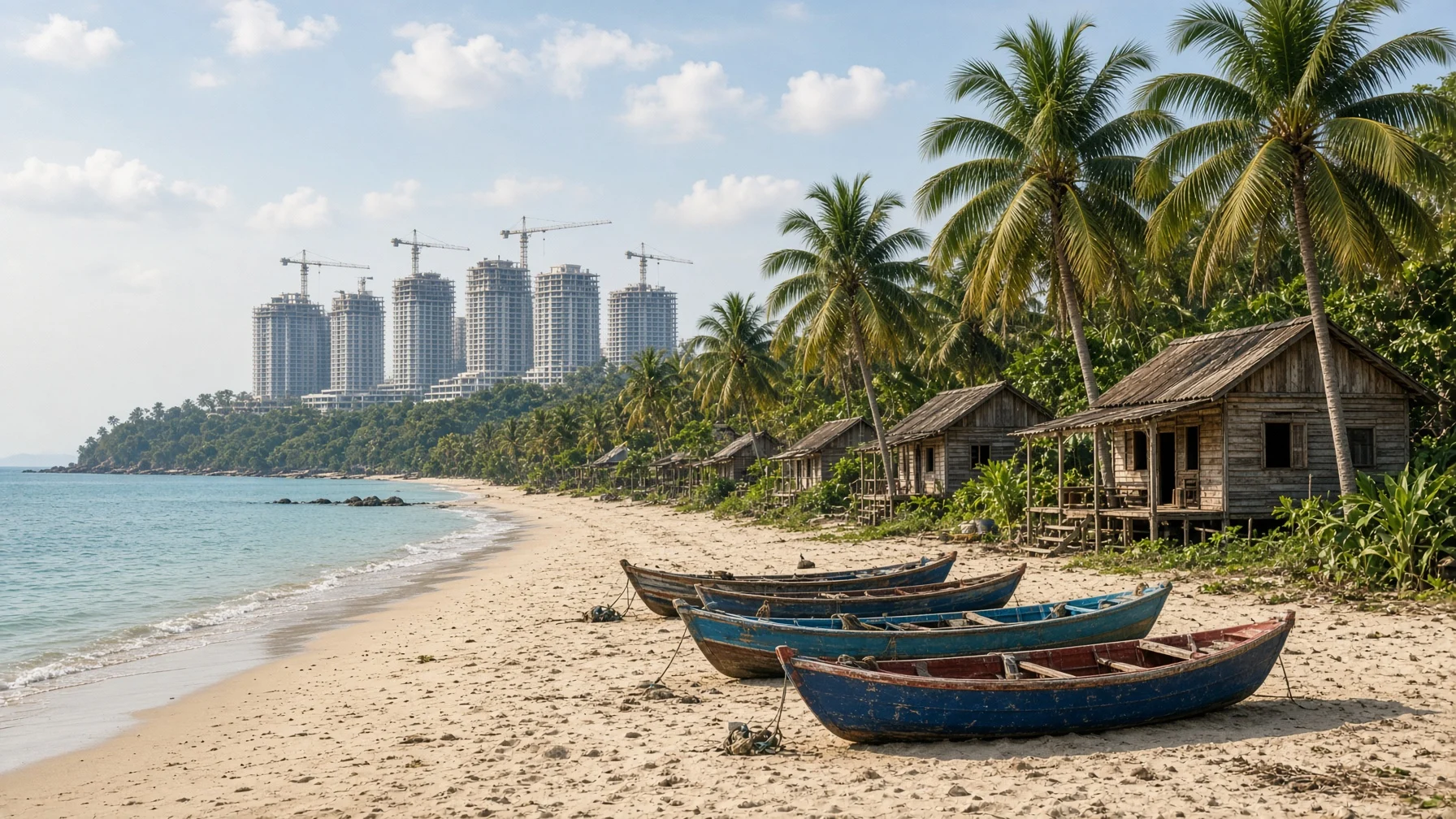
The real power of Plog’s model lies in linking traveler types to the life cycle of a destination.
[Stage 1] Venturers discover it first
A few backpacking adventurers arrive at a remote seaside village. There are only a handful of guesthouses, but they fall in love with the unspoiled scenery and spread the word.
[Stage 2] The crowds arrive
Hearing the buzz, near-allocentrics follow, hotels and restaurants soon spring up, and the largest group, the midcentrics, pours in. This is when visitor numbers peak.
[Stage 3] It loses its character and fades
As large resorts and souvenir shops multiply, the village becomes a resort like any other. The original adventurers have long since moved on, and in the end only a small number of familiarity-seekers remain, so its popularity declines. Plog warned that destinations carry the seeds of their own decline within the very process of their growth.
The Limits of Plog’s Model and How to Use It Wisely

Plog’s model is intuitive, but it has also drawn plenty of criticism. In 1990, Stephen Smith tested the model with traveler data from seven countries and reported that he found no clear support for it. A single person, too, tends to choose completely different places depending on the situation, such as a business trip, a honeymoon or a family vacation.
A 2006 study by Stephen Litvin reached an interesting conclusion: the model does not predict well where people actually go, but it explains fairly well where they most want to go in their hearts. In other words, constraints of time and money get in the way of people’s preferences.
- Destination Management: when a destination starts leaning toward midcentrics, protecting its unique character can delay the next stage of decline.
- Market Segmentation: travel agencies and local governments can tailor their products and promotion to the type of traveler they are targeting.
Plog’s model divides travelers into five types between Venturers and Dependables, and explains how a destination is discovered by adventurers, loved by the masses, and then fades as it loses its character. It is not a formula that predicts every trip, but it offers a good lens for examining why destinations change.
Thinking about what kind of traveler you are, and what stage the destination you are looking for is in right now: that is the first step toward deeper travel.