
On South Korean food packaging, the words “sell-by date” have all but disappeared. Since January 1, 2023, their place has been taken by the use-by date.
That means the sell-by date, first introduced in 1985, was replaced after 38 years. It was not just a change of name: the date now tells you something different. The old date answered “until when can this be sold?”, while the new one answers “until when is it safe to eat?”
Below, we look at how the two dates are set, how they differ, and how to judge the confusing situations that often come up in front of the fridge.
Sell-by Date vs. Use-by Date: What's the Difference?
What Is a Sell-by Date?
A sell-by date is the deadline, counted from the day a product is made, until which it may be sold to consumers. It marks the last day a store may display and sell the item, and for a long time food companies and distributors used it as a standard for managing inventory.
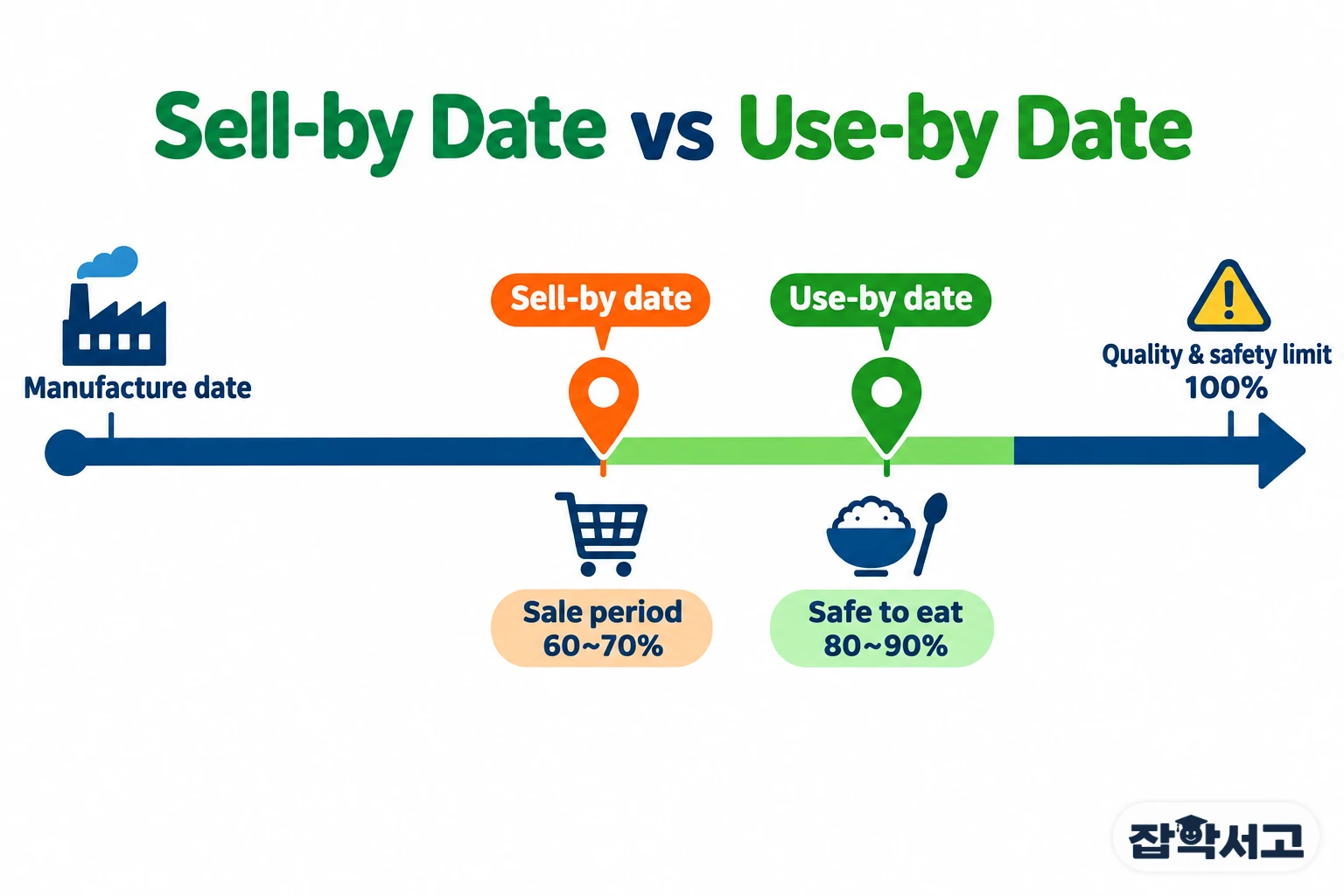
The sell-by date was usually set at 60–70% of the “quality and safety limit period.” This period is how long a food holds up before problems with its quality or safety begin to appear.
In practice, each product's date is set by storing it at a fixed temperature and humidity and testing sensory indicators such as taste and smell, physicochemical indicators such as acidity and moisture, and microbiological indicators such as bacterial counts. That is why even two blocks of tofu can carry different dates depending on how they are packaged and sterilized.
So food did not spoil the moment its sell-by date passed, yet many people treated that date as the day it became unsafe to eat. Because of this misunderstanding, a great deal of still-edible food was thrown away. According to Korea's Ministry of Food and Drug Safety, the country discards 5.48 million tons of food a year, at a disposal cost of 1.096 trillion won.
What Is a Use-by Date?
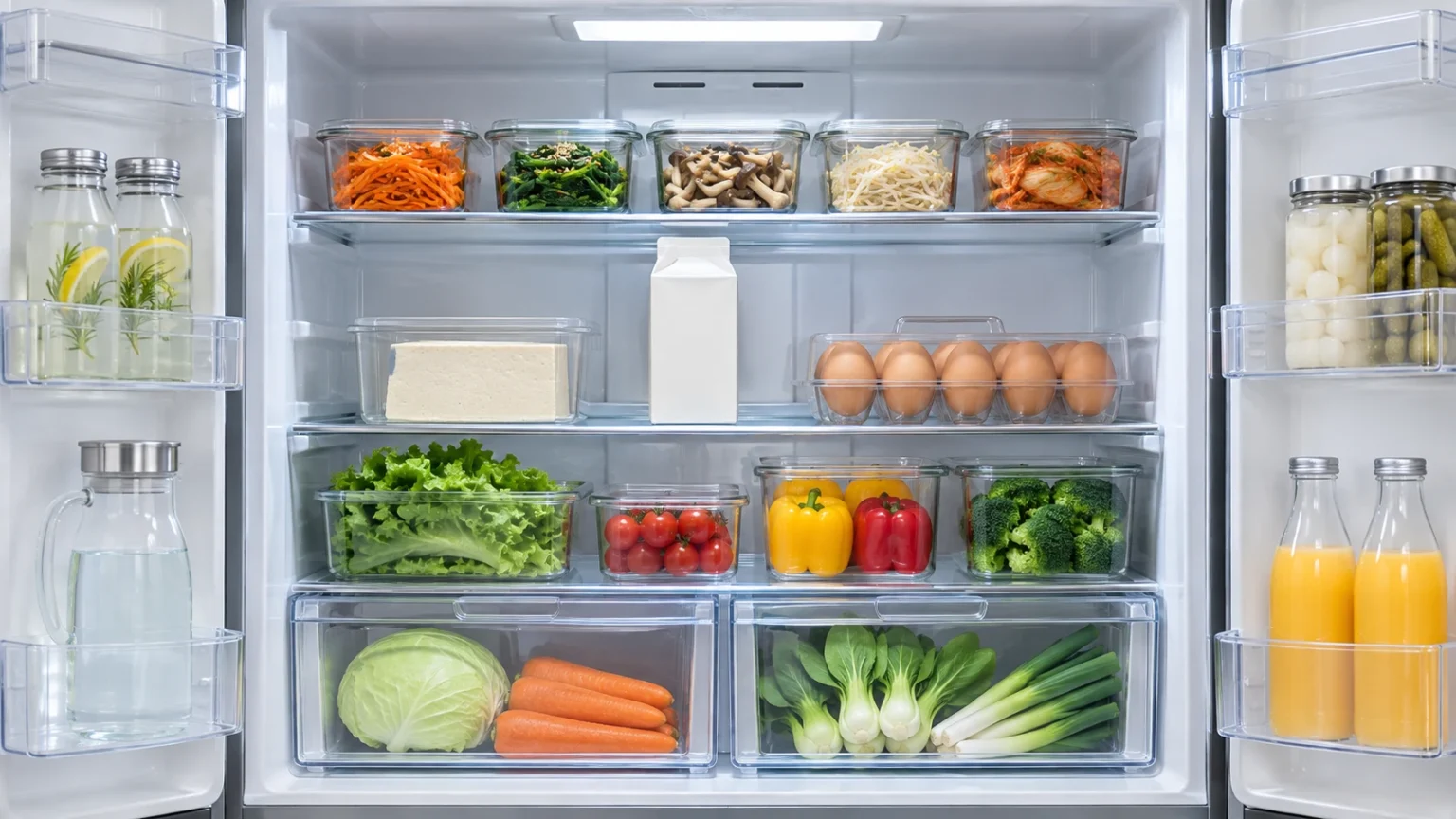
A use-by date is the deadline until which a product is safe to eat, provided it has been stored as directed on the label. The date is set from the point of view of the person eating the food, not the seller.
The use-by date is set at 80–90% of the quality and safety limit period. It is based on the same test results, but because the margin is a little smaller, the date moves later. According to reference values published by the Ministry, tofu went from 17 to 23 days, ham from 38 to 57 days, and fermented milk from 18 to 32 days.
The system took effect in 2023 under an amendment to Korea's Act on Labeling and Advertising of Foods, and that first year served as a grace period for replacing packaging. Refrigerated milk products, however, will switch only on January 1, 2031, because cold-chain conditions in distribution must be improved first.
The United States, Europe, Japan, Australia and others already use use-by dates. The Codex Alimentarius Commission (CODEX) deleted its definition of the sell-by date, noting that consumers may mistake it for the day to throw food away, and now recommends the use-by date instead.
Korea's Food Safety Information Service estimated that switching to use-by dates would bring annual benefits of 886 billion won for households, as less processed food is thrown away, and 26 billion won for industry, thanks to fewer returns and less waste.
Side-by-Side Comparison
Both dates start from the same tests, but they differ in whom the date is for. The infographic and table below summarize the differences.
| Item | Sell-by date | Use-by date |
|---|---|---|
| Meaning | Deadline for selling | Deadline for safe eating |
| Based on | Seller | Consumer |
| When it is set | 60–70% of the quality and safety limit period | 80–90% of the quality and safety limit period |
| Tofu reference value | 17 days | 23 days |
| Introduced / in force | Introduced in 1985 | In force from 2023 (refrigerated milk from 2031) |
As the table shows, the biggest difference is the reference point used to set the date. The same product carries a later use-by date than sell-by date because the standard has shifted from selling to eating.
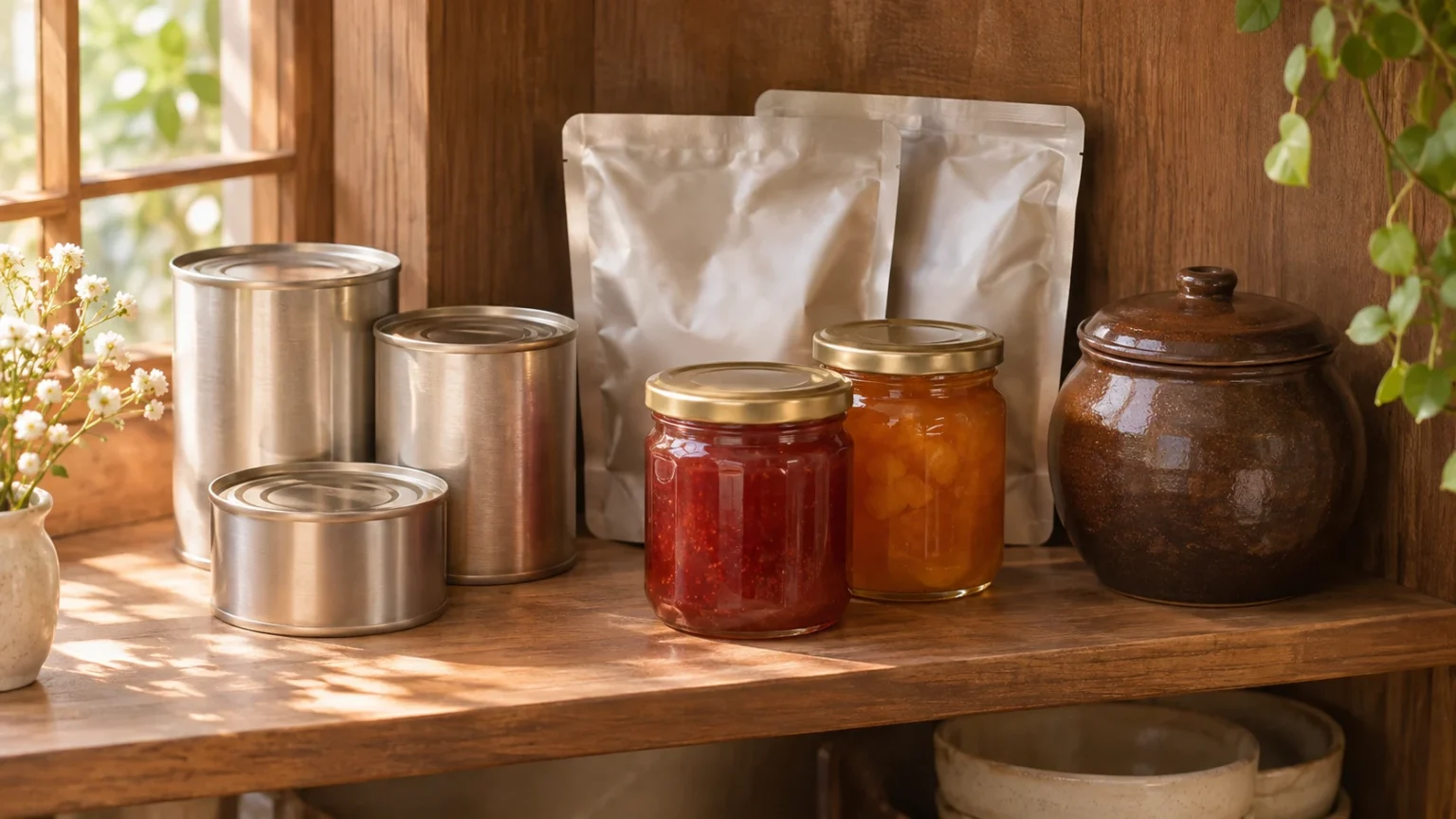
There is one more label worth knowing. Foods meant to be kept for a long time, such as canned goods, jam, retort foods and fermented sauces, may carry a “quality maintenance date” instead of a use-by date. It means the period during which the food keeps its proper quality when stored as directed. Because it is based on quality such as flavor and aroma, check the date together with whether the can is bulging or rusty and whether anything smells off when you open it.
Telling Them Apart with Confusing Cases
Situations where the date alone isn't enough to decide come up more often than you might think. Here are three cases you often run into in front of the fridge.
Case 1. Tofu one day past its use-by date
The use-by date has already been set with a smaller margin. Thinking “a few days past should be fine,” as people did with sell-by dates, can be risky. As a rule, don't eat food past its use-by date, and even before then, it is safer to throw it out if the smell or color seems wrong. You can freeze foods that are close to their use-by date, but first check the label to see whether the product can be frozen, and never refreeze something once it has thawed.
Case 2. Ham that is still in date but already opened
The printed date assumes the package is unopened and stored as directed. Once opened, microbes can enter through the air and your hands, so eat it as soon as possible even if plenty of time remains. Seal opened products, keep them refrigerated, and check their condition before the date. Some products also state how long they keep after opening, so it helps to read the storage instructions on the package.
Case 3. Chilled food left in a shopping bag for hours
A use-by date comes with the condition “when stored as indicated.” Under Korean food standards, refrigeration means 0–10°C, so if chilled food has been left in a car or at room temperature for a long time, that promise is already broken even if the date has not passed. After shopping, it is a good habit to put away chilled and frozen foods first. On hot days, packing an ice pack in your shopping bag or heading straight home also helps.
The use-by date is meant to reduce food waste, but that also makes keeping the right storage temperature more important. The system works only when the way we read dates and the way we handle our fridges change together. Next time you open the fridge, try reading the storage instructions printed next to the date as well.
Recommended reading